
Reviewed · ARAL SEA AND SHIP CEMETERY TOURS
Aral Sea – Extended trip (3 days)
The striking part of this trip is its scale: more than 1,200 kilometers in three days across western Uzbekistan, from Khiva’s old walls to the dry Aral Sea shore and the remote Ustyurt Plateau. You are not getting a quick photo stop. You are signing up for long road hours, rough desert tracks, abandoned ports, salt flats, and a remarkable run of ancient fortresses.
I like the contrast between the Savitsky Museum in Nukus and the stark Muynak ship cemetery. I also like the two yurt nights, where the desert becomes part of the experience rather than a blur outside the car. The catch is simple: this is a very full schedule, with early starts, long drives, limited comfort, and only a moderate amount of time at some sites.
Key things to know before you book
- More than 1,200 kilometers by two vehicles: A sedan handles regular roads while a 4×4 is used for rougher desert sections.
- The Aral Sea is an environmental story, not a beach resort: You see former seabed, rocky shore, hills, and the famous stranded ships near Muynak.
- Two different yurt stays: Nights at the Aral Sea camp and Ayazkala yurt camp add dinner and desert atmosphere, but accommodation costs extra.
- Nukus adds serious art value: The Savitsky Museum is one of the strongest cultural stops on the route, with admission not included.
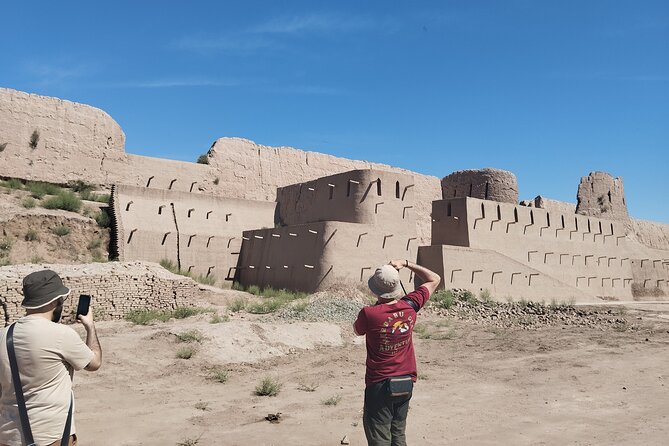
- Ancient fortresses come thick and fast: Ayazkala, Toprak Kala, Guldursun Kala, Kyzyl Kala, Koi Krylgan Kala, Angka Kala, and others are spread across the desert.
- This is a private trip for up to three people: Pickup and drop-off are available, with the standard start at 6:00 a.m. from Khiva’s Ichan Kala west gate.
A three-day road trip with very little wasted space
This experience is best understood as an expedition by road, not a conventional sightseeing tour. You begin in Khiva, Urgench, or Nukus, depending on the arrangement, and travel with a private group of no more than three people.
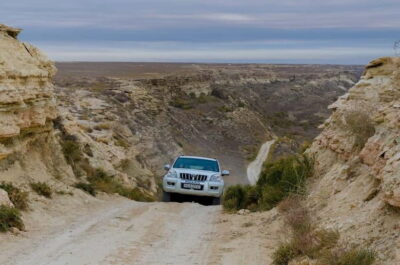
The schedule uses two cars, one sedan and one 4×4. That arrangement matters. Much of the trip is on ordinary roads, but the approach to remote parts of the Aral Sea region and Ustyurt Plateau can be rough. Experienced drivers are accustomed to desert conditions, though no vehicle can make a 1,200-kilometer route feel short.
The supplied audio guide materials give you background during the journey. If you want a live historian, ask ahead about the guide named Olimjon, who is praised for his warm manner and strong grasp of local history. Do not assume he will automatically be assigned to every departure.
More aral sea and ship cemetery tours in Khiva:
- Aral Sea Adventures (2 day)
★ 5.0 · 30 reviews - From Khiva To Aral Sea 2-Days One Night In Yurt Stay
★ 4.6 · 20 reviews - Daytrip From Khiva to Aral Sea Cemetery Of Ships . All In One
★ 4.5 · 18 reviews
Day one: Chilpik, Nukus, Muynak, and the Aral Sea
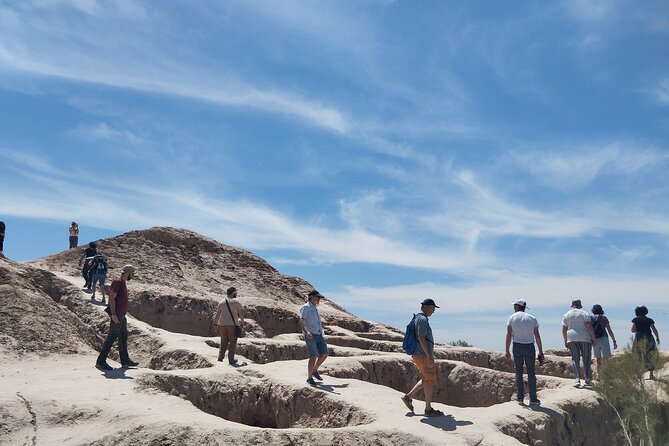
The first stop is Chilpik, also written Shilpiq or Chilpak Kala. This round, roofless Zoroastrian dakhma is more than 2,200 years old, about 15 meters high, and roughly 65 meters across. It sits above the surrounding country, making the 30-minute visit a useful first look at the region’s ancient beliefs and strategic geography.
Admission is not included. The stop is short, so you will want to arrive ready to walk and look rather than expect a long guided archaeological session.
Next comes Nukus and the State Museum of Art named after I.V. Savitsky. This is not filler between desert stops. The museum holds one of the world’s major collections of Russian avant-garde art, along with works connected to Central Asian artists and traditions. You get about an hour inside, and the $7 entrance fee is extra.
I consider this one of the tour’s most valuable contrasts. After a morning of ancient ruins and empty roads, the museum gives you art, politics, and a more urban side of Karakalpakstan. If art matters to you, try to protect this hour. The route contains many ruins, but there is only one Savitsky Museum.
From Nukus, the road continues toward the Aral Sea and Muynak. The shore is described as a place where you can swim, but the larger point is what you see around it: rocky ground, hills, and places that were once under water. The sea’s retreat is not an abstract environmental lesson here. The former waterline is part of the view.
The one-hour stop at the shore may feel brief after such a long drive. Bring patience and realistic expectations. Conditions can vary, and this is an exposed area rather than a developed recreation site.
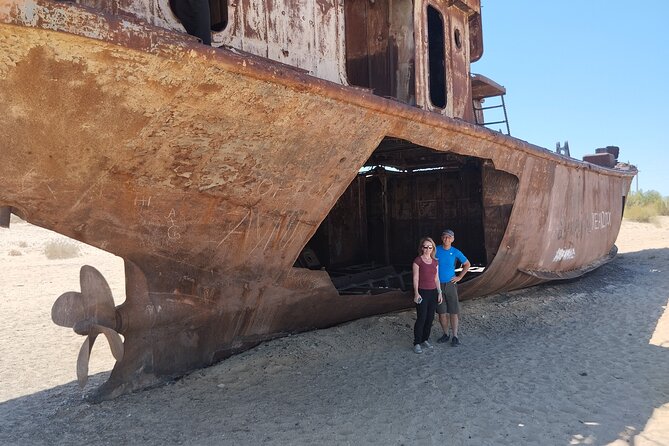
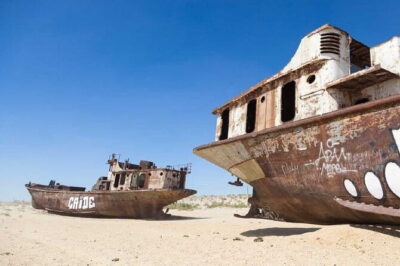
The Muynak ship cemetery is the emotional center of day one. Rusting ships sit far from the water, reminders of the Aral Sea’s collapse during the Soviet period. Once a major inland sea, it has shrunk dramatically within a single lifetime. The hour here is enough to walk around, take photographs, and absorb the strange scale of the disaster.
The Muynak Regional Studies Museum adds local context. It is modest in size, with a 30-minute visit, but it helps connect the ships to the people and communities affected by the shrinking sea. Admission is listed as free here, while the separate Aral Sea Museum fee is $3 per person. Confirm which museum is included at the time of booking, since the names can be used differently.
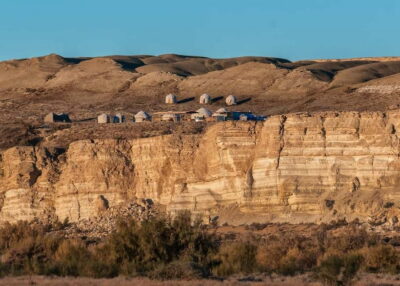
The first night is at an Aral Sea yurt camp. The listed yurt rate is $40, with dinner included in the stated accommodation total of $90 per person for the two camps. Accommodation is not part of the $899 tour price. This is a genuine cost to add when comparing the trip with other options.
Day two: the remote Ustyurt Plateau
Day two moves into the more isolated side of the route. Sudoche Lake is a natural lake near the Aral Sea, with plant and animal life that contrasts with the surrounding dry country. You also visit the remote areas around Urga and Qibla Ustyurt.
This is one of the places where the 4×4 earns its place. The road experience is part of the attraction, but it also means you should expect dust, jolts, and long stretches without city services. Wear practical shoes and keep water close at hand.
Mizdakhan Necropolis follows. It is an ancient cemetery beside the remains of Gyaur Kala and one of Karakalpakstan’s important pilgrimage sites. The scheduled visit lasts about 30 minutes, which gives you time to see the main area but not to study every ruin in detail.
The Ustyurt section includes Qubla Ustyurt and the surrounding fortress sites. Kurgancha Kala, also called Karganshikala or Davlet-Girey Kala, is linked with the 13th century. These ruins are not restored monuments with neat paths and explanatory signs at every turn. You are seeing broad remains in remote country, so the audio material and your driver’s local explanation become useful.
The route also includes Barsa-Kelmes, a salt marsh covering about 1,000 square kilometers. Salt is harvested there today. Its name means a place of no return, a fitting description for a site roughly 200 kilometers from Nukus and far from normal tourist facilities.
A 20-minute stop at Barsa-Kelmes is more about seeing the setting than touring a large attraction. If you prefer museums, cafes, and long time at each monument, this day may test you. If you like remote places and unusual geography, it is likely to be one of the strongest parts.
The second night is at Ayazkala yurt camp. The desert setting, dinner, and night sky are central to the appeal. The trip information specifically points to star observation and desert life as memorable parts of the stay, though exact conditions depend on weather and the camp.
Day three: a chain of Khorezm fortresses
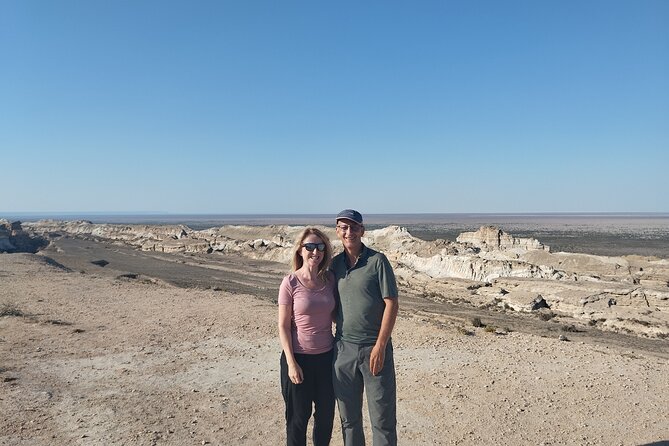
Day three begins with Ayaz Kala, an archaeological site built between the 4th century BCE and the 7th century CE. Its walls and remains sit on high ground above the Kyzylkum Desert. The one-hour visit gives you more time here than at several of the smaller fortresses.
Ayaz Kala works well early in the day because its raised position helps you understand why these sites were built where they were. You can see how a fortress controlled movement across open country. The site is free according to the supplied details, but conditions underfoot can be uneven, so a moderate fitness level is required.
Toprak Kala, or Toprak Kala, dates mainly to the Kushan period in the 2nd and 3rd centuries CE. It served as a royal residence of the kings of Khorezm and earlier as a royal sanctuary. The scheduled half-hour visit is enough for a focused look, but not a leisurely archaeological study. Admission is extra, with fortress tickets generally around $2 each.
The remaining stops come quickly. Guldursun Kala is a fortified town with exterior walls and towers dating to the 12th century. Excavations found pottery, bronze objects, and coins. You get about 20 minutes, so think of it as a sharp visual stop rather than a full tour.
Kyzyl Kala was first built in the Late Antique period, from the 1st to 4th centuries CE, then abandoned and rebuilt in the 12th and 13th centuries before the Mongol invasions. Its ticket is not included. The supplied schedule appears to swap some descriptions between Kyzyl Kala and Koi Krylgan Kala, so ask the operator for the exact order and entrance fees before departure.
Koi Krylgan Kala is another major ancient site, and the route allows about 20 minutes there. It is part of the larger network of Khorezm fortresses that make this region unusual. You do not visit one famous ruin in isolation. You see how many defensive and ceremonial sites are scattered across the desert.
Angka Kala, about 22 kilometers north of Turtkul, has an almost square plan and remains from the 1st to 3rd centuries and the 10th to 12th centuries. The fortress is described as relatively well preserved. Again, the short stop means you will rely on quick observation and the supplied information rather than a long lecture.
The final listed fortress stops include Duman Kala and Guldursun Kala, with the route returning toward Itchan Kala in Khiva. The itinerary labels the last stop as Itchan Kala but describes Duman Kala, so clarify this detail when booking. Khiva’s walled old city is the natural finish for a trip that began at its west gate, but the exact end point can be arranged in Khiva, Urgench, or Nukus.
A few more Khiva trips to weigh up
- Uzbekistan 3 Day Private Tour Tashkent-Bukhara-Samarkand Bullet Train
★ 4.5 · 23 reviews - Desert yurt camp and Mountain tour – 3 days
★ 4.5 · 15 reviews - 3-Day Chimgan Trekking Tour
★ 5.0 · 10 reviews - From Bukhara: 3-Day Yurt Stay, Hiking & Lake Aydarkul
★ 5.0 · 5 reviews
What the $899 group price really covers
The price is $899 per group of up to three people. For three people, that is about $300 per person before accommodation, meals, and fortress admissions. For two people, the per-person cost rises sharply, and a solo booking carries the full group price.
Included are private transportation, an air-conditioned vehicle, hotel pickup and drop-off, and audio guide materials. The use of a sedan and 4×4 is a practical advantage on this route. You are paying for a private vehicle setup, drivers familiar with desert roads, and a very large amount of driving.
You need to budget extra for:
- Two yurt stays and dinners, listed at $90 per person in total
- Savitsky Museum admission, $7 per person
- Aral Sea Museum admission in Muynak, $3 per person
- Fortress tickets, generally about $2 each
- Lunches
That makes the total noticeably higher than the headline fare. Still, splitting the base price among three people can make this a fair deal for such a remote route. The value is strongest when you want a private schedule and a direct route rather than a shared group departure.
Comfort, pace, and practical limits
The start time is 6:00 a.m. from Ichan Kala’s west gate in Khiva. That early departure is necessary if the route is to cover its distance, but you should not book this expecting a relaxed holiday pace.
Transportation time counts toward the three-day duration. Some stops last an hour, while others last only 20 or 30 minutes. You will see many places, but you will not have time to linger at every one.
The tour requires a moderate level of physical fitness and has a minimum age of 15. The main challenges are long sitting periods, desert conditions, rough roads, heat or cold depending on season, and walking around archaeological remains. Carry water, sun protection, sturdy shoes, and a small overnight bag that can stay accessible in the car.
Lunch is not included, and the remote sections may offer limited choices. Ask how meal stops are handled before setting out. Dinner is included with the stated yurt accommodation cost, not with the tour price itself.
The experience is private, which is a real benefit. You can ask for more time at a place that interests you, though the large route means flexibility has limits. Pickup and drop-off can be arranged in Khiva, Urgench, or Nukus, making it easier to fit the trip into a wider Uzbekistan itinerary.
Who will get the most from this route?
I would choose this for someone who wants to understand the Aral Sea through places, not just photographs. It also suits anyone with a strong interest in ancient Khorezm, Soviet-era environmental damage, desert travel, and small museums.
It is a particularly good fit for three friends or relatives who can share the group fare. Art lovers should value the Savitsky Museum, while history fans get an extraordinary run of fortresses in three days.
I would hesitate to recommend it to anyone who dislikes long drives, rough tracks, early mornings, or basic overnight accommodation. The route is ambitious enough that even an enthusiastic sightseer may feel worn out by the final fortress stops.
The five available ratings are all at the top level, with praise focused on polite drivers, professional organization, the desert setting, yurt stays, night skies, and the unusual combination of the Aral Sea and fortresses. Those strengths match the actual design of the trip: the service and logistics matter because the terrain is demanding, while the appeal comes from places that are difficult to reach alone.
Should you book the Aral Sea extended trip?
Book it if you want a serious western Uzbekistan adventure and can accept that road time is part of the experience. The combination of Muynak’s ships, the Aral Sea shore, Savitsky Museum, Ustyurt salt country, yurt nights, and ancient fortresses is hard to reproduce in a shorter outing.
Before paying, confirm the exact route order, which guide will accompany you, the yurt prices, meal arrangements, and the final stops around Duman Kala and Itchan Kala. Also calculate the added entrance fees and accommodation.
I would skip it if you have only a few days in Uzbekistan or want a comfortable, slow-paced tour. For the right person, though, this is one of those demanding journeys where the empty roads are not an inconvenience. They are the reason the trip feels far removed from ordinary sightseeing.
FAQ
Where does the tour start?
The standard meeting point is the west gate of Ichan Kala in Khiva, at 6:00 a.m.
Can the tour start or finish in Urgench or Nukus?
Yes. The tour can start or finish in Khiva, Urgench, or Nukus, according to your preference.
How many people can join the private tour?
The price covers one private group of up to three people. Only your group participates.
How far does the tour travel?
The round trip covers more than 1,200 kilometers over approximately three days.
What vehicles are used?
Two vehicles are used, one sedan and one 4×4. The drivers are experienced with desert conditions.
Are the yurt stays included in the price?
No. Accommodation is extra. The Aral Sea yurt camp is listed at $40, and the Ayazkala yurt camp at $50. The stated combined accommodation and dinner cost is $90 per person.
Are museum and fortress entrance fees included?
No. The Savitsky Museum costs $7 per person, the Aral Sea Museum in Muynak costs $3 per person, and fortress tickets are generally around $2 each.
Is lunch included?
No. Lunch is not included in the tour price.
Can I cancel for a full refund?
You can receive a full refund if you cancel at least three full days before the local start time. Cancellations or changes made less than three full days in advance are not accepted for a refund. If poor weather causes the tour to be canceled, you will be offered another date or a full refund.
Just added around Khiva
- Traditional Khiva Cooking Class with Market Visit & Lunch★ 5.0 · 4 reviews
- Old Khiva Stories with Your Local Guide★ 5.0 · 5 reviews
- A Night In The Kyzylkum Desert [2] From Khiva★ 4.5 · 3 reviews
- Master Class – Uzbek Bread (Khiva)★ 3.5 · 4 reviews
- Khorezm Fortress and KyzylKum Desert Private Tour★ 5.0 · 3 reviews
- Best of Khiva: Exclusive Private Tour!★ 5.0 · 3 reviews
- Uzbekistan 6 Days Private Tour Khiva-Bukhara-Samarkand by Train★ 5.0 · 4 reviews
- Ayaz Kala & Toprak Kala private fortress daytrip from Khiva★ 3.5 · 6 reviews
Aral Sea and Ship Cemetery Tours, compared.
Daytrip from Khiva to Aral Sea Cemetery of Ships. All in one
Read our review →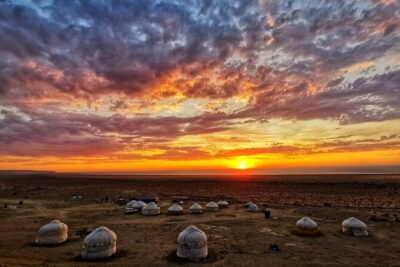
Daytrip From Khiva to Aral Sea Cemetery Of Ships . All In One
Read our review →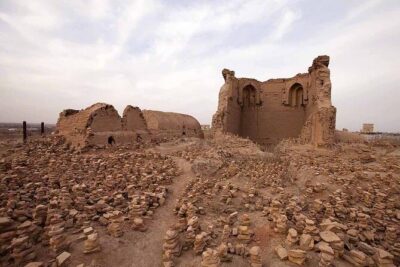
Browse the lists this tour appears in