
Reviewed · ARAL SEA AND SHIP CEMETERY TOURS
2 Days Private Tour To Aral Sea from Nukus.
The most striking part of this two-day trip is the ride across the dried bed of the Aral Sea. You pass seashells, old waterlines, drilling towers, and huge stretches of open desert on the way to a place that was once one of the world’s great inland seas. It is a travel experience with a serious purpose: you see environmental change rather than hear about it in a museum.
I like the combination of the Moynak ship cemetery and museum with a night in a yurt at the Aral Sea. I also like that this is a private trip, so your group can set the pace for photo stops and desert walks. The main drawback is the road itself. This is a remote two-day outing, with long stretches without mobile service and few comforts once you leave the last settlements.
Key points to know before you go
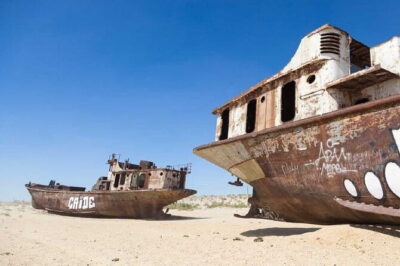
- Moynak puts the Aral Sea story in clear view: Rusting ships sit far from the water they once sailed.
- The dried seabed is part of the route: You can stop for shells, photographs, and views of gas-drilling towers.
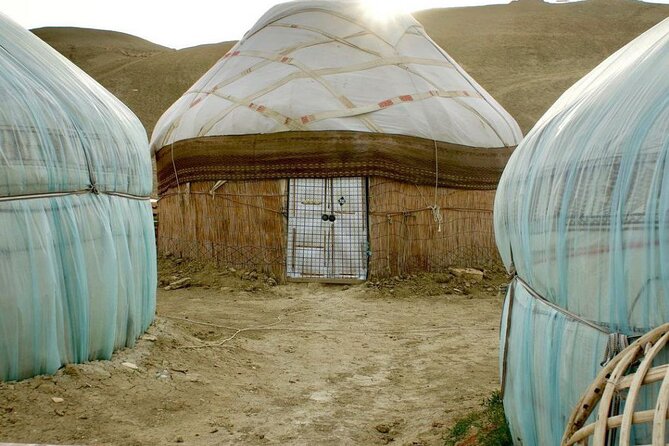
- Besqala Yurt Camp provides the overnight stay: Your package includes one night, dinner, and breakfast.
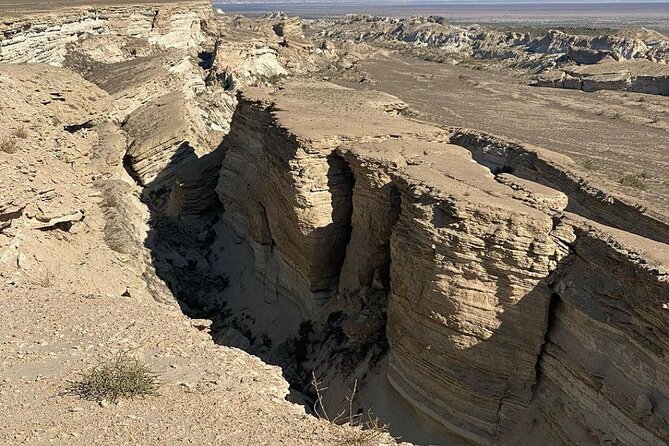
- Ustyurt adds archaeology to the desert journey: Kurgancha Kala and nearby sites connect the route with old caravan travel.
- A private air-conditioned 4×4 matters: The route includes rough, isolated desert sections where ordinary transport would be a poor fit.
- The price is $315 per person: That covers the vehicle, yurt, listed entrance tickets, and meals specified in the package, with some options needing selection at booking.
Why this Aral Sea trip is different
You are not coming here for a conventional beach holiday. The Aral Sea has dramatically retreated, leaving behind a vast dry seabed and a region shaped by environmental hardship. That makes the trip unusual, sometimes stark, and far more thought-provoking than a simple scenic drive.
From Nukus, you head toward northern Uzbekistan through Karakalpakstan. The route passes through Khojely and Kungrad, places that once served as trading points along the Great Silk Road. Today, the road leads into a much quieter world of desert villages, abandoned maritime remains, and isolated settlements.
The trip is best understood as a mix of environmental story, archaeology, and desert travel. You will not spend two days beside open water. Instead, you will see how far the shoreline has moved and how local life has changed with it.
More aral sea and ship cemetery tours in Uzbekistan:
- Daytrip from Khiva to Aral Sea Cemetery of Ships. All in one
★ 4.3 · 52 reviews - Aral Sea Adventures (2 day)
★ 5.0 · 30 reviews - From Khiva To Aral Sea 2-Days One Night In Yurt Stay
★ 4.6 · 20 reviews
Leaving Nukus for Moynak and Kungrad
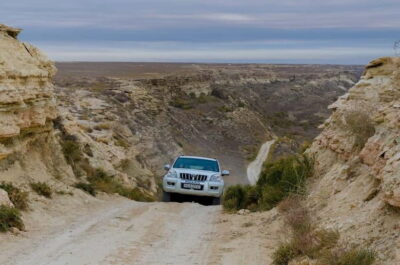
Your driver meets you in Nukus, and the journey begins in an air-conditioned 4×4. That vehicle is not a minor detail. The route includes long desert sections and the dried sea bottom, so a sturdy vehicle with cooling is a real comfort, especially in Karakalpakstan’s strong sun.
The first named stop is Kungrad, reached after passing through Khojely and the Kungrad district. The visit is brief, about 30 minutes, and there is no entrance charge listed. Think of it as a route stop that gives the journey some historical setting rather than a full sightseeing visit.
Kungrad’s connection with old Silk Road trade helps explain why this area matters beyond the Aral Sea story. Settlements here linked distant regions, and the present-day road follows a corridor that has carried people and goods for centuries.
The exact driving schedule is not stated, so you should be ready for a substantial amount of time in the vehicle. Bring water, sun protection, and something to occupy you during the quiet stretches. Comfortable, closed shoes are recommended, along with light clothing made from natural fabrics.
Moynak’s ships and the memory of a working port
Moynak is the emotional center of the first day. The town was once connected to the Aral Sea as a port, but the retreating water left ships stranded on dry ground. At the ship cemetery, you can see the physical result of that change rather than relying on maps or old photographs.
The stop lasts about two hours and includes the local museum and a short documentary about Moynak’s earlier life. That combination is useful. The ships make the scene immediately understandable, while the museum and film provide the local background needed to place what you are seeing in context.
Bring sturdy shoes and expect an exposed, sunny setting. The ship cemetery is not a polished attraction built around comfort. Its power comes from the contrast between the abandoned vessels and the empty ground around them.
This is also a good place to make calls and send messages. Once the trip continues toward the Aral Sea, mobile and internet service may disappear for much of the route. The practical advice is simple: contact family, download anything you need, and handle necessary calls in Moynak or Kungrad before leaving the last settlement.
Crossing the dried seabed toward the water
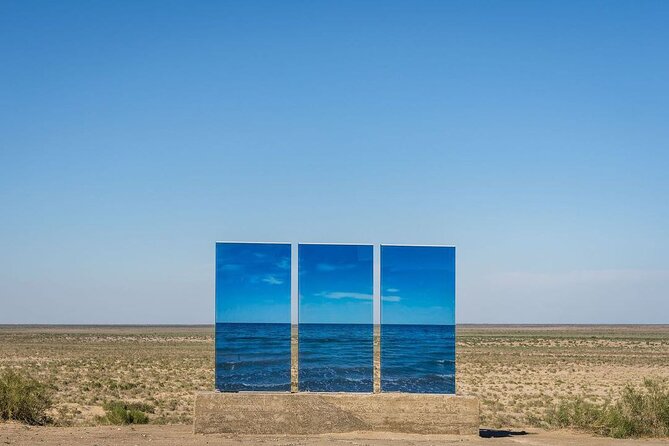
After Moynak, the route continues across the dried bottom of the sea. This is where the journey becomes most unusual. You may stop to photograph dried shells and other traces of the former shoreline, while drilling towers rise in the distance like industrial markers in the desert.
The route also shows the tension between environmental damage and modern resource use. The gas towers are part of the present-day scene, while the shells point to the water that once covered the ground. Together, they give you a sharper sense of how much has changed.
Expect wind, dust, intense sun, and very limited services. Sunglasses, a hat, sunscreen, lip balm, and moisturizer are all sensible additions to your day bag. The tour information notes that Karakalpakstan is sunny for much of the year, so do not treat sun protection as optional.
A Yusell SIM card may work in parts of the remote route, but you should not count on a reliable connection. The point of this section is not speed. It is the chance to see a place where ordinary signs of settlement and communication largely fall away.
A few more Uzbekistan trips to weigh up
- 2 Days Tour to Bukhara and Samarkand from Tashkent by train
★ 5.0 · 53 reviews - Fergana – Golden Valley From Tashkent 1 night / 2 days
★ 4.5 · 41 reviews - Yurt stay and Hiking in the Nurata Mountains tour – 2 days
★ 5.0 · 35 reviews - 2 Days of Tour in Yurt Camp and Aydarkul
★ 5.0 · 15 reviews
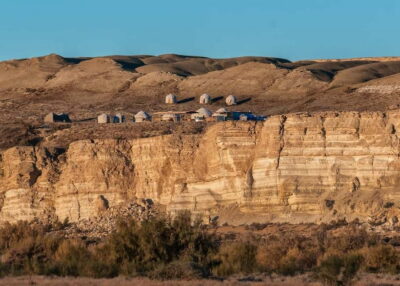
A night at Besqala Yurt Camp
At Besqala Yurt Camp, you leave your luggage in your yurt and continue by vehicle down toward the sea. The plan allows about two hours in the area. You can walk, collect shells, and, when conditions allow, swim.
The wording around swimming deserves a practical note. This is the Aral Sea region, not a standard resort beach, so you should think of swimming as an optional activity rather than the main reason to book. The most important part is reaching the remaining water and seeing it in relation to the enormous dry area around it.
Dinner is included at the yurt camp, as is breakfast the following morning. One night in a yurt gives the tour a welcome change from sitting in a vehicle or moving between formal sights. You also have the chance to look at the night sky away from settled areas, with stars and open darkness forming part of the setting.
The available information does not describe the yurt facilities in detail, so pack with modest expectations. This is a remote camp, not a full-service hotel. A warm layer can be useful because desert temperatures may feel different after sunset, though the exact weather depends on your travel dates.
The strongest praise attached to this trip concerns the comfortable handling of the tour and the spectacular position of the overnight camp. That makes sense: after the long road from Nukus, reaching a yurt near the remaining sea gives the journey a clear high point.
Ustyurt Plateau and Kurgancha Kala
Day two shifts the focus from the sea to the Ustyurt Plateau. You visit Kurgancha Kala, described as a 13th-century caravanserai hidden among the Ustyurt hills. This stop adds a layer of old travel history to a trip already shaped by movement, trade, and changing routes.
A caravanserai was a stopping place for people traveling long distances across difficult ground. Kurgancha Kala helps you picture the practical side of earlier journeys, when traders and guides needed secure places to rest between settlements.
The visit lasts about two hours. The setting is remote, and the attraction is the site itself rather than a large visitor center or busy town. You should wear closed shoes with good grip and be comfortable walking on uneven ground.
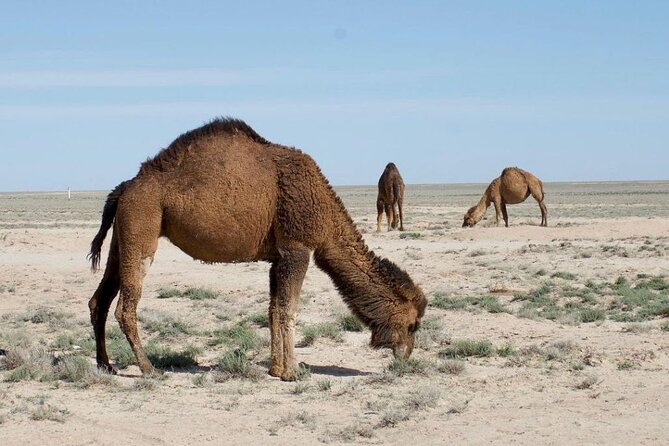
The route also includes Kubla Ustyurt village, about 50 kilometers away. It is described as one of the more remote villages in the region, where local people keep camels. That detail matters because it gives you a look at present-day life in a place that can otherwise seem empty from the road.
Do not expect a long village tour or a large menu of activities. The value lies in seeing how people and animals remain part of this dry environment. The contrast with the abandoned ships is one of the trip’s best features: one stop shows a community shaped by a vanished sea, while another shows people continuing to live with the desert.
Lunch, Mizdakhan, and the old sites near Kungrad
The journey returns toward Kungrad for lunch at a local cafe. Two lunches are listed as included if that option is selected, so check your booking choices carefully rather than assuming every package has the same meal arrangement.
After lunch, you visit the Mizdakhan architectural complex. The site includes the Halifa Erejep mausoleum, dated to the 12th century, Nazlumhansuluw, associated with the 12th to 14th centuries, Shamun Nabi from the 19th century, and ruins of Gaur Kala.
This is a substantial cultural stop after the remote desert sections. The remains bring together different periods and types of architecture, giving you a better sense of Karakalpakstan as a place with long religious and trading connections, not simply an environmental disaster zone.
About two hours is allocated here. That is enough for a focused visit, but not enough to inspect every stone or wander without a plan. If you enjoy historic structures, ask your guide to explain how the different mausoleums and ruins relate to one another. An English-speaking guide is available if you select that option.
The trip ends when you return to Nukus. Since no exact arrival time is provided, avoid booking a tightly timed evening connection unless the operator confirms the schedule directly. Desert driving can be affected by road conditions, stops, and the distance between settlements.
What $315 per person buys you
At $315 per person, this is not a cheap overnight excursion. It is also more than a simple car transfer because the package combines private transport, a remote overnight camp, a guide option, entrance tickets, and meals.
The listed inclusions are:
- One night in a yurt camp
- An air-conditioned 4×4 vehicle
- An English-speaking guide if selected
- Entrance tickets to the monuments and museums on the route
- One dinner
- One breakfast
- Two lunches if that option is selected
The value depends on how much you want the private format. Your group travels alone, and that can make a real difference on a route with long drives and photo stops. You avoid being tied to strangers’ preferences, while still having a driver and, if selected, an English-speaking guide to organize the route.
Insurance and personal expenses are not included. Food restrictions and allergies should be reported in advance so meals can be prepared according to your instructions.
The trip is often booked well ahead, with an average booking time of 56 days. That does not guarantee that every date sells out, but it is a useful reason to plan early if your Nukus schedule is fixed.
Comfort, communication, and preparation
This tour asks more of you than a city excursion. Most travelers can participate, but you need to be comfortable with extended driving, basic remote-camp conditions, strong sun, and stretches without phone or internet service.
Pack light for the yurt night and keep essentials with you in the vehicle. I would bring:
- Closed walking shoes
- Sunglasses and a hat
- Sunscreen and lip balm
- Moisturizer for dry wind
- Water and personal snacks
- A warm layer for the evening
- Any medication or personal items you may need
Mobile service may be absent for half of the route. Send messages and make important calls in Moynak or Kungrad before the final settlement. A Yusell SIM card may work, but the tour information specifically warns that coverage is not dependable.
The private setup is useful here. A group-only vehicle gives you more control over stops, luggage, and quiet time. The trade-off is that the cost is higher than joining a larger group, and the long road remains long even in a private car.
Who should book this two-day journey
I would recommend this trip to you if the Aral Sea’s environmental story is a main reason for visiting Uzbekistan. It suits travelers who want to connect a dramatic place with local history, archaeology, and present-day life rather than simply take a quick photograph and leave.
It also works well for people based in Nukus who want a structured route into the northern part of the country. The driver, 4×4, meals, tickets, and yurt night remove much of the planning burden in a region where independent logistics can be difficult.
You may want to think twice if you need dependable internet, hotel-style comfort, or a short sightseeing day. The route is remote, the communications gap is real, and the Aral Sea experience is more sobering than relaxing.
The tour has a free cancellation policy up to 24 hours before the local start time. Cancellations made later, or changes requested within that period, are not eligible for a refund.
My call on the Aral Sea tour
Book it if you want the full story: Moynak’s abandoned ships, the dry seabed, a night near the remaining water, Ustyurt’s caravan ruins, and the old sites near Kungrad. The private 4×4 format and yurt stay make the high price easier to justify, especially when you value control over the pace and a simpler route through a hard-to-reach region.
Skip it if you are looking for a comfortable resort break or a quick view of the sea. This is a demanding road journey, but it gives you something few ordinary tours can offer: a direct look at a vanished shoreline and the people who continue to live beside it.
FAQ
How long does the private Aral Sea tour from Nukus last?
The tour lasts approximately two days and ends with a return to Nukus on the second day.
What vehicle is used for the tour?
The tour uses an air-conditioned 4×4 vehicle, which is suited to the remote desert route and the dried sea bottom.
Is an English-speaking guide included?
An English-speaking guide is available if you select that option when booking.
Is accommodation included?
Yes. The package includes one night at Besqala Yurt Camp near the Aral Sea.
Which meals are included?
One dinner and one breakfast are included. Two lunches are included if that option is selected. You should provide information about allergies or food restrictions in advance.
Will I have mobile and internet service throughout the trip?
No. About half of the route passes through desert areas without settlements, mobile communication, or internet. You should make necessary calls and send messages in Moynak or Kungrad before continuing. A Yusell SIM card may work in some areas.
Just added around Uzbekistan
- Traditional Khiva Cooking Class with Market Visit & Lunch★ 5.0 · 4 reviews
- Private Intercity Transfer Tashkent – Samarkand – Tashkent★ 3.5 · 3 reviews
- Fergana Valley 2-Day Private Tour★ 5.0 · 4 reviews
- Tashkent Mountain Tour Amirsoy with Transport★ 3.5 · 3 reviews
- Tashkent-Samarkand-Bukhara tour-3nights/4 days★ 5.0 · 5 reviews
- Amirsoy & Chimgan mountain tour from Tashkent★ 5.0 · 3 reviews
- Private Tashkent City Tour★ 5.0 · 3 reviews
- Tashkent Food and Metro Journey★ 5.0 · 4 reviews
Aral Sea and Ship Cemetery Tours, compared.
Daytrip from Khiva to Aral Sea Cemetery of Ships. All in one
Read our review →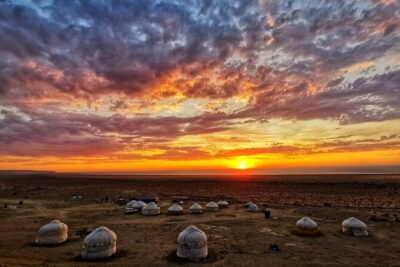
Daytrip From Khiva to Aral Sea Cemetery Of Ships . All In One
Read our review →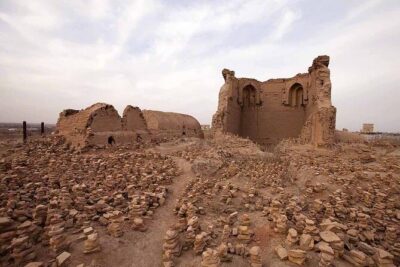
Browse the lists this tour appears in