
Reviewed · CITY TOURS
Private Tashkent City Tour
Tashkent’s story comes into focus on this private tour: the 1966 earthquake, Islamic scholarship, Soviet engineering, Uzbek food, and the polished center of the modern capital all fit into one day. You begin at the Monument of Courage, then move through old Tashkent before finishing among museums, metro stations, fountains, and grand civic buildings.
I like the private format, since your group can keep the pace practical and ask questions without waiting for strangers. I also like the mix of sights: Hazrati Imam and Chorsu Bazaar give you older Tashkent, while the metro and Amir Timur Square show the city’s later chapters. The main drawback is time. Six or seven hours covers a lot, but several stops receive only a quick look.
Key points at a glance
- Start with the 1966 earthquake: The Monument of Courage gives Tashkent’s recent past a clear human focus.
- Spend two hours at Hazrati Imam: This is the day’s most important stop for Islamic architecture, manuscripts, and religious history.
- Eat plov at the Plov Center: Lunch features Uzbekistan’s best-known national dish, though no vegetarian plov option is available there.
- Ride Central Asia’s only underground metro: About 40 minutes gives you a taste of Tashkent’s distinctive Soviet-era transport system.
- Use the private vehicle wisely: Hotel pickup, air conditioning, and included entry tickets reduce the usual half-day planning work.
- Dress for religious sites: Cover your shoulders and knees, and bring a headscarf or shawl for entering holy places.
Why this Tashkent tour works as a first look
This is a strong introduction to Tashkent because it does not limit the day to monuments. You see a memorial, a religious center, a market, decorative arts, public transport, and the city’s central square. That range matters in Tashkent, a capital whose appearance and identity were shaped by both older Central Asian traditions and the Soviet period.
The tour lasts about 6 to 7 hours, starting from your hotel in Tashkent and ending back at the meeting point. An English-speaking guide accompanies you, and an air-conditioned vehicle handles the longer transfers. In a city where the sun can be strong and distances between districts matter, that vehicle is more than a comfort. It helps keep the day moving.
The advertised price is $110 per person. I would judge that price by what is bundled in: private transport, a guide, monument entry tickets, and lunch. You are not simply paying for a driver and a list of photo stops. You are paying for a planned route through several different parts of the capital, with transport and admissions handled for you.
The value improves for a small group that wants a private schedule. Group discounts are offered, though the exact reduction is not specified. If you already know Tashkent well or prefer exploring entirely by metro and on foot, the price may feel less attractive. For a first day in the city, the convenience is easier to justify.
A few more Tashkent trips to weigh up
- Uzbekistan 6 days private tour Tas-Khiva-Buk-Sam-Tas
★ 5.0 · 45 reviews - Uzbekistan 8 Days Private Tour Tashkent-Urgench-Bukhara-Samarkand-Tashkent
★ 4.5 · 38 reviews - Tashkent: Private Full-Day City Tour on a Premium Car
★ 4.8 · 38 reviews
The Monument of Courage and the story of April 26, 1966
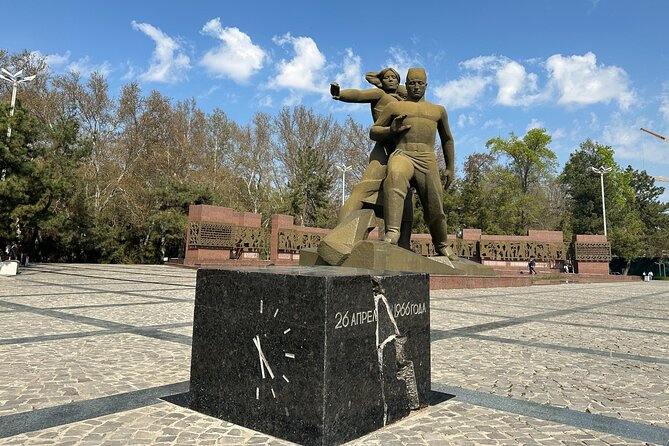
The first stop is the Monument of Courage Earthquake Memorial, with about 30 minutes set aside. It marks the approximate epicenter of the earthquake that struck Tashkent on April 26, 1966.
This is a useful opening because it gives you a clear point of reference for the modern city. Tashkent’s recent development is closely tied to that disaster, and the memorial turns a date into something visible. Your guide can place the later rebuilding of the city in context as the tour continues.
Thirty minutes is enough for the monument and an explanation, but not for a long, quiet visit. Think of this as a short history lesson rather than a major museum stop. I would pay attention to the guide here, since the meaning of the memorial is more important than the amount of time spent taking photographs.
Hazrati Imam, Tashkent’s spiritual center
The tour then gives about two hours to the Ensemble Hazrati Imam, also called the Khazrati Imom Complex. This is the fullest stop of the day and the one where modest clothing matters most.
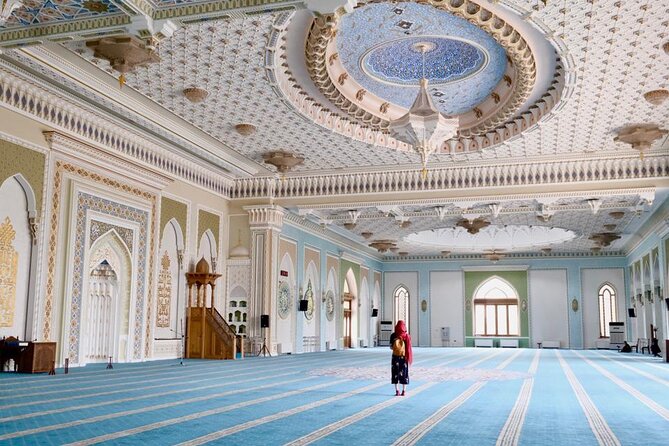
The complex includes the functioning Hazrati Imam Friday Mosque, built in 2007, along with the Barak-Khan Madrassa from the 16th to 18th centuries. The madrassa now serves as a shopping area, so you get both religious architecture and a chance to browse local crafts or souvenirs.
The Tellya Sheikh Mosque dates from the 19th century. The Muyi Moborak Library holds rare Oriental manuscripts, including the 7th-century Caliph Osman Koran. The complex also includes the mausoleum of Abu Bakr Mohammed Kaffal Shashi, described as one of the first Koran preachers in Central Asia and a noted scholar.
I like the way this stop brings several layers together. You can see an active place of worship, older madrassa architecture, a manuscript collection, and a mausoleum in one setting. Two hours gives your guide room to explain what you are seeing instead of racing you from doorway to doorway.
Dress with care. Men and women should cover their shoulders and knees. Avoid tight, revealing, or transparent clothing. Women should carry a headscarf or shawl to cover their hair when entering holy places. This is not a minor packing detail. Wearing suitable clothing makes the visit smoother and shows respect for a functioning religious site.
Chorsu Bazaar and the four roads of old Tashkent
Next comes Chorsu Bazaar, the commercial heart of the city. The name means four roads in Uzbek, a fitting description for a market that has served as a central meeting and trading place for hundreds of years.
The tour allows about an hour here. That is enough to get a feel for the market, walk through the main areas, and see the everyday side of Tashkent. I would use the time to look beyond the most obvious displays. Markets tell you what a city cooks, buys, preserves, and carries home.
Chorsu is also a good counterpoint to Hazrati Imam. The complex is formal and devotional. The bazaar is practical and social. You move from scholarship and worship to the ordinary business of food and trade.
One hour may feel short if you enjoy markets. You might want to linger over every stall, but the rest of the route still includes lunch, a museum, the metro, and Amir Timur Square. Stay aware of the meeting time so the market does not take space from the later stops.
Same Silk Road, a completely different kind of day:
- Best of Tashkent Mountains: Amirsoy, Chimgan & Charvak Trip
★ 4.8 · 567 reviews - Samarkand One Day Tour – Departure From Tashkent
★ 5.0 · 313 reviews - Tashkent City Tour
★ 5.0 · 121 reviews - Amirsoy, Chimgan & Charvak Full-Day Adventure
★ 4.9 · 82 reviews
Lunch at the Plov Center
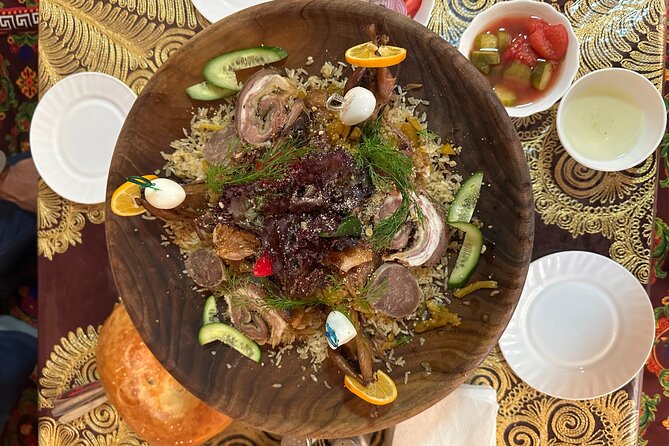
Lunch features plov, Uzbekistan’s best-known national dish. Plov is a rice-based meal generally associated with meat, carrots, and other seasonings, though the exact preparation is not specified here. The important point for planning is that lunch is arranged at the Plov Center, and there is no vegetarian plov option there.
If you are vegetarian, tell the tour provider in advance so a different lunch can be offered. Do not wait until you arrive. This is the one food restriction specifically addressed in the tour details, and advance notice is the sensible way to avoid a problem.
For many people, plov is not just fuel between monuments. It is one of the clearest ways to connect with Uzbek food culture. I like that lunch is built into the sightseeing day rather than left for you to organize while watching the clock.
The meal also affects the pace. After the morning’s walking at Hazrati Imam and Chorsu, a proper lunch gives you a break before the museum and metro. If you prefer a light meal or have dietary needs beyond vegetarian food, ask about arrangements before booking.
Uzbek applied arts in a former mansion setting
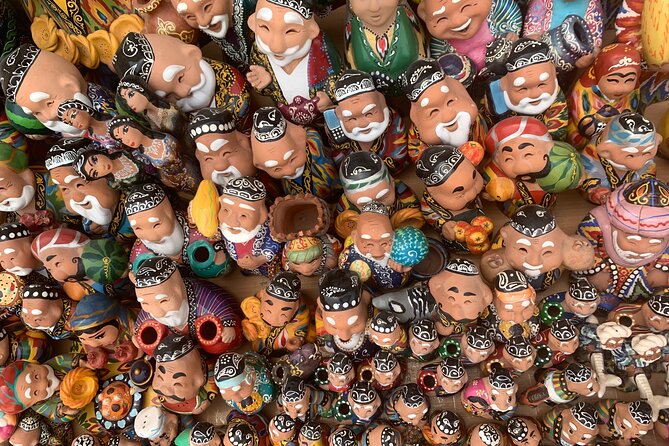
The Uzbekistan State Museum of Applied Art receives about an hour. Founded in 1997, it holds more than 7,000 works made by Uzbek artisans from the first half of the 19th century through the present.
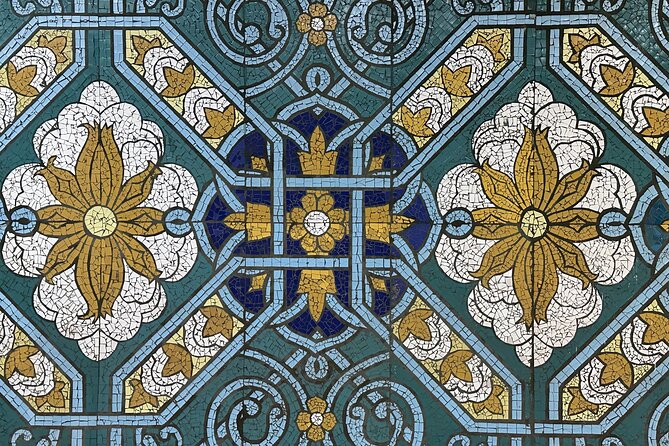
This stop adds visual detail to the day. After seeing religious buildings and a food market, you get a closer look at decorative traditions and handmade objects. The collection can help you recognize patterns, materials, and design ideas that may otherwise pass quickly as you walk through shops or historic buildings.
An hour is a sensible amount of time for a focused visit, although art lovers may wish for more. The museum is best approached as a concentrated introduction rather than a full study of Uzbek craftsmanship. Ask your guide to point out the pieces that best explain local styles, since the collection is large.
The museum is also a useful shopping filter. After seeing carefully made objects in a museum setting, you may look at market goods with a better sense of quality and design. The tour does not promise shopping time here, so do not count on a long buying session.
Forty minutes below Tashkent on the metro
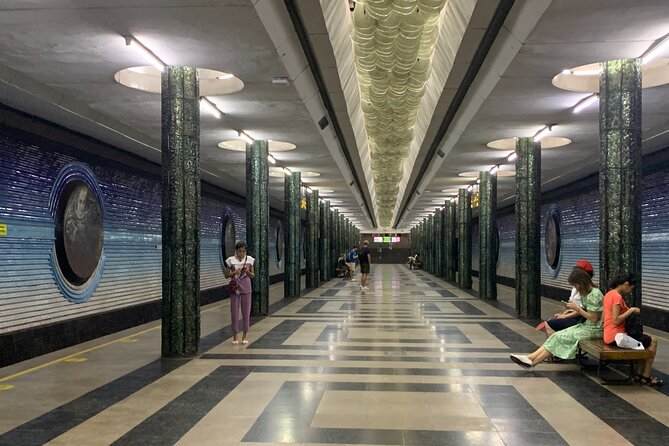
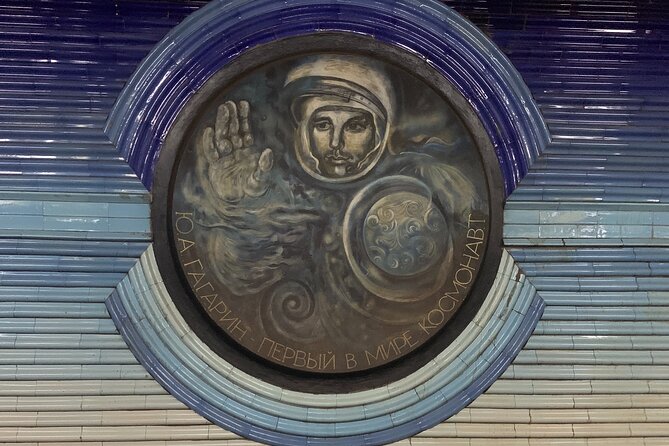
The Tashkent Metro is one of the day’s most distinctive experiences. Built in 1977, it is the only underground metro system in Central Asia, and the tour allows about 40 minutes for a ride.
This is not merely a practical transfer. The metro gives you a look at Soviet-era city planning and public architecture. It also changes the rhythm of the tour. Instead of viewing the capital from a private vehicle, you briefly use the system that serves the city itself.
Forty minutes will not cover the entire network, and the details of the ride are not specified. Still, it is enough to experience the system and see why it belongs on a city tour. If you enjoy architecture, transport, or urban history, this may be one of the most memorable parts of the day.
Keep your expectations sensible. The metro segment is a sample, not an extended station-by-station tour. The private vehicle remains the main way you move between the day’s sights.
Amir Timur Square and the modern capital
The final listed stop is Amir Timur Square, with about 50 minutes. This green public space includes flowers, fountains, and some of Tashkent’s most important political and cultural buildings.
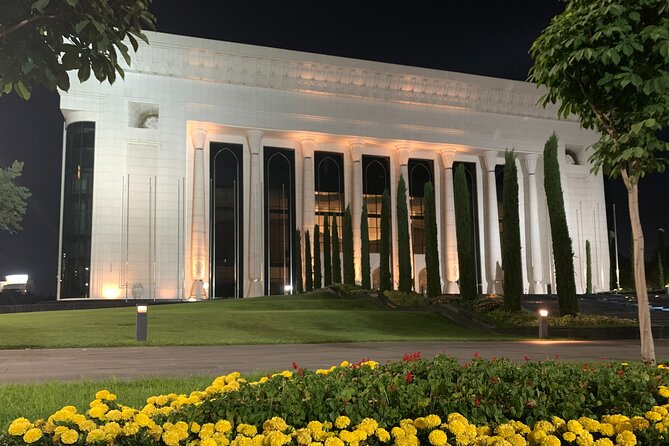
At the center is a statue of Amir Timur, known in Europe as Tamerlane, on horseback. Around the square are the Hotel Uzbekistan, built in 1974, the University of Law, formerly a women’s gymnasium, the Amir Timur Museum, the Tashkent Clock Towers, and the Uzbekistan Forums Palace.
The clock towers have an unusual story. The first was built in 1947 to house a clock mechanism from Eastern Prussia, brought to Tashkent as a war trophy by the watchmaker Ayzenshteyn. Details like this give the square more character than a simple photo stop.
This is a good place to finish because it shows the official face of present-day Tashkent. After the earthquake memorial, old religious center, bazaar, museum, and metro, the square ties together the city’s public identity and modern civic life.
Fifty minutes is enough for an orientation walk and photographs. It is not enough to fully visit every building listed around the square. Treat the stop as a guided overview unless your guide confirms that an interior visit is possible.
Private transport, meeting point, and pace
Pickup is offered from your hotel in Tashkent, and the activity ends back at the meeting point. The stated meeting point is Hotel Uzbekistan at Mirzamakhmud Musakhanov Street 45, Tashkent. Since the tour description also says the day starts from your hotel, confirm the exact pickup arrangement when you book.
The air-conditioned vehicle is useful in practical ways. It protects you from heat between stops, avoids the need to work out local transfers, and lets you carry shopping or personal items without making the whole day a walking exercise. The metro ride remains part of the experience, but you are not expected to navigate the entire city by public transport.
This is a private activity, so only your group participates. That makes it a good match for couples, families, or friends who want to ask questions and manage the day together. It is also helpful for first-time visitors who want structure without joining a large coach group.
Most people can participate, and the route is near public transportation. The available details do not promise a fully accessible itinerary, so anyone with specific mobility needs should ask the provider before booking.
What is included and what costs extra
The English-speaking city guide, air-conditioned vehicle, plov lunch, and entrance tickets to the monuments are included. This removes several small expenses that can make a full day harder to budget.
Photography and video charges are the main stated extra. The fee is $5 for photography cameras, while phone-camera photography is free. If you carry a dedicated camera, keep a little extra cash available and ask before taking pictures inside a site.
Free cancellation is available if you cancel at least 24 hours before the experience start time. Cancellations made less than 24 hours before the start are not refunded, and changes inside that period are not accepted. The cut-off follows local Tashkent time.
Who should book this six-hour city tour?
I would choose this tour for a first visit to Tashkent, especially if you want the main sights covered in one organized day. It suits you best if you value a private guide, hotel pickup, air conditioning, and a planned lunch more than an entirely independent route.
It is also a good choice for anyone interested in seeing several sides of Uzbekistan’s capital. You get religious sites, a market, food, applied arts, public transport, and central monuments rather than six versions of the same attraction.
You may prefer another plan if your main goal is slow market shopping, extensive museum time, or a dedicated food tour. The schedule is full, and the two-hour Hazrati Imam visit is the only long stop. The other attractions receive between 30 and 60 minutes.
Only three published ratings are available, with a perfect five-star average. The written feedback highlights the guide and driver, along with learning a lot about Tashkent and Uzbekistan. Since no guide names are provided, you cannot request a particular guide from the information available, but the English-speaking guide is central to the experience.
Final booking advice
Book this tour if you want an efficient, private introduction to Tashkent with the major practical details handled for you. The strongest reasons are the wide range of sights, the included plov lunch, the metro ride, and the extra comfort of hotel pickup.
Before you confirm, check three things: your exact pickup point, your clothing for Hazrati Imam, and your lunch needs. If you are vegetarian, notify the provider in advance. If you plan to use a camera, remember the $5 photography charge.
For $110 per person, the tour offers solid value for a first day, particularly for a small private group. Its weakness is not poor planning but limited time. You will get a useful city portrait, not an unhurried study of every museum, mosque, and market stall.
FAQ
How long does the Private Tashkent City Tour last?
The tour lasts approximately 6 to 7 hours, including sightseeing and lunch. It starts from your hotel in Tashkent and ends back at the meeting point.
Is hotel pickup included?
Pickup from your lodging is offered. The stated meeting point is Hotel Uzbekistan at Mirzamakhmud Musakhanov Street 45 in Tashkent, so confirm the precise pickup details when booking.
Is this a private tour?
Yes. Only your group participates in the activity.
Is lunch included?
Yes. Lunch includes plov, the national dish of Uzbekistan.
Is there a vegetarian option?
There is no vegetarian plov option at the Plov Center. If you are vegetarian, notify the provider in advance so a different lunch can be arranged.
What should I wear at Hazrati Imam?
Men and women should wear clothing that covers the shoulders and knees. Avoid tight, revealing, or transparent clothing. Women should bring a headscarf or shawl to cover their hair when entering holy places.
Is photography free?
Phone-camera photography is free. Photography with a dedicated camera costs $5, and video charges are also listed as $5.
Just added around Tashkent
- Private Intercity Transfer Tashkent – Samarkand – Tashkent★ 3.5 · 3 reviews
- Tashkent Mountain Tour Amirsoy with Transport★ 3.5 · 3 reviews
- Tashkent-Samarkand-Bukhara tour-3nights/4 days★ 5.0 · 5 reviews
- Tashkent Food and Metro Journey★ 5.0 · 4 reviews
- Amirsoy & Chimgan mountain tour from Tashkent★ 5.0 · 3 reviews
- Silk Road Secrets Tour in Uzbekistan★ 5.0 · 4 reviews
- Transfer Tashkent Airport / Railway Station – Hotel★ 3.5 · 3 reviews
- Tashkent City Tour with Hotel Pickup and Drop off★ 4.5 · 4 reviews
City Tours, compared.
Private Samarkand City Tour With Transportation
Read our review →
A City Tour Of Samarkand: The Pearl Of The East
Read our review →
Khiva Historical City Highlights Guided Walking Tour
Read our review →
Samarkand Historical City Highlights Guided Walking Tour
Read our review →
Private Guided Tour Samarkand city history and culture
Read our review →
Samarkand City Tour with a Professional Photographer
Read our review →Browse the lists this tour appears in