
Reviewed · HISTORICAL TOURS
Samarkand Historical City Highlights Guided Walking Tour
Samarkand’s greatest sights are close enough to connect on foot, but they make more sense when someone explains the people, faith, and ambition behind them. This tour links Gur-i Amir, Registan Square, Bibi-Khanym Mosque, and Shah-i-Zinda in one half-day route through the city’s Timurid core.
I like the chance to see both grand monuments and everyday Samarkand at Siab Bazaar. I also like the small group limit of 15 and the strong English-language guiding, especially from Charos, who is praised for explaining both Samarkand and wider Uzbek history clearly.
The main drawback is the length and heat. The walk can run beyond 10,000 steps, and admission fees are not included, so you need comfortable shoes, sun protection, and extra cash for the monuments.
Key points at a glance
- Four hours on foot: This is a serious sightseeing walk, not a short orientation stroll.
- Six important stops: The route covers Timurid mausoleums, Islamic schools, mosques, a market, and a historic cemetery.
- Charos may guide the walk: She is specifically praised for strong English and careful preparation.
- Entry fees are extra: The $24 price pays for the guide and taxes, but not access to the main paid monuments.
- Siab Bazaar adds local life: The market breaks up the monumental sightseeing with food, shopping, and daily activity.
- A group of up to 15: Small enough for questions, but not the same as a private tour.
Why this is a useful first look at Samarkand
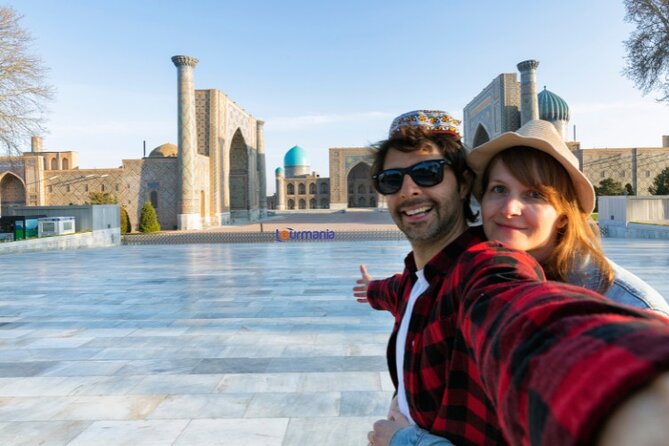
Samarkand can feel like a city of separate wonders. One moment you are facing a blue-tiled mausoleum, and a few minutes later you are crossing a market or climbing toward a hilltop mosque. This tour gives those places a connected story.
The central theme is the city’s role along the Silk Road and under Timur, also called Tamerlane. You will hear how Samarkand became the center of a powerful Timurid state and how rulers used architecture to express faith, authority, and family pride.
I especially like the range of buildings. Gur-i Amir is a royal tomb, Registan is a public square surrounded by madrasas, Bibi-Khanym is a huge mosque, Hazrat Khizr is a smaller religious site tied to legend, and Shah-i-Zinda is a line of mausoleums. The mix keeps the walk from feeling like six versions of the same monument.
The format suits you if you want context before exploring on your own. A guide can point out architectural details that are easy to miss, explain the connection between Timur and the city, and help you understand why these buildings matter beyond their blue tile.
A few more Samarkand trips to weigh up
- Samarkand: Historical Monuments Guided Walking Tour
★ 4.8 · 446 reviews - Samarkand: Historical Monuments Group Walking Tour
★ 5.0 · 29 reviews - Private Guided Tour Samarkand city history and culture
★ 5.0 · 22 reviews
Gur-i Amir and the memory of Timur
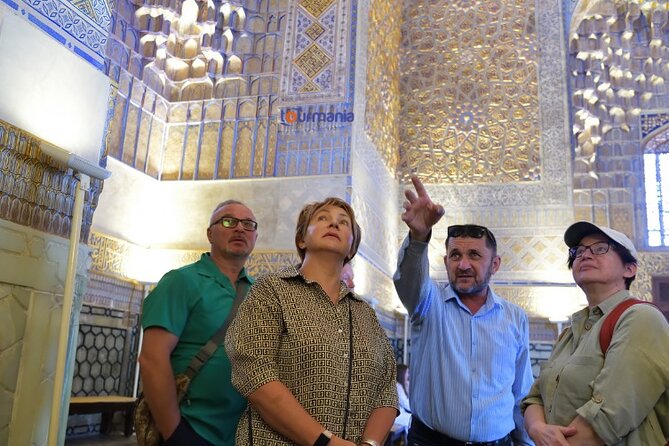
The tour begins with the Amir Temur Mausoleum, usually called Gur-i Amir, or Tomb of the King. Its importance is immediate: this is the burial place of Timur, the 14th-century conqueror who founded the Timurid Empire.
Allow about 30 minutes here. That is enough for an introduction to the site and its main features, though you may want more time if you enjoy photographing tilework and domes.
The building is known for its intricate decoration and tall dome. Inside, the atmosphere shifts from the broad scale of Samarkand’s public monuments to a more focused space of royal burial and remembrance. Your guide can help place Timur within the history of the city rather than treating the mausoleum as a pretty photo stop.
This first stop also sets up the rest of the walk. Timur’s rule, his family, and the culture that grew under the Timurids appear again at Registan, Bibi-Khanym, and Shah-i-Zinda.
Entry is not included, so keep the additional ticket cost in mind from the start. Since the exact amount can change, check the current fee when booking or on arrival.
One hour at Registan Square
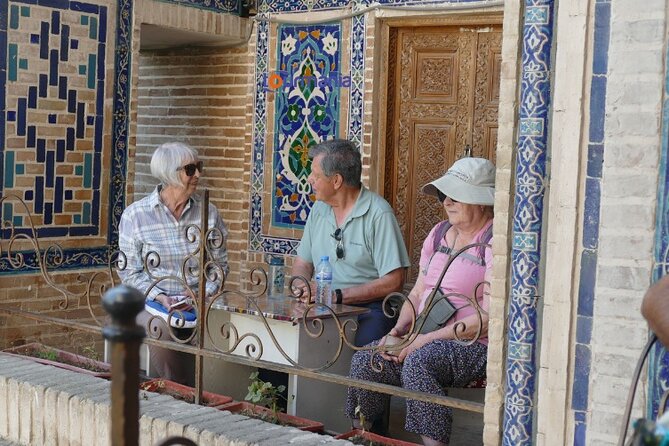
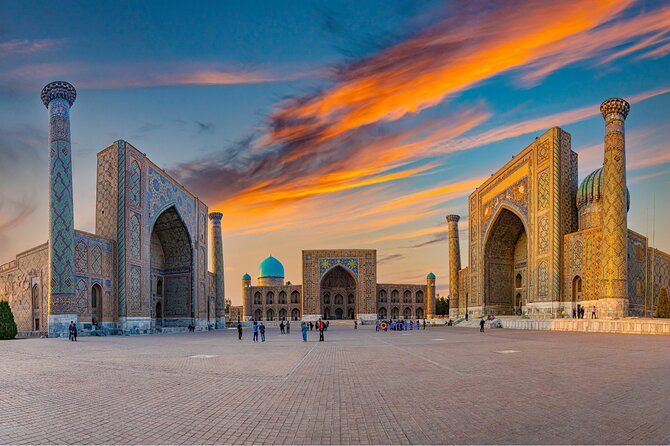
Registan is the tour’s longest stop, with about an hour set aside. That makes sense. This is Samarkand’s best-known public space and the place where the city’s educational and civic life once gathered.
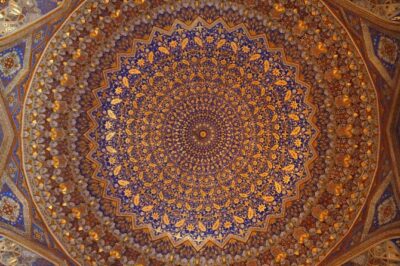
The square is framed by three ornate madrasas. Their decorated facades create the famous picture of Samarkand, but the guide’s explanation adds much more than a photograph can provide. You will learn how the square functioned as a center of study and public life, and how its architecture reflects Persian, Turkic, and Mongol influences.
I like having a full hour here because Registan rewards a slow look. Check the patterns above the entrances, compare the three buildings, and notice how the square is designed to feel larger than the individual structures. If you rush through, you will remember only blue tiles. If you pause, you begin to see the planning and symbolism.
This is also where the pace of the walk becomes clear. The stop itself is not physically demanding, but the total route adds up. If you have mobility concerns, ask the provider for current details before booking, since the experience is built around walking between major sites.
Admission is extra here as well. For many visitors, Registan is the one place where paying to enter feels essential, since the courtyards and interior details complete the experience.
Bibi-Khanym Mosque and Timur’s grand ambition
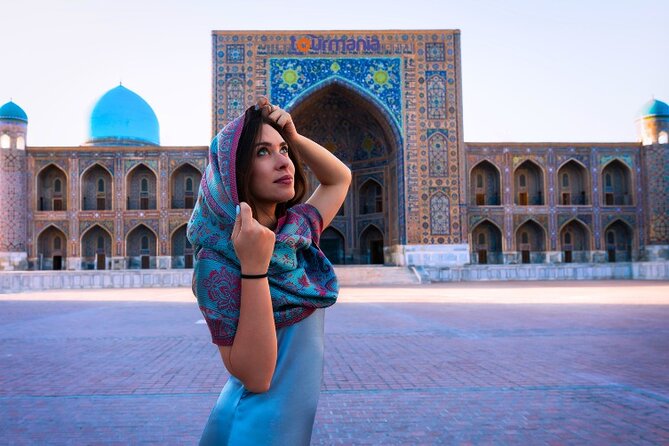
After Registan, the route continues to Bibi-Khanym Mosque for about 40 minutes. The mosque is associated with Timur and is described as a monument of love built for his wife, giving the stop a personal story alongside its political and religious meaning.
Bibi-Khanym is famous for its huge scale and Timurid design. It was meant to impress, and it still does. The mosque’s size helps you understand the resources and ambition that Timur brought to Samarkand.
A guide is useful here because the building can seem overwhelming at first. Look beyond the broad facade and consider the engineering, decoration, and intended effect. The stop also gives you a chance to compare Bibi-Khanym with Registan. Registan is a planned public square with three schools, while Bibi-Khanym is centered on a single monumental mosque.
The planned 40 minutes is enough for a clear explanation and a look around, though the site may feel brief if you want a long photo session. Again, admission is not included. The tour price remains low because the $24 covers the professional guide and taxes, not the tickets to the main attractions.
Same Silk Road, a completely different kind of day:
- Private Samarkand City Tour With Transportation
★ 5.0 · 149 reviews - A City Tour Of Samarkand: The Pearl Of The East
★ 5.0 · 133 reviews - Full Day Private Tour in Seven Lakes from Samarkand
★ 5.0 · 94 reviews - Samarkand One Day Tour: one day walking & group tour
★ 4.4 · 87 reviews
Siab Bazaar adds a taste of present-day Samarkand
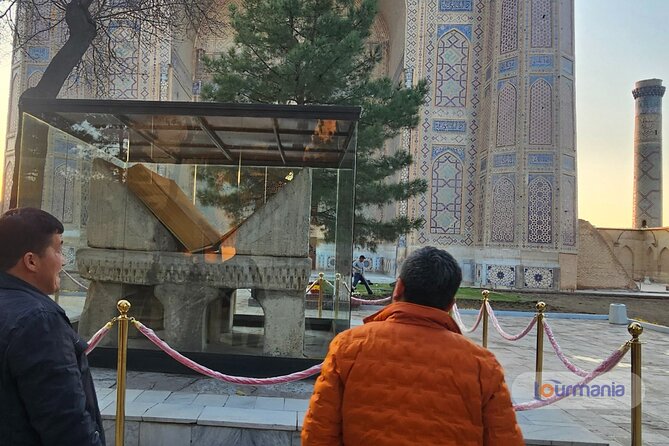
Siab Bazaar is the shortest stop, at about 20 minutes, but it may be one of the most useful. Samarkand is not only a collection of restored monuments. It is also a living city, and this market brings you closer to its daily rhythm.
The bazaar is described as the city’s oldest and largest market, located near Bibi-Khanym. It dates back to the 14th century and covers more than seven hectares. That is a large area, so do not expect to see every section in twenty minutes.
Instead, use the stop as a quick change of pace. After several major monuments, you can look at local food, goods, and ordinary shopping activity. The market helps connect the monumental Samarkand of Timur with the city you are visiting today.
Because the stop is short, you may need to choose between browsing and asking the guide questions. I would stay close to the group and treat this as a focused introduction rather than free time for a full market visit.
There is no admission charge for this stop, which helps balance the extra fees at the monuments.
Hazrat Khizr Mosque on the historic route
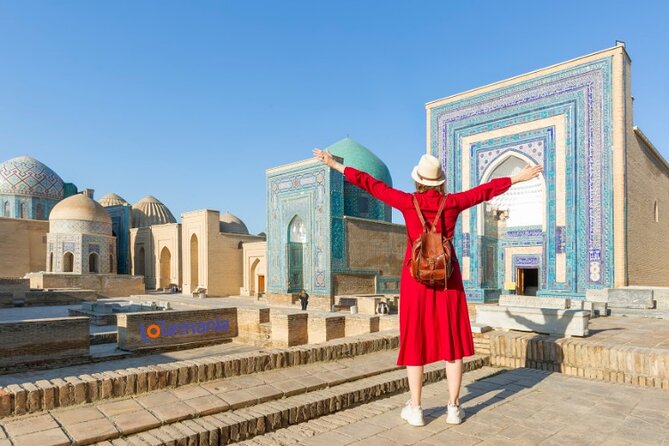
The Hazrat Khizr Mosque receives about 20 minutes. It is a mid-19th-century building linked to the legendary Islamic prophet Khizr and built on the site of an older mosque.
This stop offers a different kind of history. Gur-i Amir and Bibi-Khanym connect strongly to royal power and Timurid ambition. Hazrat Khizr brings the focus toward religious tradition, local memory, and a site that developed over several periods.
The mosque also has links to modern history, according to the tour description. That makes it a useful bridge between Samarkand’s medieval reputation and its later life.
Twenty minutes is enough for a concise explanation and a look at the building, but do not expect a long worship or architectural study. Admission is extra, and the route’s walking time matters more here than at the large monuments.
Shah-i-Zinda and the final stretch
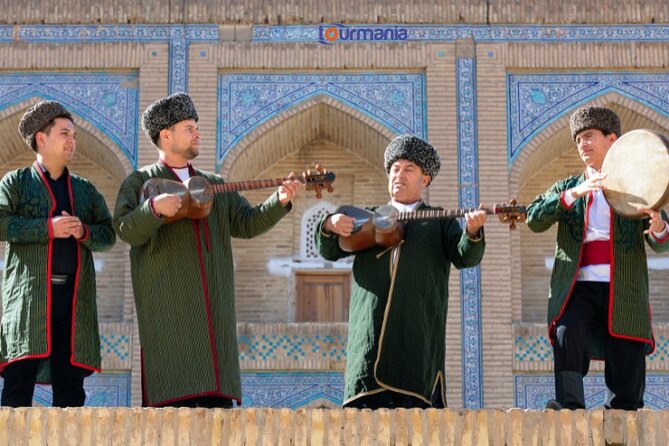
Shah-i-Zinda means The Living King. This necropolis is the final listed stop and one of the most visually striking places in Samarkand.
The complex is made up of mausoleums arranged along a route, with each building offering its own patterns, colors, and details. The craftsmanship is the main draw. Instead of one enormous structure, you get a sequence of smaller sacred buildings that create a more intimate experience.
The scheduled visit is about 20 minutes. That is a tight window for a place with so much to see, especially if you stop often for photographs. It is worth asking at the start how much time is planned for the complex and where the walk ends.
There is also a practical issue with the route information. The stated stop sequence places Gur-i Amir first and Shah-i-Zinda last, and one tour experience describes the walk in that direction. The meeting details separately list a start location using the map code MX6Q+H4 and an end address at the Gur-i Amir complex. Confirm the exact starting point and finishing point with Tourmania before setting out, since the written details do not line up perfectly.
Walking distance, weather, and timing
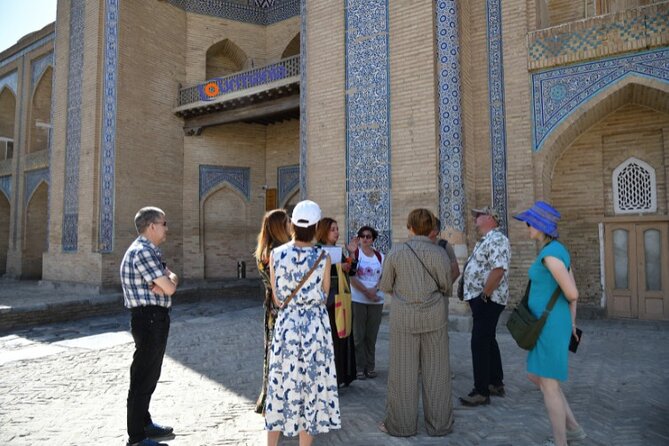
The tour starts at 9:00 a.m. and lasts about four hours. That morning start can help you get the major sights done before the day becomes hotter, but the route still includes a lot of outdoor walking.
One participant counted more than 10,000 steps. You should treat that as a useful warning rather than a precise promise. The actual distance depends on the guide’s route and how much time you spend moving inside each complex.
A different timing suggestion is worth considering: late afternoon may feel more comfortable in strong heat. That conflicts with the published 9:00 a.m. start, so ask whether another departure is possible before booking. The experience also requires good weather. If poor weather causes cancellation, you are offered another date or a full refund.
Wear shoes you can walk in for several hours. Bring water, sun protection, and a hat. These are simple choices, but they can decide whether the final stop feels inspiring or exhausting.
What the $24 price really covers
At $24 per person, this is an inexpensive way to get a structured introduction to Samarkand’s main historic center. The value comes from the guide, the route planning, and the historical links between the sites.
The price includes a professional guide and all taxes and fees. It does not include admission tickets. Since you will visit several major paid monuments, your final cost will be higher than $24.
That is not necessarily a problem. Paying the entry fees separately keeps the headline price low, but you need to budget for them. If you prefer a simple all-in price, this arrangement may feel less convenient.
The group can include up to 15 people. That is small enough to keep the walk manageable and allow questions, though you should not expect the same flexibility as with a private guide. Group discounts are available, which may improve the value for families or larger parties.
The tour is booked an average of 17 days ahead. That suggests you should not leave it until the last minute if your Samarkand dates are fixed.
The guide can shape the whole experience
The most praised part of this tour is the guiding. Charos is singled out by name and is described as well prepared, strong in English, and able to explain both Samarkand and Uzbek history.
That matters on a route with so many large monuments. Without clear guidance, the sites can blur together into tile, domes, and grand names. A good explanation gives each place a role: royal tomb, school complex, mosque, market, later religious building, and necropolis.
The tour information does not promise that Charos will lead every departure, so ask who is scheduled if her guiding is important to you. The professional guide is included, and the experience has a rating of 4.8 from 22 ratings, with 95 percent recommending it. Those figures point to a consistently well-received service, while the small number of ratings means you should still judge it alongside the practical details.
Who should book this Samarkand walk?
I would choose this tour if you are visiting Samarkand for the first time and want the main monuments explained in one connected outing. It is also a good fit if you prefer walking to arranging separate taxis and guides for each site.
History fans will get the most from the route, especially if Timur, Islamic architecture, and the Silk Road interest you. The combination of grand monuments and Siab Bazaar also works well for anyone who wants more than polished facades.
You may want a different plan if you dislike long walks, struggle in heat, or want plenty of time inside each site. The four-hour schedule is packed, and the short 20-minute visits at Siab Bazaar, Hazrat Khizr, and Shah-i-Zinda leave little room for lingering.
Free cancellation is available up to 24 hours before the start time for a full refund. Changes or cancellations inside that 24-hour window are not accepted for a refund.
Should you book it?
Book this walk if you want an efficient first day in Samarkand, can handle a long distance on foot, and are comfortable paying monument entry fees separately. The route covers the city’s essential historic sights, while Siab Bazaar gives the morning a useful dose of daily life.
I would be especially inclined to book if Charos is confirmed as your guide. If the heat is intense or you want a slower visit, ask about departure times, exact meeting and ending points, and current admission costs before paying.
FAQ
How long does the Samarkand Historical City Highlights Guided Walking Tour last?
The tour lasts approximately four hours.
What time does the tour start?
The scheduled start time is 9:00 a.m.
Which places are visited?
The route includes Gur-i Amir, Registan Square, Bibi-Khanym Mosque, Siab Bazaar, Hazrat Khizr Mosque, and Shah-i-Zinda.
Are admission tickets included?
No. Admission tickets to the paid monuments are not included in the tour price.
What is included in the $24 price?
The price includes a professional guide and all taxes and fees.
How large is the tour group?
The activity has a maximum of 15 participants. Group discounts are available.
Is the tour suitable for most people?
Most people can participate, but the tour involves substantial walking. One account of the route counted more than 10,000 steps.
Can I cancel for a full refund?
Yes. You can cancel at least 24 hours before the local start time for a full refund. Cancellations or changes made less than 24 hours before the start time are not accepted for a refund.
Just added around Samarkand
- The Golden City of Samarkand: A Self-Guided Audio Tour★ 4.0 · 4 reviews
- Samarkand Capital of Amir Timur Private Tour with Transport★ 5.0 · 3 reviews
- Shakhrisabz Private Day Tour from Samarkand★ 5.0 · 4 reviews
- Seven Lakes Panjakent: One-Day Adventure from Samarkand★ 5.0 · 3 reviews
- Explore Samarkand Guided Tour with Transfers★ 5.0 · 3 reviews
- Samarkand Local Family Cooking Class and Siyob Bazaar Tour★ 5.0 · 5 reviews
- Ancient and Modern tour in Samarkand with Transport★ 5.0 · 3 reviews
- Penjikent Day Trip From Samarkand★ 5.0 · 3 reviews
Historical Tours, compared.
Khiva Historical City Highlights Guided Walking Tour
Read our review →
Private Guided Tour Samarkand city history and culture
Read our review →
Bukhara Historical City Highlights Guided Walking Tour
Read our review →
Samarkand Walking Tour History Culture and Hidden Gems
Read our review →
Bukhara in a Day History, Culture, and Local Insight Private Tour
Read our review →Browse the lists this tour appears in