
Reviewed · CHIMGAN AND AMIRSOY MOUNTAIN TOURS
3-Day Chimgan Trekking Tour
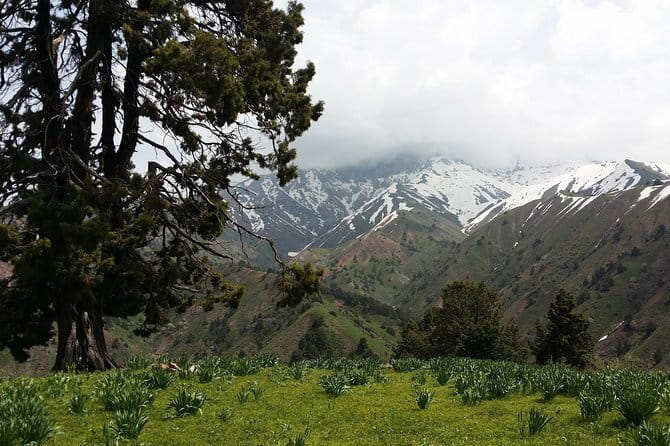
The most appealing part of this tour is how quickly you leave Tashkent behind and reach the Tian Shan mountains. Over three days, you cross mountain passes, sleep in a two-person tent, follow river valleys, and see Stone Age petroglyphs far from the city.
I like the practical setup: horses or donkeys carry up to 13 kilograms of your luggage, and the price includes tents, sleeping gear, meals, water, transfers, and an English-speaking guide. I also like the route itself, which mixes open mountain views with Ugam Chatkal National Park, native plants and wildlife, and a genuine sense of travel by foot.
The main consideration is the effort. Day two lasts about eight hours and reaches 2,550 meters, so this is not a casual walk in the hills. The weather can also force the guide to change the route, and groups of fewer than five require the guide to cook as well as lead.
Key points before you book
- Three days from Tashkent: Door-to-door transport takes you from the city to the Chimgan area and back from Shuldak.
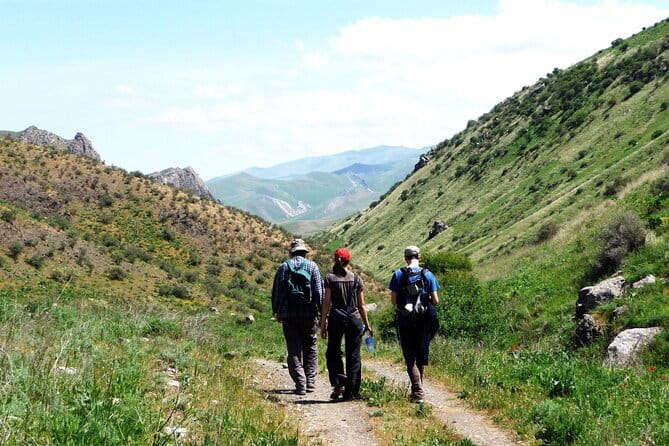
- A real mountain route: You cross Melovoy, Takhta-Jaylov, Chetkumbel, and Kubmel passes rather than staying near a resort road.
- Petroglyphs at 2,400 meters: Day two includes a visit to an ancient rock-art site near the highest part of the route.
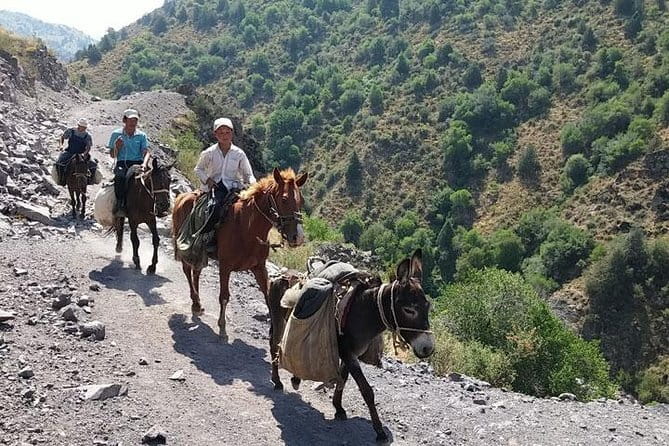
- Animal porters included: Horses or donkeys and their handlers carry camping and kitchen supplies, plus your permitted personal luggage.
- Moderate fitness, not minimal fitness: Expect four hours of walking on day one, eight on day two, and seven on day three.
- Private group format: Only your party takes part, with an English-speaking mountain guide and a flexible route plan.
Leaving Tashkent for the Chimgan mountains
Your morning begins at 9:00 at Taraqqiyot ko’chasi 45 in Tashkent. The drive to Chimgan Resort covers about 98 kilometers and takes roughly one and a half to two hours, depending on road conditions.
That transfer matters. You do not need to arrange a separate taxi, find a mountain driver, or work out how to return from a remote village. The tour handles the outward journey from Tashkent and the return from Shuldak, which turns a complicated point-to-point trek into a manageable three-day plan.
The route begins near Beldersoy Resort and Spa, but this is not a resort-based walking holiday. The resort is mainly a start point for the trail. Once you begin walking from Melovoy Pass at 1,796 meters, the focus shifts to mountain paths, saddles, valleys, and river country.
The private format is useful if you want to set the pace around your own group. It also means you should discuss your fitness level before setting out. A private tour does not make the route easy, and the guide has the right to alter it when weather or safety conditions require a change.
More chimgan and amirsoy mountain tours in Tashkent:
- Best of Tashkent Mountains: Amirsoy, Chimgan & Charvak Trip
★ 4.8 · 567 reviews - Amirsoy, Chimgan & Charvak Full-Day Adventure
★ 4.9 · 82 reviews - Tashkent Tour at Amirsoy, Chimgan Mountains and Charvak lake
★ 5.0 · 37 reviews
Day one: Melovoy Pass to the Marble River
The first walking day lasts about four hours, making it the gentlest introduction to the three-day route. You start at Melovoy Pass, at 1,796 meters, and climb toward the Takhta-Jaylov saddle at about 2,000 meters.
This section gives you an early feel for the terrain without beginning with the longest day. The saddle should provide broad mountain views, while the descent toward Marble River changes the rhythm from uphill effort to a more relaxed drop into the valley.
The Marble River is one of the memorable natural points on the first day. The route description does not specify the camping location in detail, so you should confirm the exact overnight spot and expected evening conditions with the operator before departure.
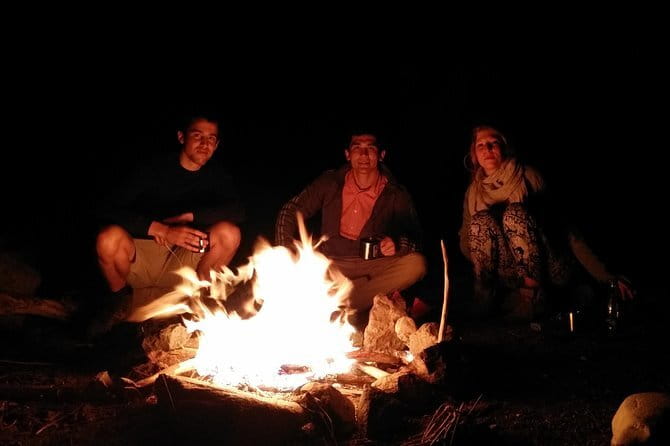
Your tent, sleeping bag, and mattress are provided. The tents are designed for two people, so if you are traveling alone, ask how tent sharing is arranged. Camping equipment is carried by animals along with the food and cooking gear, which keeps your personal load within a more reasonable limit.
Dinner is included on the first night. The cooking setup includes a gas stove and tableware, and the tour supplies three meals a day during the trek. You should still bring personal snacks if you like extra food between meals, since personal items are not included.
Day two: Chetkumbel, Kubmel, and high-altitude petroglyphs
Day two is the serious test. The walk takes about eight hours, beginning in the Beldersay Valley and climbing through Chetkumbel Pass at 1,800 meters toward Kubmel Pass at 2,550 meters.
The altitude is moderate by major mountain standards, but the length and sustained ascent make this the day that demands the most from you. The tour is aimed at people with moderate fitness, not complete beginners who rarely walk for several hours.
One of the route’s best details comes at about 2,400 meters, where you visit a petroglyph site. These Stone Age carvings give the walk a human connection that a mountain viewpoint alone cannot provide. You are not simply crossing from one valley to another. You are following a route used in a region where people have moved through the Tian Shan for a very long time.
The petroglyph stop also gives the day a clear purpose during the climb. You may find the high point more rewarding because it combines physical effort with something specific to see. The route reaches its highest elevation during these three days near the petroglyph site and Kubmel Pass.
The day ends with the need for a proper meal and rest. Lunch and dinner are included, and the guide or support team handles the cooking arrangements. For a group of fewer than five, the mountain guide may also serve as the cook, so the pace of camp preparation can depend on the size of your party and the day’s conditions.
Take sun protection seriously. The suggested kit includes sunglasses, sunblock, a hat or other head covering, and warm clothing for spring and autumn. Mountain temperatures can differ sharply from Tashkent, and the supplied advice specifically warns you to prepare for cooler conditions.
Day three: Nurekata Valley to Shuldak
The final day covers about seven hours and is mainly a descent. You continue through Nurekata Valley until reaching the junction of the Nurekata and Aksakata rivers.
A long descent can sound easier than a climb, but it still puts work through your knees and feet. Good trekking shoes matter here, especially if the path is uneven or wet. The supplied equipment advice recommends trekking shoes rather than ordinary city footwear, and you should take that seriously.
The river junction gives the last day a natural focal point. From there, the route continues toward Shuldak village at about 1,050 meters. The lower elevation marks a clear change from the high passes of the previous day.
A driver meets you in Shuldak for the return transfer to Tashkent. This is an important practical benefit. You finish in a village rather than needing to organize a local ride after a full day on foot.
The tour ends back at the original Tashkent meeting point. The exact arrival time is not provided, so avoid scheduling a tight evening flight or another fixed appointment on the final day.
A few more Tashkent trips to weigh up
- From Tashkent: Chimgan Valley Hiking Day Trip
★ 4.9 · 24 reviews - Yurt stay and Hiking in the Nurata Mountains tour – 2 days
★ 5.0 · 35 reviews - Hiking tour to Hayat, Uhum and Asraf villages – 4 days
★ 5.0 · 12 reviews - From Bukhara: 3-Day Yurt Stay, Hiking & Lake Aydarkul
★ 5.0 · 5 reviews
What your $370 includes
At $370 per person, the tour is not a cheap day trip, but the price covers much more than guiding. You receive transport from Tashkent to Chimgan and from Shuldak back to Tashkent, which would otherwise be awkward to arrange independently.
Camping equipment includes two-person tents, sleeping bags, and mattresses. You also receive bottled water, a gas stove, cooking equipment, and tableware. That reduces the amount of specialist gear you need to bring.
Food is another major part of the value. The package includes two dinners, three lunches, and two breakfasts. It does not include personal snacks, drinks beyond the supplied bottled water, or items of a personal nature.
The animal porter service is particularly useful on this route. Horses or donkeys, with handlers, carry luggage and supplies. Your own luggage is limited to 13 kilograms, but you still need a backpack for the items you carry during the day.
An English-speaking mountain guide leads the group. The guide is responsible for safety decisions and can alter the planned route because of bad weather or known hazards. That flexibility is a strength in mountain travel, though it means you should treat the itinerary as a plan rather than an unchangeable promise.
Police registration is included for the duration of the trek. A first aid kit is also provided. Tips and personal items are not included, so budget separately for both.
Camp life, food, and the luggage limit
This tour gives you a fairly complete camping system rather than asking you to bring a tent, stove, and cookware from home. You sleep in a two-person tent and use the provided sleeping bag and mattress.
The animal support makes the route more comfortable, but it does not remove the need to pack sensibly. The maximum luggage allowance is 13 kilograms per person. Bring a backpack, trekking shoes, warm layers, sun protection, a flashlight, and any personal medication you need.
A flashlight is easy to overlook, especially if you spend most of your time in cities. It becomes useful around camp after dark, and the tour specifically lists it among the recommended items.
Meals are freshly prepared during the trip. The available information does not provide sample menus, so you should tell the operator about dietary needs before departure rather than assume the camp kitchen can meet them.
The guide acts as cook for groups smaller than five. That arrangement can work well, but it also gives the guide more duties. If your group is small, ask how meal preparation affects the daily schedule and what food is planned.
Fitness, weather, and route changes
The tour is described as suitable for moderate fitness. In practical terms, you should be comfortable walking for several hours, climbing to 2,550 meters, and handling a long descent the next day.
Day one is around four hours, day two around eight, and day three around seven. Those figures are approximate, and mountain conditions can change the pace. You should not judge the tour only by the total distance, since elevation gain, surface conditions, and breaks all affect how hard the day feels.
The route can change because of weather or safety concerns. This is normal and sensible in the mountains. It also means you should not book the tour solely for one exact pass or viewpoint, since the guide may need to use a safer alternative.
Spring and autumn require warm clothing. A hat, sunglasses, and sunblock are recommended for exposed sections. Bring layers rather than relying on a single heavy item, though the supplied information does not promise a particular temperature range.
The tour is not described as accessible for wheelchairs or people with limited mobility. The passes, river valleys, camping, and long walking days make it best suited to people who can walk independently over mountain terrain.
The strongest reasons to choose this route
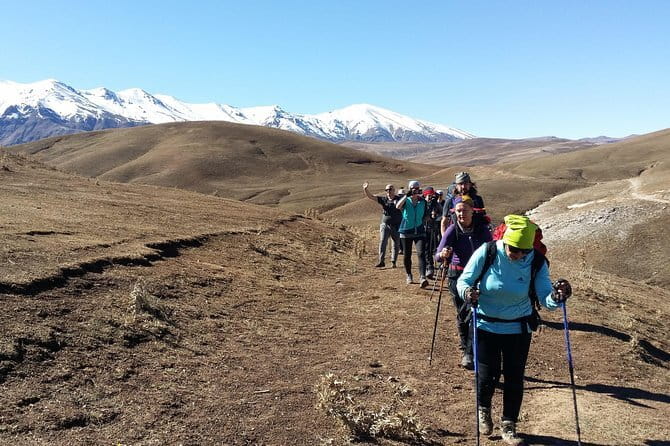
I like the balance between natural scenery and cultural interest. You get mountain views, flora and fauna in Ugam Chatkal National Park, river valleys, and a petroglyph site at high elevation.
I also value the human side of the operation. The guide and the donkey or horse handlers are part of the working structure of the trip, not just extras added for show. One published account specifically praised the helpful guide and donkey handler, and that support can make a real difference when the route becomes tiring.
The three-day length is another advantage. A single day in Chimgan would give you a taste of the mountains, but this route lets you move through several valleys and finish far from your starting point.
The private-group setup suits friends, couples, and families with suitable fitness. You avoid being placed with a large mixed group, though you also lose the chance to rely on a bigger party if someone needs extra help.
The main drawback is that comfort remains basic. You sleep in tents, walk for long hours, and carry some personal gear. If you want hotels, short walks, or a fixed timetable, this is the wrong choice.
Who will get the most from the three days
I would recommend this tour to you if you want a genuine mountain outing from Tashkent without arranging every transfer, meal, animal porter, and campsite yourself. It is a good fit for people who enjoy walking and do not mind trading hotel comfort for access to remote scenery.
It also suits visitors who want more than photographs. The petroglyphs, national park setting, and village finish add context to the mountain route.
You should think twice if you have little hiking experience or are uncomfortable with an eight-hour day. You should also be cautious if you need guaranteed weather, a fixed route, or private accommodation.
The current information gives the activity a 5 out of 5 rating from 10 ratings, with 100 percent recommending it. That is a small sample, so I would treat it as encouraging rather than final proof. The repeated praise focuses on scenic beauty, challenge, and the helpfulness of the guide and animal handler, which are exactly the parts most likely to shape your trip.
You can cancel for a full refund if you do so at least 24 hours before the 9:00 start time. Changes made inside that window are not accepted, so decide early if the weather forecast or your fitness makes you uncertain.
Should you book the Chimgan trek?
Book it if you want three active days in the Tian Shan with the hard logistics already handled. The $370 price makes the most sense when you value private transport, an English-speaking guide, camping equipment, seven included meals, bottled water, animal porters, and the return journey from a different village.
Before paying, confirm the expected camping locations, food arrangements for your group size, and any dietary needs. Bring proper shoes, warm layers, sun protection, a flashlight, and a backpack, and keep your personal luggage below 13 kilograms.
Skip it if your idea of a mountain break means easy walks and comfortable rooms. Choose it if you want a demanding but well-supported route through passes, valleys, and high mountain country, with a rare chance to see petroglyphs along the way.
FAQ
Where does the tour start?
The tour starts at 9:00 am at Taraqqiyot ko’chasi 45 in Tashkent, Uzbekistan.
How long is the transfer from Tashkent to Chimgan?
The drive covers about 98 kilometers and takes approximately one and a half to two hours.
How many hours do you walk each day?
Day one takes about four hours, day two about eight hours, and day three about seven hours.
What is the highest point on the trek?
The route reaches about 2,550 meters at Kubmel Pass. The petroglyph site is visited at about 2,400 meters and is described as the highest point during the three-day trek.
Is camping equipment included?
Yes. The tour provides two-person tents, sleeping bags, and mattresses, as well as a gas stove and tableware.
How is the luggage transported?
Horses or donkeys with handlers carry luggage and supplies. Each person may bring a maximum of 13 kilograms of luggage.
What meals are included?
The tour includes two breakfasts, three lunches, and two dinners, along with bottled water.
Can the route change because of weather?
Yes. The mountain guide may change the route because of bad weather or known safety concerns.
More 3-Day Experiences in Tashkent
- Uzbekistan 3 Day Private Tour Tashkent-Bukhara-Samarkand Bullet Train
★ 4.5 · 23 reviews - Tashkent: 3-Day Horseback Riding Tour in Chimgan Mountains
★ 4.4 · 3 reviews - Desert yurt camp and Mountain tour – 3 days
★ 4.5 · 15 reviews - Aral Sea – Extended trip (3 days)
★ 5.0 · 5 reviews
Just added around Tashkent
- Private Intercity Transfer Tashkent – Samarkand – Tashkent★ 3.5 · 3 reviews
- Tashkent Mountain Tour Amirsoy with Transport★ 3.5 · 3 reviews
- Tashkent-Samarkand-Bukhara tour-3nights/4 days★ 5.0 · 5 reviews
- Amirsoy & Chimgan mountain tour from Tashkent★ 5.0 · 3 reviews
- Private Tashkent City Tour★ 5.0 · 3 reviews
- Tashkent Food and Metro Journey★ 5.0 · 4 reviews
- Silk Road Secrets Tour in Uzbekistan★ 5.0 · 4 reviews
- Transfer Tashkent Airport / Railway Station – Hotel★ 3.5 · 3 reviews
Chimgan and Amirsoy Mountain Tours, compared.
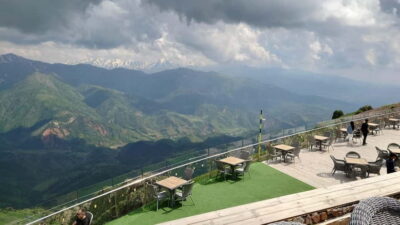
Best of Tashkent Mountains: Amirsoy, Chimgan & Charvak Trip
Read our review →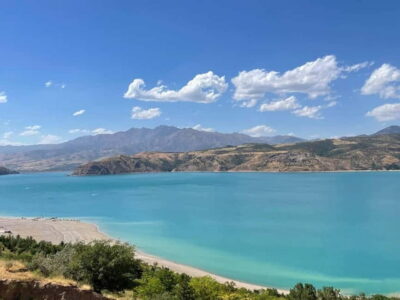
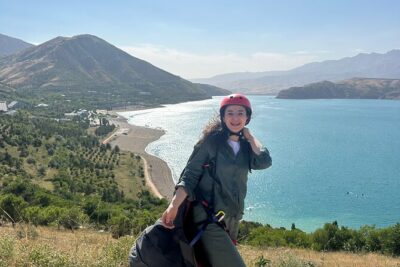
Tashkent Tour at Amirsoy, Chimgan Mountains and Charvak lake
Read our review →
Private tour: Amirsoy, Chimgan mountains & Charvak
Read our review →
Amirsoy, Chimgan Mountain & Charvak Lake tour from Tashkent
Read our review →
Tashkent Chimgan Mountains, Charvak Reservoir and Amirsoy Resort
Read our review →Browse the lists this tour appears in