
Reviewed · KHIVA ANCIENT FORTRESS TOURS
Daytrip from Khiva to Five Ancient Fortresses
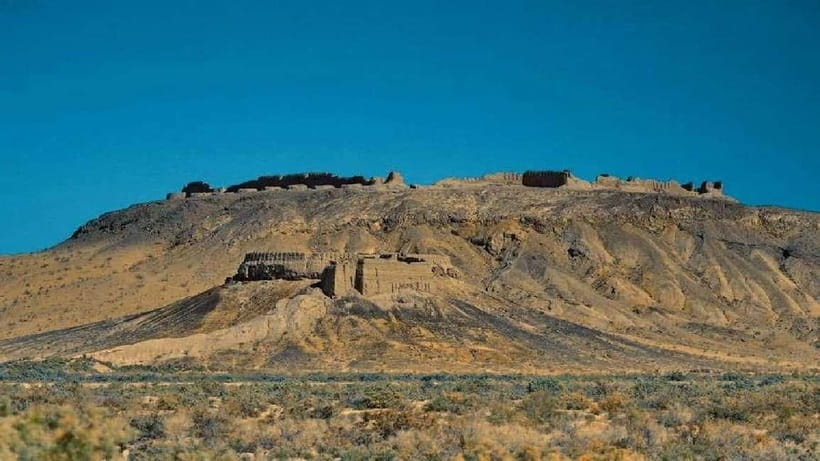
Five desert fortresses, one private car, and a long sweep of ancient Khorezm make this a memorable day outside Khiva. Ayaz-Kala and Toprak-Kala offer the clearest sense of what once stood here, while the other stops range from impressive ruins to faint traces in the earth.
I like the freedom of a private group for up to three people, plus hotel or airport pickup and a flexible departure time. I also like the chance to see Karakalpakstan beyond Khiva’s old town, with its stark roads, open country, and adobe citadels. The main drawback is that this is transport with sightseeing stops, not a fully guided archaeological tour. English may be limited, and one driver received a serious complaint about fast driving.
Key points at a glance
- Five fortresses in seven hours: Guldursun-Kala, Ayaz-Kala, Kavat-Kala, Toprak-Kala, and Kyzyl-Kala fit into one private outing.
- Ayaz-Kala is the visual prize: The complex has three fortresses around a hill and is widely regarded as the most striking stop.
- Toprak-Kala supplies the history: This former royal residence produced coins, Zoroastrian ossuaries, fabrics, jewelry, and fine pottery.
- Expect a driver, not a historian: Some drivers offer useful background, but a guide is not included and English can be limited.
- The price works best for three: At $115 per group, the base cost is about $38 per person for three people, before entry fees and food.
- Plan for extra site costs: Entry tickets are not included, and one detailed account described several payments of 20,000 Uzbek som.
Five Fortresses Beyond Khiva
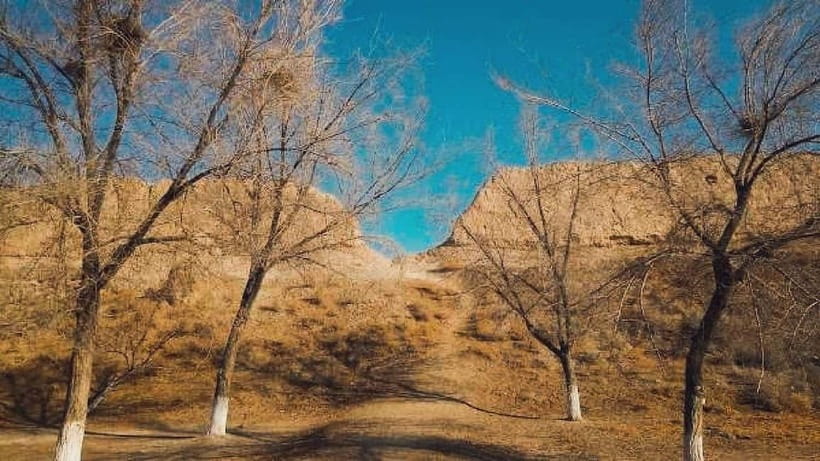
Khiva is a remarkable place, but its tiled mosques, narrow lanes, and restored walls can make Uzbekistan feel more urban and polished than it really is. This day trip takes you into Karakalpakstan, where ancient fortresses rise from dry, open country.
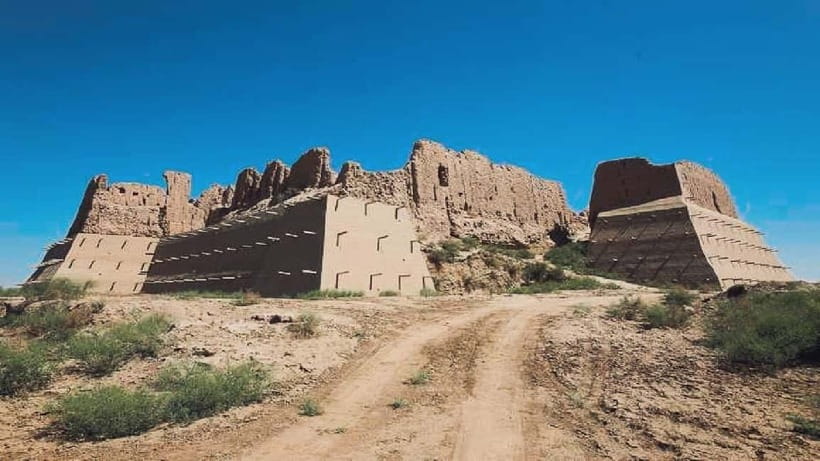
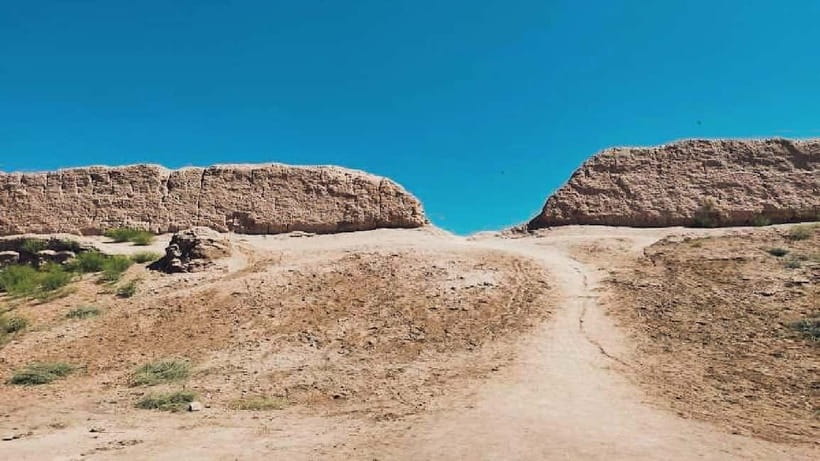
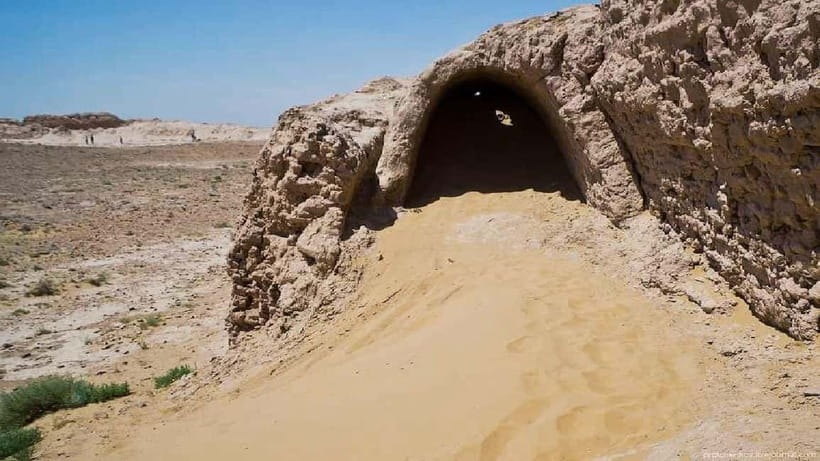
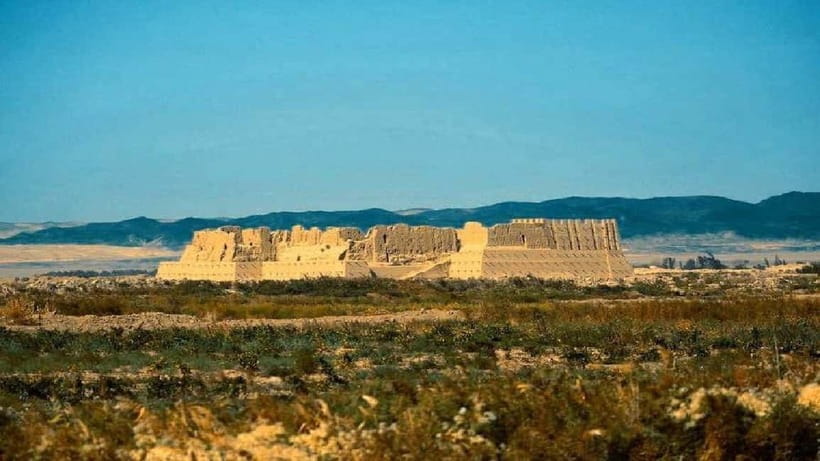
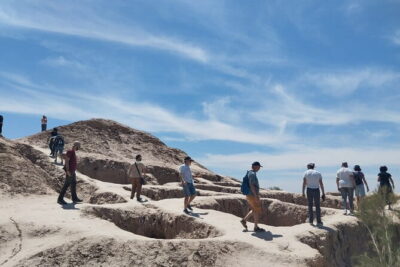
These are not European castles with intact rooms and grand furniture. Most are built from mud brick, and centuries of wind, war, abandonment, and erosion have taken their toll. What remains can look like a giant earthen wall from one angle, then reveal towers, gateways, defensive lines, and city plans as you walk around it.
That changing view is part of the appeal. You are not simply moving from one museum to another. You are seeing how the Khorezm oasis defended farms, towns, palaces, and water channels across a broad region.
The tour lasts about seven hours and is private for your group. You can start from a hotel in Khiva, or from Urgench, including the airport or train station. The same two cities are available for the return. A round-trip air-conditioned vehicle, parking fees, and pickup are included.
More khiva ancient fortress tours in Khiva:
- Transfer: Bukhara – Khiva via Ancient Fortresses
★ 4.5 · 101 reviews - Daytrip From Khiva To Ancient Fortresses
★ 4.6 · 60 reviews - Private Daytrip to 7 Ancient Fortresses of Khorezm
★ 5.0 · 25 reviews
What $115 Buys You
The listed price is $115 per group of up to three people. For three, that works out to roughly $38 per person before entrance fees and any meal. For two people, it is about $57.50 each, and a solo visitor pays the full group rate.
That is a reasonable price for a private vehicle covering a large amount of ground. You avoid arranging separate taxis, haggling over a long-distance route, or trying to connect several remote sites by public transport. You also have more control over the departure time than you would on a fixed coach outing.
The price does not include entry tickets, a guide, or lunch. This matters. The tour name may sound like a fully escorted historical excursion, but the included service is primarily private transportation with time to visit each fortress on your own.
Carry Uzbek som for the entrance fees. A detailed account described payments of 20,000 som at three sites, though the exact total may vary. Ask the driver to clarify each fee before paying, especially because entrance costs are not included in the booking price.
Guldursun-Kala and the First Sense of Scale
Guldursun-Kala is an excellent opening stop because it gives you a feel for the size of the ancient Khorezm fortifications. The fortress was built on a rectangular plan covering about 35 hectares, with thick adobe walls arranged in two rows and loopholes built into the defenses.
Its dates are described in the supplied material as reaching back to the second or first centuries BC, with later occupation continuing into the period of Shah Ala ad-Din Muhammad. Archaeological evidence places its final occupation around 1220, close to the Mongol attacks on the Khwarezmian Empire.
The site is now a ruin, so do not expect a preserved citadel with labeled rooms at every turn. You will get the most from it by walking, looking closely at the wall construction, and trying to read the fortress as a defensive settlement rather than a single monument.
Guldursun-Kala is listed as a photo stop, visit, walk, and self-guided tour. The timing may include sunset, depending on the departure schedule. If you enjoy wide views and the physical remains of old fortifications, you will likely find this stop worthwhile. If you need a complete structure or a detailed explanation at each point, it may feel spare.
Ayaz-Kala, the Day’s Big View
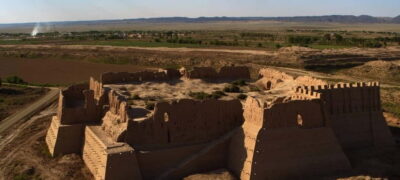
Ayaz-Kala is the most visually rewarding stop on the route. It is not one fortress but a group of three, placed around a hill at the eastern end of the Sultan Uizdak ridge. The name is often translated from Turkic as frosty or cold.
The main fortress is known for its commanding position and broad views. From the higher ground, the walls and earth-colored ruins make sense as part of a defensive system rather than an isolated building. This is the place where you should slow down, take photographs, and allow extra walking time.
The site is about 96 kilometers from Khiva, and the full route is not a quick hop between attractions. Wear shoes suitable for uneven ground and bring water. The information supplied does not promise shade, refreshments, or an indoor visitor center, so prepare for an exposed visit.
Ayaz-Kala is especially good for people who want a strong visual memory from the day. One French customer called it a favorite, and another account rated the selected sites highly. That praise fits the site’s role in the itinerary: among five ancient places, this is the one most likely to make you stop and simply look.
Same Silk Road, a completely different kind of day:
- Khiva Historical City Highlights Guided Walking Tour
★ 5.0 · 30 reviews - Aral Sea Adventures (2 day)
★ 5.0 · 30 reviews - Guided Tour To Old Fortresses
★ 5.0 · 25 reviews - Tranfer Khiva – Bukhara via Ancient Fortresses
★ 4.8 · 24 reviews
Kavat-Kala, More Oasis Than Castle
Kavat-Kala is the hardest stop to judge from photographs alone. It is described as a medieval monument stretching for about 15 kilometers along the Gavhore Channel, with a width of two to three kilometers. The wider area once held residential buildings, clay structures, and a large number of estates.
From the 12th to 13th centuries, the central part was heavily populated, with about 90 estates recorded in the description. The central fortress itself measures roughly 160 by 190 meters.
This is useful context, because Kavat-Kala is not only about a single sharp-walled citadel. It represents an entire settled oasis, shaped by water and agriculture. The site is still under substantial archaeological study, which also explains why the remains may be less immediately clear than those at Ayaz-Kala or Toprak-Kala.
The stop includes sightseeing and a break, and it may be timed around sunset. You may find exposed ruins, earth platforms, and scattered traces rather than a fortress that reads clearly from the ground. I would treat Kavat-Kala as a bonus for anyone interested in settlement patterns and archaeology, not as the strongest photo stop.
Toprak-Kala, the Former Royal Residence
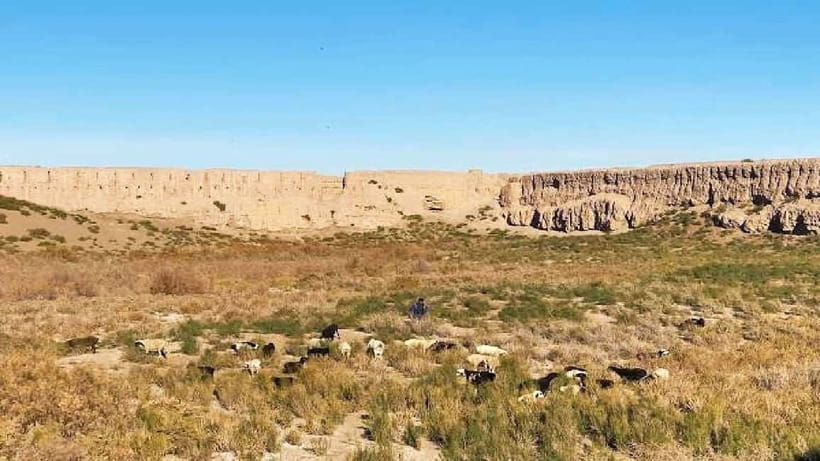
Toprak-Kala gives the day its strongest connection to court life. Built in the third century, it served as a residence for the Khorezmshahs, the rulers of the country, until about AD 305.
The complex later declined after repeated wars forced the rulers to leave. Archaeological work uncovered coins, Zoroastrian ossuaries, fine pottery, wool and silk textiles, gold ornaments, and a necklace made with hundreds of glass beads, paste, amber, and coral. Those finds show that this was not merely a military outpost. It was a royal center with craft, ceremony, trade, and religious life.
The ruins themselves are still mainly earthen walls, but Toprak-Kala has a clearer story than some of the smaller stops. You can picture officials, residents, craftsmen, and guards using the rooms and courtyards, even though the original decoration and objects are now largely in archaeological collections.
Allow time to walk and take photographs. The itinerary includes a break here, which is sensible after several exposed sites. Toprak-Kala is one of the two stops I would prioritize if your time or energy becomes limited.
Kyzyl-Kala and the Fortress as Refuge
Kyzyl-Kala shows the defensive side of Khorezm in a direct way. It served as a refuge during raids by nomadic groups, with smoke signals used to warn people that an enemy force was approaching.
The citadel had a double wall, corner watchtowers, and a water system made with ceramic pipes. That last detail is particularly revealing. A fortress could not protect a population for long without water, so the pipes point to planning beyond simple walls and weapons.
This stop includes a safety briefing, walking, photographs, and free time. As with the other sites, you explore independently unless you arrange a guide separately. The walls may be easier to understand from outside, where you can see how the double defenses and towers worked together.
Kyzyl-Kala is a useful final lesson in the purpose of these places. The fortresses were not built only for rulers. They helped local communities respond to raids, protect supplies, and retreat behind stronger defenses when warning signals arrived.
The Driver Makes a Big Difference
Your driver is the person who shapes the day. Drivers handle the roads, parking, pickup, and movement between sites. Some are friendly, flexible, and willing to stop when you want. One named driver, Izzat, was praised for being helpful throughout the day and for sharing aspects of local culture despite a language barrier.
You should set expectations clearly at the start. This service does not include a guide, and some drivers speak little English. You may receive basic information about the fortresses, but you should not count on a detailed explanation of dynasties, archaeology, or architectural features.
Download notes about the five sites before leaving Khiva. A guidebook, offline webpage, or translation app will make the self-guided visits much more rewarding. It also helps you know what to look for at Kavat-Kala, where the remains can be difficult to interpret without context.
Driving standards deserve attention. One Spanish account described dangerously fast driving, and a French account also reported fast driving on poor roads. Other accounts praised the driver’s friendliness, quick transfers, and willingness to accommodate stops. If the driving feels too fast, say so plainly at once. Your comfort matters more than shaving minutes from the route.
Food, Stops, and a Seven-Hour Pace
Lunch is optional and not included. The driver may suggest a restaurant, but you should ask to see the menu and prices before ordering. One detailed account described an uncomfortable restaurant recommendation, followed by another restaurant with a menu that did not show prices.
I would bring snacks and water, then choose lunch only if the timing and restaurant suit you. A small food stop may be welcome after walking around several adobe ruins, but do not assume that a meal is part of the seven-hour plan.
The schedule includes photo stops, free time, walks, and short breaks. You may also encounter sunset timing at several sites, depending on when you leave. Since the route covers five places, each visit cannot be a long archaeological study. The advantage is variety. The cost is that some stops may feel rushed, while others may not offer enough visible remains to hold your attention for long.
Who Will Enjoy This Day Trip
I would recommend this outing to anyone who has at least one full day beyond Khiva and wants to see the ancient Khorezm region in its own setting. It is especially suitable for three friends or a couple who value a private car and do not need constant commentary.
It also suits photographers, history enthusiasts, and people who enjoy ruins that require a little imagination. Ayaz-Kala and Toprak-Kala provide the clearest rewards, while Guldursun-Kala adds scale and Kyzyl-Kala adds a practical lesson in defense.
I would think twice if you want a polished, fully narrated tour. The absence of a guide is not a small detail. Two detailed accounts found only one or two of the five sites especially compelling, and limited English made the day less informative for them.
The physical setting also matters. You will be walking around ancient adobe structures, not following a smooth indoor museum route. The exact condition of the ground is not specified, so sturdy footwear and water are sensible choices.
Booking Advice Before You Leave Khiva
Confirm the pickup address and be ready at least 10 minutes before the scheduled time. Pickup is available from Khiva hotels and from Urgench airport or train station. Drop-off can be arranged in Khiva or Urgench.
Ask these practical questions before setting out:
- How much time will you allow at Ayaz-Kala and Toprak-Kala?
- Which entry fees should I expect?
- Is lunch planned, and can I choose the restaurant?
- How much English does the driver speak?
- Can we slow down if the road or driving feels uncomfortable?
The activity offers free cancellation up to 24 hours before departure and allows you to reserve now and pay later. Those terms are useful if your Uzbekistan route is still shifting, but they do not change the main decision: you are booking a private ride with fortress visits, not a private historian.
Should You Book the Five Fortresses Trip?
Book it if you want an efficient way to reach five remote Khorezm sites, especially if you can fill all three seats. The price is fair for private transport, the pickup options are convenient, and Ayaz-Kala, Toprak-Kala, and Guldursun-Kala can make the long ride worthwhile.
Book with caution if clear English commentary, careful driving, or restaurant planning is important to you. Bring your own historical notes, carry cash for entry fees, confirm food arrangements, and speak up about speed.
My practical verdict is simple: the route is stronger than the guiding service. For curious, independent visitors, it is a good day outside Khiva. For a fully explained archaeological tour, arrange a separate guide or choose a service that includes one.
FAQ
How long does the Five Fortresses day trip take?
The trip lasts seven hours, including transport and visits to Guldursun-Kala, Ayaz-Kala, Kavat-Kala, Toprak-Kala, and Kyzyl-Kala.
Where can pickup and drop-off take place?
Pickup is available from hotels in Khiva and from Urgench airport or train station. Drop-off is available in Khiva or Urgench.
Is this a private tour?
Yes. The vehicle is for a private group of up to three people.
What is included in the price?
The price includes hotel or listed transport-hub pickup, round-trip air-conditioned transportation, private transport, parking fees, and drop-off in Khiva or Urgench.
Are entrance tickets included?
No. Entry tickets are extra. Carry Uzbek som and confirm the fee for each site before paying.
Is a guide included?
No. A guide is not included. The driver takes you between the sites, and some drivers may provide limited information.
Is lunch included?
No. Lunch is optional and costs extra. Restaurant arrangements should be confirmed with the driver before the trip.
Can I choose the departure time?
The activity offers a flexible departure time, but you should check availability for the date you want.
What is the cancellation policy?
You can cancel up to 24 hours in advance for a full refund. The activity also allows you to reserve now and pay later.
Just added around Khiva
- Traditional Khiva Cooking Class with Market Visit & Lunch★ 5.0 · 4 reviews
- Old Khiva Stories with Your Local Guide★ 5.0 · 5 reviews
- A Night In The Kyzylkum Desert [2] From Khiva★ 4.5 · 3 reviews
- Master Class – Uzbek Bread (Khiva)★ 3.5 · 4 reviews
- Aral Sea – Extended trip (3 days)★ 5.0 · 5 reviews
- Khorezm Fortress and KyzylKum Desert Private Tour★ 5.0 · 3 reviews
- Best of Khiva: Exclusive Private Tour!★ 5.0 · 3 reviews
- Uzbekistan 6 Days Private Tour Khiva-Bukhara-Samarkand by Train★ 5.0 · 4 reviews
Khiva Ancient Fortress Tours, compared.

Private Bukhara-Khiva Transfer via Ancient Fortresses
Read our review →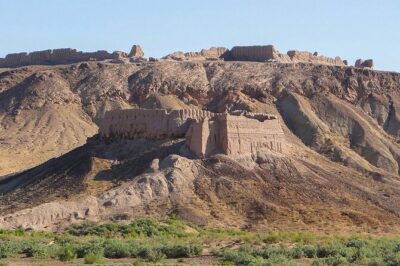
Ayaz Kala & Toprak Kala private fortress daytrip from Khiva
Read our review →Browse the lists this tour appears in