
Reviewed · KHIVA ANCIENT FORTRESS TOURS
Transfer: Bukhara – Khiva via Ancient Fortresses
The best part of this experience is simple: you turn a necessary transfer into a serious archaeological outing. Instead of spending the whole day on the road from Bukhara to Khiva, you cross the Kyzylkum Desert and stop at three old fortresses tied to the Khorezm Oasis, including Toprakkala, once a capital.
I like the private door-to-door setup, and I like the chance to reach remote ruins that are awkward to visit without your own transport. Drivers such as Pavlik, Jasur, and Ulugkbek have been praised for safe driving and useful explanations. The tradeoff is the long day: nine hours on the road, several exposed sites, and basic facilities rather than a polished sightseeing circuit.
Key points to know before booking
- A transfer with real historical stops: You travel from Bukhara to Khiva while visiting Toprakkala, Kizilkala, and Ayazkala.
- Toprakkala was a capital: The clay fortress is linked to early Khorezm statehood, written records, a calendar, and plaster figures of singers.
- Ayazkala is the major stop: Its three sections and remote hilltop setting make it the most memorable fortress visit.
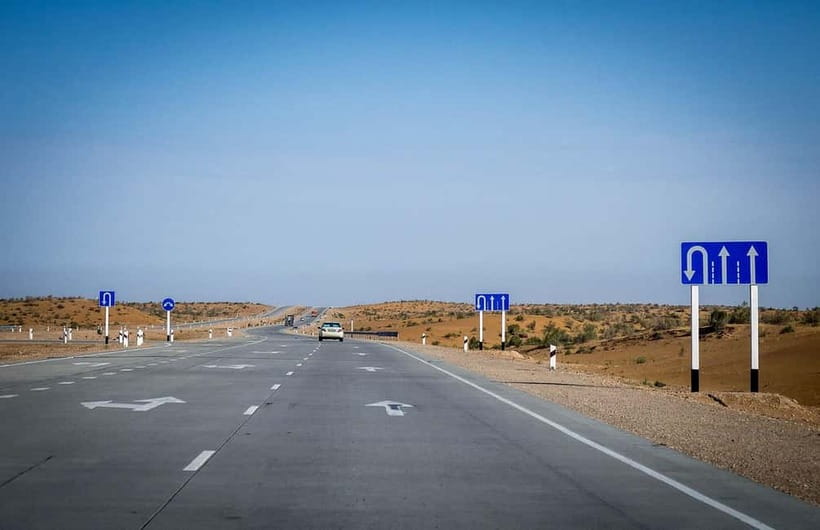
- The desert is part of the experience: Long stretches through the Kyzylkum give the day a wide, empty sense of place.
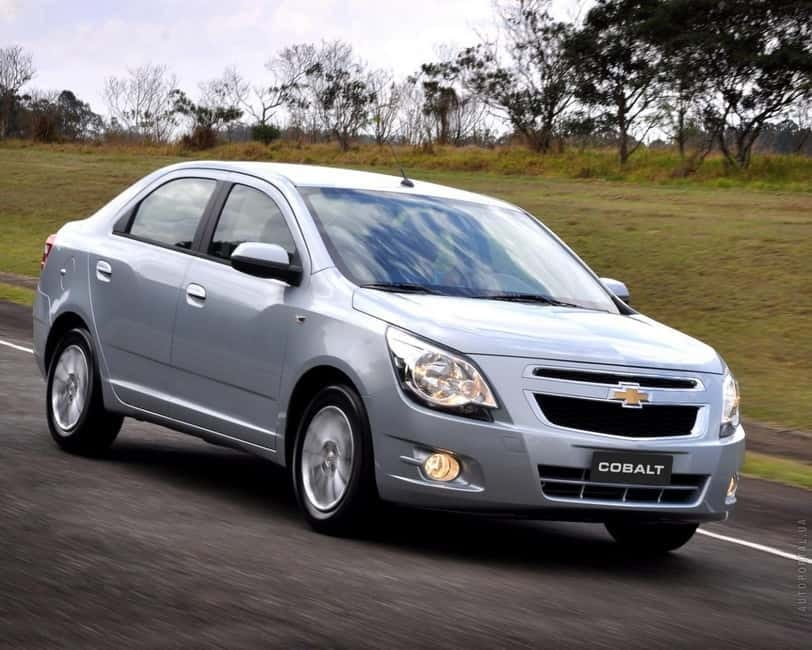
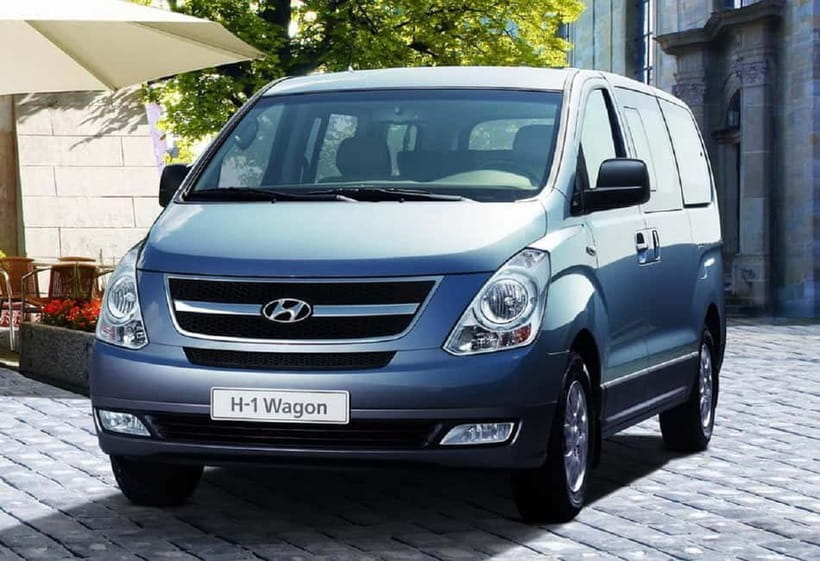
- Private transport adds comfort: Air conditioning, hotel pickup, and hotel drop-off make the long crossing easier.
- Budget for entry fees: Fortress tickets cost about $1 to $2 per monument per person and are not included.
Why this route is smarter than a plain transfer
Bukhara and Khiva are two of Uzbekistan’s big historic destinations, but the road between them can feel like a lost day. This service gives that road a purpose. You still reach Khiva at the end, but you also see the defensive chain that once guarded the Khorezm Oasis.
The old oasis is sometimes called Ellikkala, meaning 50 fortresses. That name gives you a sense of the scale, even though this outing visits only three sites. These are not restored palace complexes with cafés and polished paths. They are broad, weathered earth ruins, often set far from modern towns. That roughness is part of the appeal.
You should also set your expectations correctly. This is a private transfer with sightseeing, not a full guided archaeological tour with long lectures at every stop. Your driver speaks English or Russian, and some drivers provide helpful explanations. The quality of that commentary can vary by driver, so the service is strongest when you value access, comfort, and flexibility more than formal guiding.
The price is $160 per group of up to three people. For three people, that is about $53 each for transport, hotel pickup, hotel drop-off, and three fortress visits. Even after adding the small entrance fees and lunch, that can be good value if you already need to travel to Khiva. Solo visitors pay the full group rate, so the deal improves sharply when shared.
More khiva ancient fortress tours in Khiva:
- Daytrip From Khiva To Ancient Fortresses
★ 4.6 · 60 reviews - Private Daytrip to 7 Ancient Fortresses of Khorezm
★ 5.0 · 25 reviews - Tranfer Khiva – Bukhara via Ancient Fortresses
★ 4.8 · 24 reviews
Leaving Bukhara for the Khorezm Oasis
Pickup is from your hotel in Bukhara. You are asked to wait in the lobby five minutes before the scheduled time, a small detail worth taking seriously because this is a long road day and delays can cut into your fortress visits.
The route runs from Bukhara toward Toprakkala, then Kizilkala, Ayazkala, and finally Khiva. The order gives the day a natural rhythm: an important former capital first, a smaller military site next, and the large Ayazkala complex later.
The vehicle has air conditioning, which matters in this part of Uzbekistan. You will spend many hours inside it, and the trip crosses open desert and steppe rather than a string of towns. Bring your own water. Drinks and food are not allowed in the vehicle, so plan to eat during the intended lunch stop rather than treating the car as a picnic space.
The driving itself is a key part of the experience. One recent group praised Pavlik for good English, clear explanations, and arranging lunch at a yurt camp. Another singled out Jasur for safe driving and a comfortable, spacious minivan for six people. Ulugkbek was praised for being friendly, sociable, informative, and careful on demanding roads. These names are useful reference points, but you should not assume a particular driver will be assigned to you.
Toprakkala, the clay capital
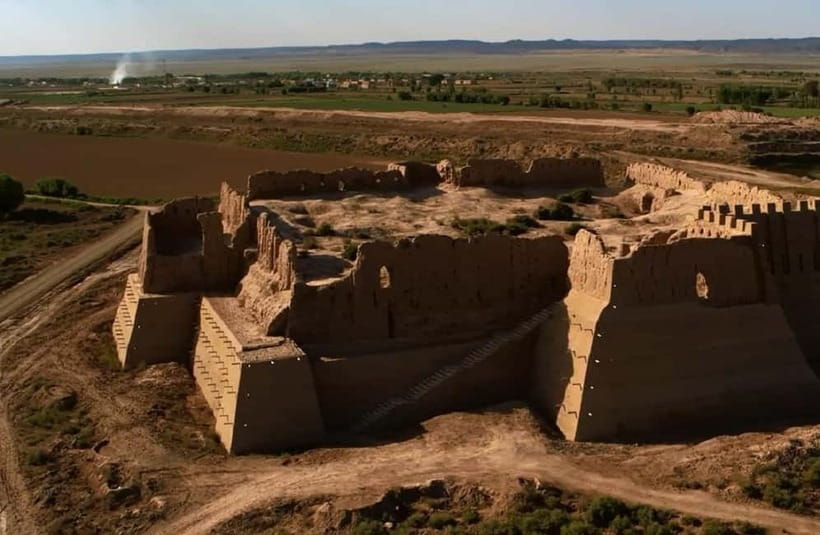
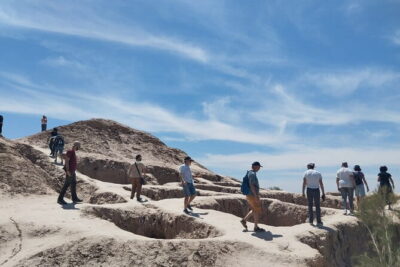
Toprakkala means Clay Fortress, and it is the most important historical stop on the route. It was the first capital of Khorezm, and the remains help show that this was an organized state rather than a collection of isolated desert settlements.
The site is especially important because early city plans were found here. Those plans point to established urban design and support the dating of Khorezm statehood to the fourth century BC. The site also produced some of the first written sources connected with Khorezm, along with a calendar and plaster statuettes of singers.
That information changes how you look at the ruins. At first, you may see walls made from earth and sun-baked brick, softened by wind and time. With the history in mind, you can picture a planned capital with civic areas, religious life, records, and court culture. The most interesting details are not always obvious from the ground, so this is a stop where a driver’s explanation can add real value.
Toprakkala is also a good place to begin because it gives the rest of the day context. Kizilkala and Ayazkala are easier to understand when you already know that these fortresses belonged to a wider network of settlements and defenses.
Wear shoes with a firm sole. The ground is uneven, and comfortable walking shoes are specifically recommended. Sunglasses help too, since the open setting offers little shelter from sun and wind.
Kizilkala, the Red Fortress
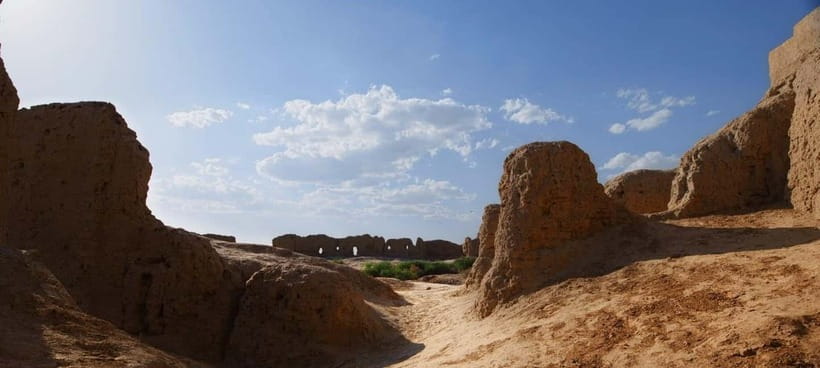
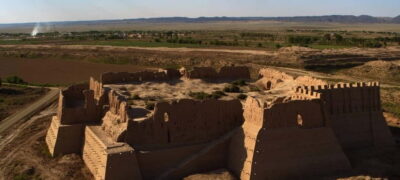
Kizilkala is a smaller garrison fortress along the route. Its name means Red Fortress, a reference to the color of the clay used in its construction.
Do not expect the same scale as Ayazkala. Kizilkala works as a shorter stop that helps you see the military side of the oasis. Fortresses were placed around the perimeter to protect settled areas from raids by nomadic groups from the north. At Kizilkala, the compact setting makes that defensive purpose easier to grasp.
The site also breaks up the drive at the right moment. After Toprakkala, you may appreciate a stop that is less demanding and more focused. You can take photographs, look across the open country, and get a feel for how exposed these positions were.
The condition of the ruins is part of the experience and part of the limitation. These are ancient clay structures, not stone castles. Wind and weather have shaped them, and some details may be difficult to identify without help. Go for the setting and the overall form rather than expecting a complete building you can explore room by room.
A few more Khiva trips to weigh up
- Transfer from Khiva to Bukhara by Fortresses
★ 5.0 · 11 reviews - Private Transfer & Photo‑Stops: Ayaz‑Kala & Toprak‑Kala”
★ 4.6 · 6 reviews - Private Transfer from/to Tashkent Airport
★ 4.5 · 14 reviews - Private Bukhara-Khiva Transfer via Ancient Fortresses
★ 4.5 · 8 reviews
Ayazkala and the edge of the steppe
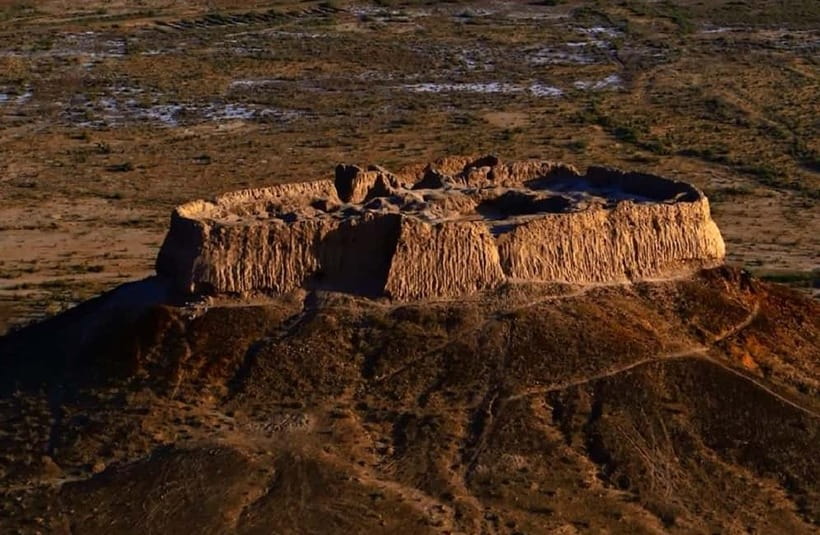
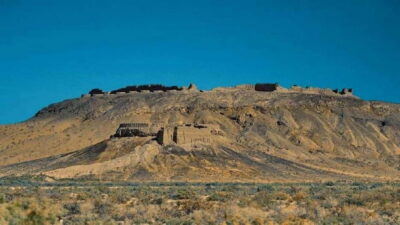
Ayazkala is the main event for many people. The fortress group has three parts and was built as part of the defensive system around the oasis. It is one of the more remote sites, but also one of the best organized and most strongly protected.
The name is often translated as Severe Frost Fortress. You may understand that name more clearly in winter, when cold air moves across the open steppe. Winter clothing is recommended, and this is not just a formality. The same exposed position that gives Ayazkala its wide views can make it feel cold and harsh.
Ayazkala rewards patience. Take time to look at the relationship between the fortress and the empty country around it. The walls, earth tones, and distant horizon create the feeling of a defensive outpost placed far from the modern world. Several people who took this transfer described the fortress settings as unexpected and almost otherworldly, a reaction that makes sense once you see how isolated the ruins are.
The drawback is the walking. You will be visiting an old fortress complex, not a museum with level floors and handrails. Comfortable shoes are essential, and anyone with limited mobility should ask for more detail before booking, even though the activity is listed as wheelchair accessible. Accessibility at the vehicle level does not necessarily mean every uneven fortress surface will be easy to manage.
The Kyzylkum Desert between the ruins
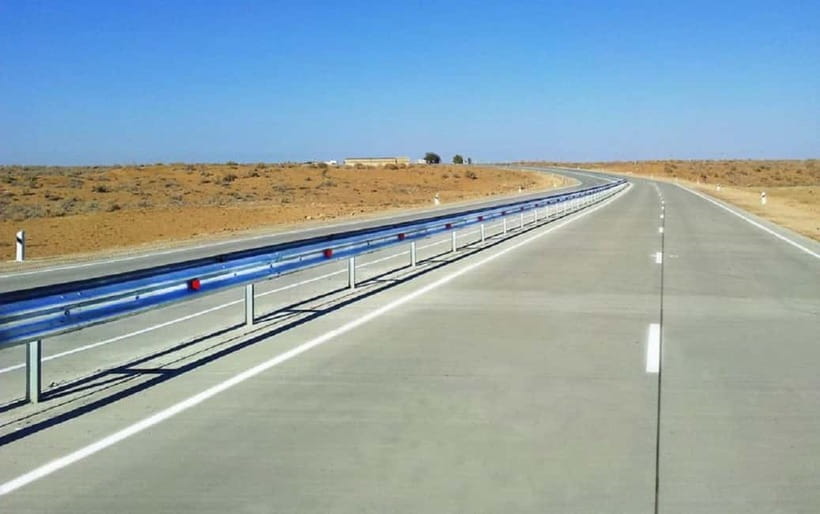
The desert crossing is not empty time. It is the setting that connects the sites. You will see long, open stretches of sand and steppe, with the fortresses appearing as sudden interruptions in a very broad view.
Because the route is long, the desert also shapes the mood of the day. This is not a quick collection of three monuments. You are moving through the same kind of dry country that made the oasis valuable and its borders vulnerable. The road helps explain why fortified settlements mattered here.
Bring water, sunglasses, and clothing suited to the season. Summer can be hot, while winter can be sharply cold at exposed sites. The supplied advice also calls for warm clothing in winter, comfortable clothes, and a camera. Those are practical suggestions, not packing filler.
The vehicle rules are strict enough to plan around. Food and drinks are not allowed inside, so keep water for stops and expect lunch along the way. One group stopped at a yurt camp, but that should be treated as an example of the lunch arrangement rather than a guaranteed feature for every departure.
Lunch and arrival in Khiva
Lunch is planned along the road, giving you a needed pause during the nine-hour day. A yurt camp was used for one group, which added a pleasant local touch to the transfer. The exact lunch venue is not specified, so bring a flexible attitude and do not book this expecting a particular menu or dining room.
The final destination is your hotel in Khiva. Arriving at your accommodation rather than a general bus station is a major benefit after a full day outside. Several drivers were praised for reaching Khiva on time, and one group specifically appreciated arriving at the right moment after the fortress stops.
Still, the schedule can be affected by road conditions, time spent walking, and the pace of your group. If you have a fixed evening booking in Khiva, tell the driver early and keep some margin. The service is designed to arrive in Khiva after the sightseeing, not to provide a quick express transfer.
How the $160 price works in practice
At $160 per group of up to three, the value depends on how many people share the car. Three people get a strong deal, especially since private transport, air conditioning, hotel pickup, hotel drop-off, taxes, and the three fortress visits are covered in the main price.
Entrance tickets are extra. Expect roughly $1 to $2 per monument per person, so the added cost is modest. Lunch and personal expenses are also extra. The important point is that you are paying mainly for the long private road transfer and the ability to stop at places that would be difficult to reach as part of a normal Bukhara to Khiva journey.
The published group limit is three people, but one reported group of six used a comfortable minivan. That suggests larger vehicles may be available, but you should confirm the vehicle size and price before booking if your group is larger than three. Do not assume the up-to-three rate automatically covers six.
Compared with paying for a plain transfer and then arranging a separate fortress outing, this combines the two jobs. It is especially good value for a small group that already has Bukhara and Khiva in its plans.
Who will enjoy this day, and who may not
I would choose this for anyone who wants to see more than Uzbekistan’s famous old-city lanes. It suits people interested in archaeology, desert scenery, ancient states, and the practical appeal of using a transfer day well.
It is also a strong option for photographers. The sites have broad views, changing light, red and clay-colored walls, and a sense of scale that is hard to get in a city museum. Bring a camera, but do not expect every fortress to offer close-up detail. The power is in the setting and the remains together.
Families and mixed-age groups can benefit from private transport because you are not tied to a large public group. You can settle into an air-conditioned car between stops. Still, the exposed ruins and uneven ground may be tiring for young children or anyone who needs smooth paths.
I would hesitate if you dislike long drives, need a full formal guide at every monument, or want a relaxed day with lots of time in each place. This is a demanding road day. The sites are worth the effort, but the transfer remains the backbone of the experience.
Communication and the driver question
The service offers English and Russian. Several drivers have been praised for speaking good English, explaining the stops, and driving safely. One Russian-speaking driver, Ulugkbek, was especially appreciated for providing information during the long journey.
That makes the driver more than a person behind the wheel, but you should keep the distinction clear. This is not presented as a guaranteed named guide service. Driver assignment can change, and the amount of historical explanation may vary.
There was also one serious communication complaint about unanswered questions as the departure date approached. I would treat that as a reason to confirm the pickup time, vehicle, group size, language, and lunch plan before the day. Good on-road service matters, but clear pre-trip communication matters too.
Should you book the Bukhara to Khiva fortress transfer?
Book it if you are already going from Bukhara to Khiva and want to make the road day count. The combination of Toprakkala’s former capital, Kizilkala’s garrison role, Ayazkala’s remote three-part complex, and the Kyzylkum Desert gives you a far broader picture of Uzbekistan than the two famous cities alone.
The strongest case is for two or three people sharing the $160 rate. You get private transport, air conditioning, hotel-to-hotel service, and three distinctive archaeological stops for a reasonable combined cost. Ask about the assigned driver and vehicle, carry water, wear sturdy shoes, and leave room in your schedule for a long day.
Skip it if you need a short, predictable transfer or if walking over rough ground is a major concern. For most curious visitors, though, this is a smart way to turn a necessary journey into one of the more unusual days of an Uzbekistan trip.
FAQ
How long does the Bukhara to Khiva fortress transfer take?
The activity lasts about nine hours, including the drive and visits to Toprakkala, Kizilkala, and Ayazkala.
What places are visited on the route?
The route goes from Bukhara to Toprakkala, Kizilkala, Ayazkala, and then Khiva. It also crosses the Kyzylkum Desert and includes a lunch stop along the way.
Is hotel pickup and drop-off included?
Yes. Pickup is provided from your hotel in Bukhara, and drop-off is provided at your hotel in Khiva. You should wait in the hotel lobby five minutes before the scheduled pickup.
Are fortress entrance tickets included?
No. Entrance tickets cost about $1 to $2 per monument per person and must be paid separately.
What languages does the driver speak?
Drivers are available in English and Russian. Individual drivers may vary, and names associated with past departures include Pavlik, Jasur, and Ulugkbek.
What should I bring?
Bring comfortable shoes, sunglasses, comfortable clothing, warm clothing in winter, a camera, and your own water. Food and drinks are not allowed in the vehicle.
Just added around Khiva
- Traditional Khiva Cooking Class with Market Visit & Lunch★ 5.0 · 4 reviews
- Old Khiva Stories with Your Local Guide★ 5.0 · 5 reviews
- A Night In The Kyzylkum Desert [2] From Khiva★ 4.5 · 3 reviews
- Master Class – Uzbek Bread (Khiva)★ 3.5 · 4 reviews
- Aral Sea – Extended trip (3 days)★ 5.0 · 5 reviews
- Khorezm Fortress and KyzylKum Desert Private Tour★ 5.0 · 3 reviews
- Best of Khiva: Exclusive Private Tour!★ 5.0 · 3 reviews
- Uzbekistan 6 Days Private Tour Khiva-Bukhara-Samarkand by Train★ 5.0 · 4 reviews
Khiva Ancient Fortress Tours, compared.

Private Bukhara-Khiva Transfer via Ancient Fortresses
Read our review →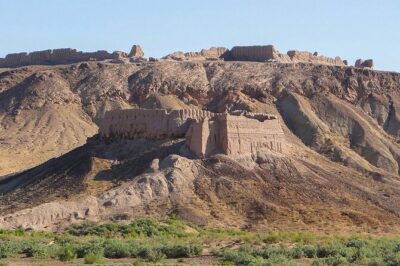
Ayaz Kala & Toprak Kala private fortress daytrip from Khiva
Read our review →Browse the lists this tour appears in