
Reviewed · KHIVA ANCIENT FORTRESS TOURS
Private Daytrip to 7 Ancient Fortresses of Khorezm
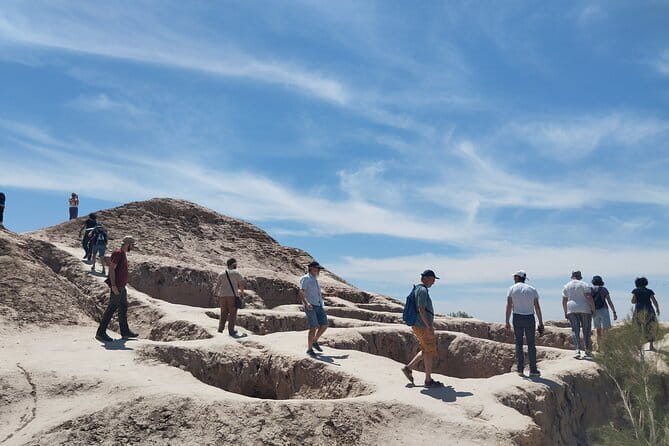
The striking part of this daytrip is the sheer number of remote ruins packed into about nine hours. From Khiva or Urgench, you head into the old Khorezm region to see mud-brick fortresses, a royal settlement, a hilltop stronghold, and Akchakul Lake. This is the kind of outing that shows you how far life once stretched beyond the famous walls of Khiva.
I like the private air-conditioned car, which keeps the long route more comfortable than a shared minibus. I also like the chance to eat local fish near Akchakul Lake, a detail that gives the day more local character than a simple circuit of archaeological sites.
The main caution is guide communication. Sarvar has driven this trip and is described as safe and helpful, but his English is still developing, and the spoken explanation may be limited. Audio files are supplied, though one booking also ended up traveling alongside another group with the same guide, so confirm the private arrangement before departure.
Key points before you book
- Eight named places appear in the route description: Dumon Kala, Guldursun Kala, Angka Kala, Janbas Kala, Ayaz Kala, Akchakul Lake, Toprak Kala, and Kizil Kala.
- The listed itinerary has seven stops, and Angka Kala is not included as a separate stop, so ask for the exact route.
- Ayaz Kala gets the longest visit, about one hour, while most fortresses receive 30 minutes.
- Toprak Kala and Kizil Kala may charge admission, while the other listed stops are shown as free.
- Lunch is not included, but local fish at Akchakul Lake is one of the most distinctive food options on the route.
- The $199 price covers up to three people, private transport, hotel pickup and drop-off, an air-conditioned vehicle, and audio-guide materials.
Why these desert fortresses matter
Ancient Khorezm was not simply a place of grand palaces and city walls. It was also a dry frontier crossed by rivers, farms, settlements, and defensive outposts. The fortresses helped control movement and protect communities in a region where water and safe routes mattered greatly.
You will not find polished exhibits at every stop. Much of the appeal comes from the setting: long stretches of open ground, rough earthen walls, empty towers, and the sense that these places were built for practical survival. The ruins can look stark, but that is exactly their strength.
This trip suits you if you prefer archaeology, open spaces, and unusual day excursions over shops and busy city sights. It is less suitable if you want a slow day with long guided talks at each site. The schedule gives most stops only 30 minutes, so the day is about seeing a broad sweep of Khorezm rather than studying one fortress in detail.
More khiva ancient fortress tours in Khiva:
- Transfer: Bukhara – Khiva via Ancient Fortresses
★ 4.5 · 101 reviews - Daytrip From Khiva To Ancient Fortresses
★ 4.6 · 60 reviews - Tranfer Khiva – Bukhara via Ancient Fortresses
★ 4.8 · 24 reviews
Toprak Kala, the royal stop
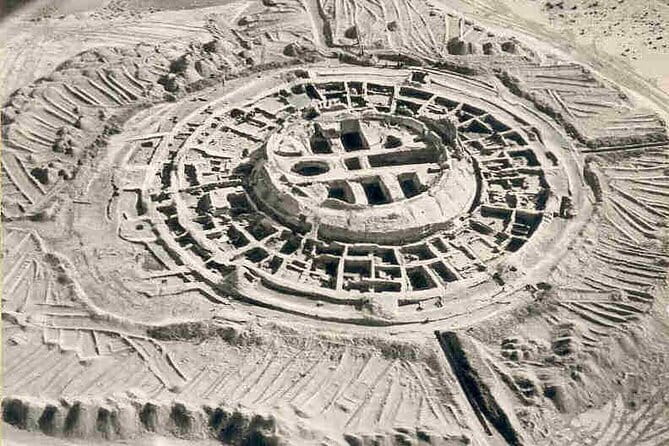
Toprak Kala is one of the most important stops because it served as a royal residence during the Kushan period, around the second and third centuries CE. It first functioned as a royal sanctuary before being abandoned for a time.
The site helps you picture Khorezm as a place with rulers, ceremony, and organized power, not just scattered desert settlements. The remaining walls and archaeological traces are best appreciated with the supplied audio material, since the visit itself lasts only about 30 minutes.
Admission is not included here, so budget for a possible ticket. The information supplied does not give the exact fee. If Toprak Kala is a priority for you, ask whether the entrance charge is payable locally and whether the stop can receive extra time.
Guldursun Kala and the medieval frontier
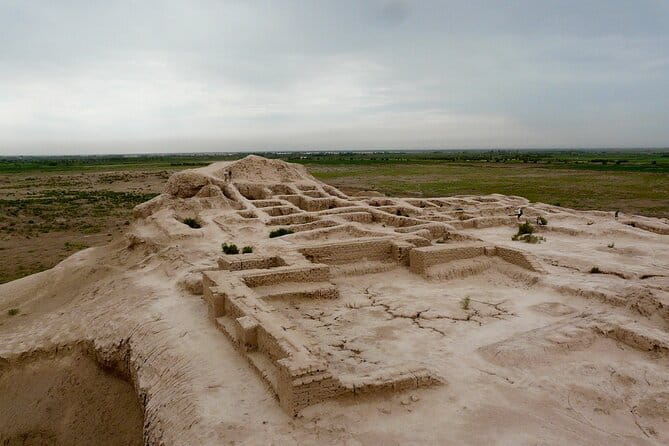
Guldursun Kala is a fortified town whose exterior walls and towers date to the 12th century CE. Archaeologists found pottery, bronze objects, and coins within the site, giving it a more tangible connection to everyday life than a bare wall alone.
I find this stop useful because it bridges the gap between the early antique fortresses and later Khorezm. You are not looking at one single period. The route crosses several centuries, and Guldursun shows how defensive places continued to matter in medieval times.
The planned visit is about 30 minutes, and admission is listed as free. That short time is enough to see the main remains and take in the scale, but not enough for a careful archaeological study. Wear practical shoes and keep your expectations realistic: this is an exposed ruin, not a restored castle.
Janbas Kala and its high walls
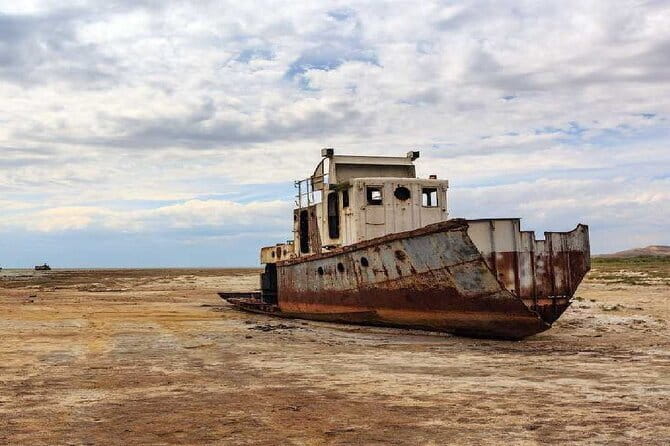
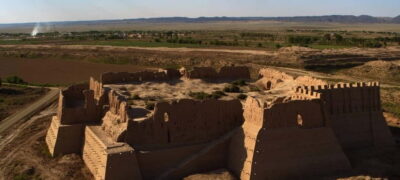
Janbas Kala has one of the more archaic fortification systems on the route, dating from the early antique period. Its four outer walls are in relatively good condition, with sections reaching about 20 meters high.
The height is the point here. You can better understand the defensive thinking of the builders when you see how the walls dominated the surrounding ground. The fortress was designed to protect its interior and make approach difficult.
You get about 30 minutes at Janbas Kala. That is enough for a first look, but the open setting and wall height may make you want to linger. The trip requires a moderate level of physical fitness, so do not treat this as a fully effortless sightseeing day. The tour is by car, but getting close to the ruins and walking around them still takes some effort.
A few more Khiva trips to weigh up
- Private Daytrip to Muynak and Nukus
★ 5.0 · 10 reviews - Best of Khiva: Exclusive Private Tour!
★ 5.0 · 9 reviews - Ayaz Kala & Toprak Kala private fortress daytrip from Khiva
★ 3.5 · 6 reviews - Private Transfer & Photo‑Stops: Ayaz‑Kala & Toprak‑Kala”
★ 4.6 · 6 reviews
Ayaz Kala, the visual high point
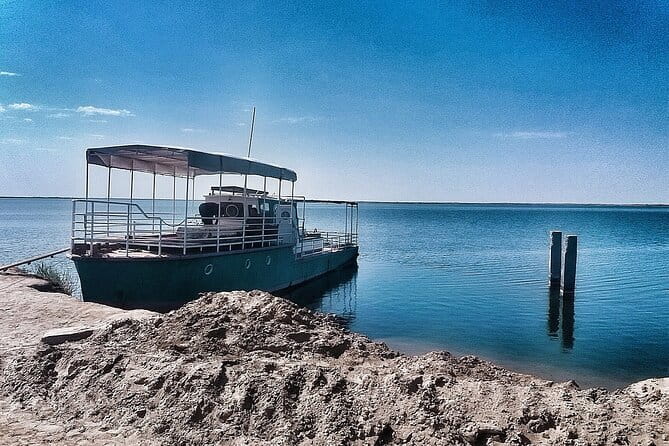
Ayaz Kala is the most spectacular fortress group on the route, and the schedule reflects that with about one hour. It is not one building but three fortresses placed on and around a prominent hill at the eastern end of the Sultan-Uiz-dahg range.
This is where the day’s scale becomes clear. You see how the fortresses relate to one another and to the surrounding open ground. The hill setting gives Ayaz Kala a stronger visual impact than many of the lower ruins.
I would use the extra time here carefully. Walk at a comfortable pace, look across the different fortress levels, and use the audio material to sort out what you are seeing. The supplied information does not specify the exact walking route or difficulty, but the moderate-fitness notice is worth taking seriously.
Ayaz Kala is also the stop most likely to reward patience. A rushed photograph and a quick return to the car would miss much of its appeal. At the same time, there is no promise of a long on-site talk, so prepare to make good use of the hour yourself.
Kizil Kala and layers of rebuilding
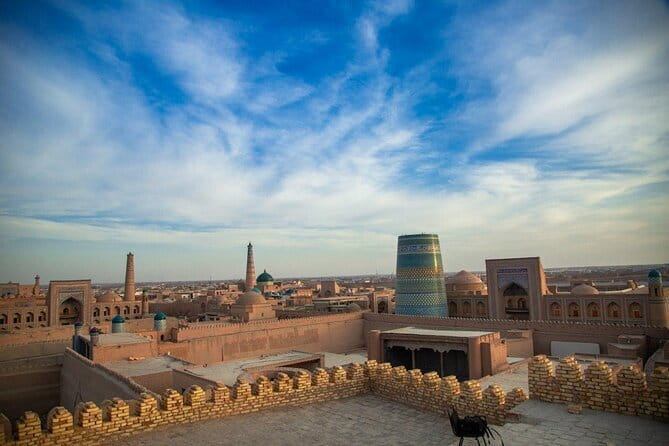
Kizil Kala, also written Qizil Qala or Kyzyl Kala, was first built during the Late Antique period, from the first to fourth centuries CE. It was later abandoned and rebuilt in the 12th and 13th centuries, just before the Mongol invasions.
That sequence gives you one of the clearest examples of change across the route. A fortress could lose its use, then return to service when conditions demanded it. The site is not only about age. It is about repeated adaptation.
The stop lasts about 30 minutes. Admission is not included, so ask in advance about the current local fee. Since the site may be described under several spellings, matching the name on your booking details with the local signs could help avoid confusion.
Dumon Kala and a three-part defensive plan
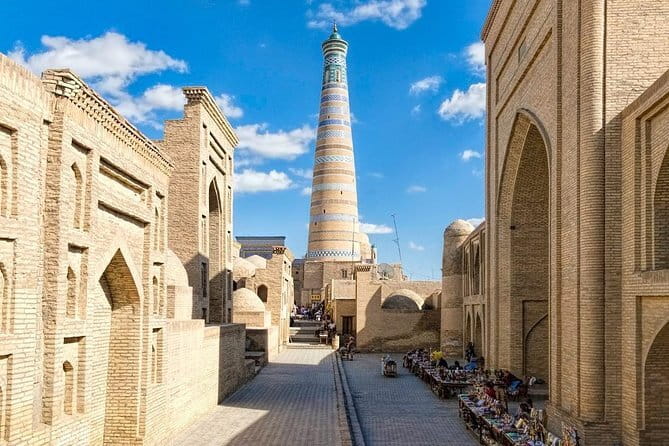
Duman Kala, also written Dumon Kala, is made up of three connected sections. These include a square western enclosure with corner towers, a smaller square citadel, and an irregular northern enclosure.
The layout is more interesting than a single block of ruins. You can look for the difference between the main enclosure, the citadel, and the northern section, then think about how each part may have served a different purpose. The site offers a useful reminder that a fortress was often a working complex, not just a thick wall.
The planned visit is 30 minutes, and admission is listed as free. Because the information provided labels this stop simply as Uzbekistan, confirm the local name and exact location with the operator before setting out.
Akchakul Lake and the food break
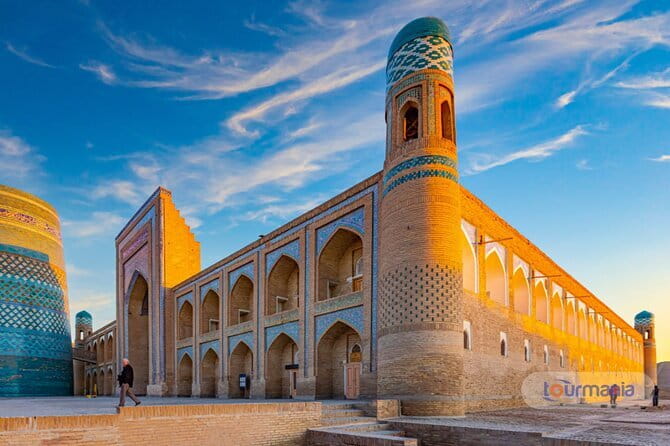
Akchakul Lake adds a welcome change to a day dominated by fortifications. In the period described by the tour, the Amu Darya, also called the Ox River, flowed in two directions here, through the Akcha River and the Suvyorgan River. The name Akcha is linked to the Akchakhan Fortress area.
The lake stop is about 30 minutes, so do not expect a long waterside outing. Its value is the connection between water, settlement, and food. The region’s rivers made life possible, and local fish gives you a taste of that connection.
Lunch is not included in the $199 price. The description points to local fish at the Akchakul lake complex, but it does not state the price, menu, or whether a meal is guaranteed. Ask before departure if you want to plan around this stop. If fish is important to you, confirm whether it can be arranged and whether you should bring another lunch option.
The missing Angka Kala question
The route summary names Angka Kala, but the detailed seven-stop itinerary does not show it as a separate stop. The itinerary lists Toprak Kala, Guldursun Kala, Janbas Kala, Ayaz Kala, Kizil Kala, Duman Kala, and Aqchako‘l, which appears to be Akchakul Lake.
That creates a small but important booking question. The experience is marketed as a trip to seven ancient fortresses, yet the summary names eight places when the lake is counted as a stop. Angka Kala may be an omitted fortress, a variation in the route, or a naming mix-up.
I would message Oxus Travel before booking and ask for the exact stops on your date. This matters because 30 minutes saved at one site may be used for another, and because the name of a fortress is a basic part of what you are paying to see.
A private car, but confirm the arrangement
The tour includes private transportation in an air-conditioned sedan, hotel pickup and drop-off, and departure at 9:00 am. It can begin in Khiva or Urgench, which is useful if you are staying in either city.
The price is $199 per group of up to three people, not $199 per person. With three people, that works out to about $66 per person before any admission or food costs. For a nine-hour private outing with transport and pickup, that can be a reasonable deal, especially if you would otherwise need to arrange a car and driver separately.
The word private deserves a quick check. One booking involved another group traveling in a separate car with the same guide. That arrangement did not provide the expected amount of time at the stops. I would confirm two points in writing: that your group will have its own car, and that the guide will remain assigned to your group rather than splitting attention.
Guide communication and the audio material
Sarvar is named as a driver who made a solo female guest feel safe. That is a useful point for anyone traveling alone, particularly on a long route through remote areas. The same account also noted that Sarvar is still learning English and did not provide extensive spoken information about the fortresses.
Audio-guide materials are included, and audio files may be sent before the trip. This can work well if you are comfortable listening independently. It also means you should download or check the files before leaving, rather than assuming every stop will come with a long live explanation.
If you want detailed archaeological discussion, ask about the guide’s language level and the content of the audio materials before booking. If you mainly want safe transport, clear stops, and the freedom to look around at your own pace, the arrangement may suit you well.
Timing, comfort, and what to bring
Nine hours is a long day, even with a sedan. The route covers several widely separated sites, and most visits are short. You will spend a meaningful part of the day in the car, so the air-conditioning matters, particularly in warm weather.
The tour requires moderate physical fitness. The data does not give exact distances between the car and each ruin, nor does it promise paved paths. Plan for walking on uneven ground and for exposure to the elements without assuming that every site has visitor facilities.
Useful preparations include:
- Comfortable walking shoes
- Water for the road
- Sun protection
- A phone or camera with enough battery
- A backup snack, since lunch is not included
- Questions about admission fees and the Angka Kala stop
The experience requires good weather. If poor weather cancels the trip, you are offered another date or a full refund.
Who gets the best value from this trip
I would recommend this outing to anyone staying in Khiva or Urgench who wants more than the famous old town. It is especially useful for a small group of two or three people, since the group price becomes much better per person.
It also suits solo visitors who value a private car and want a structured way to reach remote ruins. Sarvar’s safety record is a positive sign, but solo visitors should confirm the language arrangement and private guide setup.
You may want a different plan if you need wheelchair-friendly access, a slow pace, a full meal, or detailed live interpretation at every fortress. The supplied information does not describe accessibility, exact road conditions, or a guaranteed lunch, so ask directly if any of those points affect your decision.
Should you book the seven-fortress route?
Book it if you want a broad, unusual day outside Khiva and are happy with archaeological ruins rather than restored monuments. The strongest reasons are the private air-conditioned transport, the chance to see Ayaz Kala and Toprak Kala, and the stop at Akchakul Lake with its local fish tradition.
Before paying, confirm the exact list of fortresses, especially Angka Kala, and ask how the guide and audio materials will work. Also check the entrance costs for Toprak Kala and Kizil Kala and make a plan for lunch.
At $199 for up to three people, this is best value when shared by a small group. Go with realistic expectations about the short visits and limited spoken English, and you get a full, memorable look at ancient Khorezm beyond the streets of Khiva.
FAQ
Where does the fortress daytrip start?
The trip can start from Khiva or Urgench. Hotel pickup and drop-off are included.
What time does the tour begin?
The stated start time is 9:00 am.
How long does the experience last?
The trip lasts about nine hours.
How many people can join the private tour?
The price covers one group of up to three people. Only your group is intended to participate.
What type of vehicle is used?
Private transportation is provided in an air-conditioned sedan car.
Is lunch included?
No. Lunch is not included. Local fish at the Akchakul Lake complex is mentioned as a food option, but the supplied information does not guarantee a meal or give its price.
Are entrance tickets included?
Admission is listed as free at Guldursun Kala, Janbas Kala, Ayaz Kala, Duman Kala, and Aqchako‘l. Tickets are not included for Toprak Kala and Kizil Kala.
Is the trip suitable for every fitness level?
The experience requires a moderate level of physical fitness. The exact walking distances and path conditions are not provided.
Can I cancel for a full refund?
Yes, if you cancel at least 24 hours before the local start time. Cancellations or changes made within 24 hours are not refunded or accepted. Poor weather may result in a different date or a full refund.
Just added around Khiva
- Traditional Khiva Cooking Class with Market Visit & Lunch★ 5.0 · 4 reviews
- Old Khiva Stories with Your Local Guide★ 5.0 · 5 reviews
- A Night In The Kyzylkum Desert [2] From Khiva★ 4.5 · 3 reviews
- Master Class – Uzbek Bread (Khiva)★ 3.5 · 4 reviews
- Aral Sea – Extended trip (3 days)★ 5.0 · 5 reviews
- Khorezm Fortress and KyzylKum Desert Private Tour★ 5.0 · 3 reviews
- Best of Khiva: Exclusive Private Tour!★ 5.0 · 3 reviews
- Uzbekistan 6 Days Private Tour Khiva-Bukhara-Samarkand by Train★ 5.0 · 4 reviews
Khiva Ancient Fortress Tours, compared.

Private Bukhara-Khiva Transfer via Ancient Fortresses
Read our review →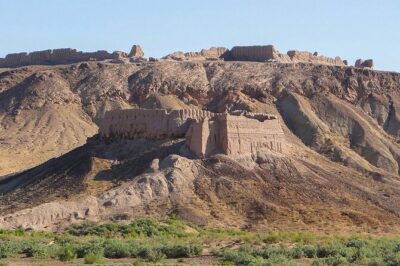
Ayaz Kala & Toprak Kala private fortress daytrip from Khiva
Read our review →Browse the lists this tour appears in