
Reviewed · GUIDED
Guided Tour To Old Fortresses
The striking thing about this trip is the setting: ancient fortresses rise from the open desert beyond Khiva, with wide views, salt flats, and very little between you and the horizon. Guide Sukhrab drives and explains the sites, so you are not left to puzzle over piles of mud brick on your own. I like the private format and the chance to talk about Uzbek customs, daily life, and local stories as well as old stones.
I also like the thoughtful pacing. Sukhrab has adjusted outings for hot weather, walking speed, train schedules, and photo stops. The main drawback is the long drive, roughly two hours each way, and the fortress visits require moderate walking on uneven ground. This is a full day in the desert, not a quick add-on from Khiva.
Key points to know before you book

- Three very different desert fortresses: Ayaz-Kala, Toprak-Kala, and Kyzyl-Kala each offer a different sense of ancient Khorezm.
- Sukhrab is both driver and guide: You get one local companion for the road, the sites, and questions about modern life in Uzbekistan.
- Private tour for up to four people: The $88 price is per group, not per person, which makes the cost especially attractive for a small party.
- About seven hours total: The schedule begins at 8:30 a.m. and includes the driving time from Khiva.
- Good views and photo stops: Ayaz-Kala is on high ground, while the open desert around the fortresses gives the best sense of scale.
- Bring proper shoes and lunch money: Sneakers are recommended, and lunch is not included. The planned food stop features freshly prepared somsa.
Why these fortresses are worth a day from Khiva
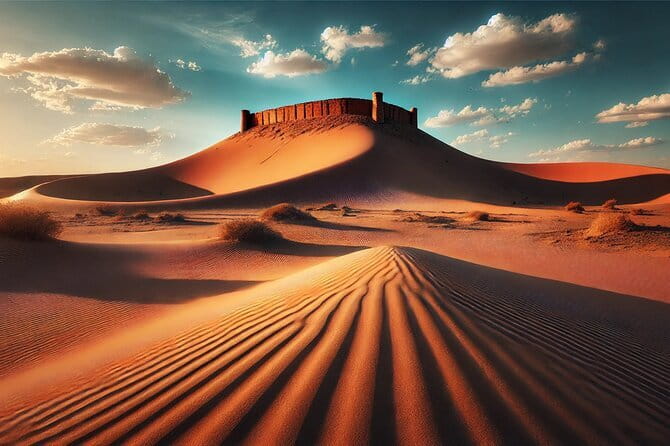
Khiva’s walled old town is the obvious focus of a visit, but it shows only one chapter of Khorezm. The desert fortresses north and east of the city point to an older world of frontier towns, lookout posts, rulers, soldiers, and trade routes.
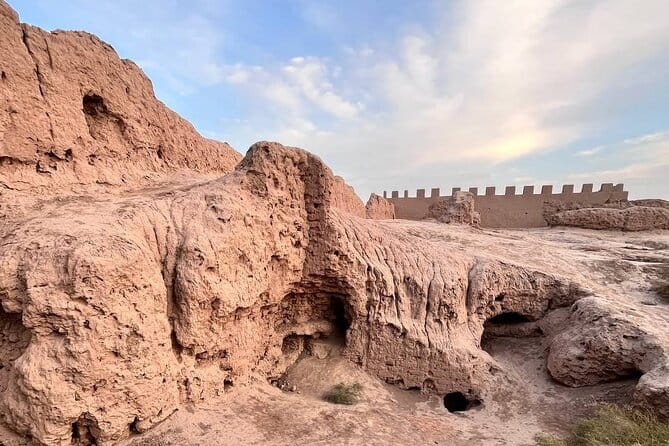
You will not find polished galleries or reconstructed halls here. These are exposed ruins, often made from earth and mud brick, with wind and sun doing their slow work. That raw quality is the point. You can see the shape of a settlement, follow a wall, climb for a view, and imagine how much labor went into building in such a dry place.
The guide makes a big difference. Sukhrab does not only recite dates. He explains the purpose of the fortresses, shares stories and legends, and connects ancient life with present-day Uzbekistan. His English is described as easy to understand, and he is happy to discuss local customs, family life, food, and everyday routines during the long drive.
That conversation matters because the ride takes up a large part of the day. If you enjoy asking questions, the drive becomes part of the tour rather than dead time. If you prefer constant sightseeing, you should know that the road stretches are real and sometimes long.
A few more Khiva trips to weigh up
- Khiva Historical City Highlights Guided Walking Tour
★ 5.0 · 30 reviews - Old Khiva Stories with Your Local Guide
★ 5.0 · 5 reviews - Samarkand: Historical Monuments Guided Walking Tour
★ 4.8 · 446 reviews
The drive from Khiva to the desert ruins
Pickup begins at 8:30 a.m., with collection offered from your accommodation. The tour is private, so only your own group participates. Transport is air-conditioned, an important detail in a region where summer heat can make even a short walk feel demanding.
The trip lasts about six hours and 45 minutes, or roughly seven hours, including driving. The fortresses are around 100 kilometers from Khiva, and the road time is about two hours in each direction. That makes this a serious excursion, but the distance is also what takes you away from the city and into the broad Khorezm desert.
I would use the drive to ask questions early. You can talk with Sukhrab about Khiva, Uzbek traditions, food, regional customs, and the history of the fortresses before reaching the first site. Several outings have also included water, and Sukhrab has been praised for safe driving and punctual pickup.
The open views begin to matter before you arrive. You might see flat desert, salt flats, distant walls, and a sky that feels much larger than the streets of Khiva. Wind can be strong, so carry a light layer even on a warm day. One outing was notably windy, while another took place in 34-degree heat with a brisk breeze.
Ayaz-Kala offers the best first view
Ayaz-Kala is the most dramatic opening stop. The site includes two large fortresses, more than 2,000 years old, with the main fortress perched on a hill. From the upper ground, you can look across the desert and understand why height mattered here.
The climb is not presented as a technical hike, but you should expect uneven surfaces and a moderate level of exertion. Sneakers are the sensible choice. Loose sandals may be less comfortable on slopes and rough ground.
The reward is the view. From Ayaz-Kala, the walls and towers take on a different scale, and the surrounding emptiness makes the ancient defensive purpose easier to grasp. This is also the strongest stop for photographs, especially if you like broad views rather than close-up architectural detail.
Sukhrab accompanies you up the fortress and explains the site in place. That is better than receiving a quick talk beside the car, since you can point to a wall, a tower, or a rise in the ground and ask what you are seeing.
Allow about 35 minutes here. That may sound short, but the site is open, exposed, and physically more demanding than a museum. On a hot or windy day, the pace may need to slow. Sukhrab has adapted the walk for people with different fitness levels, including stopping for rests and continuing the conversation while you recover.
Toprak-Kala shows the scale of an ancient city
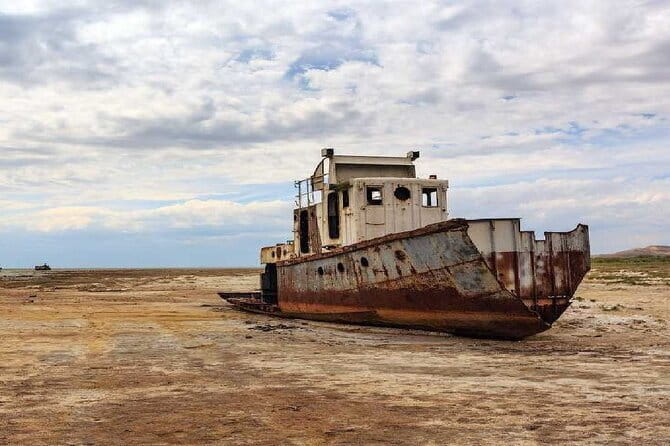
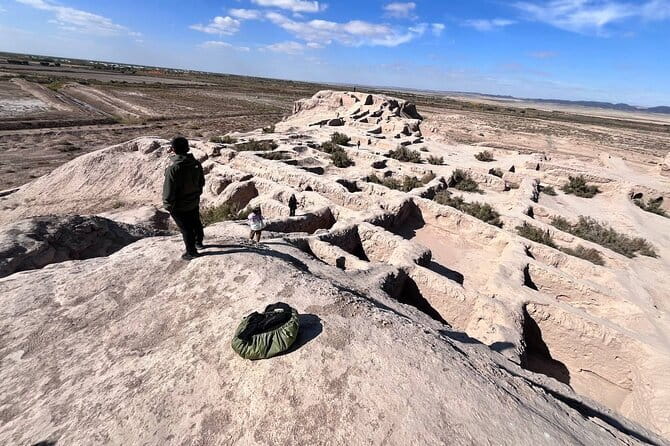
Toprak-Kala feels less like a single watchtower and more like the remains of an old urban center. It was once an important place connected with the Khorezmshahs, and its broad ruins help you picture a settlement rather than only a defensive wall.
Here, I would pay attention to the ground plan. Even when walls have collapsed, the layout can suggest streets, rooms, courtyards, and official spaces. The site rewards a guide who can explain what the remains may have been used for, since an unmarked ruin can otherwise be hard to read.
The scheduled visit lasts around 35 minutes, matching Ayaz-Kala. There is no separate entrance charge listed for Toprak-Kala, while tickets for the other sites are included. You do not need to handle the ticket process yourself.
Toprak-Kala is also a good place to keep asking questions about power and daily life. The site’s connection to Khorezm’s rulers gives Sukhrab a chance to explain how authority, defense, and settlement fit together. His strength is not just naming the fortress. He adds legends and stories gathered from local older residents, which gives the ruins a more human edge.
Do not expect a restored palace. The charm is in seeing the remains as they are, with the desert around them. Some people will find the lack of shelter and signage a drawback. I find it more rewarding when the explanation comes from a local guide who can respond to your interests.
Same Silk Road, a completely different kind of day:
- Transfer: Bukhara – Khiva via Ancient Fortresses
★ 4.5 · 101 reviews - Daytrip From Khiva To Ancient Fortresses
★ 4.6 · 60 reviews - Aral Sea Adventures (2 day)
★ 5.0 · 30 reviews - Private Daytrip to 7 Ancient Fortresses of Khorezm
★ 5.0 · 25 reviews
Kyzyl-Kala brings the defensive story into focus
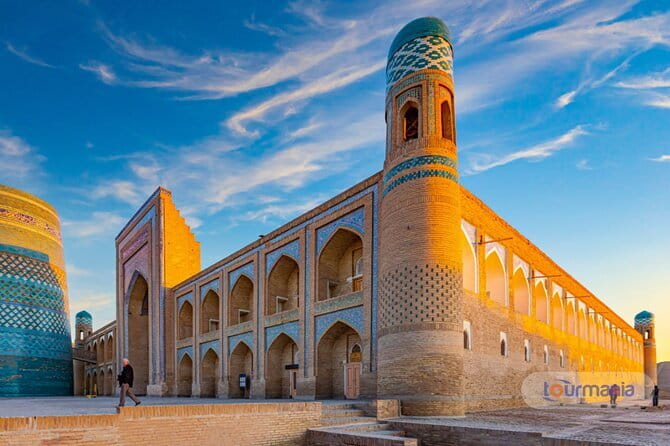
Kyzyl-Kala is known for its large walls and towers. The fortress was built to protect the area from invaders, and its shape makes that military role easier to see than at some less intact ruins.
The stop is shorter, about 25 minutes, but it adds variety. After Ayaz-Kala’s views and Toprak-Kala’s city scale, Kyzyl-Kala brings you back to fortification. Look closely at the wall lines and tower positions. Even without imagining every detail, you can see how the builders used thick walls and raised points to control access.
Because this is the third site, the shorter visit is useful. You have already spent time in the sun and on rough ground, and the schedule avoids turning the afternoon into a long, tiring inspection of similar ruins. Sukhrab still walks with you and explains the purpose of the fortress on site.
The three stops work best together. Visiting only one would give you a dramatic ruin. Visiting all three lets you compare a hill fortress, an ancient city, and a defensive stronghold. That comparison is one of the strongest reasons to set aside a full day from Khiva.
The food stop is simple and local
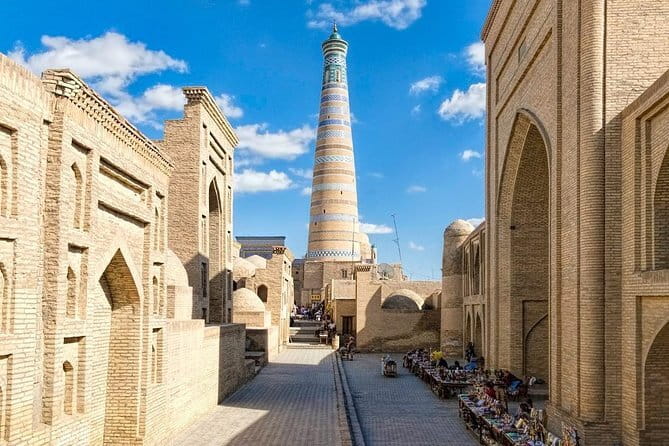
Lunch is not included, so bring money for food. The planned break on the way back features somsa, a traditional filled pastry prepared by local street cooks. It is a practical meal after several hours outside and a more local choice than a formal tourist restaurant.
The stop is described as a short break after the fortress visits. It may be the moment you most appreciate a drink, shade, or a chance to sit. Some outings have also included a cafe stop, tea or coffee, biscuits, or a local meal such as plov, but the clearest plan for this experience is freshly prepared somsa.
Do not book this tour expecting a long culinary visit. Food is an extra and the stop is brief. Still, the simple meal fits the day. You are visiting remote ruins, and eating something made by local cooks helps keep the experience tied to the region rather than turning it into a sealed sightseeing bubble.
The private format is the tour’s best value
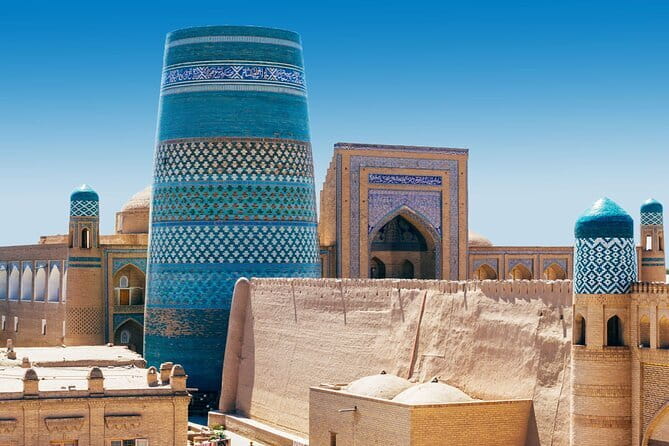
The listed price is $88 per group of up to four people. For one person, that is not a bargain compared with a shared excursion. For two people, it becomes $44 each, and for four, it works out to $22 per person before lunch.
That price includes the English-speaking guide, air-conditioned transport, and entrance tickets. It also buys privacy, which gives you more control over the pace and conversation. You can ask Sukhrab to spend more time on history, local life, legends, photography, or practical travel questions.
The private setup is useful if you have a train later. Sukhrab has adjusted timing for a passenger catching an afternoon train and helped with practical stops along the way. Still, tell him about fixed plans when booking. The tour is long, and driving times can change with weather, stops, and walking pace.
The included tickets remove a small layer of hassle, but lunch remains your responsibility. You also need to supply the energy for the walking and the patience for the road. The value is strongest for a couple, family, or group of friends who want a personal day outside Khiva.
What the guide adds beyond the ruins
Sukhrab’s most useful quality is his willingness to talk. He explains the old fortresses clearly, but he also answers questions about modern Uzbekistan and Khiva. That makes the ride feel connected to the place you are visiting now, not only to events from centuries ago.
His background as a Khiva native adds a local point of view. He has spoken with older people in the area while preparing his material, which helps explain why local stories and legends appear alongside formal history. You can ask where a story comes from and how people in the area understand the old sites.
His manner also suits a private day. He has been described as kind, attentive, punctual, and easy to talk with. His English is strong, and he is willing to adjust for heat, fitness, train times, and requests for photographs. These are practical qualities, not mere niceties. On a seven-hour excursion, a rigid guide would make the long road feel much longer.
You should still tell him what you want. Some people want a detailed history lesson. Others want more conversation about life in Uzbekistan. The tour is built to adapt, so use that flexibility.
Heat, walking, and what to pack
This is a moderate-activity outing. You do not need an athlete’s fitness, but you should be comfortable walking over uneven ground and climbing at least some slopes, especially at Ayaz-Kala. One person with a modest normal walking routine managed the route when it was taken at an easy pace.
Pack:
- Sneakers or other firm walking shoes
- Water, even though water has been provided on outings
- Sun protection suitable for an open desert site
- A light layer for wind
- Money for lunch
- Your phone or camera for the views and photo stops
Conditions can shift. June may be very hot, while another day can be cold and windy. The fortresses offer little obvious shelter, so check the day’s forecast and dress for exposure.
The mobile ticket is convenient, and confirmation arrives when you book. Pickup is offered, but you should confirm the exact meeting details with the provider. Free cancellation is available up to 24 hours before the start time. Changes or cancellations inside that window are not refundable.
Who should book this day trip
I would choose this tour if you have already allowed time for Khiva’s old city and want to understand the wider Khorezm region. It suits people who enjoy ruins in open settings, local conversation, photography, and a guide who can move between ancient history and modern life.
It is especially good for couples and small groups. The group price makes sense for up to four people, and a private car is more comfortable than being tied to a larger party. It also suits anyone who wants to ask many questions without worrying about holding up strangers.
I would think twice if you dislike long drives, heat, wind, or unmarked ruins. This is not a polished attraction with air-conditioned rooms at every stop. The fortresses are exposed, the ground can be rough, and the main reward comes from the combination of place, story, and desert scale.
Should you book the Guided Tour to Old Fortresses?
Yes, if you want more than Khiva’s famous walls and minarets. Ayaz-Kala, Toprak-Kala, and Kyzyl-Kala offer three distinct views of ancient Khorezm, and Sukhrab adds the local context that makes the ruins easier to understand.
The main decision is simple: can you spare about seven hours for a roughly four-hour round-trip drive and moderate walking? If so, the $88 group price is strong for a private guide, transport, and entrance tickets. Book it for a full day beyond the city, wear good shoes, bring lunch money, and tell Sukhrab about any train or timing needs before you set out.
FAQ
How long does the tour last?
The tour lasts approximately six hours and 45 minutes, or about seven hours in total, including driving time.
What time does the tour start?
Pickup begins at 8:30 a.m.
How many people can join the private tour?
The price covers one private group of up to four people. Only your group participates.
Which fortresses are included?
The route includes Ayaz-Kala, Toprak-Kala, and Kyzyl-Kala.
Is transportation included?
Yes. Transport with air conditioning is included, along with an English-speaking guide who also serves as the driver.
Is lunch included?
No. Lunch is not included. The planned stop offers a chance to buy freshly prepared somsa from local street cooks.
Do I need to be very fit?
A moderate level of fitness is recommended. The sites involve walking on uneven ground, and sneakers are recommended.
Can I cancel for a full refund?
Yes, if you cancel at least 24 hours before the experience start time. Cancellations or changes made less than 24 hours before the start are not refunded.
Just added around Khiva
- Traditional Khiva Cooking Class with Market Visit & Lunch★ 5.0 · 4 reviews
- Old Khiva Stories with Your Local Guide★ 5.0 · 5 reviews
- A Night In The Kyzylkum Desert [2] From Khiva★ 4.5 · 3 reviews
- Master Class – Uzbek Bread (Khiva)★ 3.5 · 4 reviews
- Aral Sea – Extended trip (3 days)★ 5.0 · 5 reviews
- Khorezm Fortress and KyzylKum Desert Private Tour★ 5.0 · 3 reviews
- Best of Khiva: Exclusive Private Tour!★ 5.0 · 3 reviews
- Uzbekistan 6 Days Private Tour Khiva-Bukhara-Samarkand by Train★ 5.0 · 4 reviews
Guided, compared.
Khiva Historical City Highlights Guided Walking Tour
Read our review →
Samarkand Historical City Highlights Guided Walking Tour
Read our review →
Private Guided Tour Samarkand city history and culture
Read our review →
Bukhara Historical City Highlights Guided Walking Tour
Read our review →Browse the lists this tour appears in