
Reviewed · ARAL SEA AND SHIP CEMETERY TOURS
Aral Sea Tour from Nukus 1 night / 2 days
The Aral Sea is not a normal sightseeing stop. Here, a vanished sea has become a salt-and-dust desert, with rusting ships stranded far from water and the empty seabed stretching toward the horizon. The trip puts you right inside one of the modern era’s clearest warnings about careless use of nature.
I like two things especially: the private 4×4 takes you well beyond the usual city sights, and the yurt camp gives the journey a human, quiet pause under a clear sky. The main drawback is hard to ignore: the roads are rough and the driving days are long, so anyone with back or mobility problems should think twice.
Key points to know before you book
- The ship cemetery at Muynak: Rusting boats sit on dry ground where a working port once served the Aral Sea.
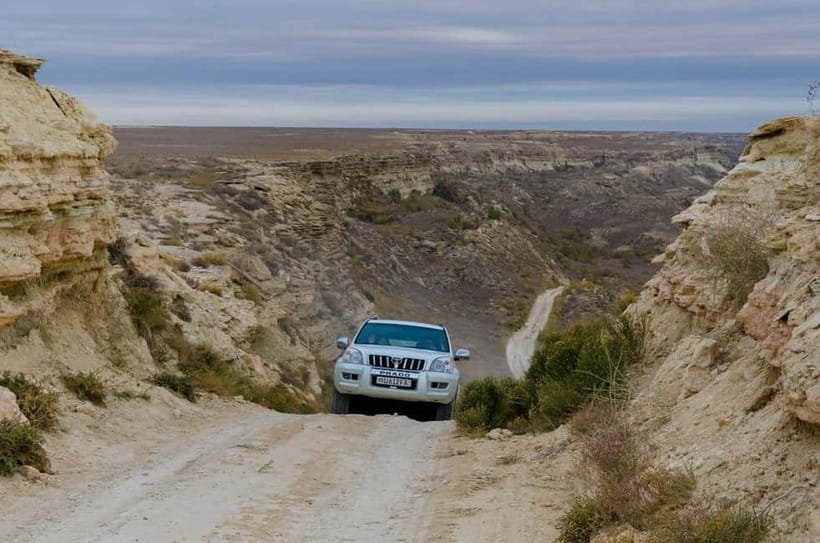
- A true off-road route: The 4×4 is necessary, with about seven hours of driving to the camp and eight hours back to Nukus.
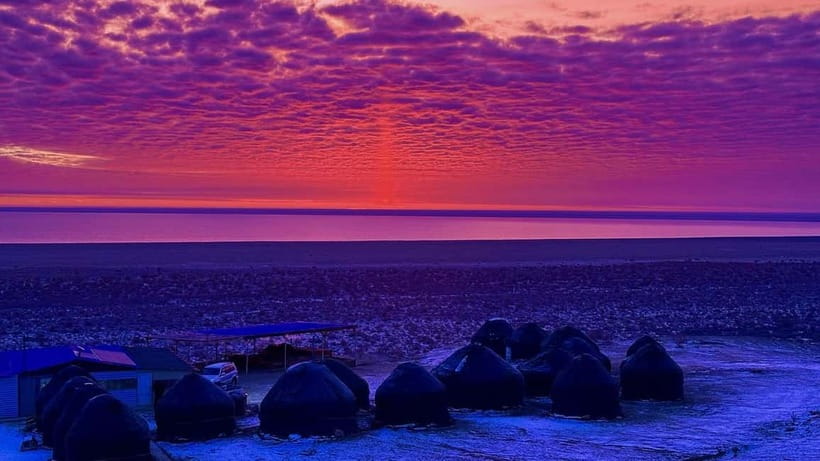
- A night beside the dry sea: The yurt stay adds a campfire, desert quiet, possible swimming, and strong stargazing.
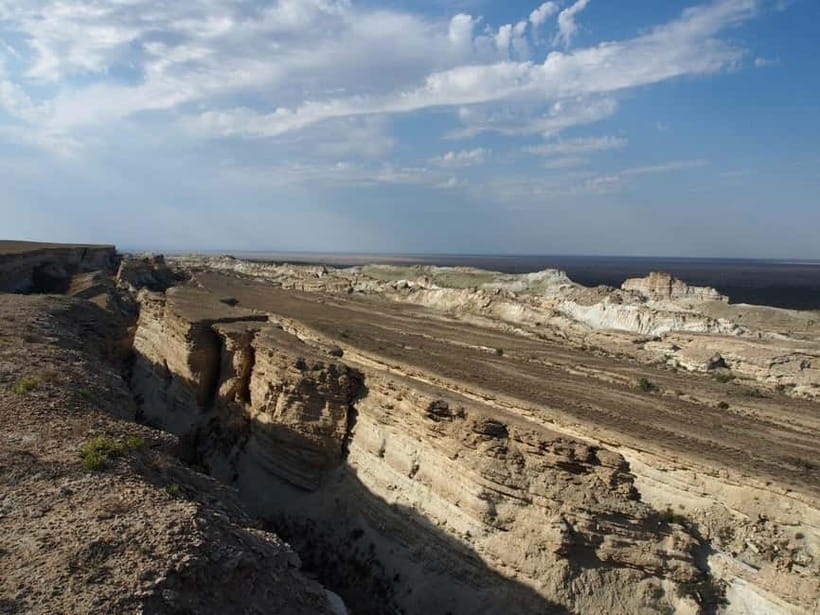
- Ustyurt’s white canyons: The plateau offers stark cliffs, open desert, and scattered cemeteries linked to local nomadic communities.
- A private group of up to four: You get pickup from Nukus and a more flexible ride than a large coach tour.
- Extra costs matter: Accommodation, four meals, the museum ticket, and personal expenses are not included in the $590 group price.
Why the Aral Sea makes such a powerful day trip
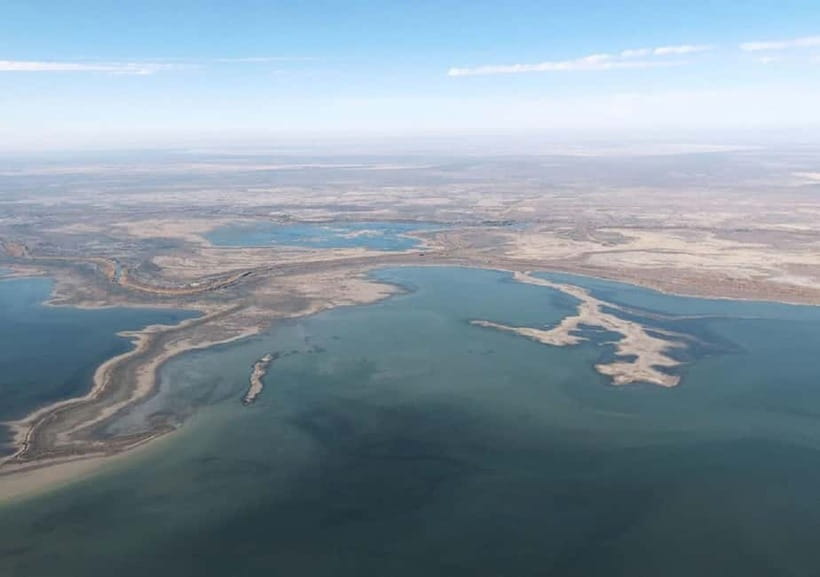
From Nukus, the road leads into Karakalpakstan, a region where the Aral Sea disaster is not an abstract environmental story. The sea began shrinking after rivers feeding it were diverted for irrigation. What remains is a vast dry seabed, and the journey lets you see the result at ground level.
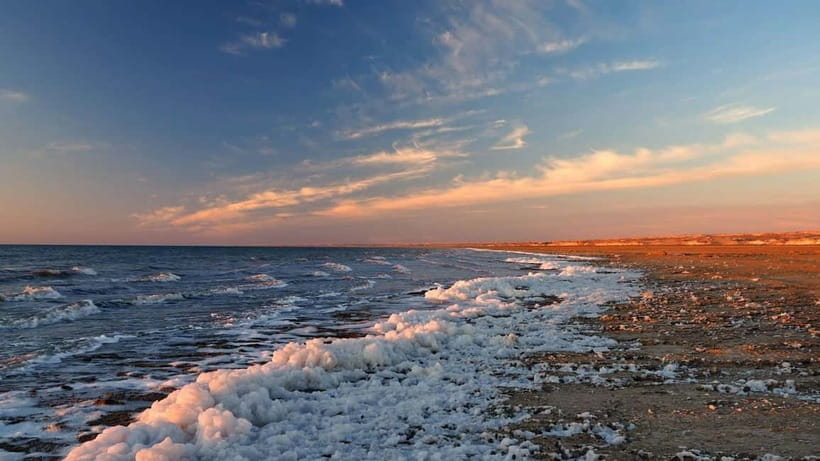
You do not simply stop at a viewpoint, take a picture, and leave. At the dry seabed, you can walk across the former sea floor, touch the ground, and see how completely the water has retreated. Salt, mud, wind, and empty distance replace the old shoreline.
That physical scale is the reason to make this trip. The route is tiring, but it gives meaning to the word catastrophe in a way a museum display cannot. You see the human cost, the damaged environment, and the distance between the present desert and the sea that once supported ports and fishing communities.
The tour is private for up to four people, which is useful here. You can stop at the named sites without being tied to a large bus group. Pickup is available from your Nukus hotel, airport, or railway station, and the driver speaks English or Russian according to the booking information.
More aral sea and ship cemetery tours in Uzbekistan:
- Daytrip from Khiva to Aral Sea Cemetery of Ships. All in one
★ 4.3 · 52 reviews - Aral Sea Adventures (2 day)
★ 5.0 · 30 reviews - From Khiva To Aral Sea 2-Days One Night In Yurt Stay
★ 4.6 · 20 reviews
Mizdakhan, a city of the dead near Nukus
Mizdakhan is an unusual first stop. This ancient cemetery complex, sometimes called the City of Deaths, contains a large collection of mausoleums and burial structures. It also preserves customs and traces connected with the pre-Islamic period.
The site gives the route an important human beginning. Before you see the empty Aral seabed, you encounter a place shaped by centuries of belief, memory, and local tradition. The mausoleums are not presented as polished museum pieces. They form part of an open, weathered complex that rewards a slow walk and careful attention.
Wear good shoes here. The wider tour calls for comfortable footwear, and protective hiking boots or sports shoes are especially sensible. A hat, sunglasses, sunscreen, and long trousers will help in the open sun.
Mizdakhan is not the longest stop, but it prevents the day from becoming a simple drive to a disaster site. It places the Aral Sea story within the older history of Karakalpakstan.
Muynak and the ship cemetery
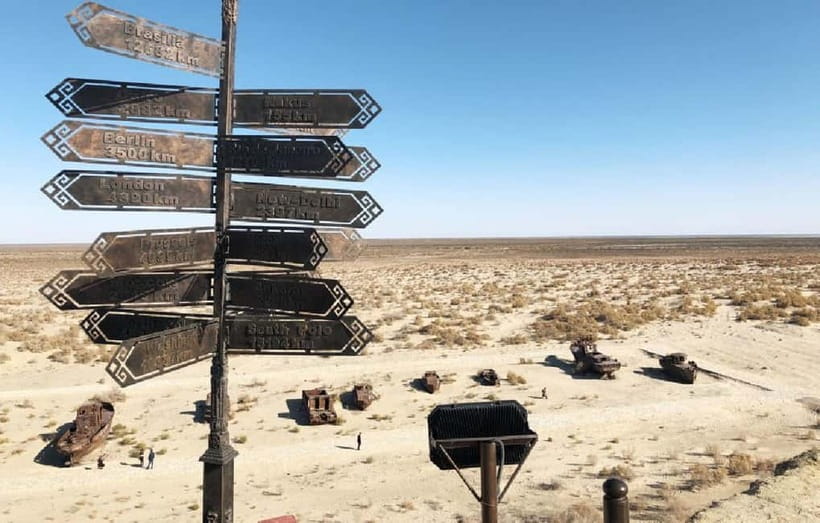
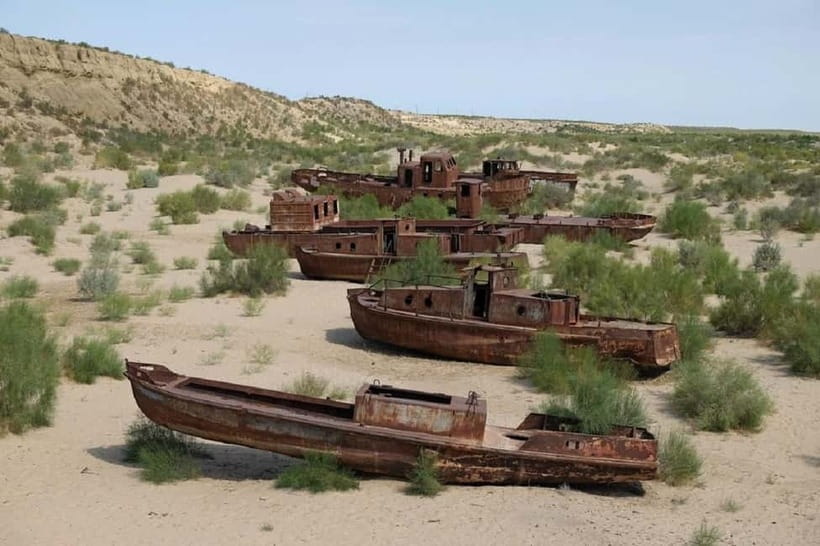
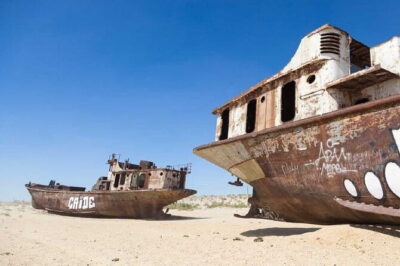
Muynak is the emotional center of the first day. Once a port town on the Aral Sea, it is now famous for its ship cemetery, where abandoned vessels rest on dry ground. The image is almost surreal: boats designed for water are scattered across a desert plain.
The cemetery works because it is both visual and factual. You can see the rust, climb or walk around the vessels where permitted, and understand how far the water has moved away. These are not decorative relics placed for a museum. They are reminders of a working fishing economy that lost its sea.
You also visit the Aral Sea Ecological Museum of Muynak. The entry fee is listed separately at $5 per person. I would pay it, because the museum adds context to the ship cemetery and helps explain the regional effects of the sea’s disappearance.
Lunch is recommended in the Muynak or Kungrad area, but it is not included. The meal plan costs $50 for four meals, covering one breakfast, two lunches, and one dinner. Karakalpak food may feature beef, lamb, or fish, with rice, wheat or sorghum dough, and vegetables. Tell the operator in advance if you need vegetarian food or have other dietary preferences.
Crossing the dry seabed to the yurt camp
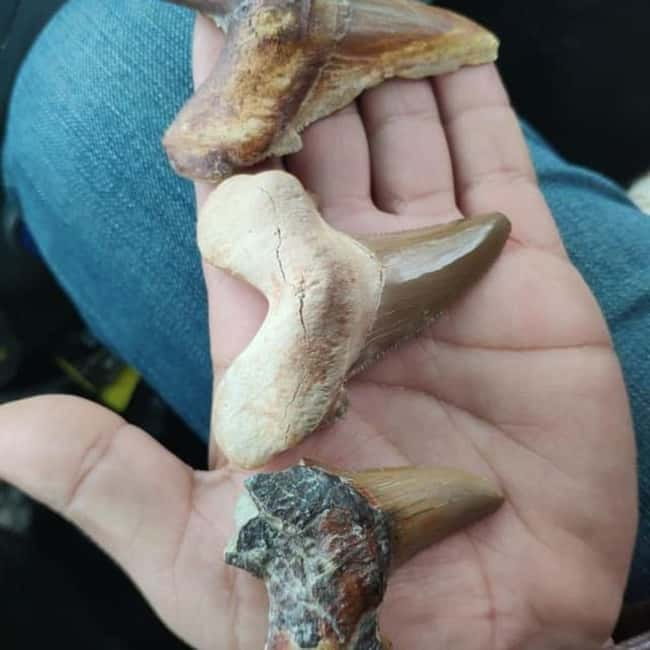
After Muynak, the route becomes more remote. Through Uchsay village, the 4×4 continues across the former seabed, then toward the Ustyurt Plateau and the camp near the Aral Sea.
This is where the trip demands patience. The first day covers about 400 kilometers and takes roughly seven hours with stops. The second day covers a similar distance and takes about eight hours. The roads can be severely potholed, and the ride is described as very bumpy. This is not a minor inconvenience. It is one of the defining features of the experience.
The vehicle is an air-conditioned 4×4, a sensible choice for the route. Still, air conditioning does not soften every jolt. If you have back pain, spine problems, or limited mobility, this tour may be a poor fit. The activity is specifically not suitable for people with mobility impairments.
The long ride also affects how you should plan your Uzbekistan trip. Do not schedule a demanding sightseeing day immediately after returning to Nukus at about 17:00. You may want a quiet evening, especially if you have onward travel.
A few more Uzbekistan trips to weigh up
- Fergana – Golden Valley From Tashkent 1 night / 2 days
★ 4.5 · 41 reviews - Yurt Camp Tour with Night from Bukhara
★ 3.8 · 35 reviews - Sunset walking tour of Samarkand
★ 4.9 · 16 reviews - Tashkent city Night Tour with Dinner & Free Pro Photography
★ 5.0 · 7 reviews
One night at the Aral Sea yurt camp
The yurt camp turns a punishing drive into an overnight experience rather than a simple out-and-back excursion. Accommodation costs an extra $25 per person. Breakfast and dinner are also separate unless arranged as part of the meal package.
At camp, you may swim in the remaining water, hike, and relax around a campfire. The description says the sea is safe for swimming, and a fresh shower is available to remove salt and mud afterward. Bring swimwear if you want that option, plus a towel if your own packing list requires one.
The night sky is a major reason to stay. There is no mobile or internet connection, but a telephone is available for local communication in the car and at the camp. Electricity is available for charging devices. That combination gives you basic practical support without turning the camp into a connected resort.
Bring warm clothing even if the daytime feels hot. A warm jacket is recommended in early spring and late autumn. The open desert can feel very different after sunset. Comfortable clothes, a sun hat, sunglasses, sunscreen, and sturdy shoes belong in your day bag.
The camp is best approached as simple desert accommodation. Its value comes from location, quiet, and the chance to see the Milky Way, not from hotel-style facilities. You can enjoy the campfire, the silence, and the sunrise, but you should not expect city comforts.
The Ustyurt Plateau and its white canyon country
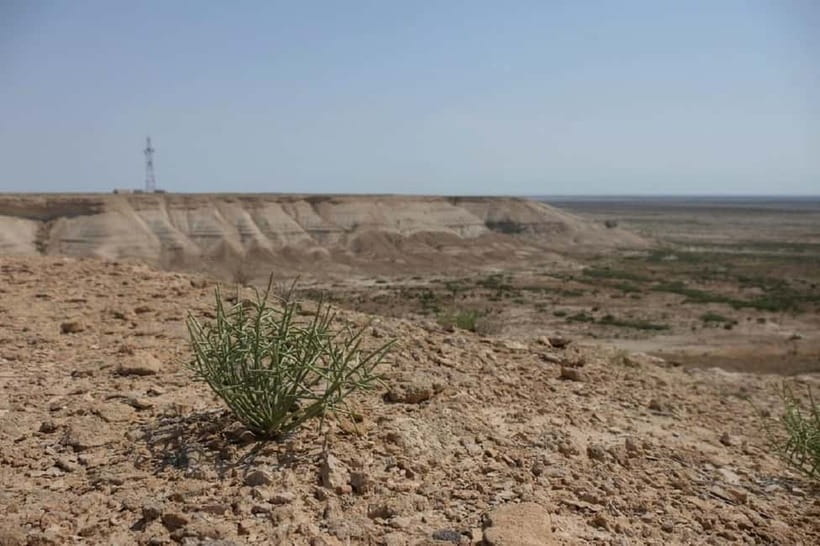
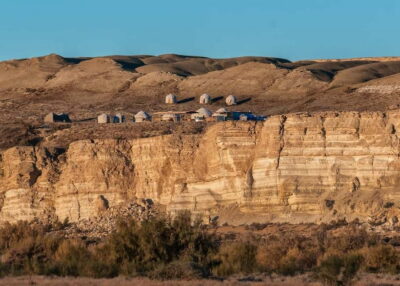
The Ustyurt Plateau adds variety to the route. This broad, stark area is described as containing Uzbekistan’s Grand Canyons, with pale or white-toned cliff formations. The views are open and severe rather than lush or colorful.
I like this section because it shows that the Aral trip is not only about the sea. The plateau has its own character: wide horizons, sharp edges, pale rock, and a sense of distance. Along the way, you may also see cemeteries connected with local nomadic communities.
The route can feel mysterious, but do not expect a neatly marked national park with a string of paved viewpoints. The attraction is the remote setting and the changing shapes along the road. Your driver is important here, both for finding the route and for handling the rough surface.
English-language guiding deserves a quick check before departure. The booking offers an English or Russian-speaking driver, but one booking had a driver who did not speak English despite an English guide expectation. If explanations in English matter to you, confirm exactly what language service you will receive before paying.
Davlatgirey caravanserai and the return through Sudochie Lake
The second day begins with breakfast at extra cost, followed by the return toward Nukus. A stop at Davlatgirey caravanserai, also called Kurgancha kala, brings you to an abandoned trading station.
A caravanserai once gave merchants and animals a place to rest along long-distance routes. Here, the appeal is the remains and the sense of an old travel network crossing the same broad region. It is a quiet counterpoint to the modern 4×4 journey.
The road then returns across the Ustyurt Plateau before reaching Sudochie Lake. The lake is an important stop for migrating birds, including pink flamingos, white swans, ducks, and other species. It is also known as a favored hunting area.
Birdlife at Sudochie will depend on timing and conditions, so treat it as a chance rather than a guarantee. The stop gives the return route a different mood after the dry seabed and cliffs. Instead of only looking at what has disappeared, you get a reminder that parts of the region still support water and wildlife.
Lunch is recommended as a picnic in the Kungrad area. Since meals are not included in the base price, confirm what will be arranged and carry any needed personal items. Food and drinks are not allowed in the vehicle, so follow the operator’s rule and plan meal stops rather than snacking during the drive.
What the $590 group price really covers
The price is $590 per private group of up to four people. That works out to $147.50 per person for four, before extras. For two people, the per-person cost is much higher, but you are still paying for a private 4×4, pickup, a remote route, and the driver’s time across two long days.
Included are the air-conditioned 4×4 vehicle and all fees and taxes listed for the activity. The following costs are separate:
- One night in the yurt camp: $25 per person
- Four meals: $50 for four meals
- Aral Sea Ecological Museum entry: $5 per person
- Personal expenses and anything not specified
For four people, the stated extras add $80 per person if the meal package applies to the group, plus the museum ticket. The total therefore moves well above the advertised base price. Check the currency and final total carefully when booking, since one booking calculation placed the overall cost much nearer to 700 euros.
Is it good value? I think it can be, especially for a small group that wants a private vehicle and a difficult-to-reach destination. It is less attractive if you dislike long drives, expect polished roads, or want a low-cost overnight excursion. The price pays for access and logistics, not luxury.
How to prepare for the road
The best preparation is physical and practical. Wear long trousers, sturdy sport shoes or hiking boots, and clothes that can handle dust. Add a cap or hat, sunglasses, sunscreen, and a warm jacket outside the hottest months.
Pack swimwear if you want to enter the sea, and keep your essentials close during the drive. There is no mobile or internet connection at the camp, although electricity and a local telephone are available. Tell someone your wider travel plan before leaving Nukus if you need regular contact.
Do not book this experience for someone with serious back or spine trouble. The road surface is poor, with potholes and repeated jolts. The activity also is not suitable for people with mobility impairments.
The private format helps, but it does not shorten the route. A small group can share the cost and enjoy more personal space, yet everyone still spends many hours in the vehicle. That is the tradeoff for reaching the dry sea and plateau.
Should you book this Aral Sea tour?
Book it if you want to understand the Aral Sea through direct contact with the place: the ship cemetery, the empty seabed, the yurt camp, the plateau, and the contrast of Sudochie Lake. It is especially suited to curious, physically able visitors who value unusual regional history and remote scenery more than comfort.
Skip it if rough roads, long drives, or simple accommodation would spoil the trip. Also confirm the guide language, total cost, meals, and yurt arrangements before departure.
For the right person, this is a memorable two-day journey from Nukus. It is demanding, sometimes uncomfortable, and unusually honest about the price of human mistakes.
FAQ
How long does the Aral Sea tour from Nukus take?
The experience lasts about 1.5 days, with one night at a yurt camp. The first drive to the camp takes about seven hours, and the return to Nukus takes about eight hours.
How far is the route?
The tour covers approximately 400 kilometers each way, or about 800 kilometers in total, with stops along the route.
Is transportation included?
Yes. An air-conditioned 4×4 vehicle is included, along with pickup from your Nukus hotel, airport, or railway station.
Is the tour private?
Yes. It is a private group experience for up to four people.
Is the yurt camp included in the price?
No. One night at the yurt camp costs an additional $25 per person.
Are meals included?
No. Meals are separate. The listed meal package costs $50 for four meals: one breakfast, two lunches, and one dinner.
Can you swim in the Aral Sea?
Yes. The tour information says the sea is safe for swimming. A fresh shower is available at the camp to wash off salt and mud.
Is there mobile or internet service at the camp?
No mobile or internet connection is available at the camp. A telephone is available for local communication, and electric power is provided for charging devices.
More 2-Day Experiences in Uzbekistan
- 2 Days Tour to Bukhara and Samarkand from Tashkent by train
★ 5.0 · 53 reviews - Yurt stay and Hiking in the Nurata Mountains tour – 2 days
★ 5.0 · 35 reviews - 2 Days of Tour in Yurt Camp and Aydarkul
★ 5.0 · 15 reviews - Desert Yurt Camp tour – 2 days (shared)
★ 4.5 · 13 reviews
Just added around Uzbekistan
- Traditional Khiva Cooking Class with Market Visit & Lunch★ 5.0 · 4 reviews
- Private Intercity Transfer Tashkent – Samarkand – Tashkent★ 3.5 · 3 reviews
- Fergana Valley 2-Day Private Tour★ 5.0 · 4 reviews
- Tashkent Mountain Tour Amirsoy with Transport★ 3.5 · 3 reviews
- Tashkent-Samarkand-Bukhara tour-3nights/4 days★ 5.0 · 5 reviews
- Amirsoy & Chimgan mountain tour from Tashkent★ 5.0 · 3 reviews
- Private Tashkent City Tour★ 5.0 · 3 reviews
- Tashkent Food and Metro Journey★ 5.0 · 4 reviews
Aral Sea and Ship Cemetery Tours, compared.
Daytrip from Khiva to Aral Sea Cemetery of Ships. All in one
Read our review →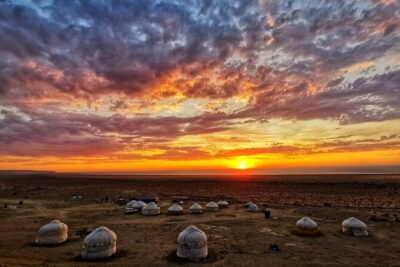
Daytrip From Khiva to Aral Sea Cemetery Of Ships . All In One
Read our review →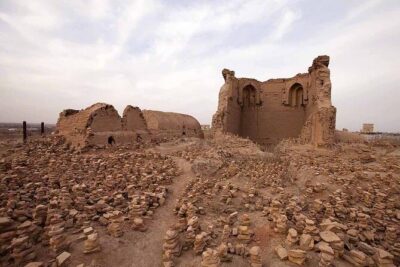
Browse the lists this tour appears in