
Reviewed · FOOD & DRINK
Food tour in Tashkent
Tashkent’s food culture makes its best introduction at the table. This four-hour tour takes you from local eateries to Chorsu Bazaar, then finishes with the famous plov at Besh Qozon Pilaf Center.
I like the mix of classic dishes and market food, and I like having a small group capped at 10 people. A guide such as Ibrahim can add useful stories about spices, recipes, and family traditions. One thing to consider: the food stops may not all feel equally local, since some groups have been taken to chain-style restaurants and a tourist-focused plov spot.
Key points
- Classic Uzbek dishes: Taste plov, lagman, manti, and shashlik during a guided food crawl.
- Chorsu Bazaar: Walk through Tashkent’s best-known market for bread, dried fruit, spices, snacks, and local color.
- Besh Qozon finale: End with a serving at one of the city’s best-known pilaf centers.
- Small-group setting: The group is limited to 10 participants, making questions and conversation easier.
- Practical four-hour format: Pickup, transport, food, lunch, and return to Tashkent are included.
- Hands-on food learning: Depending on the day, you may see traditional bread-making or take part in a short cooking lesson.
A Four-Hour Introduction to Uzbek Food
Uzbek cuisine is built for sharing. Rice, meat, dough, bread, noodles, and fragrant spices appear in dishes that are filling without being complicated. This tour gives you a useful first look at that food culture without asking you to plan several restaurants across Tashkent on your own.
The schedule divides the experience into four one-hour sections. Two early stops include guided visits and food tastings, followed by an hour at Chorsu Bazaar and a final hour at Besh Qozon Pilaf Center. The timing is tidy, though the actual order or dishes may vary with the guide and the day.
I see this as a good first-day activity in Tashkent. You can taste several major dishes, learn what to look for on later meals, and ask questions before ordering on your own. The included comfort vehicle also saves you from figuring out transport between separate food stops.
The tour is conducted in English or Russian. A small group of no more than 10 people should give you more room to speak with the guide than a large coach tour. Ibrahim has led some departures, and his strongest point is explaining food along with wider local customs and daily life.
A few more Tashkent trips to weigh up
- Tashkent: Uzbek Culture, Food, Crafts & Pottery Masterclass
★ 5.0 · 24 reviews - Tashkent Vegan Street Food Tour
★ 5.0 · 22 reviews - Tashkent Walking & Food Tour: Highlights + Local Flavors
★ 5.0 · 18 reviews
Plov, Lagman, Manti, and Shashlik on the Menu
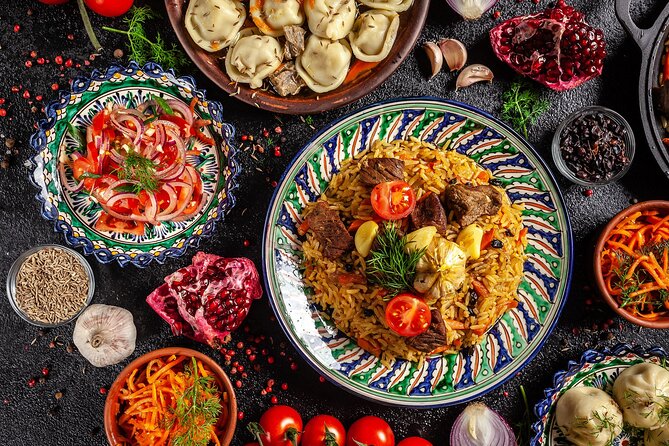
The tour focuses on the dishes most visitors hope to try in Uzbekistan. Each one shows a different part of the country’s cooking style.
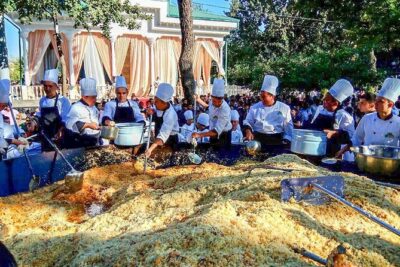
Plov is the obvious star. This rice dish is usually associated with rice cooked with meat, carrots, and seasoning, though exact methods vary. On this tour, you taste it at Besh Qozon Pilaf Center, a large and well-known Tashkent destination devoted to pilaf.
The setting matters. A dedicated pilaf center lets you see how seriously this dish is treated in Uzbekistan. It also gives the final stop a clear purpose rather than ending with a random restaurant meal. The tradeoff is that Besh Qozon can feel designed for visitors as well as locals, so this is not necessarily the most intimate meal of the day.
Lagman brings noodles into the picture. It may be served with meat, vegetables, and a seasoned broth or sauce, depending on the preparation. Manti are filled dumplings, usually steamed, while shashlik is grilled meat served on skewers.
Together, these dishes help you compare textures and cooking methods. You get soft dough in manti, noodles in lagman, grilled meat in shashlik, and fragrant rice in plov. If you have never eaten Uzbek food before, that range makes the tour more useful than a meal built around only one specialty.
The food is not presented as a formal tasting menu. You are visiting eateries and food vendors, so portions and presentation may be practical rather than polished. That is part of the appeal, but it also means you should arrive ready for a substantial amount of food.
The First Two Food Stops
The first two hours are devoted to visits, guided explanation, and tasting. The supplied details do not name every restaurant, so you should think of these stops as a sample of Tashkent’s food scene rather than a fixed list of famous addresses.
The ideal version of this section takes you to a family-run restaurant and a street food seller. That combination gives you two useful views of Uzbek cooking. One shows how dishes are served in a sit-down setting, while the other brings you closer to quick, everyday eating.
You may taste several dishes across the stops, including lagman, manti, and shashlik. Fresh bread is also part of the wider food experience. Uzbek bread is not just a side item. It is a central part of meals and a good way to understand how bread-making fits into daily life.
The guide’s role is important here. A dish can be easy to eat but harder to understand without context. You can ask how ingredients are used, why certain foods matter at gatherings, and how recipes pass through families. Ibrahim received especially strong praise for explaining foods and sharing general information, although one departure was less satisfied with the guide’s knowledge of food and spices.
That mixed result is worth keeping in mind. The quality of the day depends partly on the individual guide. If food detail is your main reason for booking, ask questions as you go. A good guide should be able to explain the ingredients and customs behind each dish, not just name it.
Chorsu Bazaar and the Taste of the Market
Chorsu Bazaar receives a full hour, including a guided visit, photography, and time to look around. This is one of the most useful parts of the tour because a market shows you the ingredients behind the restaurant dishes.
Expect displays of fresh produce, spices, dried fruits, traditional snacks, and sweets. You may also taste freshly baked bread and speak with vendors through the guide. The market gives you a chance to see food as a product, not only as something already cooked and placed on a plate.
I especially like this stop for visitors who want help with local food shopping. Your guide can explain what you are seeing and help with simple questions about ingredients. Even if you do not buy anything, the colors, smells, and crowded aisles make Chorsu a strong place for photographs and orientation.
The hour goes quickly. This is a guided market visit rather than a long free-shopping session, so you may not have time to browse every section. If you see dried fruit, sweets, or spices you want, deal with those purchases promptly and keep track of your personal spending, since personal expenses are not included.
The market can also be the most unpredictable stop. Vendor interactions and available tastings may change from one day to another. I would treat that flexibility as part of the experience, not expect a perfectly controlled food demonstration.
Same Silk Road, a completely different kind of day:
- Best of Tashkent Mountains: Amirsoy, Chimgan & Charvak Trip
★ 4.8 · 567 reviews - Samarkand One Day Tour – Departure From Tashkent
★ 5.0 · 313 reviews - Tashkent City Tour
★ 5.0 · 121 reviews - Amirsoy, Chimgan & Charvak Full-Day Adventure
★ 4.9 · 82 reviews
Besh Qozon and Tashkent’s Pilaf Tradition
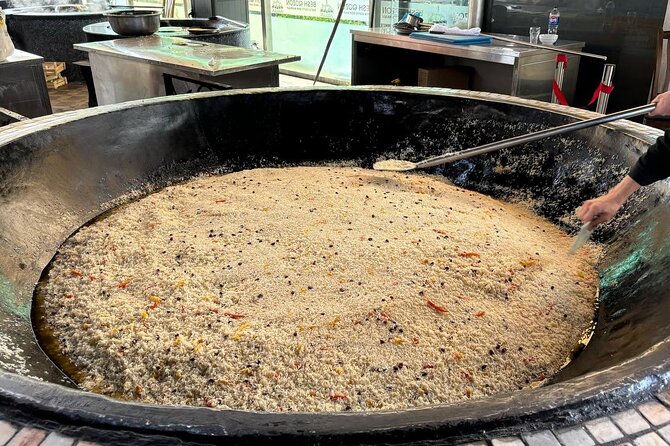
The final hour takes you to Besh Qozon Pilaf Center. This gives the tour a strong ending, since plov is one of the dishes most closely tied to Uzbek food culture.
The center is a practical place to try the dish in a setting built around high-volume pilaf service. You can watch the final portion of the food journey come together and compare this rice dish with the noodles, dumplings, and grilled meat tasted earlier.
Some visitors may find the setting too tourist-oriented. That does not make the food irrelevant, but it changes the feel. You are not necessarily ending in a quiet family kitchen. You are ending at a famous and accessible Tashkent food institution.
For many people, that is a fair trade. The meal is included, the stop is easy to reach by the tour vehicle, and you do not need to guess where to find a dependable serving of plov. If you already know Uzbek food well and want only small neighborhood restaurants, you may prefer a more specialized food walk.
Food Demonstrations and Cultural Stories
The tour may include a traditional bread-making demonstration or a short cooking class focused on a classic Uzbek dish. These activities are useful because they turn you from a passive eater into an observer of the process.
The information does not guarantee which activity will be offered on every departure. I would ask the guide at the start whether bread-making or cooking practice is planned for your group.
The cultural explanation is just as important as the tasting. Uzbek dishes are linked to family meals, celebrations, hospitality, and regional habits. Learning those connections helps you understand why plov receives such attention and why bread appears so often at the table.
You should also expect the guide’s style to shape this part of the day. Ibrahim has been praised for explaining food and offering general knowledge. Another guide was seen as talkative but less confident with spices and culinary detail. That is a reminder to judge the tour as a guided introduction, not a professional cooking course.
What the $99 Price Really Covers
At $99 per person, this is not the cheapest way to eat in Tashkent. Local food on its own can cost much less, especially if you choose casual restaurants and market snacks independently.
The price becomes easier to assess when you count what is included: a local guide, food tastings, lunch, a comfort vehicle, pickup, and return to Tashkent. You are also paying for route planning, translation help, and the chance to sample several dishes in four hours.
I think the value is strongest for first-time visitors, short stays, and people who do not speak Russian. The guide can remove uncertainty at the market and explain what you are eating. The transport is useful because the stops are spread across the city.
The value is weaker if you are already comfortable finding local restaurants or if you want a strictly traditional food route. One departure included the main market, then two chain-style fast food restaurants, followed by a tourist-focused plov venue. That is a fair warning for anyone booking mainly for intimate, family-run cooking.
In other words, you are buying convenience and a broad introduction, not a guarantee that every stop will feel deeply local. The small group and included meal help, but your expectations should match the format.
Timing, Pickup, and What to Bring
The activity lasts four hours and begins with pickup in Tashkent. You need to contact the provider with your pickup location, so have that information ready when you book.
A comfort vehicle is included, which matters in a city food tour. You can move between stops without arranging separate taxis or losing time with directions. The tour also returns you to Tashkent after the final tasting.
Wear comfortable clothes. You will be moving between restaurants, vendors, and the market, and the food itself is likely to be filling. Alcohol and drugs are not allowed, and the activity is not suitable for babies under one year old.
The tour allows free cancellation up to 24 hours before departure for a full refund. You can also reserve now and pay later, which helps if your Tashkent schedule is still changing. Starting times depend on availability, so check the date before assuming a particular morning or afternoon slot.
Who Will Enjoy This Tour Most
I would recommend this tour to you if Uzbek food is new to you and you want a guided overview in one compact outing. It is also a good choice if you are in Tashkent for only a short time and want your meals to do double duty as cultural sightseeing.
Small groups suit curious eaters. You can ask about ingredients, request help at Chorsu, and learn how to identify dishes on later menus. English and Russian language support makes the experience easier for many international visitors.
Families with older children may find the variety appealing, though the tour is not suitable for babies under one year. People with strict dietary needs should confirm arrangements before booking, since no special menu information is provided.
I would be more cautious if you are seeking a serious culinary study. The tour includes broad food coverage, but not every stop may offer detailed instruction about spices or cooking methods. The optional bread demonstration or mini class could add useful depth, but it is not described as a guaranteed feature at every departure.
Should You Book the Tashkent Food Tour?
Book it if you want a convenient first taste of Uzbek cuisine, especially with transport and lunch handled for you. The combination of plov, lagman, manti, shashlik, market snacks, and Chorsu Bazaar gives you a solid introduction in half a day.
I would book with realistic expectations. The strongest day will include a guide who explains the food well, lively market time, and several genuinely local stops. The weaker version may lean toward chain restaurants and a tourist-friendly pilaf center.
The high overall score of 4.7 from seven ratings suggests that the tour often delivers, and Ibrahim has received particularly warm praise for his explanations. Still, the uneven food knowledge and stop selection mean this is best for broad orientation, not for food obsessives demanding a carefully controlled restaurant crawl.
If this is your first visit to Tashkent, I think the $99 can be worthwhile. You will finish knowing which dishes to order, what Chorsu sells, and why plov matters. If you already have local contacts and plenty of time, spend the money on several independent meals instead.
FAQ
How long does the Tashkent food tour last?
The tour lasts four hours, including food tastings, guided visits, the Chorsu Bazaar stop, and the final visit to Besh Qozon Pilaf Center.
What foods are included?
The tour features plov, lagman, manti, and shashlik. You may also taste fresh bread, dried fruits, traditional snacks, and artisanal sweets at the market.
Is lunch included?
Yes. Food tastings and lunch are included in the tour price.
Is transportation provided?
Yes. Pickup in Tashkent, a comfort vehicle, and return to Tashkent are included. You need to contact the provider with your pickup location.
What languages does the guide speak?
Live guiding is available in English and Russian.
How large is the group?
The activity is offered as a small-group tour with no more than 10 participants.
Can I cancel for a refund?
Yes. You can cancel up to 24 hours before the activity for a full refund.
Can I reserve now and pay later?
Yes. The tour offers a reserve-now, pay-later option, so you do not need to pay at the time of booking.
Just added around Tashkent
- Private Intercity Transfer Tashkent – Samarkand – Tashkent★ 3.5 · 3 reviews
- Tashkent Mountain Tour Amirsoy with Transport★ 3.5 · 3 reviews
- Tashkent-Samarkand-Bukhara tour-3nights/4 days★ 5.0 · 5 reviews
- Amirsoy & Chimgan mountain tour from Tashkent★ 5.0 · 3 reviews
- Private Tashkent City Tour★ 5.0 · 3 reviews
- Tashkent Food and Metro Journey★ 5.0 · 4 reviews
- Tashkent City Tour with Hotel Pickup and Drop off★ 4.5 · 4 reviews
- Silk Road Secrets Tour in Uzbekistan★ 5.0 · 4 reviews
Food & Drink, compared.
Uzbek Culture, Food, Crafts & Pottery Masterclass
Read our review →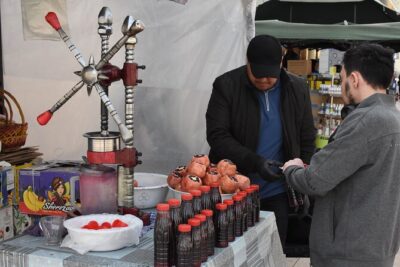
Tashkent Walking & Food Tour: Highlights + Local Flavors
Read our review →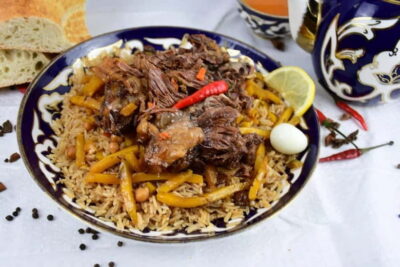
cooking traditional food in Samarkand with local people
Read our review →
Browse the lists this tour appears in