
Reviewed · COOKING CLASSES
cooking traditional food in Samarkand with local people
The best part of this Samarkand experience happens away from the grand monuments: you visit Siab Bazaar, then continue to Ravot village to cook and eat with an Uzbek family. The five-hour outing gives you a look at gardens, kitchens, customs, and daily life that a city sightseeing tour cannot provide.
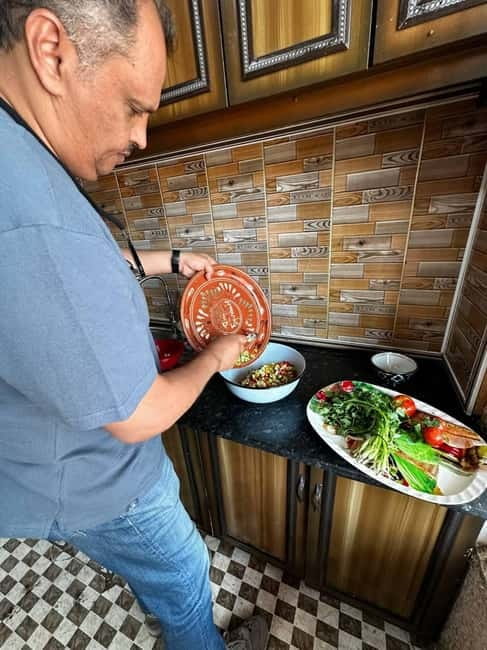
I like the personal welcome and the generous meal, which can include plov, salads, beverages, and other local dishes. I also like the chance to see food prepared with gas, an o’choq, or a traditional tandir oven, with hosts such as Akram, Navruz, or Havruz guiding you through the process.
The main thing to consider is that the cooking may not be fully hands-on. One participant helped prepare vegetables but mostly watched the cooking, so you should book this for family contact and cultural exchange first, and for a formal cooking lesson second.
Key points at a glance
- Siab Bazaar comes first: Browse Samarkand’s best-known market before heading into the countryside. It is closed on Mondays.
- Ravot is close to the city: The village sits 14 kilometers from Registan Square in Toyloq district, with a good road between the city and the house.
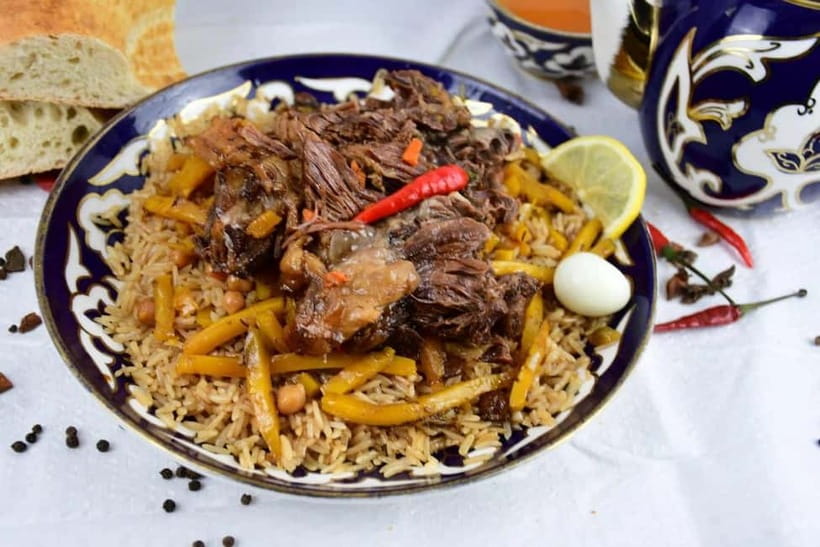
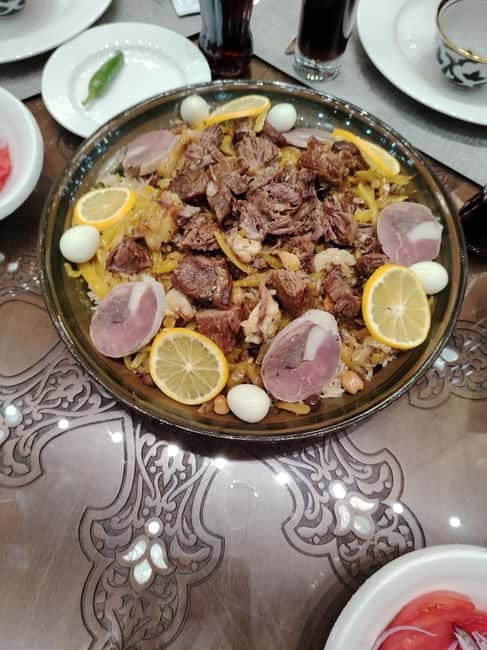
- Plov is the likely star dish: You may help prepare Samarkand-style plov, along with salads, hanim, and other dishes chosen around your preferences.
- You enter a real family home: The visit can include time in the garden, a look at village life, and conversation about Uzbek customs.
- Transport is built in: Pickup and drop-off are available from your hotel, airport, or station, which is useful before or after a train ride.
- The price covers more than food: At $62 per person, you receive transport, an English-speaking guide, the market visit, cooking session, and lunch or dinner.
From Siab Bazaar to Ravot village
This outing works because it links two parts of Samarkand life. You begin at Siab Bazaar, a natural place to see the ingredients and food habits that shape Uzbek cooking, then leave the city for a family home in Ravot.
The market portion is not just a shopping stop added to fill time. It gives you a useful introduction to the products used later in the kitchen. You can look at the colors, shapes, and variety of produce before seeing how those ingredients become a proper meal.
The timing matters. Siab Bazaar is closed on Mondays, so do not choose that day if the market is important to you. The cooking visit can still be the main event, but you would miss one half of the planned experience.
From the market, the road runs about 14 kilometers from Registan Square to Ravot in Toyloq district. The route is described as good and not bumpy, and the drive shifts the mood from central Samarkand to village life without taking up an entire day.
I appreciate this compact setup. You do not need to arrange a taxi to a distant village, work out a return trip, or carry shopping bags onto public transport. Pickup and drop-off can be arranged at your hotel, airport, or station, making the outing practical on a day when you are changing bases.
A few more Samarkand trips to weigh up
- Samarkand: Village Tour with Plov Cooking Class & Home Visit
★ 5.0 · 29 reviews - Samarkand: Uzbek Cooking Class in a Village Home
★ 5.0 · 22 reviews - Cooking class in Samarkand with local life experience
★ 5.0 · 19 reviews
Entering a Samarkand family home
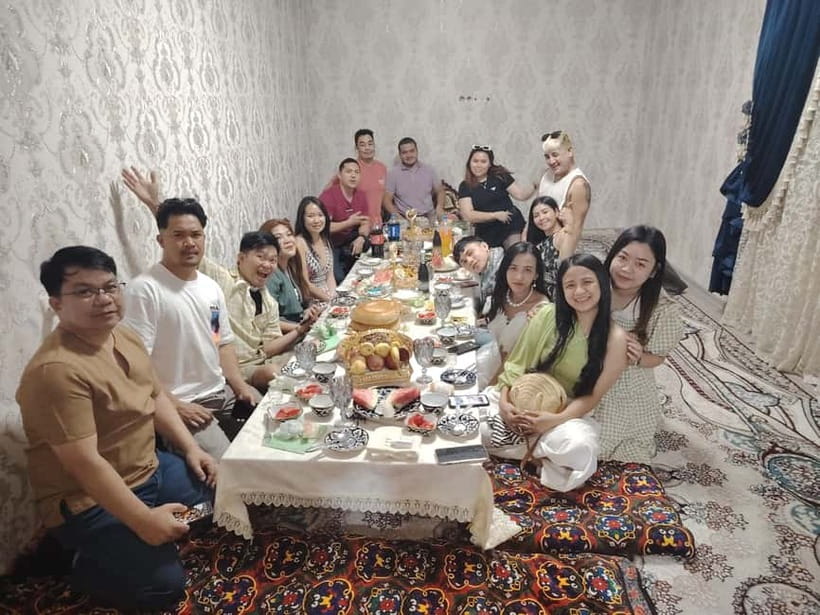
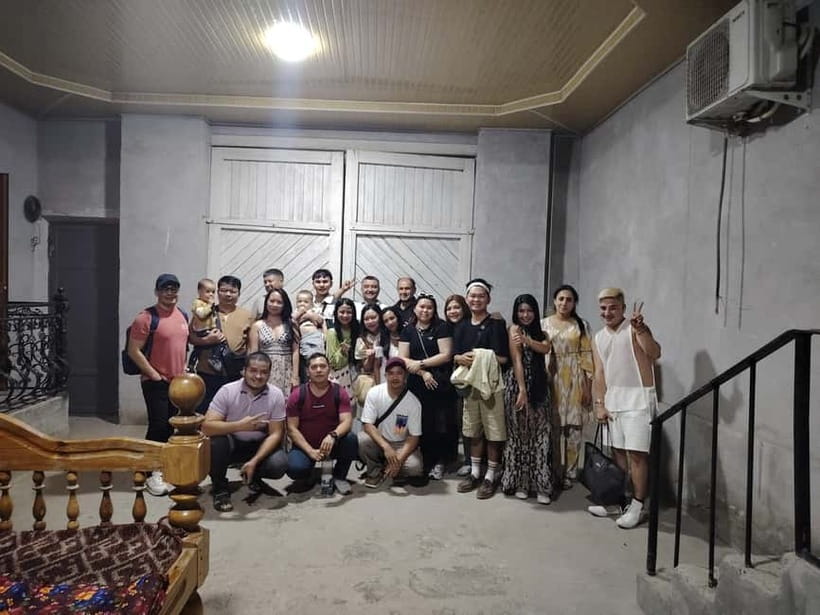
The visit at the house is the heart of the experience. You are welcomed by a local family, not seated in a restaurant designed to look traditional. That difference matters if you want conversation and a clearer idea of how people live outside the tourist center.
The family setting can include a walk through the garden and fruit trees, a look at the vegetable patch, and time to ask about Uzbek traditions. You might also see part of the neighborhood around Ravot. These simple details often tell you more about ordinary life than another hour inside a monument.
The hosts named in the experience include Akram, Navruz, and Havruz, with family members taking part in the welcome and cooking. Akram is described as speaking excellent English and offering plenty of conversation about Uzbek life. That makes a difference because a shared meal is much better when you can ask questions without struggling through translation.
I would treat this as a social visit with food at its center. You are not simply moving from one cooking station to the next. You may spend time meeting relatives, seeing the home, talking about customs, and learning how hospitality works in an Uzbek household.
The dress rules are worth noting. Short skirts and tight clothing are not allowed, and respectful clothing is the sensible choice for entering a family home. Weapons, sharp objects, explosives, and nudity are also prohibited. The restrictions are straightforward, but pack and dress for a conservative household rather than a casual restaurant.
What you actually cook and eat
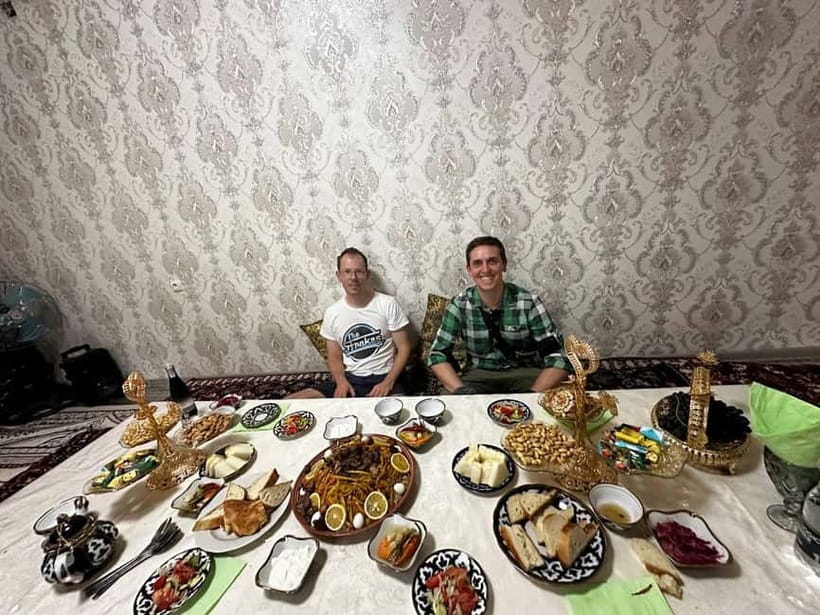
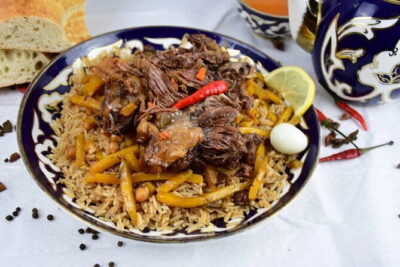
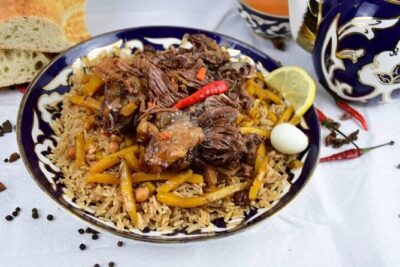
Plov is the dish with the strongest identity here. It is Uzbekistan’s famous rice-based specialty, and preparing it with a local family gives you a better sense of the time, tools, and care behind the dish than simply ordering a plate in town.
The menu is not completely fixed. You can discuss preferences and may prepare different salads and local dishes. Hanim is another dish selected by one pair of participants, and the cooking can include a range of Uzbek foods rather than a single recipe.
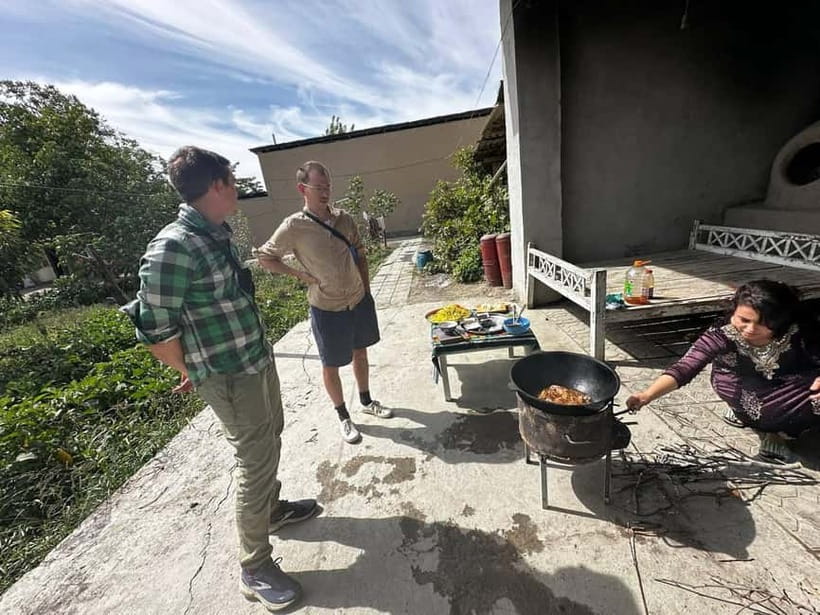
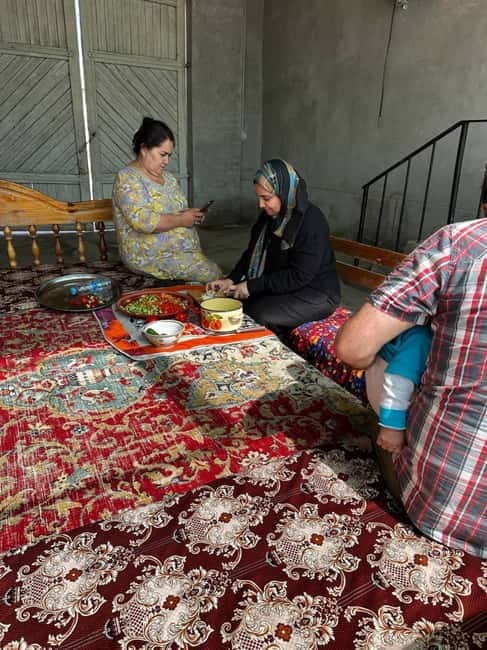
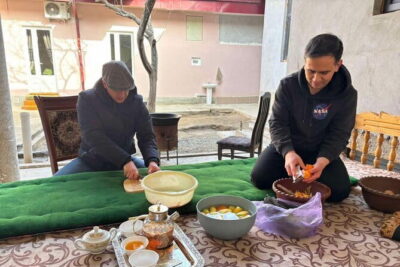
You are invited to take part in the preparation. That may mean washing or cutting vegetables, helping with the steps of a recipe, or handling part of the work under direction. You can also see how the family cooks with different heat sources, including gas and an o’choq, a traditional cooking hearth.
Bread adds another useful piece of food culture. The family can show you how bread is baked in a tandir, the traditional clay oven used across Central Asia. Even if you do not perform every step yourself, seeing the oven in use connects the meal with an older household method.
The meal includes salads, cooked dishes, beverages, and either lunch or dinner, depending on the time of your booking. Portions and exact dishes are not specified, so I would not book expecting a fixed restaurant-style menu. The appeal is the family’s choice of food and the chance to eat what has been prepared in the home.
One point deserves honest emphasis: the level of participation may vary. The description invites you to cook, but one account found the session more observational than expected, with only some vegetable preparation. If you need a technical class where you make every dish from start to finish, ask how active the session will be before booking.
Why the family meal matters
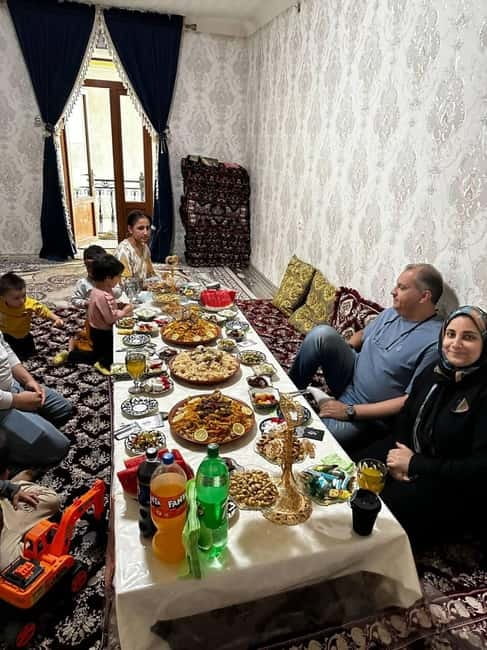
Uzbek hospitality is not an abstract idea here. It appears in the act of welcoming you into the house, showing you the garden, preparing several dishes, and sitting down to eat together.
I like that the experience lets you ask about how things are done, not just what a dish is called. You can learn which products are used, what tools are in the kitchen, and how the family adapts cooking to gas, an o’choq, or a tandir.
The meal also gives the visit a natural rhythm. You explore the market, travel to the village, help with food, talk while it cooks, and then eat together. That is a more human pace than rushing through a list of sights.
The garden is a particularly nice touch. Fruit trees and a vegetable plot help you connect the meal to the place where ingredients may be grown or stored. I would not assume that every season offers the same produce, but the chance to see the garden gives the home visit more substance.
You should also expect the family to be the focus, rather than polished presentation. The house may feel personal and informal. That is exactly why this suits people who want contact with local life, but it may not suit anyone seeking a staged show with a precise timetable and professional cooking-school format.
Same Silk Road, a completely different kind of day:
- Samarkand: Historical Monuments Guided Walking Tour
★ 4.8 · 446 reviews - Private Samarkand City Tour With Transportation
★ 5.0 · 149 reviews - A City Tour Of Samarkand: The Pearl Of The East
★ 5.0 · 133 reviews - Full Day Private Tour in Seven Lakes from Samarkand
★ 5.0 · 94 reviews
Is $62 a fair price?
At $62 per person, the value depends on how you use the five hours. You are paying for a private-style cultural experience with transport, an English-speaking guide, the Siab Bazaar visit, a cooking session, and a full meal. You also avoid paying separately for transfers to and from the village.
That package is useful in Samarkand, where a short activity can otherwise turn into a day of arranging cars and figuring out rural transport. Pickup from a hotel, airport, or station is included, as is the return journey, so the price has practical value beyond the food.
I would compare it with the cost of a standard restaurant meal only if food is your sole concern. You can eat plov for less elsewhere. The extra money here pays for access to a family home, conversation, transport, and the setting in Ravot.
The value is strongest for solo visitors, couples, and small groups who want a direct connection with local people. It is also a good choice if you have already seen Registan Square and the central sights and want to add something less formal.
The value is weaker if you want a serious chef-led course. Since hands-on work can vary, make sure your expectations match the format. This is best seen as a home cooking encounter with instruction, not necessarily a professional masterclass where you prepare every component independently.
Timing, transport, and practical planning
The activity lasts five hours, though the exact starting times depend on availability. That is long enough to include the market, drive, cooking, meal, and return without taking over your full day.
I would avoid placing it immediately before a train or flight unless you leave plenty of extra time. Transport is included, and drop-off at a station or airport is offered, but rural meals and family visits can be less exact than a quick taxi ride. The flexible transfer option is useful, but a generous buffer is still wise.
If you arrive in Samarkand by train, the station pickup can make this a convenient first or final activity. You can also arrange hotel pickup. The same applies to the airport, though you should confirm the meeting details and timing when you book.
The road to Ravot is described as good quality and not bumpy, which helps if you are concerned about leaving the city. The village is close enough for a half-day visit, but far enough to make the change in setting noticeable.
The activity is listed as wheelchair accessible. Since the visit takes place in a village home and includes a garden and cooking area, I would still confirm the exact access arrangements for your needs before departure. Accessibility can depend on the layout of the house, though the activity is officially marked as accessible.
English guidance is available. That is important here because the best part of the visit is conversation about food, family, traditions, and daily life.
Free cancellation is available up to 24 hours before the activity for a full refund. You can also reserve and pay later, which helps if your Samarkand schedule is still shifting.
Who will enjoy this most
I recommend this experience if you want to meet local people and are happy with an informal pace. It suits anyone who would rather see a garden and family kitchen than spend another afternoon moving between formal attractions.
It is especially good for people who enjoy food as a way into culture. Plov, bread, salads, and village cooking provide a clear subject for conversation, while the household setting gives you a reason to ask about traditions and daily routines.
Families may also like it because the activity offers several types of interest in one outing: market browsing, transport through the countryside, cooking, a garden visit, and a shared meal. The wheelchair accessibility listing may help some families, though exact home access should be confirmed.
I would be more cautious if you are booking mainly for a hands-on culinary qualification. The invitation to participate is real, but the amount of work you do may depend on the host, the menu, and the timing. If you want to knead, chop, stir, and cook every dish yourself, ask for a clear plan.
The experience also suits visitors who have only a short stay in Samarkand. With transport included and Ravot just 14 kilometers from Registan Square, you can reach village life without committing to a full-day countryside trip.
Should you book the Ravot cooking visit?
I would book it if your priority is genuine family contact, a good meal, and a change from the usual Samarkand sightseeing route. The strongest features are the warm welcome, English conversation, garden visit, market stop, and the chance to see plov and tandir bread made in a household setting.
Book with one small adjustment in mind: think of it as a cultural visit built around cooking, rather than a tightly structured cooking school. If you accept that balance, $62 is a reasonable price for transport, food, guidance, and several hours with a local family.
Check the calendar carefully because Siab Bazaar is closed on Mondays. Dress respectfully, allow extra time if you are catching transport afterward, and ask how much hands-on cooking is planned. With those points settled, this is one of the more personal ways to add local life to a Samarkand itinerary.
FAQ
How far is the village from Samarkand?
Ravot village is 14 kilometers from Registan Square, in Toyloq district. The road is described as good quality and not bumpy.
Is Siab Bazaar open every day?
No. Siab Bazaar is closed on Mondays. Choose another day if you want the market portion included.
What food can I cook?
The menu can include plov, salads, hanim, and other Uzbek dishes. You can discuss food preferences with the host, and bread may be baked in a traditional tandir oven.
Is transportation included?
Yes. Pickup and drop-off are included from hotels, the airport, and stations.
Is the activity available in English?
Yes. The experience includes a live English-speaking guide.
Can I cancel the booking?
You can cancel up to 24 hours in advance for a full refund. Reserve now and pay later is also available.
More Food in Samarkand
- Tashkent: Uzbek Culture, Food, Crafts & Pottery Masterclass
★ 5.0 · 24 reviews - Tashkent Vegan Street Food Tour
★ 5.0 · 22 reviews - Tashkent Walking & Food Tour: Highlights + Local Flavors
★ 5.0 · 18 reviews - With John Private Tashkent city & Food tour
★ 5.0 · 13 reviews
Just added around Samarkand
- The Golden City of Samarkand: A Self-Guided Audio Tour★ 4.0 · 4 reviews
- Samarkand Capital of Amir Timur Private Tour with Transport★ 5.0 · 3 reviews
- Shakhrisabz Private Day Tour from Samarkand★ 5.0 · 4 reviews
- Seven Lakes Panjakent: One-Day Adventure from Samarkand★ 5.0 · 3 reviews
- Explore Samarkand Guided Tour with Transfers★ 5.0 · 3 reviews
- Samarkand Local Family Cooking Class and Siyob Bazaar Tour★ 5.0 · 5 reviews
- Ancient and Modern tour in Samarkand with Transport★ 5.0 · 3 reviews
- Penjikent Day Trip From Samarkand★ 5.0 · 3 reviews
Cooking Classes, compared.
Village Tour with Plov Cooking Class & Home Visit
Read our review →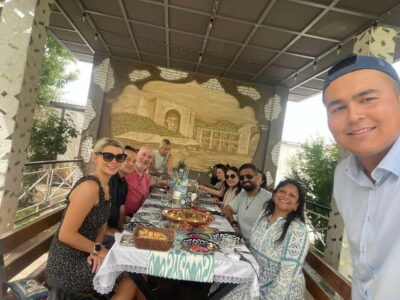
Cooking class in Samarkand with local life experience
Read our review →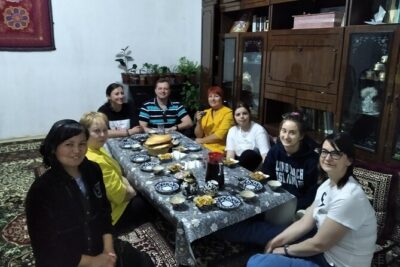
Private Samarkand Cooking Class with Market Tour & Transfers
Read our review →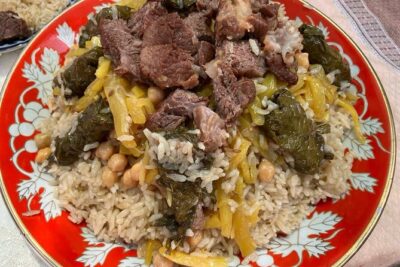
Cooking Class in the Village with Local Family in Samarkand
Read our review →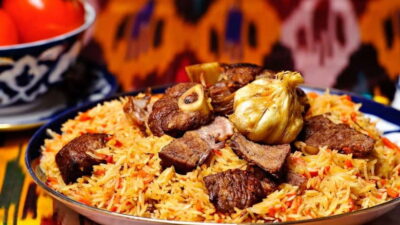
Samarkand Local Family Cooking Class and Siyob Bazaar Tour
Read our review →Browse the lists this tour appears in