
Reviewed · FOOD & DRINK
Tashkent Vegan Street Food Tour
Tashkent’s best vegan food is not confined to a health-food café. This four-hour tour takes you from Chorsu Bazaar to Alay Bazaar, through old-town lanes and finally to a restaurant serving vegan versions of Uzbek dishes. The food is the hook, but the city itself gets equal billing.
I like the personal angle, especially the chance to see two very different markets and learn how plant-based food fits into a meat-heavy food culture. I also like that Akmal, the guide and owner, uses walks, stories, photographs, and local encounters instead of turning the morning into a simple meal crawl.
The main drawback is the price: $72 per person is a serious spend in Tashkent, particularly if you are comfortable finding inexpensive market food on your own. The value depends on how much you want the guide, cultural context, and confidence to order vegetarian and vegan food during the rest of your Uzbekistan trip.
Key points to know before booking
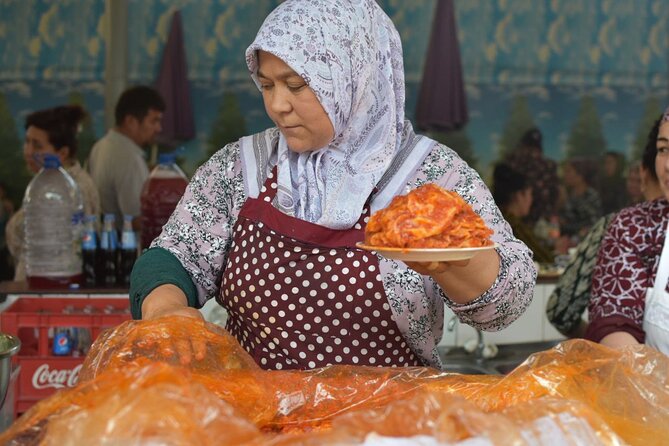
- Two markets, two sides of Tashkent: Visit Chorsu Bazaar in the old town and Alay Bazaar in the city centre.
- A full morning of food: Plan to arrive hungry, since the tastings include potato pastries, bread with Korean salads, and veganized local dishes.
- Akmal leads the experience: He grew up in Tashkent, has lived and travelled in Europe, and speaks excellent English.
- More than a food stop: Expect walks through Khadra, local stories, photographs, and a look at everyday city life.
- Small group format: The maximum group size is seven, with pickup offered and group discounts available.
- A useful first-day activity: The tour can help you understand what vegetarian and vegan eating looks like in Uzbekistan before you set off elsewhere.
Why this tour matters in meat-focused Uzbekistan
Uzbek cuisine is built around meat, dairy, bread, noodles, rice, and hearty pastries. That can make eating vegan difficult if you do not speak the language or know which dishes contain hidden animal products. This is where the tour earns its keep.
Akmal and his team are vegans who grew up in Tashkent. They know the city from the inside, including the gap between traditional food and the needs of people who avoid meat, dairy, and eggs. The tour is designed to show you what is possible rather than simply point out the obvious vegetable stalls.
I like that distinction. You are not only being taken to a restaurant that already caters to foreign visitors. You are being shown local food in markets and ordinary neighbourhoods, then introduced to a restaurant that has adapted Uzbek dishes into vegan forms.
Part of the tour money supports imprisoned vegan activists. That is an unusual feature and may matter to you if you want your spending to support a cause connected to the people running the experience. The tour does not pretend that Tashkent is easy for vegans, but it gives you a practical start.
Other Tashkent days people book alongside this one:
- Best of Tashkent Mountains: Amirsoy, Chimgan & Charvak Trip
★ 4.8 · 567 reviews - Samarkand One Day Tour – Departure From Tashkent
★ 5.0 · 313 reviews - Tashkent City Tour
★ 5.0 · 121 reviews
Chorsu Bazaar and the famous Gluttony Lane
The morning begins at Chorsu Bazaar, the oldest and most picturesque market in Tashkent. It sits in the old town and is the kind of place where the setting matters as much as the meal. You begin among market stalls, local shoppers, and the daily business of buying food.
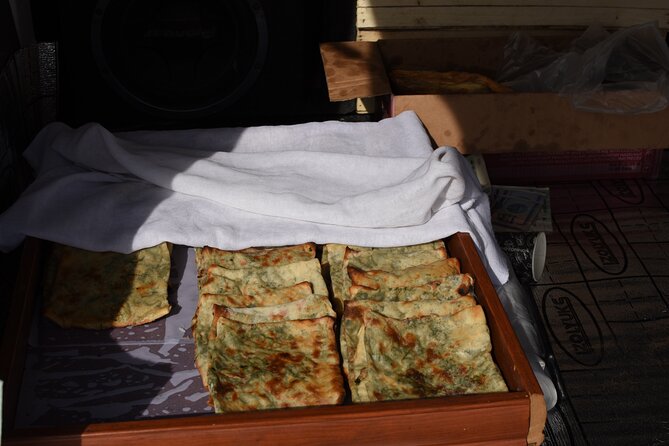
The first food stop is Gluttony Lane, known across the city for khanum served in a thick tomato sauce. Here, the vegan version is described as a potato pastry. That makes it a useful introduction to the tour’s method: start with familiar local food, then focus on a plant-based form that you can actually eat.
Khanum is not light snack food. It is a filling pastry, and the rich tomato sauce adds weight to the dish. You may want to pace yourself from the start, since the morning includes several more tastings. The practical advice is simple: do not eat a large breakfast before arriving.
Chorsu is also a good place to begin learning how food connects to city life. You are not just sampling an item in isolation. You are seeing where ingredients are bought and how the market fits into the old town.
Admission to the bazaar is free, but that does not mean the first stop lacks value. The guide’s role is to explain what you are seeing, direct you toward suitable food, and help you understand why this particular pastry matters locally. Without that support, a visitor could easily wander through the market without knowing which dishes are vegan or how to order them.
Khadra and the quiet lanes of the old town
After Chorsu, the group walks through Khadra and the narrow, winding lanes of Tashkent’s Old City. This forty-minute section gives your stomach a break and changes the pace of the morning.
The walk focuses on everyday neighbourhood life. You may see children playing and notice a slower rhythm than in the market. This is a useful counterpoint to Chorsu, since it shows that Tashkent is not only grand public spaces, monuments, and busy roads.
I especially like this part of the plan because it prevents the experience from becoming a chain of food stops. The organisers clearly want the tour to include conversation, photographs, and stories. That gives Akmal room to explain customs and city life in a way that a restaurant meal alone cannot.
Do not expect a formal architecture tour here. The supplied details point to local streets and ordinary life rather than a long list of monuments. That is good news if you want a personal introduction to Tashkent, but less useful if your main goal is a tightly structured sightseeing route.
The walk also matters from a practical point of view. By the time you reach the next market, you have had time to digest the khanum and consider what you have learned. A food tour that includes movement tends to feel more balanced than one spent entirely at tables.
Alay Bazaar and Tashkent’s Korean influence
The next market is Oloy, also called Alay Bazaar, in central Tashkent. It is a farmer’s market with a different setting from Chorsu, and the contrast helps you see two parts of the city in one morning.
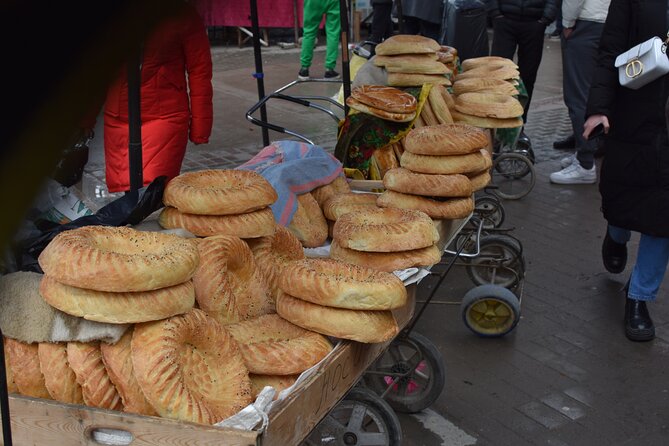
Here, you try round Uzbek bread stuffed with traditional Korean salads. The combination reflects a food tradition that is familiar in Tashkent, even though it may surprise people who associate Korean food only with restaurants or Korea itself.
This is one of the most interesting food ideas on the route. Bread is central to Uzbek eating, while Korean-style salads add sharp, seasoned vegetables. Together, they create something simple, portable, and suited to a market lunch.
The tasting also shows why a local guide is useful for plant-based eating. A dish can look vegetarian but still contain dairy, meat stock, or another ingredient you would rather avoid. The tour is built around finding food that fits a vegan diet, not merely food that appears to contain vegetables.
The stop lasts about an hour. As with Chorsu, admission is free, but the cost of the tour covers more than entry. You are paying for the route, food choices, communication help, and the guide’s knowledge of where to look.
If you eat quickly or prefer large restaurant meals, market tastings may feel informal. That is part of the appeal, but it also means you should not expect a polished tasting menu. The food is tied to daily life, and the surroundings are part of the experience.
A few more Tashkent trips to weigh up
- Tashkent: Uzbek Culture, Food, Crafts & Pottery Masterclass
★ 5.0 · 24 reviews - Tashkent Walking & Food Tour: Highlights + Local Flavors
★ 5.0 · 18 reviews - With John Private Tashkent city & Food tour
★ 5.0 · 13 reviews - Food tour in Tashkent
★ 4.7 · 7 reviews
Vegan beshbarmak near the National Library
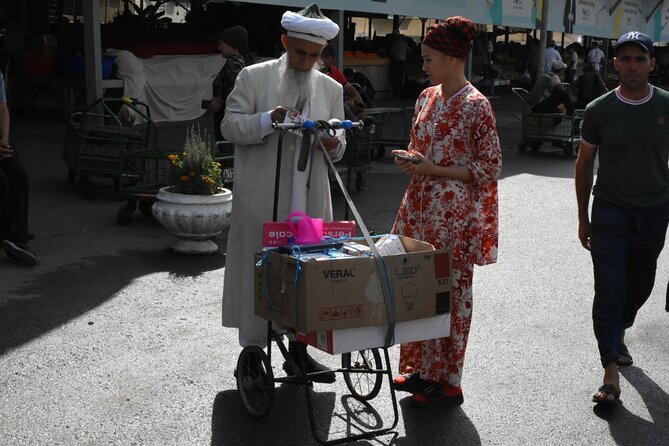
The final stop is a local restaurant near the National Library of Uzbekistan named after Alisher Navoi. The restaurant has adapted local dishes into vegan versions, giving the tour a sit-down ending after the markets and walking.
The star dish is vegan beshbarmak, described as an oxymoron of Central Asian cuisine. Traditional beshbarmak is strongly associated with meat, so a plant-based version invites you to think about what makes a dish local. Is it the meat, the noodles, the method, the seasoning, the setting, or the people who eat it? The tour uses that tension well.
This is more than a substitute meal. For someone new to Uzbek food, it is a chance to understand how a familiar dish can be reworked for a different diet. For a vegan, it may be one of the rare chances to try a local classic without needing to guess about its ingredients.
The restaurant is also a practical resource. Several people who took the tour found the food and atmosphere memorable enough to want to return, though finding the restaurant again can be difficult if you do not note the route. I would save its name and location before leaving if you think you may come back.
One account also refers to beer, music, and warm hospitality at the restaurant. Those details suggest that the final stop is meant to feel social, not rushed. Still, the exact dishes and restaurant arrangements can change, so treat the listed meal as the planned highlight rather than a permanent menu guarantee.
What the $72 price really buys you
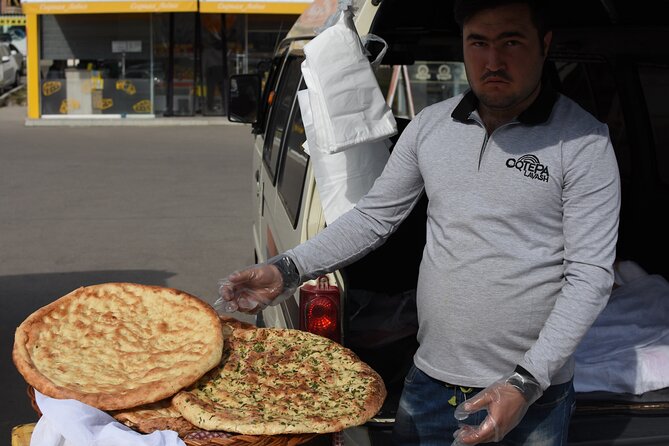
At $72 per person, this is not a bargain food walk. Tashkent’s markets are free to enter, and independent visitors can often eat cheaply. If you are judging the tour only by the amount of food, the cost may seem high.
I would judge it by the combination of access and confidence. You get roughly four hours with a guide, food at several stops, transport or pickup options, a small group capped at seven, and help understanding what is safe for a vegan diet. You also get a route linking two markets, the old town, and a central restaurant.
For a first morning in Uzbekistan, that can be useful. Several people used the experience at the start of their trip and found it easier to handle vegetarian and vegan eating afterward. Knowing which local foods to look for can save you time and reduce the stress of explaining your diet at every meal.
The value is strongest for solo visitors, first-time visitors to Uzbekistan, and anyone who wants a cultural introduction rather than a simple list of restaurants. It is also a good fit for people who normally eat meat. The tour is not presented as a lecture for vegans only, and the food gives you a fresh way to understand Uzbek habits.
The value is weaker if you already know Tashkent well, speak enough Russian or Uzbek to manage market food, or mainly want the cheapest possible meal. A group discount may help if you are travelling with friends, but no discount amount is provided.
Guide style and group size
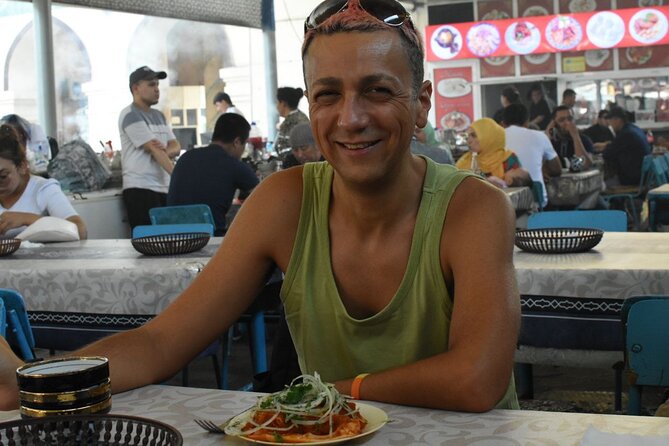
Akmal is the owner and guide. He was born and raised in Tashkent, later travelled and lived in Europe, and then returned to the city. That background gives him a useful point of comparison between local customs and the questions that international visitors often ask.
His English is described as excellent, and the feedback consistently highlights his friendly, funny, and informed manner. I would expect the experience to feel conversational rather than scripted, especially since the tour can be adjusted with walks, photographs, stories, and local encounters.
The maximum group size is seven. That is small enough for questions and for the guide to keep track of dietary needs. It also suits the market setting, where a large group could become awkward around food counters and narrow lanes.
Solo visitors may find the format especially appealing. One person had the tour alone and found that the private-feeling experience made market exploration easier. You should not assume every departure will be private, but the small maximum keeps the group personal.
Pickup is offered, though the supplied details do not specify the pickup zone or whether it costs extra. Confirm that point when booking if hotel pickup matters to you. The stated operating window is Monday through Sunday, 9:00 a.m. to 1:00 p.m., which matches the four-hour morning format.
Who should book this Tashkent food tour
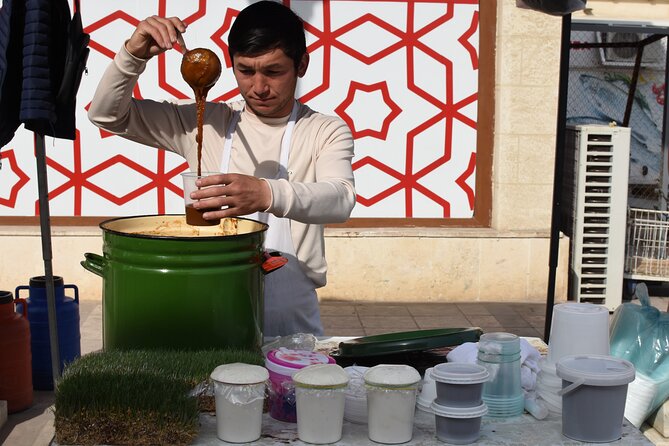
I would put this near the top of the list for a vegan visiting Uzbekistan for the first time. It deals with the central problem quickly: how to eat local food without spending your trip guessing.
It also suits vegetarians and curious omnivores. The tour is not only about replacing meat. It introduces markets, neighbourhoods, bread, pastries, salads, local customs, and a plant-based take on a major Central Asian dish.
Families should note that most people can participate, but the tour includes walking through markets and old-town lanes. Children who enjoy trying food and seeing daily life may do well; children who need a tightly scheduled sightseeing route may find the flexible style less predictable.
People with serious allergies should contact the provider before booking. The available details confirm that the tour is vegan-focused, but they do not provide a full ingredient list, kitchen protocol, or allergy policy. A guide can help with communication, yet you should still explain your needs clearly.
The tour requires good weather. If poor weather causes cancellation, you are offered another date or a full refund. You can cancel for a full refund up to 24 hours before the start time, but changes or cancellations inside that window are not accepted.
Should you book it?
Book this tour if you want an informed start to Tashkent, need help eating vegan, or prefer meeting a local guide over following a standard sightseeing route. The strongest features are the two-market plan, the old-town walk, Akmal’s personal connection to the city, and the chance to try vegan beshbarmak.
Think twice if $72 feels out of proportion to your food budget or if you are happy exploring markets without help. The tour is not the cheapest way to eat in Tashkent. It is a way to turn food into a practical guide to the city, with enough local context to help you manage the rest of your trip.
FAQ
How long is the Tashkent Vegan Street Food Tour?
The experience lasts approximately four hours.
What time does the tour operate?
The stated operating hours are Monday through Sunday, from 9:00 a.m. to 1:00 p.m.
What is the price?
The listed price is $72 per person. Group discounts are available, though the discount amount is not specified.
How many people can join?
The maximum group size is seven people.
Is hotel pickup available?
Pickup is offered. The available details do not specify the exact pickup area or any additional pickup charge, so confirm this when booking.
What food is included?
The route includes potato khanum in tomato sauce at Chorsu Bazaar, Uzbek round bread stuffed with traditional Korean salads at Alay Bazaar, and veganized local dishes including vegan beshbarmak at a restaurant near the National Library.
Can non-vegans join?
Yes. The experience is suitable for people who normally eat meat as well as vegans and vegetarians.
What happens if I need to cancel?
You can cancel at least 24 hours before the start time for a full refund. Cancellations or changes made less than 24 hours before the start time are not accepted. If poor weather cancels the tour, you are offered another date or a full refund.
More Food in Tashkent
- Ten Bites Adventure Food Tour in Tashkent
★ 5.0 · 6 reviews - Food tour in Tashkent
★ 5.0 · 5 reviews - Tashkent Food and Metro Journey
★ 5.0 · 4 reviews - Tashkent: 4 Hour Food Tour and Metro Journey with a Guide
★ 5.0 · 4 reviews
Just added around Tashkent
- Private Intercity Transfer Tashkent – Samarkand – Tashkent★ 3.5 · 3 reviews
- Tashkent Mountain Tour Amirsoy with Transport★ 3.5 · 3 reviews
- Tashkent-Samarkand-Bukhara tour-3nights/4 days★ 5.0 · 5 reviews
- Amirsoy & Chimgan mountain tour from Tashkent★ 5.0 · 3 reviews
- Private Tashkent City Tour★ 5.0 · 3 reviews
- Tashkent Food and Metro Journey★ 5.0 · 4 reviews
- Transfer Tashkent Airport / Railway Station – Hotel★ 3.5 · 3 reviews
- Tashkent City Tour with Hotel Pickup and Drop off★ 4.5 · 4 reviews
Food & Drink, compared.
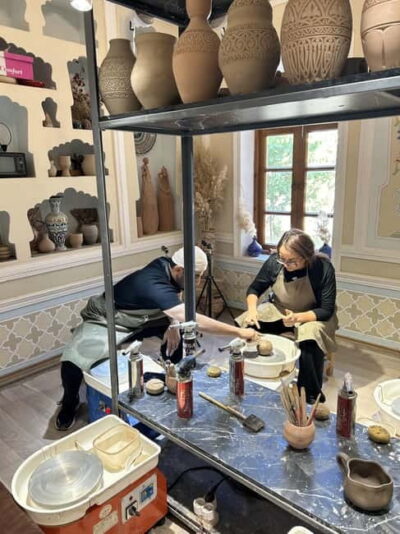
Uzbek Culture, Food, Crafts & Pottery Masterclass
Read our review →
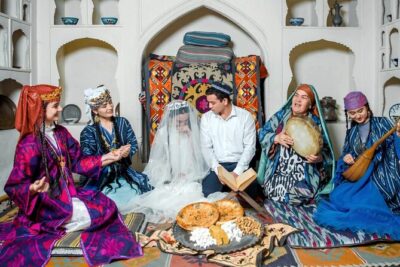
Tashkent Walking & Food Tour: Highlights + Local Flavors
Read our review →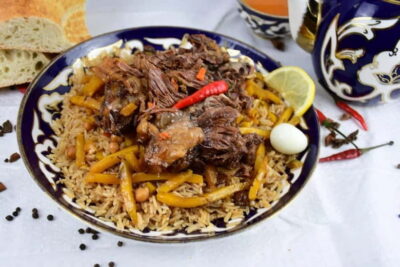
cooking traditional food in Samarkand with local people
Read our review →
Browse the lists this tour appears in