
Reviewed · FOOD & DRINK
Tashkent: 4 Hour Food Tour and Metro Journey with a Guide
Tashkent’s best introduction may be underground, then at the table. This private four-hour tour links Chorsu Bazaar’s food stalls with the city’s ornate metro stations and a generous meal of Uzbek plov. It gives you a quick look at daily life, local cooking, and Soviet-era design without making you arrange the pieces yourself.
I like two things right away: pickup anywhere in Tashkent makes the morning easy, and the private format lets you ask questions or adjust the food focus. Guide Yusuf has earned particular praise for helping visitors navigate the bazaar and speak with vendors. The main consideration is crowding. The metro can be busy even outside the listed peak hours, and the tour involves plenty of walking and standing.
Key points at a glance
- Chorsu Bazaar first: Taste Uzbek snacks, inspect produce and spices, and get help choosing what to try.
- Metro art between meals: Ride several stations and hear the stories behind mosaics, artwork, and Soviet design.
- A serious plov finish: Eat at Besh Qozon Pilaf Center and try plov linked to different regions of Uzbekistan.
- Private and flexible: Your guide can answer questions at your pace, with English, Uzbek, Polish, or Russian available.
- Four hours, with food included: Metro tickets, bazaar snacks, and meals at local restaurants are covered in the $100 price.
- Plan your timing: Avoid 7:30 to 9:30 AM and 5:00 to 7:30 PM if you want a less crowded metro ride.
Why food and the Tashkent Metro work so well together
Tashkent can be hard to read at street level during a short visit. The city is large, modern, and spread out, while its food traditions are often easiest to understand through small tastings rather than one formal meal. This tour solves that problem by pairing places you might not connect on your own.
At Chorsu Bazaar, you see ingredients and prepared foods in the setting where many residents shop. On the metro, you see a different side of the capital, one shaped by monumental public design and Soviet planning. Then plov brings the tour back to the table.
I like this mix because it avoids treating food as a separate show for visitors. You taste, move through the city, and learn how the city’s spaces fit together. A guide also matters at the bazaar. You can point, ask what something is, and decide how adventurous you want to be without guessing your way through every stall.
The tour is a private group experience, so the pace should feel more personal than a large coach outing. It is still a four-hour schedule, not an all-day food crawl. You get a useful sample of Tashkent rather than an exhaustive survey of Uzbek cooking.
More tashkent metro tours in Tashkent:
- Tashkent Food and Metro Journey
★ 5.0 · 4 reviews
Chorsu Bazaar: start with snacks and local ingredients
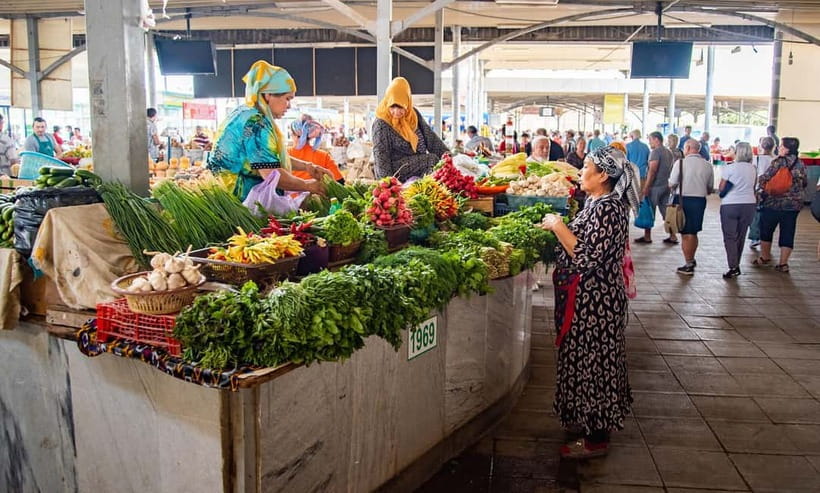
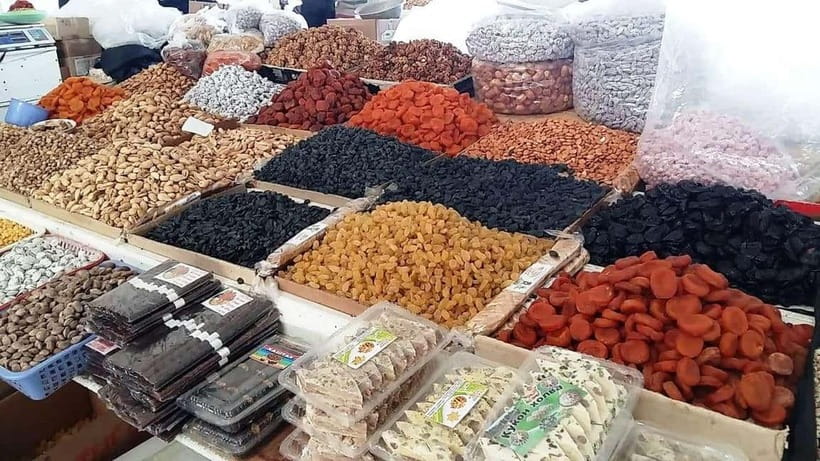
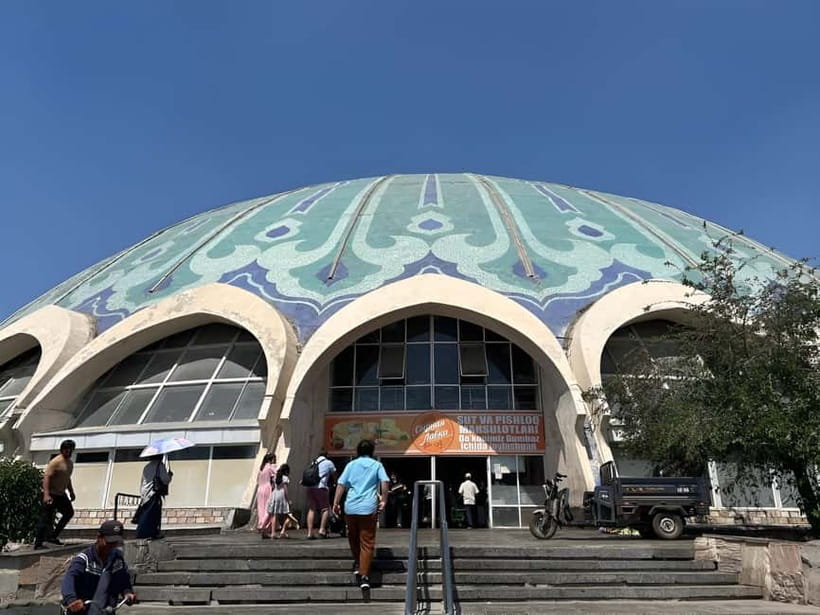
The first major stop is Chorsu Bazaar, with about an hour and a half devoted to food tasting and the market. This is the part of the tour most likely to make you glad you have a guide.
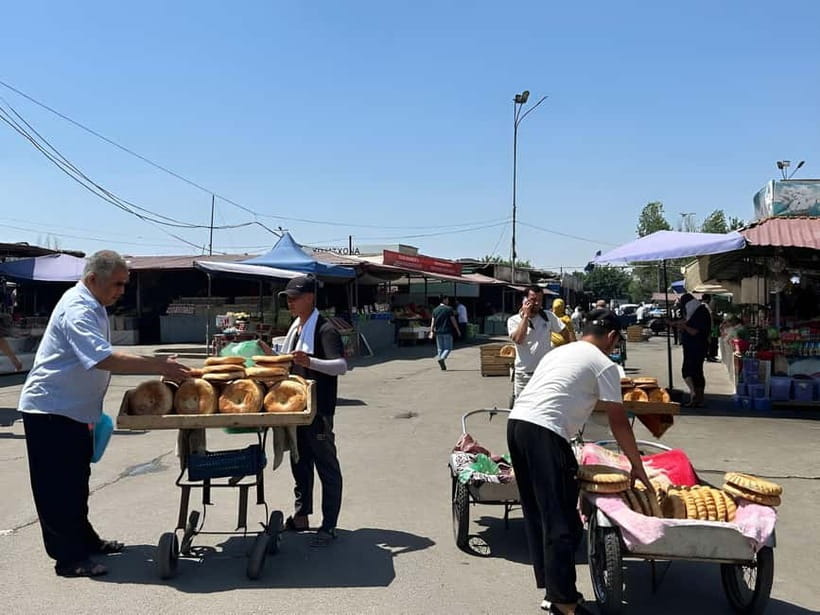
Central Asian bazaars can feel confusing at first. There may be unfamiliar pastries, fresh produce, spices, sweets, and prepared foods packed into a large market setting. With a guide, you can ask what you are seeing, learn which foods are regional, and focus on tasting rather than worrying about basic etiquette or communication.
The included snacks give you a starting point, while additional purchases are your responsibility. That distinction matters. You are not limited to the official tastings, but you should budget extra if you want to buy treats, ingredients, or souvenirs to carry on.
Expect the food to cover several styles rather than one neat course. The tour description points to savory pastries, stews, street food, fresh produce, and other traditional Uzbek flavors. You may find bold seasoning, hearty textures, and dishes designed to fill you up. This is not a polished restaurant tasting menu. It is a look at food as part of ordinary city life.
I would arrive with room in your stomach. There is a full meal later, and the day is designed around repeated eating. If you are someone who likes to sample many small bites, Chorsu will be the strongest part of the opening. If you prefer a quiet sit-down meal, the market may feel noisy and less controlled.
The bazaar also gives the guide a chance to explain food beyond ingredients. Uzbekistan’s cooking reflects regional traditions and a long pattern of exchange across Central Asia. The useful information here comes through what you taste and where it is sold, not through a long classroom lecture.
Riding Tashkent’s decorated metro stations
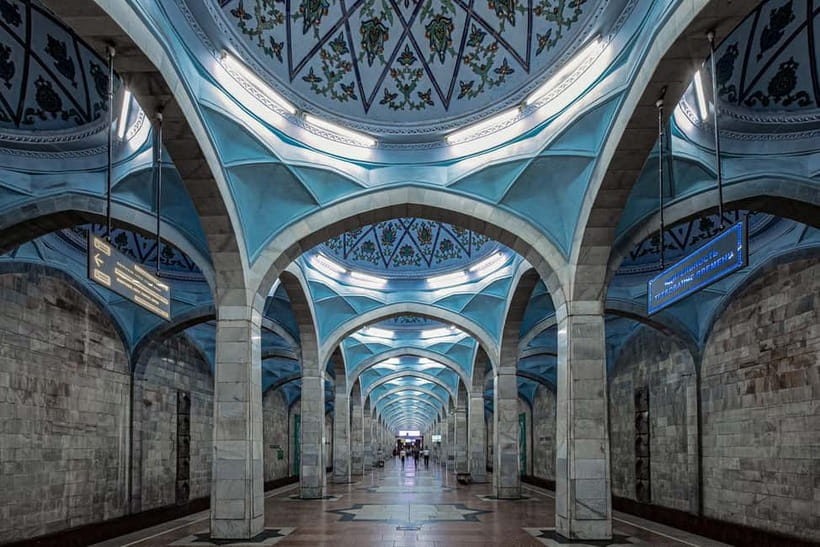
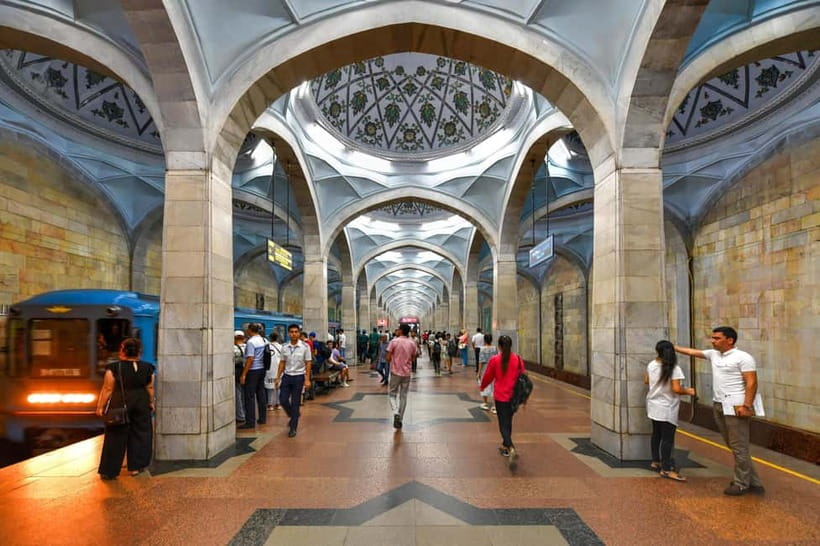
After the market, the tour spends about an hour and a half on a guided metro journey. Metro tickets for all stops are included, so you do not need to work out the fare system while moving between stations.
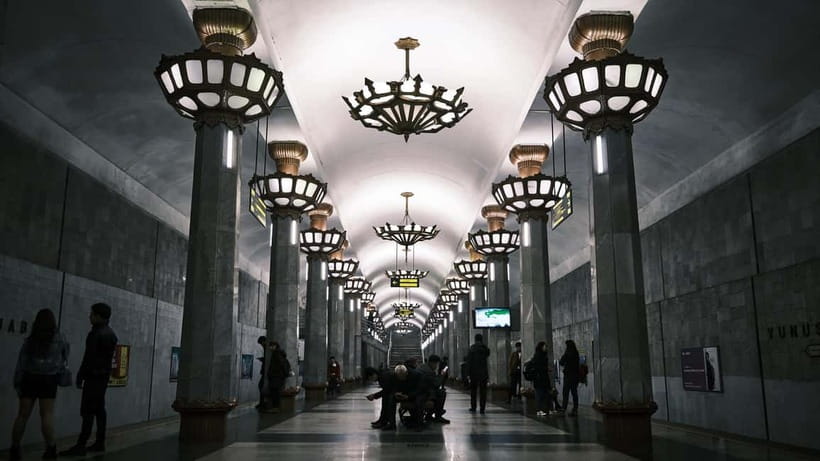
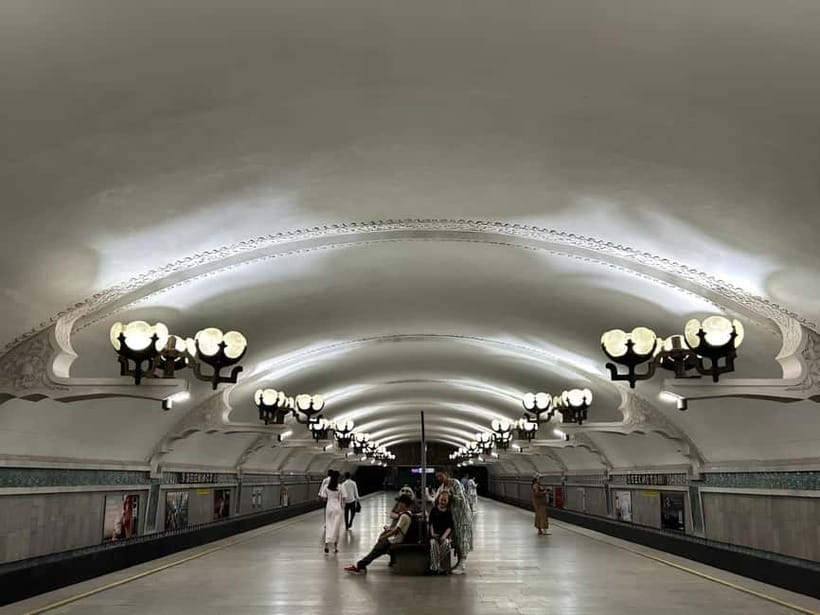
The point is not simply to use the metro as transport. Tashkent’s stations are known for their artwork, mosaics, decorative details, and Soviet-era architecture. Each stop has its own visual character, and a guide can add context about the designs and the stories connected with important stations.
This is a good choice for anyone who likes architecture but might otherwise pass through the stations too quickly. Underground spaces can be easy to overlook when you are focused on reaching the next sight. Here, the stations become the sights.
The practical warning is crowding. Peak periods are listed as 7:30 to 9:30 AM and 5:00 to 7:30 PM, but the metro may still be busy at other times. You should expect walking, standing, and moving with other passengers. Comfortable shoes and comfortable clothing are sensible, not decorative advice.
If your main goal is food, ask about a food-heavy adjustment. The experience can reportedly be customized to focus more on eating and less on the metro. That is useful if crowds make you uncomfortable, or if ornate stations are interesting to you but not worth ninety minutes of your limited time.
On the other hand, do not book this tour expecting a private train carriage or a quiet museum visit. You are using the public metro system. The private group applies to your guide and party, not to the surrounding commuters.
Besh Qozon and the art of Uzbek plov
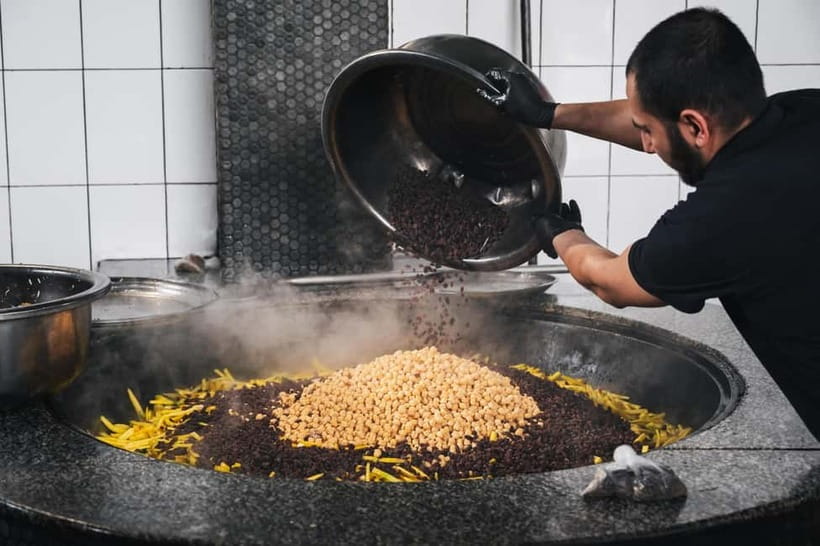
The final food stop listed in the route is Besh Qozon Pilaf Center, with about one hour for food tasting and a local meal. This is the big finish, and you should not treat it as a small sample after the bazaar.
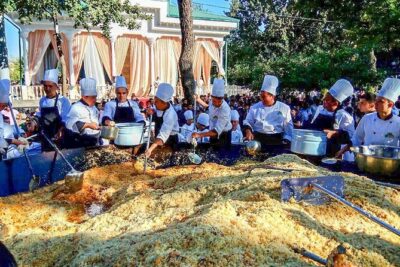
Plov is one of Uzbekistan’s signature dishes. It is built around rice and is prepared in large quantities, often with meat, carrots, and other ingredients. At Besh Qozon, the focus is on tasting plov connected with different regions of the country. That regional comparison gives the meal more meaning than simply ordering a plate and moving on.
One person described eating so much plov that walking afterward became difficult. Take that as friendly practical advice: pace yourself at Chorsu. You can enjoy the market more if you remember that another substantial meal is coming.
The meal is included, along with a meal at a local Uzbek restaurant as part of the overall package. The supplied details do not specify every dish or portion, so dietary needs should be shared in advance. That is especially important if you avoid meat, have food allergies, or need to limit particular ingredients.
The plov stop should suit you if you want a filling, traditional meal in a place associated with the dish. It may not suit you if you are looking for light food or a refined dining room. The appeal is local cooking at full strength, not delicate portions.
A few more Tashkent trips to weigh up
- Tashkent: Uzbek Culture, Food, Crafts & Pottery Masterclass
★ 5.0 · 24 reviews - Tashkent Vegan Street Food Tour
★ 5.0 · 22 reviews - Tashkent Walking & Food Tour: Highlights + Local Flavors
★ 5.0 · 18 reviews - With John Private Tashkent city & Food tour
★ 5.0 · 13 reviews
What the $100 price really covers
At $100 per person, this is not the cheapest way to eat in Tashkent. Local food itself can be inexpensive, and you could visit the metro and Chorsu Bazaar on your own for less. The price needs to be judged against the service, not just the dishes.
You are paying for four hours of a private guide, pickup anywhere in Tashkent, metro tickets for all stops, bazaar snacks, a meal at a local Uzbek restaurant, and a meal at a plov restaurant. You also get translation and cultural context at places where a first-time visitor may otherwise miss the point.
The value is strongest for a short stay. If you have only a day or two in Tashkent, the tour bundles several city experiences into one half-day. You do not need to research which metro stations to visit, find a suitable plov restaurant, or figure out how to approach food sellers at Chorsu.
The value is weaker if you already speak one of the guide languages, know the city well, and are comfortable arranging your own meals. Independent visitors may prefer to spend $100 across several separate meals and metro rides. The private format is also more expensive per person than a large group tour, though it may become better value if shared by several people in the same booking.
The high rating of 5 from four verified bookings points to strong satisfaction, but the sample is small. I would treat it as a good signal about the guide, food, and route, not as proof that every visitor will have the same experience.
Guides, languages, and the private format
Guiding is central to this experience. English, Uzbek, Polish, and Russian are available, which makes the tour useful for a wide range of visitors. Yusuf is the guide specifically named in the supplied feedback, and he was praised for helping at the bazaar, explaining metro history, and making local interaction easier.
A private group changes the feel of the day. You can ask why one dish is different from another, pause at a metro station, or tell the guide that you need to slow down. You are not waiting for a busload of people to finish taking photos.
There are limits. Four hours passes quickly once you include pickup, market time, metro transfers, and two meals. You should not expect a detailed study of every station or every Uzbek regional cuisine. Think of it as a well-packed introduction.
Communication before the tour was also described as excellent, which matters when pickup is involved. Still, give clear information about your location and food restrictions. The tour offers pickup, but it does not include drop-off afterward.
Timing, comfort, and the end of the route
Choose a start time outside the busiest metro periods if the underground portion matters to you. The listed busy windows are 7:30 to 9:30 AM and 5:00 to 7:30 PM. Since the metro can remain crowded beyond those hours, a quieter time is not guaranteed, but avoiding peak periods should improve your chances.
Wear comfortable shoes. You will walk through a market, move around metro stations, and stand on a public train. Comfortable clothing is also recommended, especially if you are visiting during a warm spell or plan to eat several substantial dishes.
There is a small route detail worth confirming before you pay. The general description says the experience concludes at Chorsu Bazaar, while the detailed route places Chorsu earlier and ends at Besh Qozon Pilaf Center. Since drop-off is not included, ask the provider to confirm the final stop and how close it is to your next plan.
That is not a reason to reject the tour. It is simply useful to know where you will be at the four-hour mark, especially if you have a train, flight, or timed attraction afterward.
Free cancellation is available up to 24 hours before the start for a full refund, and you can reserve now and pay later. Those terms help if your Tashkent schedule is still shifting, but they do not replace checking the start time and final location.
Who should book this food and metro tour
I would recommend it most strongly to first-time visitors who want help making sense of Tashkent. You get food, public transport, architecture, and local context in one outing. It is also a strong fit for food-focused visitors who want more than restaurant meals, since Chorsu shows you ingredients and market habits as well as finished dishes.
The tour suits couples, families, and small private parties who value flexibility. It also works well for people who feel uneasy approaching a large bazaar alone or who want help communicating with vendors.
You may want a different plan if you dislike crowded public transport, eat very lightly, or prefer to explore at your own pace. Independent visitors can visit Chorsu, ride the metro, and find plov separately. You should also think twice if you need guaranteed control over every ingredient, since the tour includes multiple traditional dishes and market tastings. Inform the provider about allergies and dietary restrictions before the day.
Should you book it?
Book this tour if you want a compact, food-led introduction to Tashkent and value a guide who can explain what you are seeing. The best reasons are the private format, the help at Chorsu Bazaar, the metro’s unusual station design, and the substantial regional plov tasting at Besh Qozon.
Skip it if your priority is a quiet meal, a self-guided metro visit, or the lowest possible cost. Also confirm the final stop, since the general description and detailed route differ. For most first visits, though, $100 is a reasonable price for combining experiences that are easy to miss or mishandle on your own.
FAQ
How long does the Tashkent food and metro tour last?
The tour lasts four hours. The planned stops allow about 1.5 hours at Chorsu Bazaar, 1.5 hours for the metro journey, and one hour at Besh Qozon Pilaf Center.
What is included in the price?
The price includes pickup from any location in Tashkent, metro tickets for all stops, snacks at Chorsu Bazaar, a meal at a local Uzbek restaurant, and a meal at a local plov restaurant.
Is hotel pickup available?
Yes. Pickup is available from any location in Tashkent.
Does the tour include transportation after it ends?
No. Drop-off after the tour is not included.
Which languages can the guide speak?
The available guide languages are English, Uzbek, Polish, and Russian.
Is this a private tour?
Yes. The activity is operated for a private group.
Can dietary restrictions or allergies be accommodated?
You should inform the provider about dietary restrictions or allergies in advance so the food arrangements can be considered.
When is the Tashkent Metro busiest?
The listed peak periods are 7:30 to 9:30 AM and 5:00 to 7:30 PM. The metro may still be busy outside those times.
Can I cancel the tour for a refund?
You can cancel up to 24 hours in advance for a full refund.
Can I reserve now and pay later?
Yes. The tour allows you to reserve a place and pay later.
More Food in Tashkent
- Food tour in Tashkent
★ 4.7 · 7 reviews - Ten Bites Adventure Food Tour in Tashkent
★ 5.0 · 6 reviews - Food tour in Tashkent
★ 5.0 · 5 reviews - cooking traditional food in Samarkand with local people
★ 4.8 · 17 reviews
Just added around Tashkent
- Private Intercity Transfer Tashkent – Samarkand – Tashkent★ 3.5 · 3 reviews
- Tashkent Mountain Tour Amirsoy with Transport★ 3.5 · 3 reviews
- Tashkent-Samarkand-Bukhara tour-3nights/4 days★ 5.0 · 5 reviews
- Amirsoy & Chimgan mountain tour from Tashkent★ 5.0 · 3 reviews
- Private Tashkent City Tour★ 5.0 · 3 reviews
- Tashkent Food and Metro Journey★ 5.0 · 4 reviews
- Tashkent City Tour with Hotel Pickup and Drop off★ 4.5 · 4 reviews
- Silk Road Secrets Tour in Uzbekistan★ 5.0 · 4 reviews
Food & Drink, compared.
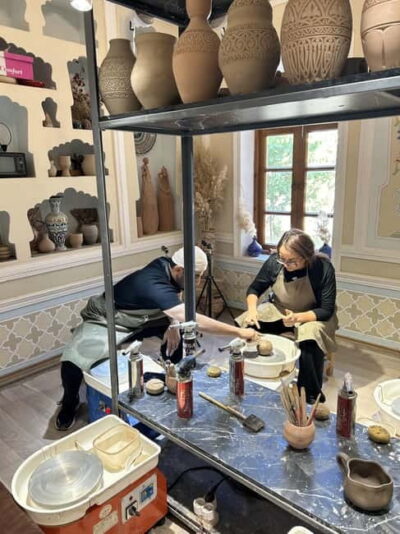
Uzbek Culture, Food, Crafts & Pottery Masterclass
Read our review →
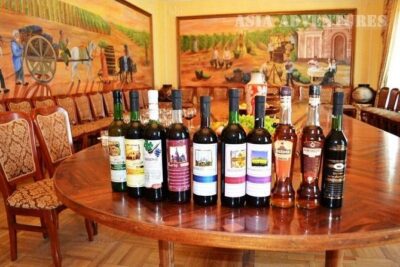
Tashkent Walking & Food Tour: Highlights + Local Flavors
Read our review →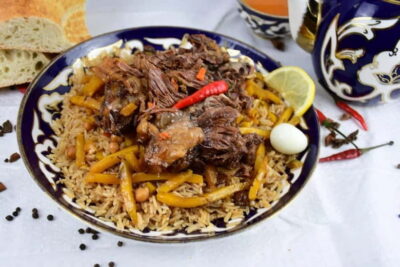
cooking traditional food in Samarkand with local people
Read our review →
Browse the lists this tour appears in