
Reviewed · TASHKENT TOURS
Tashkent Soviet Architecture (Modernism) and Subway station tour.
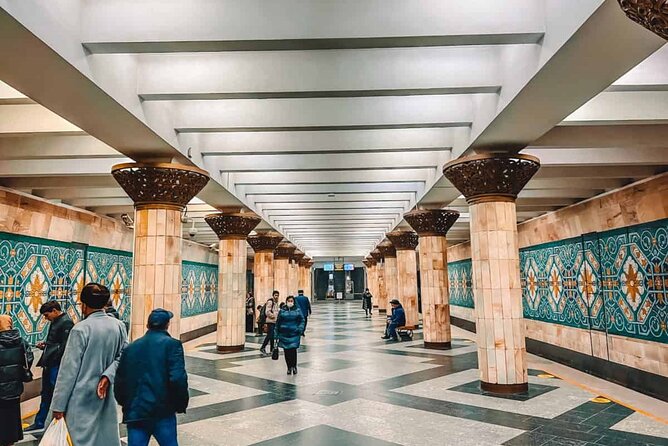
The best part of this Tashkent tour is underground. The city’s metro stations are not just transport stops, but polished public rooms filled with Soviet-era design, mosaics, and symbols. Above ground, you’ll connect those stations with grand squares, earthquake memorials, and buildings that show how Tashkent changed under Soviet rule.
I like the private format, since guides such as Aziza have adjusted walks around a group’s interest in Soviet architecture. I also like the mix of major sights and everyday city life, including the chance to use the metro and, according to the tour description, visit Chorsu Bazaar’s food stalls. The main drawback is that transport fees are not included, and the route can feel quick if you want long architectural stops.
Key points to know before booking
- The metro is the star: You visit three or four especially attractive stations, with some tours seeing five or six, including the Cosmonaut station.
- The focus is flexible: Ask for Soviet modernism, Uzbek history, markets, or a broader first look at Tashkent.
- Guides vary by date: Aziza, Mirwaheed, and Mirvoxid are among the guides named in the tour feedback.
- The walk begins and ends at Hotel Uzbekistan: This makes the route simple to plan, though transport costs are extra.
- It suits private groups: One booking can cover anywhere from one to 20 people, with group discounts available.
- Allow about two hours and 15 minutes to two and a half hours: That is enough for an overview, not a slow architectural study.
Why Tashkent’s metro makes this tour worth considering
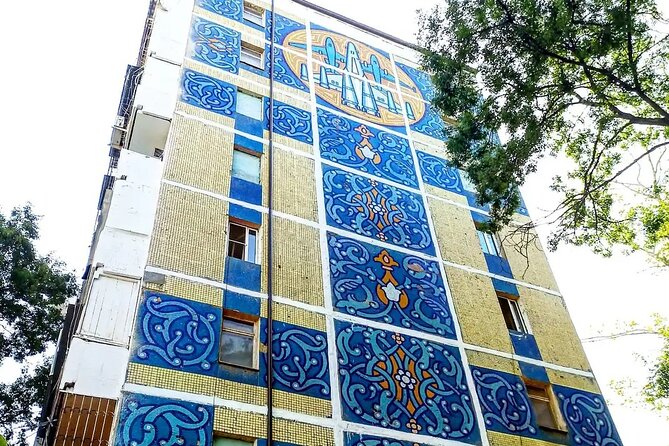
Tashkent can be hard to read at first. Its broad streets and open squares reflect Soviet city planning, while Uzbek details, older buildings, and modern commercial life give the center a different feel. A guide helps you connect those pieces instead of seeing each monument as a stand-alone photo stop.
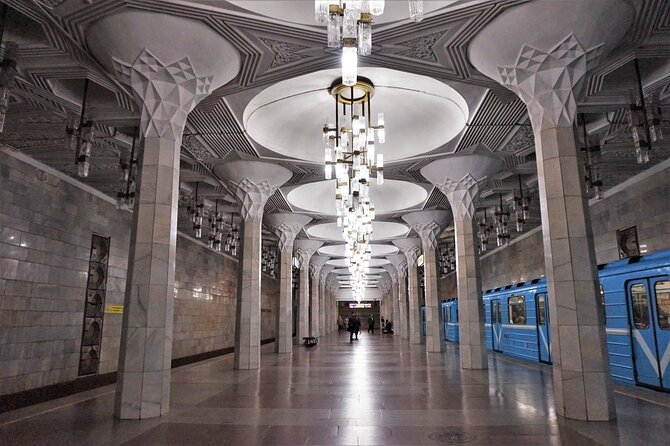
The metro gives the tour its clearest theme. You’ll ride through the system and visit three or four of its most attractive stations. Some tours have covered five or six, and the Cosmonaut station is a particular target for visitors interested in Soviet design.
You should not expect a museum-style visit with time to study every wall. The tour lasts roughly two hours and 15 minutes, sometimes described as two and a half hours, so the metro portion has to move at a good pace. Still, this is a smart use of your time in Tashkent because you see how art, architecture, and daily transport share the same space.
The private setup matters here. If you want to stop for photos, ask about a building, or spend more time on Soviet modernism, your guide can adjust the rhythm. Aziza is praised for being warm, organized, and willing to shape the walk around a group’s interests. Mirwaheed and Mirvoxid are also named as guides who explain the city’s past and present well.
Other Tashkent days people book alongside this one:
- Best of Tashkent Mountains: Amirsoy, Chimgan & Charvak Trip
★ 4.8 · 567 reviews - Samarkand One Day Tour – Departure From Tashkent
★ 5.0 · 313 reviews - Tashkent City Tour
★ 5.0 · 121 reviews
Starting at Amir Temur Square and Hotel Uzbekistan
The meeting point is Hotel Uzbekistan on Mirzamakhmud Musakhanov Street. The tour usually returns there, so you begin and finish at a clear central landmark rather than trying to find an unfamiliar side street.
The first stop is Amir Temur Square, where the guide explains the architecture and history of the square and the Uzbekistan Hotel. This is a useful opening because the hotel gives you an immediate example of Tashkent’s large-scale Soviet-era design.
You’ll spend about 35 minutes here, with no admission charge. That is enough time to understand the main ideas and take in the setting, though architecture fans may wish for more time to study the building from different angles.
The square also gives your guide a chance to establish the city’s political and urban story. Tashkent’s public spaces were shaped by the Soviet period, yet the city has continued to express Uzbek identity through renamed squares, national symbols, and newer uses of old civic areas.
For a first visit, this is a practical place to begin. You get your bearings, learn how the tour will read the city, and start with a landmark that is easy to locate. If you already know central Tashkent well, tell the guide that you want less orientation and more detail on building design.
Independence Square and the Romanov palace
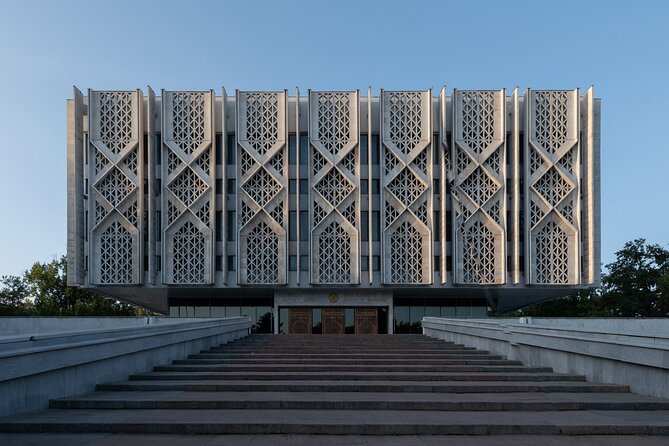
Independence Square, also called Mustakillik Square, follows the first stop. The listed visit lasts about 15 minutes and includes the Palace of Duke Romanov and the Museum of History of Uzbekistan as points of explanation.
This part of the tour is brief, so think of it as a guided introduction rather than a full museum visit. No admission ticket is included for the museum, and the tour information does not promise an interior visit. Ask your guide at the start if you want to enter or spend extra time there.
The contrast between the square, the Romanov palace, and the Soviet buildings is one of the route’s useful features. You are not looking at one period in isolation. Instead, you see how imperial, Soviet, and independent Uzbek layers sit within the same central area.
I would pay attention to how the guide frames the change from Soviet rule to independent Uzbekistan. Several people who booked the walk specifically valued explanations of both the past and the present. That wider context is more useful than a list of dates, especially if this is your first time in the country.
Riding through Tashkent’s decorated metro stations

The metro section takes about 30 minutes and is the heart of the experience. Your guide explains the subway system and its architecture, then takes you through a selection of the more decorated stations.
The stations are known for their varied themes and formal interiors, so each stop can feel different from the last. The tour description promises three or four of the best stations, while some completed routes have included five or six. Cosmonaut station is especially important for many architecture-focused visitors, and it is worth naming it when you book if you want to see it.
The metro also gives you a look at ordinary Tashkent life. You are not only viewing a preserved monument. You are using the same system that residents use to cross the city. That makes the architectural experience feel more connected to daily life.
Your metro admission is included, but other transport fees are not. The wording does not spell out every possible transport charge, so ask what is covered before setting out. Since the tour is based at Hotel Uzbekistan and uses public transport during the route, you should also wear comfortable shoes and keep your belongings easy to manage.
One practical point: the tour is private, but the metro itself is public. Your guide controls the route and explanation, not the pace of the stations or the movement of other passengers. If photography is important to you, mention it early so the guide can allow enough time at the stops.
Same Silk Road, a completely different kind of day:
- Amirsoy, Chimgan & Charvak Full-Day Adventure
★ 4.9 · 82 reviews - Shymkent Day Tour from Tashkent
★ 4.6 · 71 reviews - Highlights of Tashkent (old and new part)
★ 5.0 · 60 reviews - 2 Days Tour to Bukhara and Samarkand from Tashkent by train
★ 5.0 · 53 reviews
The Courage Monument and Tashkent’s earthquake story
The route includes a monument connected with the 1966 earthquake and the rebuilding of Tashkent. This stop adds a needed human and civic element to a tour that could otherwise become a parade of large buildings.
The Courage Monument is tied to the city’s memory of the earthquake and the Soviet reconstruction that followed. Your guide explains the monument and the architecture around it, helping you understand why so much of central Tashkent has a planned, monumental feel.
The stop is not given a separate duration, so it is likely woven into the walking route between other sights. That can be an advantage because the story becomes part of the city rather than a detached lecture. It can also mean less time for close inspection, depending on the group and the day.
I find this one of the most useful stops for understanding modern Tashkent. The city’s broad avenues and planned public buildings are not simply a matter of style. They also reflect rebuilding after disaster, state planning, and the desire to present a strong capital.
Friendship of Nations Palace and its broad public square
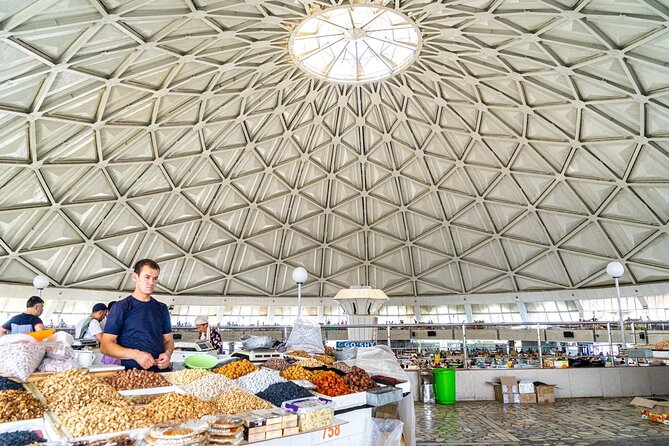
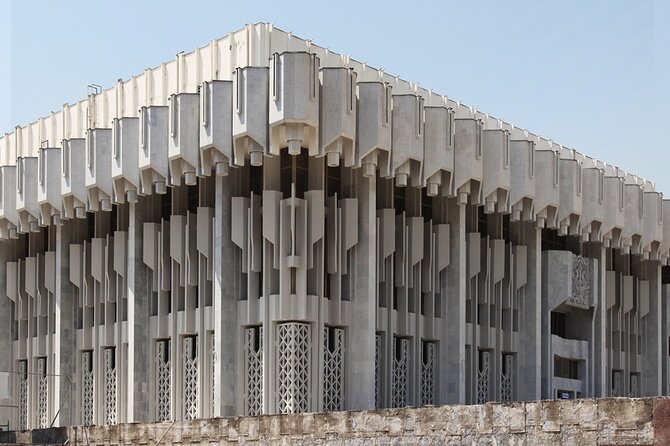
The final listed stop is the Friendship of Nations Palace and Friendship of Nations Square. You have about 20 minutes here, with no admission charge.
This is another chance to examine the way Soviet public architecture used large civic spaces and grand building forms. The name also points to a central Soviet idea: presenting many nationalities as part of one union. In today’s Uzbekistan, that old language takes on a different meaning, and a local guide can explain the change better than a plaque can.
The stop helps round out the tour. You have seen a hotel, government and civic spaces, metro interiors, and an earthquake memorial. Together, they show several sides of Tashkent’s modern architecture rather than repeating the same type of building.
Do not expect a long interior visit here unless your guide confirms one. The listed time is short and the tour is designed as a walking overview. If you want a slower look at public buildings, ask whether the route can be adjusted.
Where Chorsu Bazaar fits into the experience
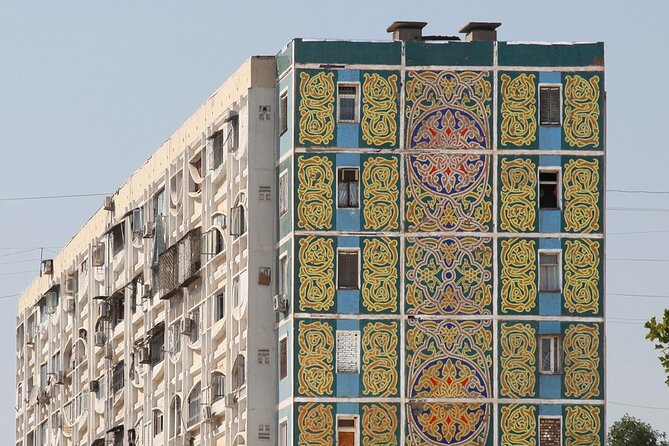
The tour description also includes Chorsu Bazaar and its food stalls as a way to see places locals use. That is appealing because it shifts the experience from official squares to shopping, food, and daily routines.
At the same time, Chorsu Bazaar is not included as a detailed stop in the supplied route, which focuses on Amir Temur Square, Independence Square, the metro, the Courage Monument, and Friendship of Nations Square. If the bazaar is a priority, confirm the route before booking or at the meeting point.
This is one area where the private format helps. The guide can potentially shape the walk around your interests, but the total time remains limited. A group that wants both a serious Soviet architecture tour and a full bazaar visit may need to choose one as the main focus or arrange additional time.
Guides, pacing, and the value of a private walk
The guides named in the tour feedback include Aziza, Mirwaheed, and Mirvoxid. The strongest pattern is not a particular scripted route, but the guides’ ability to explain architecture and connect it with Tashkent’s history.
Aziza is described as punctual, warm, fun to walk with, and generous with her time. She has also tailored walks toward hidden Soviet remains, subway rides, and a first introduction to the city. Mirwaheed and Mirvoxid are praised for explaining the city’s older and newer sides and for offering ideas for places beyond the tour.
That last point has real value. A two-hour walk cannot cover all of Tashkent, so a good guide should help you plan the rest of your stay. You may receive suggestions for other places to visit, though the specific recommendations will depend on your guide and interests.
The pace is generally described as comfortable, but one booking had confusion over the meeting arrangements and a late start. Confirm the meeting details clearly, especially if you are staying somewhere other than Hotel Uzbekistan. The provider also asks for good weather, and a poor-weather cancellation can lead to a new date or a full refund.
Is $50 per person good value?
At $50 per person, this is not the cheapest way to see Tashkent’s center. It is a private experience, however, and can accommodate groups from one to 20 people. Group discounts may improve the price for larger parties.
The value depends on what you want from a guide. If you only need to ride the metro and photograph a few stations, you can likely do that independently for much less. If you want the buildings explained, the Soviet period placed in context, and the route adjusted to your interests, the fee is easier to justify.
The tour includes guided service and the metro admission listed in the itinerary. It does not include all fees and taxes or transport fees, so ask for a clear cost outline. There are no admission charges for the main outdoor squares and monuments listed.
For a first day in Tashkent, I consider the price reasonable if you want orientation with substance. For a repeat visit focused only on architecture, the private format becomes more valuable because you can request specific buildings or metro stations instead of following a general city walk.
Who should book this Tashkent tour?
I would recommend it to first-time visitors who want a fast but thoughtful introduction to the capital. It also suits people interested in Soviet modernism, public buildings, metro design, or the way Tashkent was rebuilt after the earthquake.
Families and private groups benefit from the flexible format, provided everyone can manage a walking route and public transport. Most people can take part, and service animals are allowed. The meeting point is near public transportation.
I would be more cautious if you want a long museum visit, a slow photographic study, or a full food tour at Chorsu Bazaar. The route covers a lot in a short time, and the listed stops leave limited time for interiors. Ask for adjustments before the walk begins.
Should you book it?
Book this tour if you want Tashkent’s Soviet architecture explained by a local guide rather than simply photographed. The metro stations, the Uzbekistan Hotel, the earthquake memorial, and the central squares form a strong introduction to the city’s modern identity.
Before paying, confirm whether your preferred metro stations and Chorsu Bazaar are included, and clarify any transport charges. If Aziza, Mirwaheed, or Mirvoxid is available, you can expect a guide experienced with architecture-focused walks, but guide assignment may vary.
With free cancellation up to 24 hours before the start time, you have some room to adjust your plans. I would place it early in a Tashkent stay, when the city’s wide avenues, metro system, and Soviet-era buildings can help you make sense of everything you see afterward.
FAQ
How long does the Tashkent Soviet architecture tour last?
The experience lasts approximately two hours and 15 minutes. It is also described as a private two-and-a-half-hour walking tour, so the exact duration may vary slightly.
How much does the tour cost?
The listed price is $50 per person. Group discounts are available.
Is this a private tour?
Yes. Only your group participates, and private groups can range from one to 20 people.
Where does the tour begin?
The meeting point is Hotel Uzbekistan at Mirzamakhmud Musakhanov Street 45 in Tashkent.
Where does the tour finish?
The tour usually ends at Hotel Uzbekistan, the same place where it begins.
Is the metro ticket included?
Metro admission is listed as included. Transport fees in general are not included, so you should confirm which costs apply before starting.
Which metro stations will I see?
The tour includes three or four of the most attractive stations. Some routes have included five or six, and Cosmonaut station is specifically highlighted in the experience details.
Does the tour visit Chorsu Bazaar?
Chorsu Bazaar and its food stalls are included in the general description, but it is not listed as a detailed stop in the supplied route. Confirm this if the bazaar is important to you.
Can the route focus on Soviet architecture?
Yes. The private format allows the guide to adjust the walk around your interests, including a stronger focus on Soviet architecture and lesser-known Soviet remains.
What happens if I need to cancel?
You can cancel at least 24 hours before the start time for a full refund. Cancellations or changes made less than 24 hours before the start time are not accepted for a refund. If poor weather or insufficient bookings cancel the experience, you will be offered another date or a full refund.
Just added around Tashkent
- Private Intercity Transfer Tashkent – Samarkand – Tashkent★ 3.5 · 3 reviews
- Tashkent-Samarkand-Bukhara tour-3nights/4 days★ 5.0 · 5 reviews
- Tashkent Mountain Tour Amirsoy with Transport★ 3.5 · 3 reviews
- Amirsoy & Chimgan mountain tour from Tashkent★ 5.0 · 3 reviews
- Private Tashkent City Tour★ 5.0 · 3 reviews
- Tashkent Food and Metro Journey★ 5.0 · 4 reviews
- Silk Road Secrets Tour in Uzbekistan★ 5.0 · 4 reviews
- Transfer Tashkent Airport / Railway Station – Hotel★ 3.5 · 3 reviews
Tashkent Tours, compared.
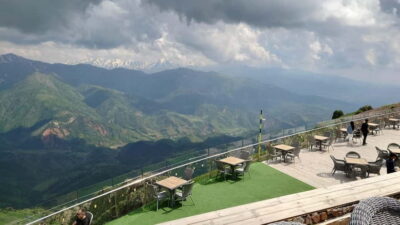
Best of Tashkent Mountains: Amirsoy, Chimgan & Charvak Trip
Read our review →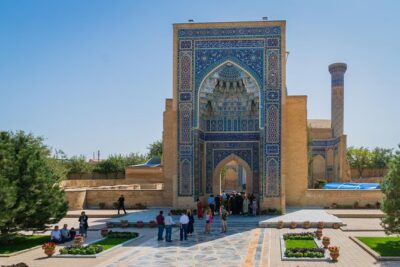
Samarkand One Day Tour – Departure From Tashkent
Read our review →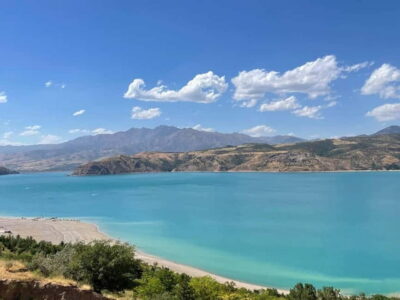
2 Days Tour to Bukhara and Samarkand from Tashkent by train
Read our review →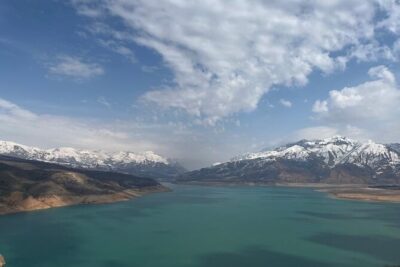
Uzbekistan 6 days private tour Tas-Khiva-Buk-Sam-Tas
Read our review →
Uzbekistan 8 Days Private Tour Tashkent-Urgench-Bukhara-Samarkand-Tashkent
Read our review →Browse the lists this tour appears in