
Reviewed · TASHKENT TOURS
Tashkent: Cultural Exploration & Pottery Masterclass
The best part of this Tashkent experience is that you do more than look at Uzbek craft. You learn why pottery, embroidery, dolls, textiles, and household customs matter, then sit at the wheel and make something yourself. I like the hands-on pottery lesson and the generous Uzbek meal, especially the hot bread, palov, pickled vegetables, and cherry juice described by guests. The main guide, Yusuf, is known for explaining history in an easy, personal way.
I also like that this is a private activity, so Yusuf can adjust the cultural discussion to your interests. The catch is practical: this is not a museum visit with a finished souvenir guaranteed by the end. Your piece may need glazing, and shipping it home costs extra. Food is also meat and dairy based, with limited plant options.
Key things to know before booking
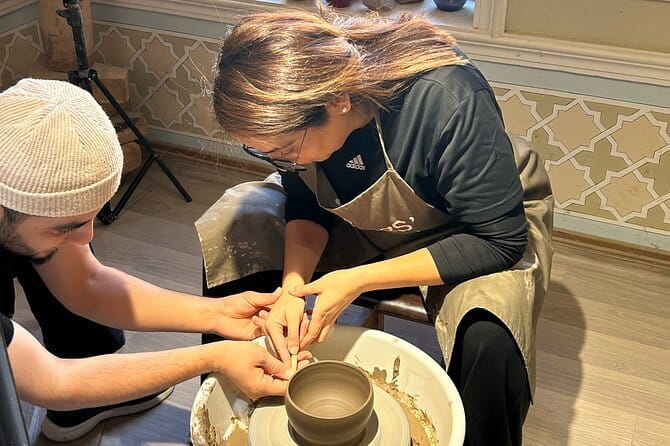
- You make your own Uzbek pottery: The class covers clay preparation, wheel work or molding, drying, shaving, and decoration.
- Yusuf leads the cultural discussion: Topics range from Silk Road trade and silk production to wedding customs, superstitions, and Suzani embroidery.
- The meal is part of the experience: Expect non bread, salads, Uzbek palov, green tea, and water.
- Your group stays private: Only your party participates, which gives you room to ask questions and work at your own pace.
- Pickup is included, but drop-off is not: Plan your next stop in Tashkent with that in mind.
- The $85 price covers more than a short class: It includes transportation pickup, instruction, equipment, lunch, and fees, but not glazing or pottery shipment.
Why this Tashkent tour feels different
Many city tours leave you with photos and a few facts. This one gives you a small task to wrestle with: turning a lump of clay into a useful or decorative object. That change matters. You pay closer attention to the potter’s hands, the feel of the clay, and the decorative marks because you are trying to do the work yourself.
The cultural portion gives the pottery a wider setting. Uzbek crafts are not treated as isolated souvenirs. The discussion connects ceramics with household traditions, textiles, wedding customs, local beliefs, and the old trading routes that carried goods and ideas across Central Asia.
I would choose this experience if you want a cultural activity with conversation and food, not just a quick stop at a workshop. At roughly three and a half hours, it also fits neatly into a Tashkent itinerary. It is long enough to feel substantial, but short enough to leave time for other sights.
Other Tashkent days people book alongside this one:
- Best of Tashkent Mountains: Amirsoy, Chimgan & Charvak Trip
★ 4.8 · 567 reviews - Samarkand One Day Tour – Departure From Tashkent
★ 5.0 · 313 reviews - Tashkent City Tour
★ 5.0 · 121 reviews
One hour with Yusuf and Uzbekistan’s craft traditions
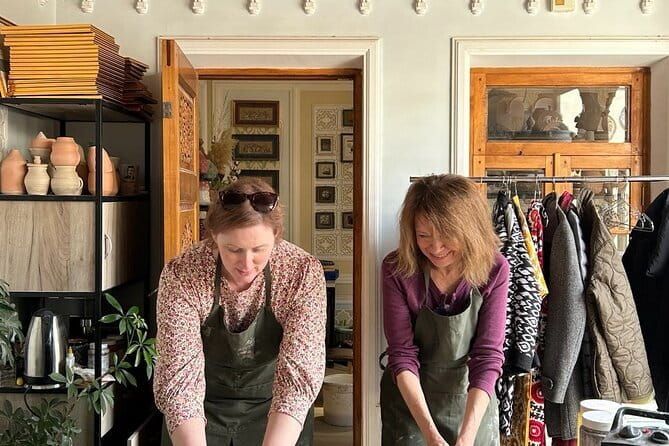
The first hour is a guided look at artistic traditions across Uzbekistan. Yusuf covers the Silk Road and its importance, then moves into traditional textiles and silk production. This helps explain why craft skills became so closely tied to trade, family life, and regional identity.
You also hear about traditional doll making and differences between tribal crafts. These subjects are useful because Uzbek craft is not one single style. Techniques and designs can vary between communities, and a good guide can help you notice distinctions that are easy to miss when you browse a market.
The talk also includes local superstitions and household traditions. I find these details more useful than a list of dates because they show how people used craft in everyday life. A textile, doll, or ceramic vessel can carry practical meaning, family memory, or a belief about the home.
Wedding customs and the history of Suzani embroidery add another layer. Suzani is known for its detailed embroidered designs, and learning where it fits in Uzbek life gives you more to look for later in shops, museums, and historic houses.
Ceramics and pottery lead naturally into the next part of the afternoon. You are not simply told that pottery is old or important. You get to see some of the steps that keep the craft alive.
The level of detail can change with your questions. One useful feature of a private tour is the chance to ask Yusuf to spend more time on subjects that catch your attention. A guest who wanted to focus on Uzbek crafts and history found the conversation easy to follow and personal. That flexibility is a real advantage over a fixed group script.
The pottery masterclass, from wet clay to decoration
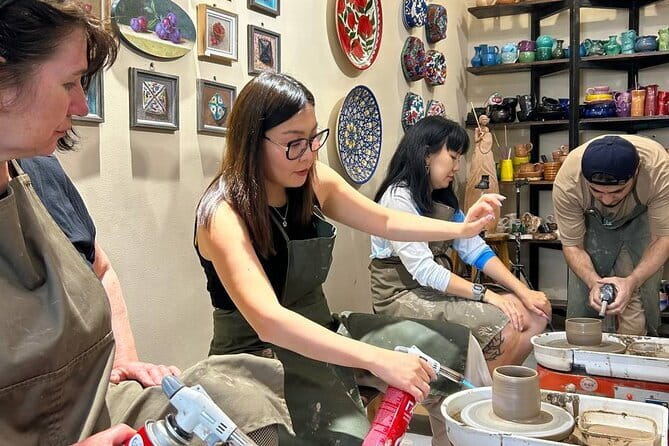
The pottery class lasts about one to one and a half hours. It begins with an introduction to the craft and clay preparation. You then select the type of piece you want to make before trying wheel throwing or molding.
That choice is important for beginners. Wheel work looks simple when an experienced potter does it, but keeping clay centered and balanced takes control. Molding can offer another route into the craft. The precise options may depend on the workshop and the artisan guiding you, so treat this as a practical lesson rather than a promise that you will produce a perfect bowl on your first try.
A fire torch is used for initial drying. After that, the piece can be shaved and decorated. The sequence gives you a better sense of the labor behind Uzbek ceramics. Shaping is only one stage. The surface still needs attention, and decoration can change the entire look of the object.
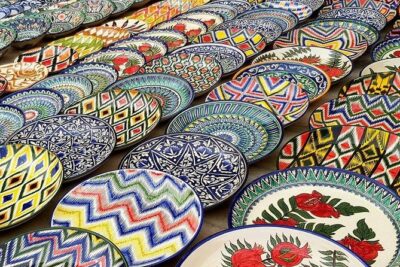
One especially interesting detail is the artisan’s use of carving to preserve Uzbek designs on pottery. This is where the class moves beyond a generic craft activity. You are learning a method linked to local visual traditions, not simply painting a souvenir with random colors.
Keep your expectations sensible. The class includes making and decoration, but glazing is not included. Your piece may therefore require more work after the session. Pottery shipment is also extra, so ask about the next steps if you are not carrying the item home yourself.
I like the class best for people who enjoy trying something unfamiliar. You do not need prior pottery experience. You should be comfortable getting your hands dirty, accepting a few uneven edges, and taking pride in a piece that shows your learning curve.
Lunch with palov, hot bread, and green tea
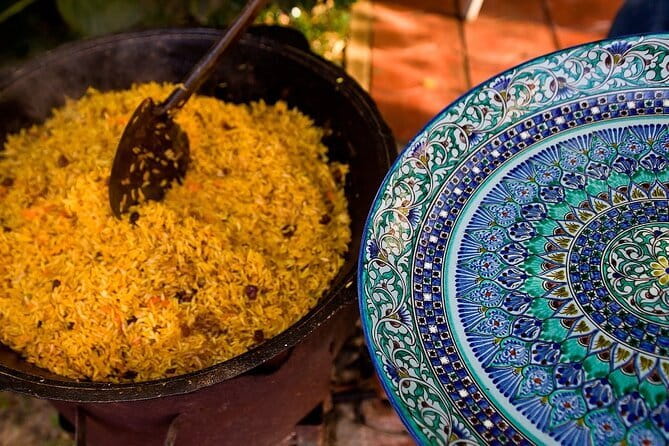
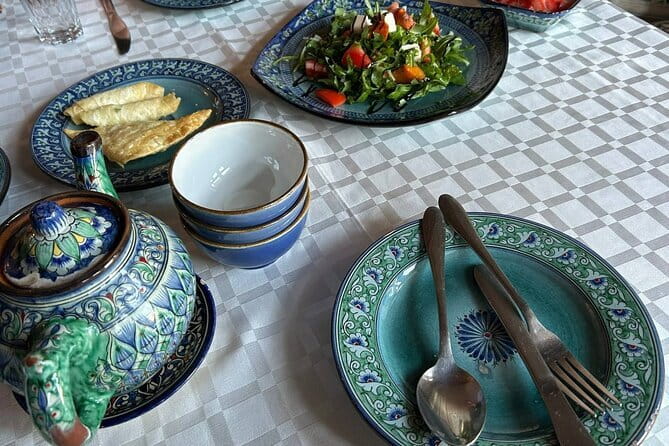
The final hour is devoted to a traditional Uzbek meal. It includes Uzbek non bread, Shakarob and Kuzchi Kayfiyat salad, a variety of Uzbek palov, unlimited green tea, and water.
The meal gives the afternoon a relaxed finish. After concentrating on clay, you get time to eat and talk through what you have learned. A reported meal combination included palov, homemade cherry juice, pickled vegetables, and bread served hot from the oven. Cherry juice is not listed among the standard inclusions, so consider it a possible extra rather than something to count on.
Palov is one of the foods most closely associated with Uzbekistan. It is a filling rice dish, and the mention of several varieties suggests that the meal may offer more than one preparation. The supplied details do not specify every ingredient or serving style, so anyone with dietary restrictions should confirm before booking.
Food is the clearest limitation here. The meal contains meat and dairy, with limited plant-based choices. Bread and pastries contain wheat, nuts may appear in Uzbek dishes, and cheese is used in starters. If you are vegetarian, vegan, gluten-free, allergic to nuts, or unable to eat dairy, contact the provider before the activity and confirm what can be prepared.
For most people, the meal adds real value to the tour. It is not just a snack placed between activities. It gives you a chance to connect the craft discussion with daily life, hospitality, and food traditions.
Same Silk Road, a completely different kind of day:
- Amirsoy, Chimgan & Charvak Full-Day Adventure
★ 4.9 · 82 reviews - Shymkent Day Tour from Tashkent
★ 4.6 · 71 reviews - Highlights of Tashkent (old and new part)
★ 5.0 · 60 reviews - 2 Days Tour to Bukhara and Samarkand from Tashkent by train
★ 5.0 · 53 reviews
What the $85 price really covers
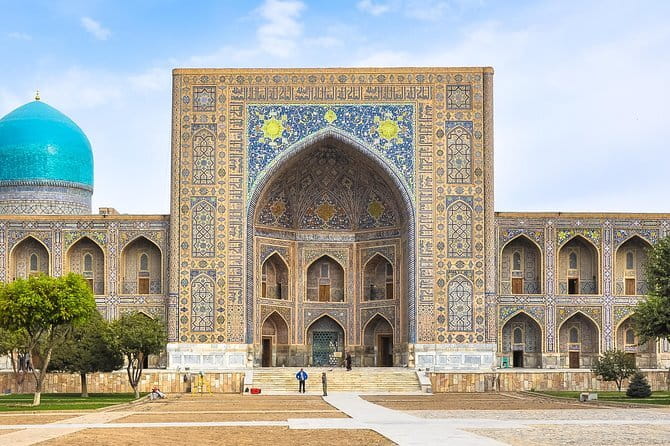
At $85 per person, this is not the cheapest way to spend an afternoon in Tashkent. It is also not simply a pottery class. The price includes pickup, all fees and taxes, pottery equipment, guided cultural instruction, the pottery session, and lunch.
That bundle makes the cost easier to judge. If you booked transportation, a private cultural guide, a meal, and a craft workshop separately, the total could rise quickly. Here, the private format is part of the value because your group is not sharing the session with strangers.
The price works best for couples, families, or small groups who want a focused cultural activity. Group discounts are available, which may improve the per-person value for a larger party. The activity is booked about 29 days ahead on average, so I would not leave it until the final day of a busy Tashkent visit.
Still, factor in the extras. There is no drop-off, and glazing and shipment are not covered. If you want to send your pottery home, ask about the cost before you begin. The final price is reasonable for the full package, but only if you value the meal and private instruction.
Pickup, timing, and the private format

The full activity lasts about three hours and thirty minutes. The rough division is one hour for cultural exploration, one to one and a half hours for pottery, and one hour for the meal.
Pickup is included. Drop-off is not, so arrange your next move before the tour ends. The experience is near public transportation, which may help if you are continuing independently, but the supplied information does not identify a specific station or route.
Your confirmation arrives at booking. The tour is private, meaning only your own group takes part. That matters here because pottery can require repeated demonstrations and individual correction. It also means you can ask Yusuf to explain a tradition in more detail instead of moving along with a large group.
Most people can participate, and service animals are allowed. The available information does not provide a detailed accessibility description for the pottery workspace, so anyone with mobility needs should ask the provider about seating, the wheel, and access before reserving.
Who will enjoy this experience most
I would recommend this for:
- First-time visitors wanting a clear introduction to Uzbek customs
- People who enjoy making things with their hands
- Couples and families seeking a private activity
- Food lovers interested in palov and non bread
- Museum fans who want to connect objects with living craft
- Visitors with a half-day available in Tashkent
It may be less suitable if you want a fast sightseeing circuit, a polished finished ceramic to take home immediately, or a fully plant-based meal. It is also not the right choice if you dislike uncertainty in a hands-on class. Clay has its own plans.
The cultural talk makes it more suitable for curious adults than for anyone looking only for a photo opportunity. Children may enjoy the pottery, but the supplied information does not give a minimum age or a child-specific program, so families should confirm those details.
What the strongest praise points to

The repeated strengths are clear: Yusuf’s friendly explanations, the chance to learn about different Uzbek ethnic traditions, and the satisfaction of making a pottery piece. The meal also earns attention for its quantity and memorable details, especially hot bread, palov, pickled vegetables, and cherry juice.
The guide’s manner seems central to the experience. Yusuf is described as easy to talk to and willing to listen to individual interests. That is useful in a private tour, where the quality of the conversation can shape the whole afternoon.
The pottery is not presented as a simple craft souvenir. The artisan has developed a carving technique for preserving Uzbek designs, and that local connection gives your work more meaning. You leave with a better understanding of how design can carry cultural memory.
Should you book the Tashkent pottery experience?
Book it if you want to connect Tashkent’s craft traditions with your own hands, your own questions, and a generous Uzbek meal. The best value comes from the combination of private guiding, equipment, pickup, lunch, and a serious introduction to pottery for $85.
Before booking, confirm dietary needs, ask about the finished piece, and clarify glazing and shipping costs. Remember that you must arrange your own drop-off. If those points work for you, this is a thoughtful choice for a three-and-a-half-hour cultural outing, especially if Yusuf’s personal style and the chance to make something matter more to you than checking off a long list of sights.
FAQ
How long does the Tashkent cultural and pottery experience last?
The activity lasts approximately 3 hours and 30 minutes. It includes about one hour of cultural exploration, one to one and a half hours of pottery, and one hour for the meal.
Is pickup included?
Yes. Pickup is included in the price. Drop-off is not included, so you need to plan your transportation after the activity.
Is this a private tour?
Yes. Only your group participates in the activity.
What does the cultural exploration cover?
The discussion includes the Silk Road, traditional textiles and silk production, doll making, differences between tribal crafts, local superstitions, household traditions, wedding customs, Suzani embroidery, and ceramics.
Do I need pottery experience?
No previous experience is stated as a requirement. The class includes an introduction, clay preparation, piece selection, wheel throwing or molding, initial drying, shaving, and decoration.
Is glazing included?
No. Glazing is not included.
Can the pottery be shipped home?
Shipment is not included. You should confirm available shipping arrangements and costs with the provider.
What food is served?
The meal includes Uzbek non bread, Shakarob and Kuzchi Kayfiyat salad, a variety of Uzbek palov, unlimited green tea, and water. The meal contains meat and dairy, while wheat, nuts, and cheese may also be present.
Just added around Tashkent
- Private Intercity Transfer Tashkent – Samarkand – Tashkent★ 3.5 · 3 reviews
- Tashkent Mountain Tour Amirsoy with Transport★ 3.5 · 3 reviews
- Tashkent-Samarkand-Bukhara tour-3nights/4 days★ 5.0 · 5 reviews
- Amirsoy & Chimgan mountain tour from Tashkent★ 5.0 · 3 reviews
- Private Tashkent City Tour★ 5.0 · 3 reviews
- Tashkent Food and Metro Journey★ 5.0 · 4 reviews
- Transfer Tashkent Airport / Railway Station – Hotel★ 3.5 · 3 reviews
- Tashkent City Tour with Hotel Pickup and Drop off★ 4.5 · 4 reviews
Tashkent Tours, compared.
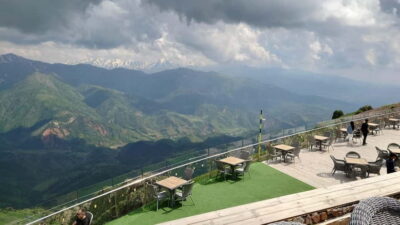
Best of Tashkent Mountains: Amirsoy, Chimgan & Charvak Trip
Read our review →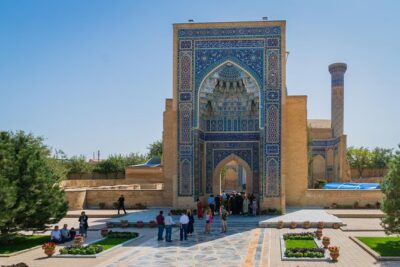
Samarkand One Day Tour – Departure From Tashkent
Read our review →
2 Days Tour to Bukhara and Samarkand from Tashkent by train
Read our review →

Uzbekistan 6 days private tour Tas-Khiva-Buk-Sam-Tas
Read our review →
Uzbekistan 8 Days Private Tour Tashkent-Urgench-Bukhara-Samarkand-Tashkent
Read our review →Browse the lists this tour appears in