
Reviewed · GUIDED
Uzbekistan 8 Days Private Guided Tour
Khiva’s walled Itchan Kala is the star here: a compact city of madrasas, mosques, palaces, mausoleums, and minarets where you can see a remarkable amount in one guided day. From there, the route links four major Uzbek cities by plane, train, and private car, rather than wasting days on long road transfers.
I like the practical coverage and the private format. You get entrance tickets, local guides, airport and station transfers, the Tashkent to Urganch flight, and train tickets between the main cities. I also like the small local touches, especially the plov lunch at Besh Qozon and the possible folklore and Registan light shows.
The main drawback is the pace. This is an ambitious eight-day circuit with several early starts, a seven-hour regular train from Khiva to Bukhara, and little free time in the historic cities. Accommodation, most meals, visas, and personal costs are also outside the $970 price.
Key points to know before booking
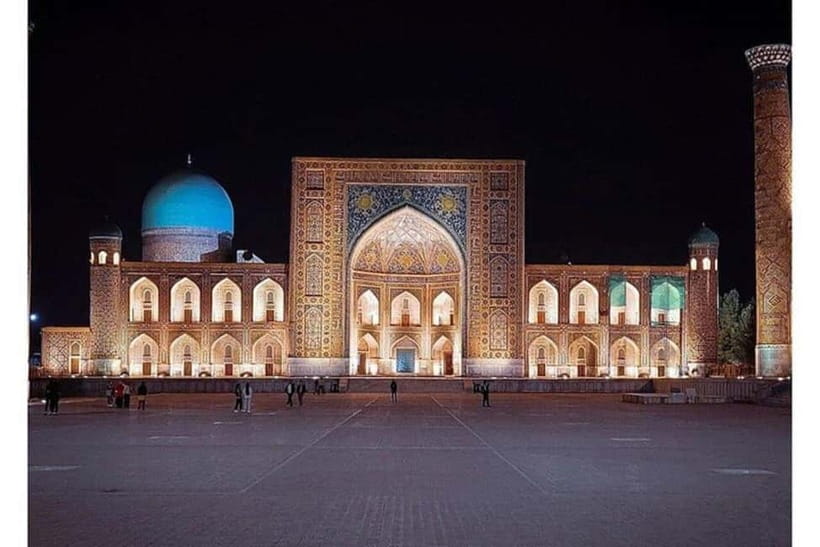
- Khiva’s Itchan Kala is the visual high point: Expect an eight-hour guided visit through the old walled city, including Kalta Minor, Juma Mosque, Kunya Ark, and Islam Khoja Minaret.
- The route uses several kinds of transport: You fly from Tashkent to Urganch, then travel by car, regular train, and high-speed train.
- Your $970 covers important sightseeing costs: Monument and museum tickets, guides, transfers, domestic airfare, and listed rail journeys are included.
- Bukhara needs comfortable walking shoes: The old center is packed with mosques, trading domes, madrasas, and the Kalon ensemble.
- Samarkand gets one full sightseeing day: Registan, Gur Emir, Shah-i-Zinda, Bibi Khanym, and Ulugh Beg Observatory fill the schedule.
- You can customize the tour: Language, transport, and some arrangements should be confirmed well before departure.
The big picture: four Silk Road cities in eight days
This is a fast cultural circuit through Uzbekistan’s best-known historic centers. You begin and end in Tashkent, fly west to Urganch for Khiva, continue by rail to Bukhara, then move on to Samarkand before returning to Tashkent.
The appeal is simple: you see the country’s major monuments without having to arrange every transfer yourself. A driver meets you at airports and stations, guides join you in the cities, and admission tickets are handled for the listed sights.
The trade-off is that the itinerary leaves little room for wandering. Day 3 is especially demanding because you take an early flight, arrive in Khiva in the morning, and then tour for most of the day. If you prefer slow café stops, long market visits, or unplanned detours, you may find this schedule tight.
The private group format helps. You are not tied to a large bus, and the tour can be customized. The minimum departure is one participant, which makes the arrangement useful for solo visitors, couples, and families with children aged five or older.
A few more Bukhara trips to weigh up
- Best of Bukhara: All Day Private Old Town Tour
★ 5.0 · 66 reviews - Best of Bukhara: All Day Private Old Town Tour
★ 4.9 · 62 reviews - Bukhara Full Day Old City Private Tour
★ 5.0 · 46 reviews
Tashkent: a gentle start and a packed city day
On arrival, a driver meets you in the airport arrivals hall with a sign showing your name. You are taken to your hotel, then have a free first day. That pause matters after an international flight, especially since the following morning includes a full city program.
Your second day begins at 9:00 with a guide in the hotel lobby. The route brings together modern civic spaces, religious sites, museums, markets, and the city’s metro system.
Amir Timur Square and the Amir Temur Museum introduce one of Uzbekistan’s most important historical figures. Independence Square provides a look at the capital’s public face, while the Museum of Applied Art offers a more intimate view of Uzbek decorative traditions.
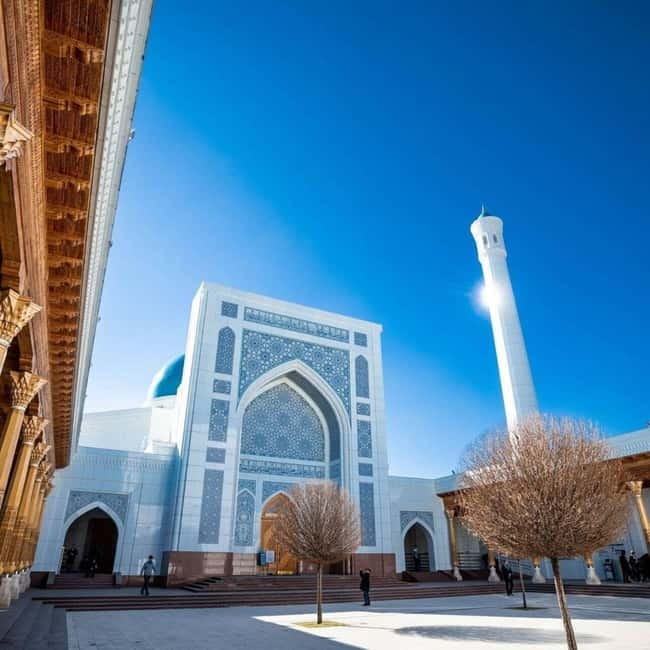
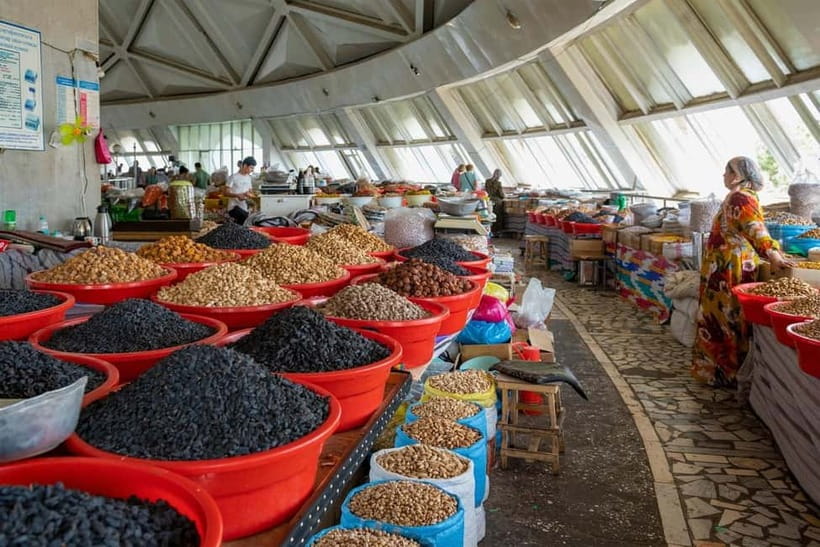
Khast Imam Square and Kukeldash Madrasah shift the focus toward religious and architectural heritage. Chorsu Bazaar adds the everyday side of Tashkent, with its covered market setting and food culture. Minor Mosque provides another major architectural stop.
The Tashkent metro is a smart inclusion. It is not merely transport here, but part of the city experience, with stations known for distinct decorative designs. You will not have to figure out the system alone, since it is part of the guided day.
The schedule is full but sensible for a first look. You have the evening free, which gives you time to rest rather than forcing another formal activity.
Khiva: a full day inside Itchan Kala
The third day starts early. You transfer to Tashkent airport at 6:00 for the 7:00 Uzbekistan Airways flight to Urganch, arriving at 8:30. A driver and guide meet you there, and a sedan transfer takes you to Khiva.
Khiva is best understood through Itchan Kala, the old walled city. Its concentrated layout makes a guided walking day efficient, although the number of monuments can feel like a lot to absorb in one stretch.
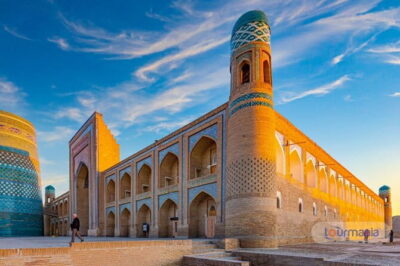
You visit Muhammad Amin Khan Madrasah and Muhammad Rahim Khan Madrasah, along with the distinctive Kalta Minor minaret. Kunya Ark, the old fortress complex, gives the city’s political past a physical setting.
Juma Mosque is another major stop. Its interior is known for its forest of wooden columns, though the supplied schedule does not specify how much time is spent inside each monument. Tash Khovli Palace adds tiled courtyards and royal architecture to the day.
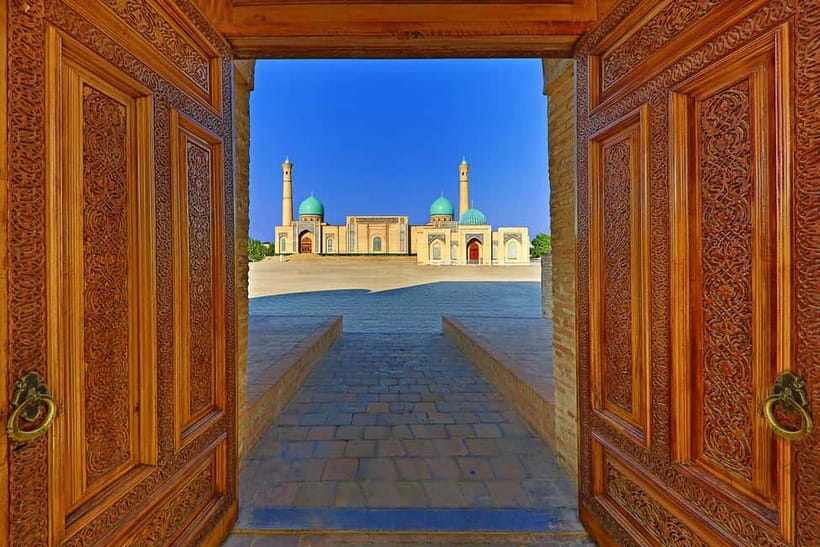
The route continues to Pakhlavan Mahmud Mausoleum and Islam Khoja Minaret. Together, these sites show why Khiva is often presented as a city of minarets and an open-air museum.
You will want practical clothing and shoes for this day. There is a lot of walking, and the schedule runs for about eight hours after an early flight. The evening is free once you reach the hotel, but you may be ready for a quiet meal and an early night.
Khiva to Bukhara: the slow rail connection
Day 4 begins later, with a 10:00 transfer to Khiva railway station. The 11:10 regular train to Bukhara takes about seven hours and 17 minutes, arriving at 18:14.
This is the least polished transport segment. The train is described as regular rather than high-speed, and you spend much of the day aboard. Still, the route crosses the Kyzylkum Desert and follows the broad corridor associated with the old Great Silk Road, giving you a long look at the country between its historic cities.
Your Bukhara driver meets you at the station and takes you to the hotel. The evening is free, which is welcome after the rail journey. You should think of this day as a transfer day with scenery, not as another sightseeing day.
The benefit is that the tour avoids a long private road transfer between Khiva and Bukhara. The drawback is the duration. If train comfort is important to you, confirm the seating arrangements before departure.
Same Silk Road, a completely different kind of day:
- City Tour Around Bukhara
★ 5.0 · 55 reviews - Yurt Camp Tour with Night from Bukhara
★ 3.8 · 35 reviews - All You Need To Know About Bukhara. A Walk In The Town
★ 4.9 · 31 reviews - One-Day Private Tour in the Old Town of Bukhara
★ 5.0 · 24 reviews
Bukhara: monuments around Lyab-i-Hauz and Kalon
Bukhara receives a full guided day on Day 5, beginning at 9:00. This is one of the strongest parts of the route because many key sights sit within or near the historic center.
You start with the Lyab-i-Hauz ensemble, a traditional gathering area built around a pool. Nodir Devon Begi Madrasah is nearby, making this an efficient opening to the day. If the folklore show is available, it takes place at the Nadir Divan-Begi Madrasah and adds music and performance to the architectural visit.
The Ark of Bukhara gives you a sense of the city’s former power. This fortified complex was the seat of local rulers, and its scale helps explain why Bukhara was more than a stop for merchants. Maghak-i Attari Mosque and Chasma Ayub Mausoleum add older religious buildings to the route.
The Trading Domes are particularly useful for understanding Bukhara as a commercial center. They are not isolated monuments, but parts of the old urban network where trade, worship, education, and daily life sat close together.
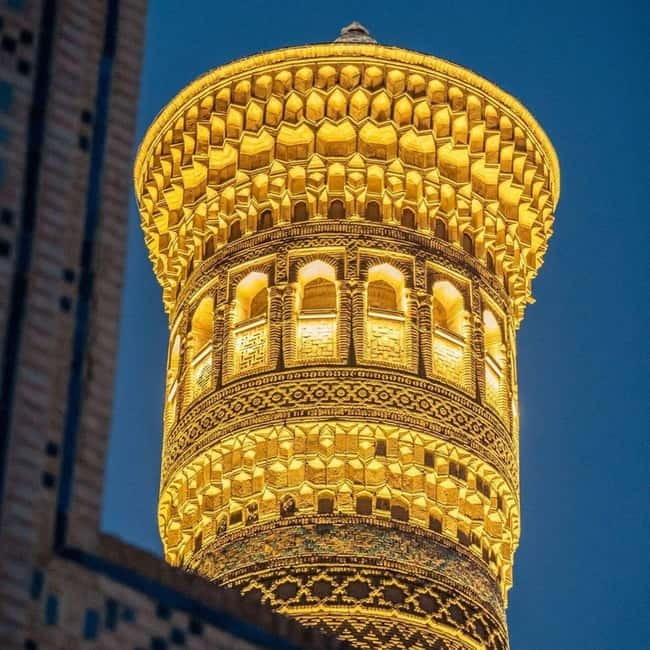
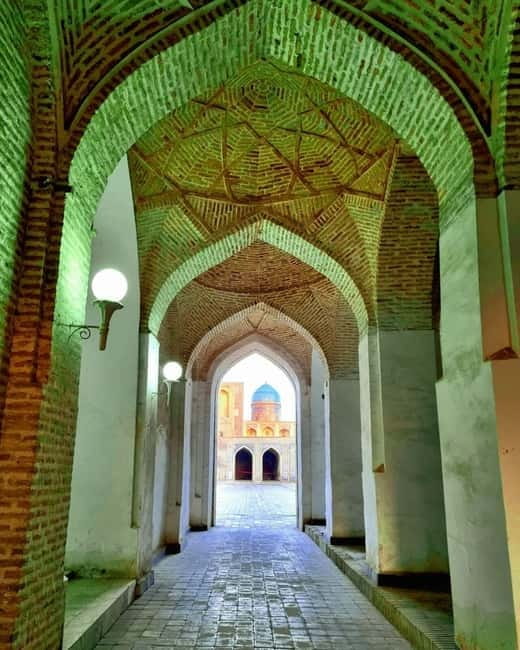
The afternoon centers on the Kalon ensemble: the Great Minaret of Kalon, Poi Kalyan Mosque, and Mir-i-Arab Madrasa. This is the image many people associate with Bukhara, and the grouping works well as a guided lesson in the city’s architecture.
Ulugbek Madrasah is also included. Its connection to the Timurid ruler and scholar Ulugbek helps link Bukhara with the wider history you will encounter in Samarkand.
Bukhara’s sightseeing day is dense but walkable. You should expect repeated stops at religious buildings, and respectful clothing is sensible. Ask your guide about photography rules and any separate photo or video charges, since those costs are not included.
Bukhara’s quieter side before the train to Samarkand
Day 6 begins at 9:00 with four additional sights before the afternoon rail departure. Chor Bakr Memorial Complex takes you outside the central cluster and offers a different setting from the trading domes and city squares.
Sitorai Mokhi-Khosa Palace presents the former summer residence of Bukhara’s rulers. It gives the day a change of rhythm, moving from religious and commercial buildings to palace interiors and grounds.
You also visit the Ismail Samani Mausoleum, one of the most important early Islamic monuments on the route, and Chor Minor Madrasah, known for its four small towers. These stops are less massive than the Kalon complex but add useful range to the Bukhara program.
At 15:00, you transfer to the railway station for the 15:46 train to Samarkand. Arrival is scheduled for 17:29, followed by a hotel transfer.
The timing leaves little space between the final Bukhara sight and the train. Keep your belongings organized and be ready to leave on time. The private transfer makes the station change easier, but this remains a scheduled travel day.
Samarkand: Timurid grandeur in one long day
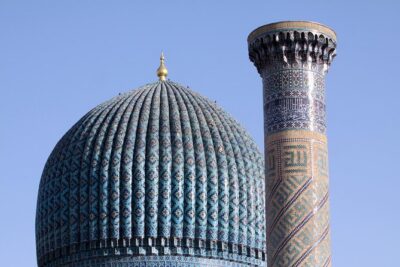
Samarkand gets its main sightseeing day on Day 7. At 9:00, you meet the guide and begin with Gur Emir Mausoleum, the burial place associated with Amir Timur. Its importance is both historical and visual, and it prepares you for the grand scale of the day.
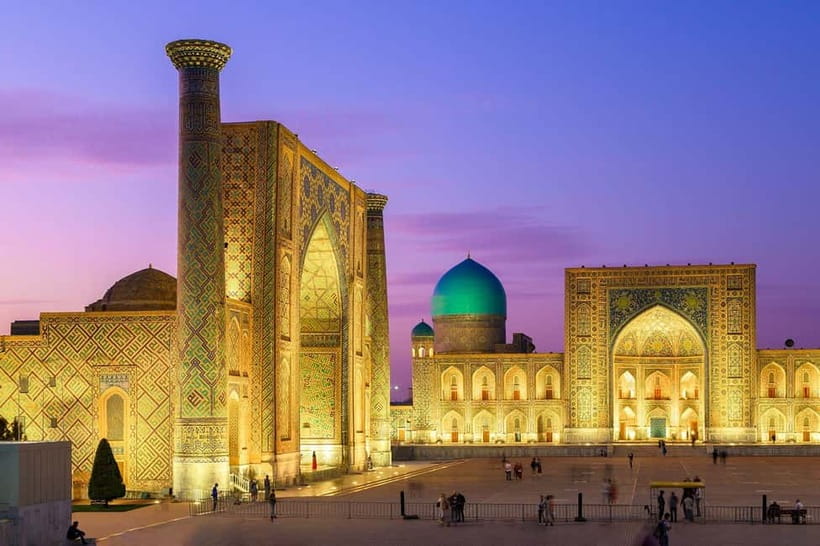
Registan is the centerpiece. Three monumental madrasas frame the square, creating one of Central Asia’s most memorable urban spaces. The possible sound and light show adds an evening-style presentation if it is available, but it should not be treated as guaranteed.
Bibi Khanym Mosque follows, then Siyob Bazaar. The bazaar is a useful counterpoint to the monumental architecture. Instead of only seeing rulers’ buildings and religious schools, you get time around a working market setting.
The Shah-i-Zinda Ensemble is one of the most detailed stops in Samarkand, with mausoleums arranged along a sacred avenue. It is also a place where the walking pace can slow naturally, though the full-day schedule may limit how long you linger.
Ulugh Beg Observatory closes the main sightseeing list. It connects Samarkand’s Timurid era with astronomy and scientific study, adding intellectual depth to a day otherwise dominated by monumental architecture.
At 18:00, you transfer to Samarkand station for the 18:32 train to Tashkent. The scheduled arrival is 20:47, followed by a hotel transfer. This makes Samarkand another excellent but demanding day. You see the essential monuments, but you do not have a spare day for nearby sites or a slower second look.
Food, performances, and small extras
The included meal at Besh Qozon is a useful addition. It is described as the biggest plov place, and plov is one of Uzbekistan’s signature dishes. This is not a full meal plan, so budget separately for most lunches and all dinners.
The itinerary also refers to a camp-style breakfast and a BBQ dinner at a yurt camp. Because the detailed day-by-day schedule does not place the yurt camp, you should confirm exactly where this fits before booking. It may belong to a customized version of the route rather than the standard sequence shown here.
The folklore show at Nadir Divan-Begi Madrasah and the Registan light show are both listed as available if operating. Treat them as useful bonuses, not fixed promises. Ask about timing before you build your evening plans around either one.
What the $970 price really covers
At $970 per person, the tour offers good value for a private, multi-city route if you want the main logistics handled. The package includes visa support in the form of a letter of invitation, air-conditioned transportation, English or another requested language guide, monument and museum admission, the Tashkent to Urganch flight, and the listed train tickets.
It also includes the Besh Qozon lunch. The tour guarantees departure with a minimum of one participant, which can make the price easier to assess for solo visitors who would otherwise pay for private transfers and guides separately.
The important omission is accommodation. You must arrange and pay for hotels yourself, along with most lunches, dinners, visas if needed, personal expenses, and photo or video fees at sights.
The rail details also need attention. The Khiva to Bukhara train is regular. The Bukhara to Samarkand and Samarkand to Tashkent journeys are intended to be high-speed, but if tickets are unavailable within 30 days of departure, the operator may substitute the most comfortable regular train class or other transport.
A language other than English should be requested early. Guides in French, German, Italian, and Russian are offered, but another language may not be available if you book less than 60 days before departure.
Who will get the most from this tour
I would choose this route if you want a clear first visit to Uzbekistan and care more about seeing the major historic cities than having long stretches of free time. It suits couples, families with older children, solo visitors, and anyone who prefers a private guide and arranged station transfers.
The minimum age is five. Infants aged zero to four can travel free if they do not occupy a seat. The experience is not suitable for people over 95, according to the stated participation rules.
You should be comfortable with full sightseeing days, early airport departures, train travel, and substantial walking. The tour is not designed as a relaxed resort holiday. It is a concentrated introduction to Uzbekistan’s architectural and cultural centers.
Free cancellation up to 24 hours before departure and reserve-now, pay-later booking make planning less risky. Still, confirm hotel choices, train class, language, and the yurt camp details before paying for the rest of your trip.
Should you book the Uzbekistan eight-day tour?
Book it if you want maximum historical coverage in a short trip and appreciate having drivers, guides, tickets, flights, and trains arranged in one private package. The route reaches Khiva, Bukhara, and Samarkand, which is the main reason to choose it.
Think twice if you dislike early starts or long transfer days. The Khiva to Bukhara train is a real commitment, and each major city receives roughly one serious sightseeing day.
For $970 per person, the value is strongest when you use the included transport, admission tickets, guides, and private transfers. Just add accommodation, meals, visa costs, and personal spending to the true budget. Confirm any special language and the optional performances early, then this becomes a practical way to see Uzbekistan’s essential Silk Road cities without wrestling with every connection yourself.
FAQ
Where does the tour start and end?
You can arrange pickup and drop-off at Hilton Tashkent City or Tashkent International Airport.
How long does the tour last?
The tour lasts eight days.
Is the tour private?
Yes. It is arranged as a private group experience, and departures are guaranteed with a minimum of one participant.
Which languages are available for the guide?
English, French, German, Italian, and Russian guides are available. Other language requests should be made early, since they may not be available if booked less than 60 days before departure.
Is accommodation included?
No. You must arrange and pay for accommodation separately.
Is the domestic flight included?
Yes. The Tashkent to Urganch flight is included.
Which train journeys are included?
The regular train from Khiva to Bukhara and the high-speed trains from Bukhara to Samarkand and Samarkand to Tashkent are included. High-speed tickets may be replaced with comfortable regular train tickets or other transport if unavailable.
Are monument entrance tickets included?
Yes. Entrance tickets to the monuments and museums listed in the itinerary are included.
Are meals included?
One lunch at Besh Qozon is included. Most lunches and all dinners are not included. A camp-style breakfast and BBQ dinner may be part of a customized plan, so confirm this before booking.
Can children join the tour?
Children aged five and older can participate. Infants aged zero to four can travel free if they do not occupy a seat.
What documents should I bring?
Bring your passport or ID card and a visa if one is required for your nationality. Visa support in the form of a letter of invitation is included, but visa fees are not.
Just added around Bukhara
- Full-Day Private Guided Tour to Islamic 7 Saints of Bukhara★ 4.5 · 3 reviews
- Bukhara Walking Tour★ 5.0 · 4 reviews
- Bukhara in a Day History, Culture, and Local Insight Private Tour★ 5.0 · 4 reviews
- 2 Day Ukhum Hiking Tour from Bukhara★ 5.0 · 4 reviews
- A Complete Chapter To Old Bukhara★ 5.0 · 5 reviews
- Bukhara: Full-Day Guided Tour with English-Speaking Guide★ 5.0 · 4 reviews
- 2 – Days Guided Tour of Samarkand and Bukhara from Tashkent★ 5.0 · 5 reviews
- 9 Days Private Guided Tour to Uzbekistan★ 5.0 · 3 reviews
Guided, compared.
Khiva Historical City Highlights Guided Walking Tour
Read our review →
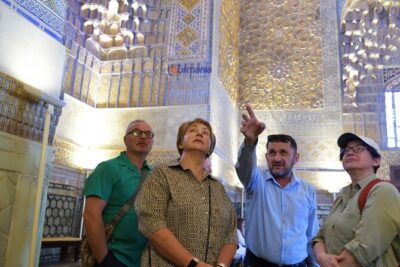
Samarkand Historical City Highlights Guided Walking Tour
Read our review →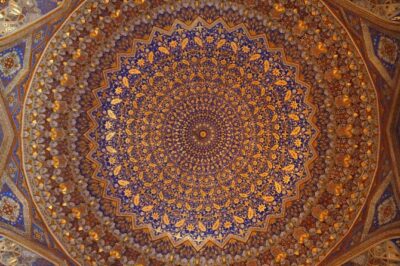
Private Guided Tour Samarkand city history and culture
Read our review →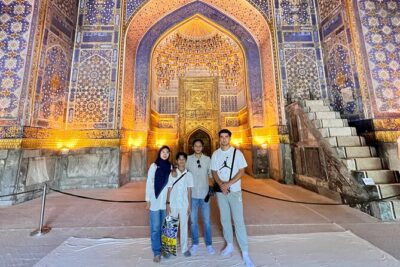
Browse the lists this tour appears in