
Reviewed · WALKING TOURS
All You Need To Know About Bukhara. A Walk In The Town
Bukhara is easiest to understand on foot, and this tour gives you a useful map of the old town as you move from shady pools and trading domes to grand mosques, madrasas, and mausoleums. Guide Hamza puts the buildings into a clear Central Asian timeline, so the city feels like a connected story rather than a string of pretty façades.
I like the history-first approach and the practical orientation. Hamza explains how places fit together, answers questions, and points out details you might walk past alone. I also like the chance to meet other tourists while keeping the cost at $55 per person. The main thing to know is that this is not truly a private tour: expect around 10 to 15 people, although the group may be smaller in quieter seasons.
Key points to know before you book
- A strong first-day orientation: The route helps you understand Bukhara’s old town before you return to individual sights on your own.
- Hamza is the main attraction: He is praised for fluent English, clear storytelling, humor, and a firm grasp of Bukhara’s past and culture.
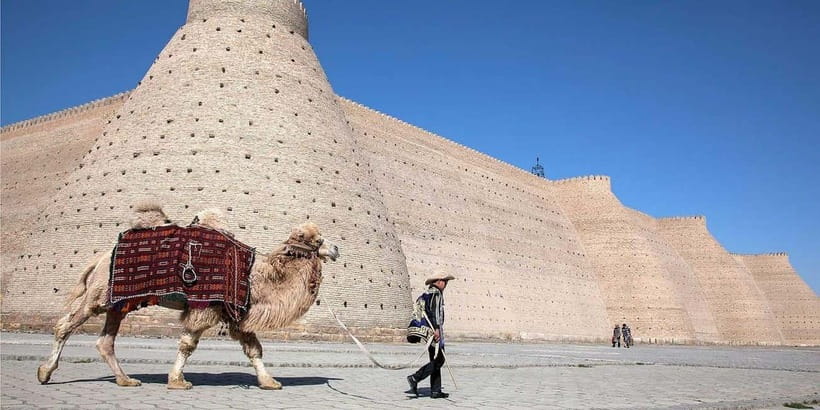
- Major monuments in one walk: You see the Ark area, Poi Kalan, Mir-i-Arab Madrasa, Bolo Haouz Mosque, and the Samanid Mausoleum.
- The price reflects the group format: At $55 per person, the tour is less costly than a fully private guide, but it is not a one-to-one experience.
- Shopping advice is part of the value: Your guide can help you make sense of carpets, textiles, spices, and other Uzbek handicrafts.
- Bring water and a charged phone: The walk lasts 4.5 hours, and shade, seating, and indoor stops vary along the route.
Why Bukhara makes sense on foot
Bukhara grew as a Silk Road center more than 2,000 years ago. Its old town brings together royal power, Islamic learning, trade, worship, and craft production in a fairly compact area. That makes a walking tour especially useful: you can see how one neighborhood leads into another without spending time in a vehicle.
The historic center is protected as a UNESCO World Heritage site. That status matters to you as a visitor because the old streets and major monuments still form a coherent setting. You are not simply ticking off isolated attractions. You are walking through the setting where merchants traded, students studied, rulers governed, and pilgrims passed through.
The route begins near Nadir Divan Begi Madrasah, close to the donkey statue meeting point. This is a practical place to start because it puts you near Lyabi Khauz and the central pedestrian streets. From there, the walk moves through the old commercial and religious quarters before finishing at the Ismail Samani Mausoleum.
A few more Bukhara trips to weigh up
- Bukhara Historical City Highlights Guided Walking Tour
★ 4.5 · 16 reviews - Bukhara: Private Guided Walking Tour with Hotel Pickup
★ 5.0 · 11 reviews - Bukhara: Walking Tour with a Small Group
★ 5.0 · 10 reviews
Starting at Lyabi Khauz and the old trading quarter
Lyabi Khauz is one of Bukhara’s best-known gathering places. The name refers to the area around a pool, and the setting gives the tour a calmer beginning before the route moves into busier lanes. Your guide uses this early stop to explain the city’s layout and the role of public spaces in old Bukhara.
I like starting here because you quickly get a sense of scale. You are not dropped at a distant monument and left to work out the city afterward. Instead, you begin in a central spot and gradually build a mental map.
The walk then reaches Toqi Sarrafon Bazaar, one of Bukhara’s historic trading domes. The domes were built to shelter merchants and shoppers from the intense Central Asian sun. Toqi Sarrafon is associated with money changers, and the trading area helps explain why Bukhara was more than a religious center. It was also a place where goods, currencies, languages, and ideas met.
Expect a short stop here rather than a long shopping session. The tour is designed to explain the area and keep moving. If you want to buy something, you can return later with a better idea of what you are looking at.
Magok-i-Attari Mosque and the layers below the streets
Magok-i-Attari Mosque is one of the more unusual early stops. Its name is often linked to a lower or sunken position, and its setting hints at how much older Bukhara is than the visible buildings suggest. The city has been rebuilt and reshaped many times, leaving layers beneath the modern street level.
This is the kind of place where a guide adds real value. On your own, you may notice an old brick façade and move on. With Hamza explaining the building’s setting and religious role, you get a better sense of how Bukhara’s past survives in fragments.
The route includes several brief guided stops between the mosque and Ulugbek Madrasa. The supplied schedule does not name each of these points, so you should think of them as short explanations along the way rather than separate, lengthy visits. That rhythm keeps the walk moving, but it also means the tour is not built around long periods at every monument.
Ulugbek Madrasa and the life of religious schools
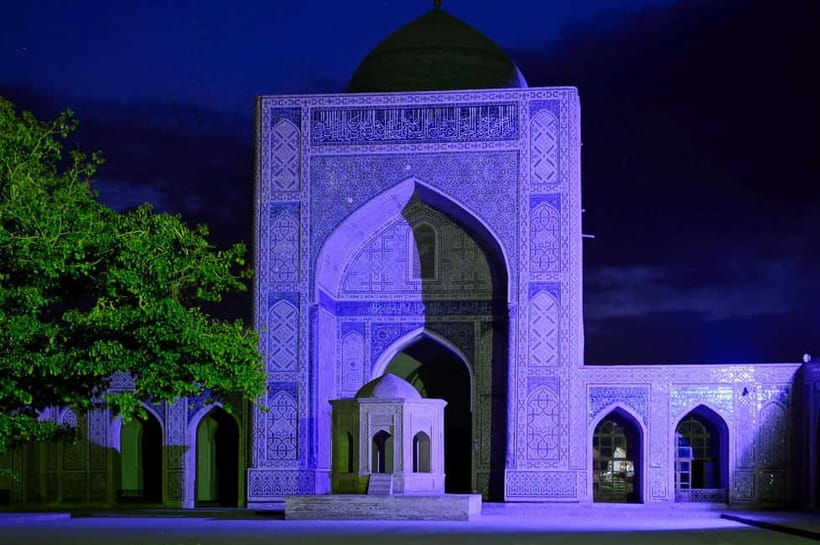
Ulugbek Madrasa gives the tour a chance to explain how Islamic education worked in Bukhara. The madrasa was not simply a decorative school building. It had teaching spaces, student rooms, and religious functions, with its architecture shaped around study and worship.
One useful detail from the tour is the explanation that madrasas traditionally included both a lecture hall and a mosque. That kind of practical information helps you read the buildings more intelligently later. You begin to notice that the decorative entrance is only one part of the design.
The stop is relatively short, so do not expect an extended academic lecture inside every building. Some entry areas may require a separate ticket, and entrance fees are not included in the tour price. You can pay on the spot if you choose to enter places where access is available.
Same Silk Road, a completely different kind of day:
- Best of Bukhara: All Day Private Old Town Tour
★ 5.0 · 66 reviews - Best of Bukhara: All Day Private Old Town Tour
★ 4.9 · 62 reviews - City Tour Around Bukhara
★ 5.0 · 55 reviews - Bukhara Full Day Old City Private Tour
★ 5.0 · 46 reviews
Poi Kalan, Bukhara’s great architectural set piece
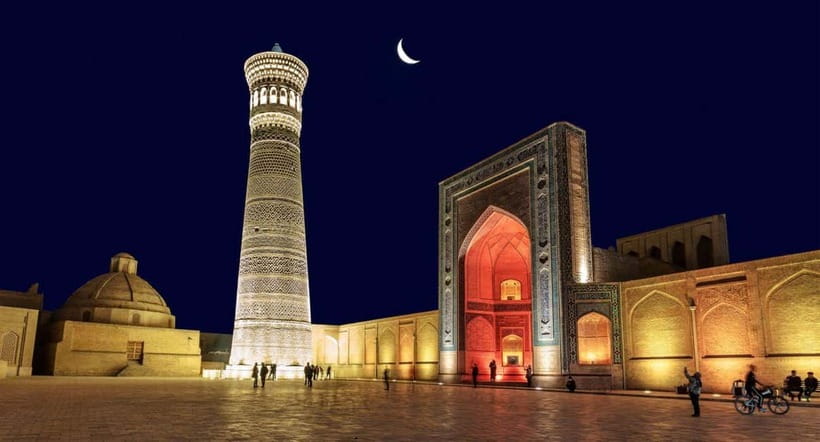
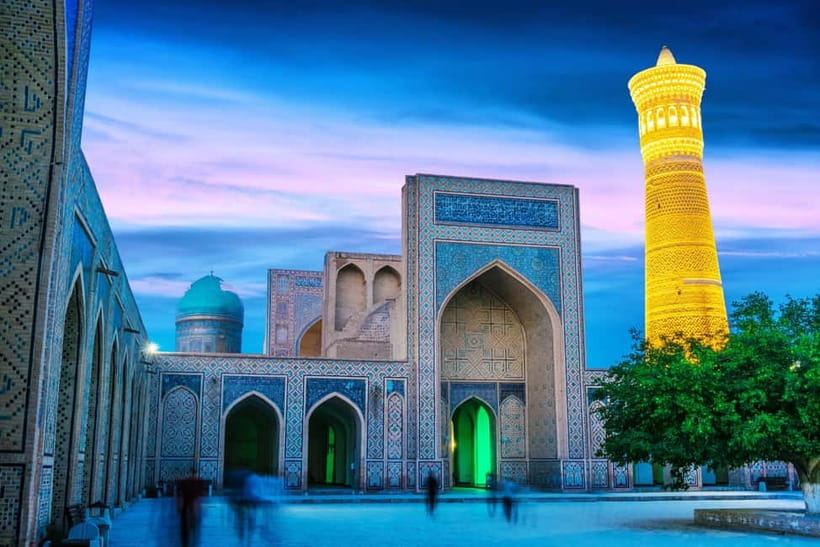
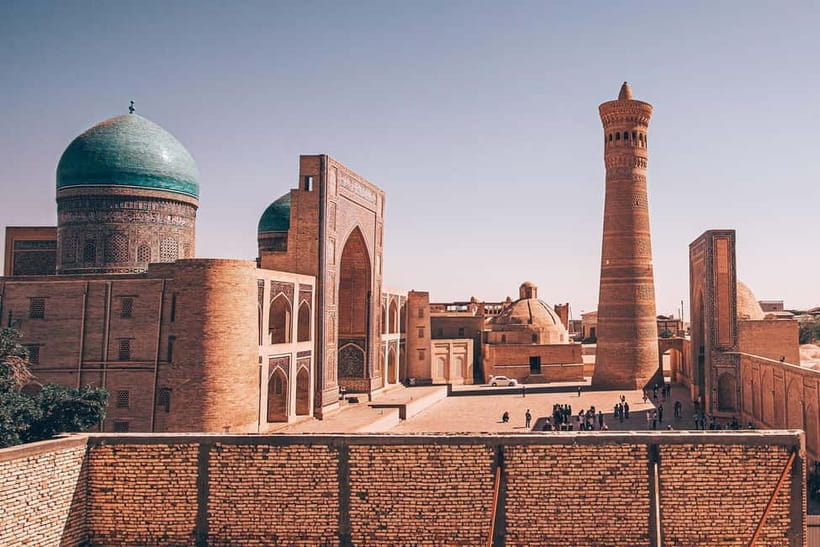
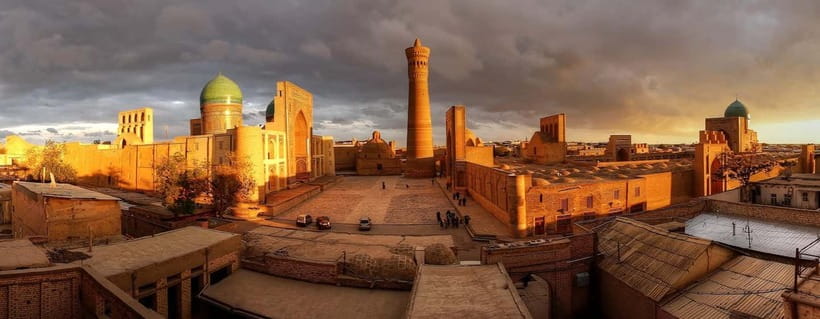
Poi Kalan is the visual centerpiece of the walk. The ensemble includes the Kalan Minaret, Kalan Mosque, and Mir-i-Arab Madrasa. Together, these buildings show why Bukhara is often considered one of the finest surviving medieval city centers in Central Asia.
The Kalan Minaret is especially striking. Its brickwork and height made it a powerful marker for the city, and it remains one of the sights you are most likely to remember afterward. Your guide connects the minaret to the wider religious and political life of Bukhara instead of treating it as a photo stop.
The Kalan Mosque gives you a sense of scale. Its broad courtyard and repeated arches are very different from the smaller, more intimate spaces elsewhere in the city. I find this contrast useful because Bukhara’s architecture can blur together when you visit too many monuments in a row.
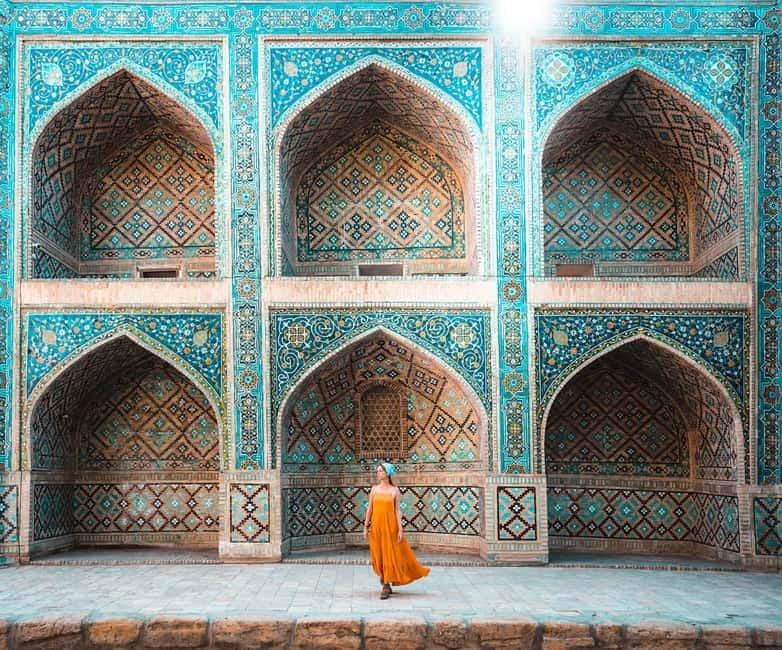
Across from the mosque, Mir-i-Arab Madrasa completes the famous view. The blue and turquoise details catch the eye, but the guide’s explanation gives the building more meaning than color alone. This is also a good place for questions. Hamza’s strongest quality, based on the experience described, is his ability to set each monument inside the larger story of Central Asia.
Allow time for photos here, but keep your attention on the details around you. The square can feel busy, and the route continues through pedestrian-friendly lanes and commercial areas. The walk is easy in the sense that it follows the old town, but it is still a long period on your feet.
Bazaars, textiles, and shopping without guesswork
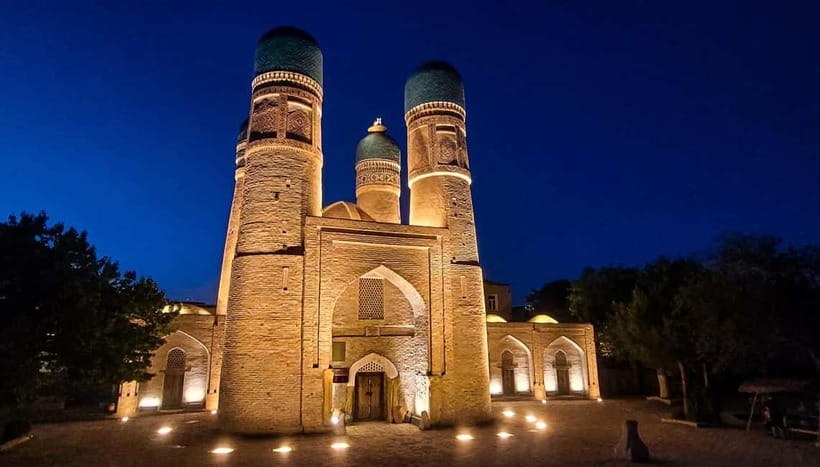
Bukhara is a good place to shop for Uzbek handicrafts, particularly hand-woven textiles, carpets, and small souvenirs. You will see goods displayed in madrasas, trading domes, and shops along the old streets. The settings are part of the appeal, but they can also make it hard to tell what is a fair purchase for your budget.
This is where the guide’s local suggestions are useful. Hamza can recommend places to shop and explain what you are seeing. He can also suggest a local restaurant for lunch, although food is not included and the tour itself does not provide a meal.
I would not treat this walk as a dedicated shopping tour. You get an introduction to Bukhara’s craft traditions and time permitting, help with shopping, but the main focus remains history and architecture. If you want to bargain at length or compare carpets, plan a separate shopping period after the walk.
Bolo Haouz Mosque and the city’s public life
The route continues to Bolo Haouz Mosque, known for its impressive carved wooden columns and covered front porch. After the large scale of Poi Kalan, this stop feels more personal and architectural. The wooden details reward a slower look, especially if your guide points out how the porch shapes the building’s entrance.
Bolo Haouz also helps broaden your view of Bukhara. The city was not only a collection of monumental schools and royal structures. Mosques, pools, courtyards, and public gathering places helped organize daily life.
The tour schedule allows only a short guided visit here. That is enough for an introduction, but not for a long architectural study. If this mosque becomes a favorite, note its location and return later when you can look more closely.
Chashma-Ayub and the Samanid Mausoleum
Chashma-Ayub Mausoleum follows Bolo Haouz. Its name is associated with the spring of Job, giving the site a religious story alongside its architecture. The building’s form differs from the domes and tiled façades around Poi Kalan, which makes it a useful change of pace.
The final major stop is the Samanid Mausoleum, reached at the end of the route. This is one of Bukhara’s most important early Islamic monuments, known for its carefully arranged brick decoration. Rather than relying on bright tile, the building uses patterns of light and shadow created by brickwork.
Finishing here works well. The mausoleum feels quieter and more self-contained than the grand central ensembles, and it gives the tour a chance to look back toward Bukhara’s earlier period. The official finish is at the Ismail Samani Mausoleum, so you should not assume the walk returns you to your hotel.
What the guide adds to the experience
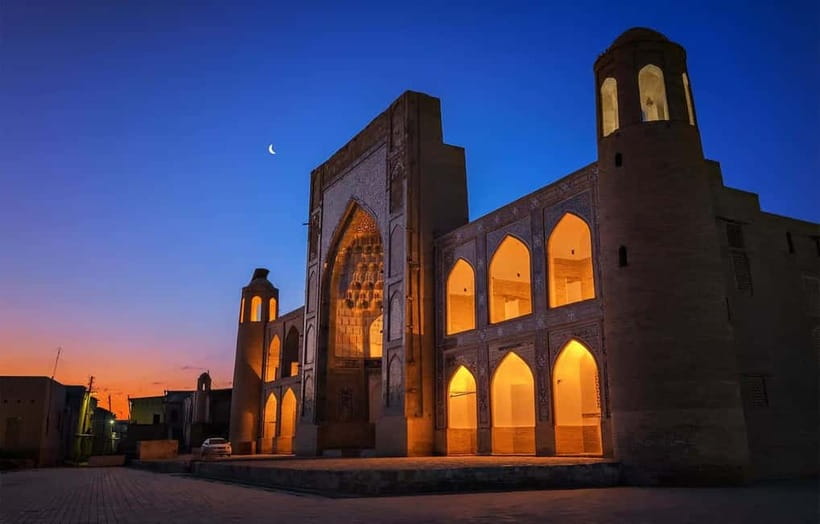
The strongest part of this experience is the guiding. Hamza is described as fluent in English, funny, relaxed, and able to explain long stretches of history without making every stop feel like a list of dates. He begins by placing Bukhara and Central Asia in context, which helps if you arrive with only a basic idea of the region.
I particularly value the way the tour links buildings to one another. You learn how dynasties, religious institutions, trade, and city planning shaped what you are seeing. That approach is more useful than memorizing the name of every façade.
Hamza also encourages participation and questions. The Q&A element matters because Bukhara can raise practical questions about religion, madrasa life, architecture, local customs, and shopping. The experience is not just a speech delivered while you walk.
The guide’s restaurant and shopping tips are another plus. They are not guaranteed as formal stops, but they are included among the available suggestions and support. The provider also offers assistance around the clock, which may be useful if you need help before or after the walk.
Group size, timing, and the real value of $55
The listed price is $55 per person. For a 4.5-hour English tour with a professional guide and a route covering most of Bukhara’s key sights, that can be good value, especially if you are visiting for a short time.
The lower price comes from the group format. The tour usually has around 10 to 15 people, despite the booking language calling it a private group. In quiet periods, the group may be much smaller. One booking in the off-season became a one-person experience, but you should not book expecting that result.
A group can be useful if you enjoy meeting fellow tourists and comparing plans. It also keeps the cost below a true private tour. The tradeoff is less control over the pace, fewer chances to linger at your favorite building, and possible difficulty hearing if the group spreads out.
The tour lasts 4.5 hours, not a full calendar day, even though the wider description presents it as a one-day city tour. The route covers a lot of ground, but you still need time afterward if you want to enter monuments, shop, eat lunch, or revisit the central squares.
Start times vary, so check availability when booking. Some people use the tour on their first evening or soon after arriving in Bukhara. That is a smart choice if you want an orientation first, then plan your own return visits the next day.
Practical advice for a smoother walk
Wear comfortable shoes and bring water. You should also carry a sun hat, camera, and charged smartphone. Bukhara can be sunny, and the route moves between open areas, covered bazaars, and old streets with different amounts of shade.
Entrance tickets are not included. The tour can skip ticket lines where that service applies, but you should still expect to pay admission separately at places where an entrance fee is required. Lunch, dinner, accommodation, transport with a driver, and train or flight tickets are also outside the price.
The meeting point is near the donkey statue by Nadir Divan Begi Madrasah. Confirm the exact spot before setting out, especially if you are staying elsewhere in the old town. The tour is listed as wheelchair accessible, but the historic setting may still include uneven surfaces or tight pedestrian lanes, so ask the provider about your particular needs.
Free cancellation is available up to 24 hours in advance for a full refund. You can also reserve and pay later, which helps if your Central Asia route is still changing.
Who should book this Bukhara walk?
I would choose this tour if you want a clear introduction to Bukhara’s old town, care more about history and architecture than luxury transport, and enjoy asking questions. It is also a good fit if you are arriving with limited time and want to see the major landmarks before deciding where to return.
The tour suits solo visitors and couples who like meeting other people. The group setup keeps the price reasonable and can make the first hours in a new city feel less confusing.
I would choose a private tour instead if you want to set your own pace, spend a long time photographing one building, or avoid a group of up to 15 people. You should also plan extra time outside this walk for shopping and interior visits, since the 4.5-hour route offers an overview rather than an exhaustive visit to every site.
Final verdict: a smart first look at Bukhara
Book this tour if you want Bukhara explained, not merely displayed. Hamza’s clear English, humor, historical context, and local suggestions are the main reasons to choose it, while the route gives you a solid first look at the city’s most important monuments.
At $55, the value is strongest for a first visit, a short stay, or anyone who wants an affordable alternative to a fully private guide. Just remember that the tour is normally shared, some stops are brief, entrance fees are extra, and the finish is at the Samanid Mausoleum rather than your accommodation.
FAQ
How long does the Bukhara walking tour last?
The tour lasts 4.5 hours. Availability should be checked for the exact starting time.
Is this a private tour?
No. The tour normally includes around 10 to 15 people. It is offered at a lower price because it is a group tour, although the group can be smaller during quiet periods.
What language is the tour conducted in?
The live tour guide speaks English.
Where does the tour start?
The meeting point is near the donkey statue, close to Nadir Divan Begi Madrasah.
Where does the tour finish?
The tour finishes at the Ismail Samani Mausoleum, also known as the Samanid Mausoleum.
Are entrance tickets included?
No. Entrance tickets are not included and can be paid for on the spot.
Are meals and transport included?
No. Lunch, dinner, transport with a driver, accommodation, and flight or train tickets are not included.
What should I bring?
Bring water, a sun hat, a camera, and a charged smartphone. Comfortable walking shoes are also a sensible choice for a 4.5-hour city walk.
Just added around Bukhara
- Full-Day Private Guided Tour to Islamic 7 Saints of Bukhara★ 4.5 · 3 reviews
- Bukhara Walking Tour★ 5.0 · 4 reviews
- Bukhara in a Day History, Culture, and Local Insight Private Tour★ 5.0 · 4 reviews
- 2 Day Ukhum Hiking Tour from Bukhara★ 5.0 · 4 reviews
- A Complete Chapter To Old Bukhara★ 5.0 · 5 reviews
- Bukhara: Full-Day Guided Tour with English-Speaking Guide★ 5.0 · 4 reviews
- Uzbekistan 8 Days Private Guided Tour★ 4.6 · 3 reviews
- 2 – Days Guided Tour of Samarkand and Bukhara from Tashkent★ 5.0 · 5 reviews
Walking Tours, compared.
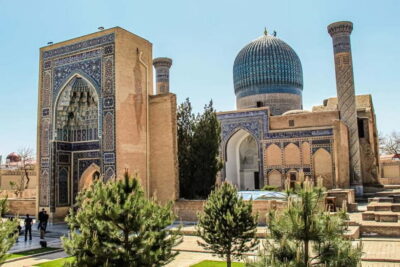
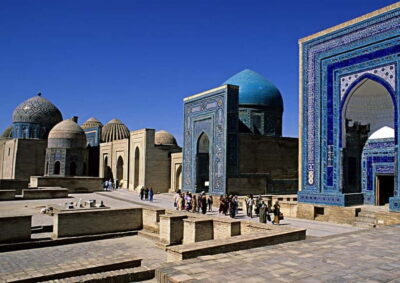
Samarkand One Day Tour: one day walking & group tour
Read our review →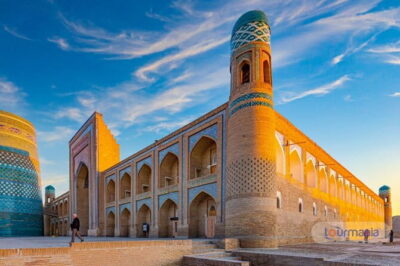
Khiva Historical City Highlights Guided Walking Tour
Read our review →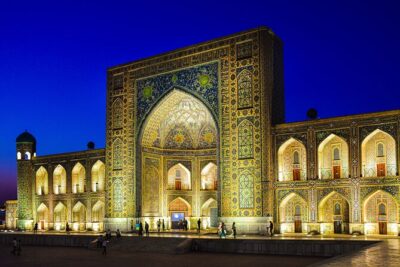
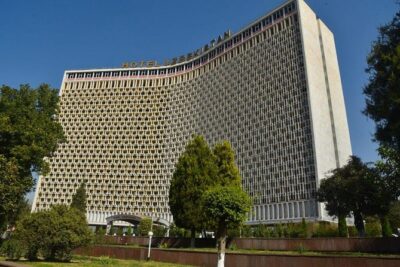
Tashkent Walking Tour with Local Lady / Gentleman
Read our review →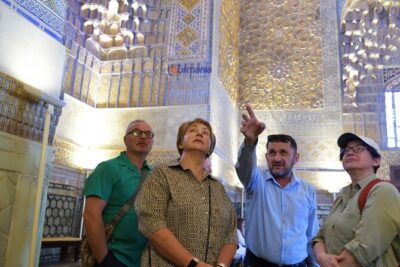
Samarkand Historical City Highlights Guided Walking Tour
Read our review →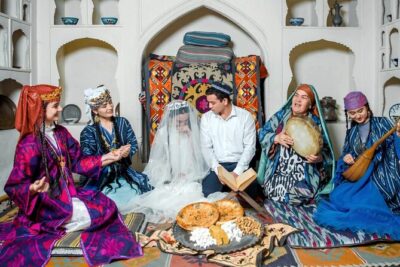
Tashkent Walking & Food Tour: Highlights + Local Flavors
Read our review →
Browse the lists this tour appears in