
Reviewed · TRAIN EXPERIENCES
Samarkand One Day Private Tour from Tashkent with Bullet Train
Samarkand is the reason many people come to Uzbekistan, and this tour gets you there without making you solve the country’s transport puzzle first. You take the Afrosiyob bullet train from Tashkent, meet a private guide in Samarkand, and spend the day among tiled schools, royal tombs, ancient ruins, and observatory remains.
I like two things right away. First, the private format lets you ask questions and adjust the pace, which matters on a long sightseeing day. Second, the route goes beyond Registan to places such as Afrasiyab Museum and Ulugh Beg Observatory, giving you a broader picture of Samarkand.
The main caution is the schedule. A nine to twelve-hour day is demanding, and bullet train seats can sell out quickly, especially during high season. Confirm your arrangements early and expect a full day on your feet.
Key points at a glance
- Afrosiyob rail connection: Round-trip bullet train tickets between Tashkent and Samarkand are included when the option is available.
- Six major stops: You visit Registan, Bibi Khanym Mosque, Shah-i-Zinda, Ulugh Beg Observatory, Afrasiyab Museum, and Gur Emir Mausoleum.
- Private guiding: Only your group takes part, with an experienced licensed guide and an air-conditioned vehicle.
- Good historical range: The day moves from ancient Afrosiab to the age of Timur and Ulugh Beg.
- Strong guide feedback: Timur, Charos, Pushi, and Shokhrukh are specifically praised for clear explanations, flexibility, and care in hot weather.
- Extra cash needed: Photo and video charges at museums may cost $1 to $2 per sight, and tips are not included.
Why the Tashkent to Samarkand train matters
The train is one of the best features of this experience. Instead of spending much of the day on a road, you travel between Uzbekistan’s two major cities by Afrosiyob bullet train. The return ticket is included, along with transport in an air-conditioned vehicle once you are touring Samarkand.
That arrangement is valuable because the rail connection is not something I would leave until the last minute. Bullet train seats open for sale 45 days before departure and can sell out within an hour during the busiest periods. The tour operator has sometimes secured tickets under difficult conditions, but you should not count on a last-minute rescue.
Your day begins at Shimoliy Vokzal, also called the northern railway station, on Turkiston ko’chasi in Tashkent. The meeting point is near public transport, but you still need to allow time to find the correct station entrance and platform. Your confirmation arrives at booking, so read it carefully for the departure details.
The train makes this possible as a day trip, but the timetable leaves little room for drifting. You are not simply wandering around Samarkand with an open afternoon. You are working through a carefully packed route before returning to the station for the ride back to Tashkent.
A few more Tashkent trips to weigh up
- 2 Days Tour to Bukhara and Samarkand from Tashkent by train
★ 5.0 · 53 reviews - Tashkent Airport & Train Station Pick Up & Drop Off
★ 4.5 · 50 reviews - Day Tour to Samarkand from Tashkent by train.
★ 5.0 · 34 reviews
Registan, Samarkand’s grandest stage
Registan is the first major stop, with about an hour set aside and admission included. The square became the center of the city after life in ancient Afrosiab declined, and it was rebuilt several times before taking the form you see today.
Three monumental madrasas frame the square: Ulugbek, Sherdor, and Tillokori. Their facades are covered with geometric tilework, inscriptions, and bold color. The scale can feel almost theatrical, but a good guide helps you see past the postcard view. Ask about the different periods of construction and the role of the square in city life.
An hour is enough to see the main courtyards and understand the basic story, but it may not satisfy you if you want to examine every tile. This is one reason the private setup helps. You can ask your guide to pause for architectural details or point out places that work well for photographs.
The square also introduces a theme that continues all day: Samarkand is not one single historical city. It is a place rebuilt, renamed, expanded, and celebrated by different rulers over many centuries.
Bibi Khanym Mosque and Timur’s ambition
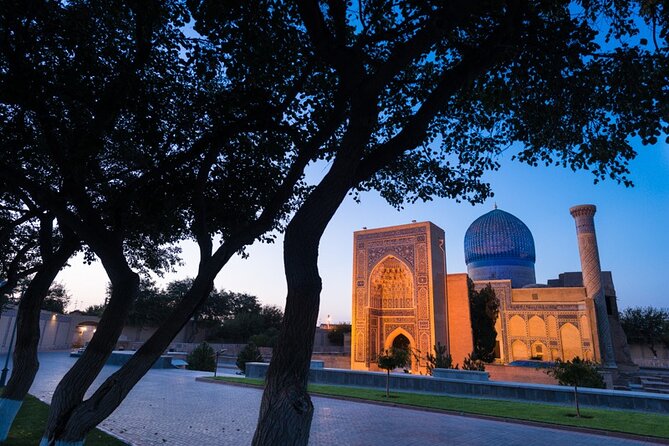
The stop at Bibi Khanym Mosque lasts about 30 minutes. The mosque was built between 1399 and 1404 on Timur’s order and named for his wife. It is one of Central Asia’s best-known buildings, with a vast scale that reflects the ruler’s desire to create a capital worthy of his empire.
I would use this stop to look closely at the structure rather than rush through a checklist. The building’s size is the main story. Timur’s building projects were meant to impress, and Bibi Khanym does that even when parts of the complex have required reconstruction.
Thirty minutes is brief, so your guide’s explanation is important. You will get the main context, see the principal areas, and move on. If you want long photo sessions or quiet time, you may feel pressed.
The tour includes entrance tickets, which keeps the day moving. You should still carry small cash for photo and video charges at museums and sights. Those fees are separate and usually run about $1 to $2 per sight.
Shah-i-Zinda, the most detailed stop

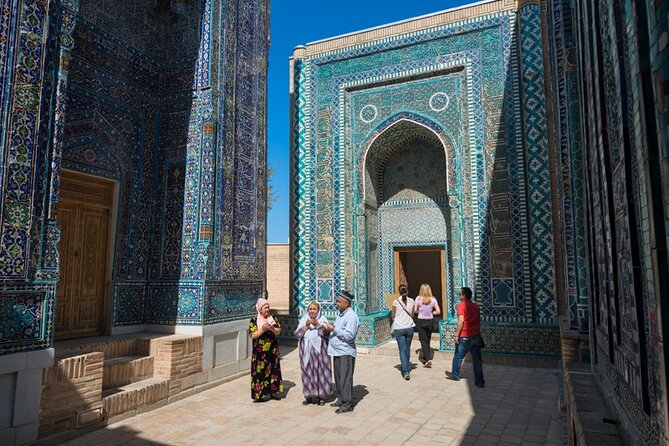
Shah-i-Zinda receives about an hour, and I consider it one of the most rewarding parts of the route. The ensemble sits on the southeastern mound of Afrosiab and contains 44 tombs arranged through more than 20 mausoleums.
This is not a single building but a long architectural procession. As you move through the complex, tiled facades appear one after another, with blue, turquoise, and patterned decoration covering the tombs. The site brings together work from the ninth through fourteenth centuries, with later additions from the nineteenth century.
You should wear practical shoes and be ready for steps and walking. The tour data does not give a formal accessibility statement, so anyone with mobility concerns should ask the provider before booking. Most people can take part, but the day includes several historic compounds rather than flat, modern galleries.
A private guide can make a major difference here. There is a lot to see, and it is easy to remember only the colors. Guides such as Charos have been praised for finding shaded places during very hot weather and explaining the sites in a calm, clear way. That kind of care is useful in Samarkand’s summer heat.
Same Silk Road, a completely different kind of day:
- Best of Tashkent Mountains: Amirsoy, Chimgan & Charvak Trip
★ 4.8 · 567 reviews - Samarkand One Day Tour – Departure From Tashkent
★ 5.0 · 313 reviews - Tashkent City Tour
★ 5.0 · 121 reviews - Amirsoy, Chimgan & Charvak Full-Day Adventure
★ 4.9 · 82 reviews
Ulugh Beg Observatory and the science of the Timurid age
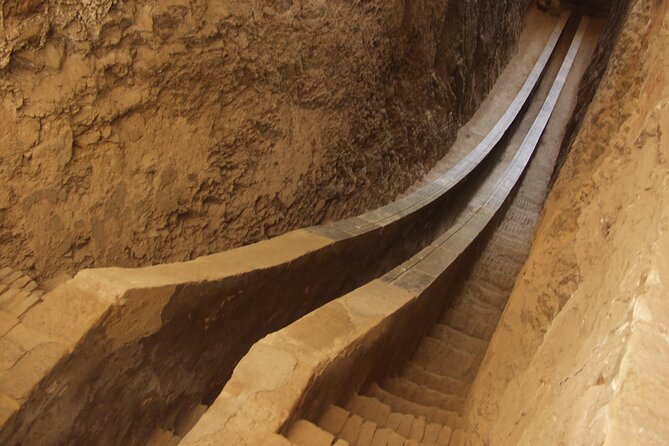
The observatory stop lasts about 20 minutes. Only the foundations remain, but the site tells an important story about Ulugh Beg, Timur’s grandson, who was an astronomer, scientist, and architect.
This visit keeps the tour from becoming a parade of royal monuments. Samarkand was not only a city of conquest and ceremony. It was also a center for scientific study. The remains may look modest beside Registan or Shah-i-Zinda, so your guide’s explanation gives the stop its weight.
Twenty minutes is enough for a focused visit, though not for an extended museum session. I like this as a short pause in the route because it changes the subject. You move from rulers and tombs to measurement, observation, and the intellectual life of the Timurid court.
Afrasiyab Museum and the city before Timur
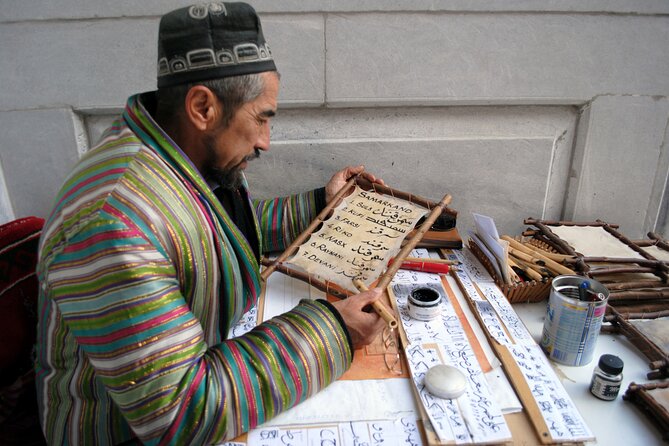
Afrasiyab Museum receives about an hour and takes you toward the northern part of modern Samarkand. The museum sits near the ruined site of ancient and medieval Afrosiab, where settlements developed over many centuries.
This is the stop that helps you understand why Samarkand cannot be reduced to its famous blue-tiled monuments. Before Timur’s Samarkand, there was an older city here. The museum and ruins connect the modern streets to that earlier settlement.
The time allocation is generous compared with the observatory. I would pay attention to how your guide links the museum to the city’s earlier phases, then use any remaining time to look around at your own pace. The stop may feel less instantly dramatic than Registan, but it gives the day needed context.
The route can also feel hot and exposed, especially around historic ruins. Bring water and take advantage of shaded breaks when offered. The air-conditioned vehicle provides relief between sites, but you should still plan for sustained walking outdoors.
Gur Emir Mausoleum and Timur’s final resting place

The last major stop is Gur Emir Mausoleum, with about 30 minutes included. This is the tomb of Timur, often known in the West as Tamerlane, and the building dates mainly from 1404 to 1405, with later work over the centuries.
The mausoleum is smaller than Registan but more intimate. Inside, the decoration turns inward, with a richly ornamented setting for Timur’s tomb and those connected to his dynasty. It is a fitting place to think about the ruler’s reach and the buildings he left behind.
Half an hour gives you time to see the interior and hear the essential story. If you have a strong interest in dynastic detail, you will want to keep asking questions because the itinerary moves quickly.
Ending here creates a good final note. You have seen the public face of Timurid power at Registan, its religious and architectural ambition at Bibi Khanym, its royal burial places at Shah-i-Zinda, and finally Timur’s own mausoleum.
What the private format really adds
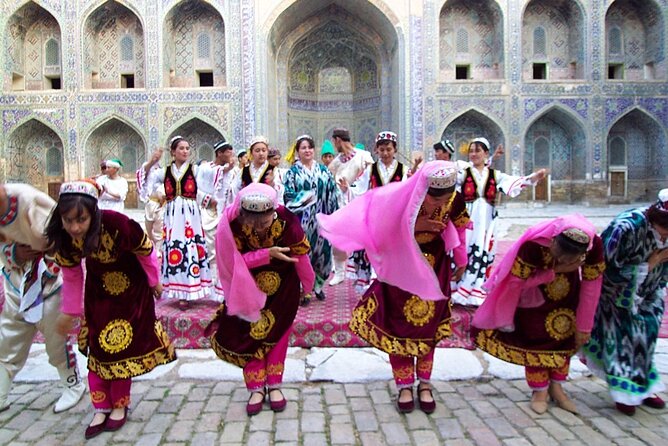
The private arrangement is more than a label. Only your group participates, so you do not have to wait for a large party to gather or follow a stranger’s pace. You can ask for clearer explanations, request a short pause, or spend extra time at a favorite site if the schedule allows.
The guides named in the feedback include Timur, Charos, Pushi, and Shokhrukh. Their praised qualities are practical ones: clear language, strong historical explanations, politeness, flexibility, cheerful attention, and good photo spots. Charos’s habit of leading people toward shade on a brutally hot day is exactly the sort of small service that matters more than a rehearsed speech.
The guide also helps connect the sites. Without that bridge, Samarkand can become a blur of domes, blue tiles, conquerors, and dates. With a good explanation, you can see the sequence from Afrosiab to the Timurid period and then understand why modern Samarkand looks the way it does.
The private format costs more than joining a large group, but the price is $190 per person and includes transport, the licensed guide, entrance tickets, taxes, and the round-trip Afrosiyob option. For a first visit, that is a fair package if you value time and convenience. You are paying for a long-distance rail connection, a full day of private attention, and a vehicle between sites, not simply an entrance ticket.
The hard parts: heat, time, and tourist commerce
This is not a slow, meditative tour. Six stops plus two train journeys make for a packed day. You should expect an early start, a late return, and limited time at each monument.
Heat can add another layer of strain. One review describes a brutally hot day, and the guide’s ability to find shade became especially useful. Carry water, wear light clothing, and bring shoes you can walk in comfortably.
You should also know that Samarkand’s famous monuments are surrounded by commercial activity. Shops and tourist stalls can appear around the old sites, and the atmosphere may feel less quiet than the architecture suggests. The tour gives you access to the major sights, but it cannot remove the commercial side of popular historic places.
One poor experience involved train-ticket problems and frustration with the amount of shopping activity around the monuments. The operator’s response made the important point that Afrosiyob seats are difficult to secure in high season. The practical lesson is simple: book early, confirm the rail option, and keep your expectations realistic about the pace and setting.
Who should book this day trip?
I would choose this experience if you are based in Tashkent and have only one day for Samarkand. It suits first-time visitors who want the main monuments, clear historical background, and a private vehicle without arranging every transfer themselves.
It also works well for families and small groups. You can keep together, ask questions without feeling shy, and benefit from the air-conditioned car between stops. A flexible guide can make the schedule easier for mixed ages and different walking speeds, although the full day remains demanding.
I would hesitate if you dislike timed sightseeing or want to spend several hours at one monument. Samarkand deserves more than a day, and this tour gives you a strong first look rather than a leisurely stay. If you have two or three days, staying overnight would allow more time for the old city and evening visits.
The tour is also less suitable for anyone who cannot manage extended walking, steps, or heat. The information says most people can participate, but it does not promise full accessibility. Ask before booking if that is a concern.
Should you book the Samarkand day tour?
Book it if your Uzbekistan schedule is tight and you want Samarkand handled in one efficient, private day. The combination of Afrosiyob rail travel, included admissions, an air-conditioned vehicle, and a guide who can explain the layers of the city gives you good value at $190 per person.
Book early, especially if you are traveling during a busy period. The train is the key weak point because seats can disappear quickly, and the day depends on that connection.
I would choose this tour for convenience, strong site coverage, and the chance to have a guide such as Timur, Charos, Pushi, or Shokhrukh shape the day around your group. I would skip it only if you have enough time to stay overnight or prefer to explore slowly without a fixed route.
FAQ
Where does the tour begin?
The tour begins at Shimoliy Vokzal, located at 77RP+J94, Turkiston ko’chasi, Tashkent, Uzbekistan.
Where does the tour end?
The activity ends back at the meeting point in Tashkent.
Is the bullet train ticket included?
Yes. The included package lists return Afrosiyob bullet train tickets between Tashkent and Samarkand, with the Tashkent to Samarkand to Tashkent option.
What sights are included?
The tour visits Registan, Bibi Khanym Mosque, Shah-i-Zinda, Ulugh Beg Observatory, Afrasiyab Museum, and Gur Emir Mausoleum. Entrance tickets are included.
Are photo and video charges included?
No. Photo and video museum charges are paid in cash at the entrance and may cost $1 to $2 per sight.
Can I cancel the tour?
You can cancel for a full refund if you cancel at least 24 hours before the experience start time. Cancellations or changes made less than 24 hours before the start time are not accepted for a refund.
Just added around Tashkent
- Private Intercity Transfer Tashkent – Samarkand – Tashkent★ 3.5 · 3 reviews
- Tashkent Mountain Tour Amirsoy with Transport★ 3.5 · 3 reviews
- Tashkent-Samarkand-Bukhara tour-3nights/4 days★ 5.0 · 5 reviews
- Amirsoy & Chimgan mountain tour from Tashkent★ 5.0 · 3 reviews
- Private Tashkent City Tour★ 5.0 · 3 reviews
- Tashkent Food and Metro Journey★ 5.0 · 4 reviews
- Transfer Tashkent Airport / Railway Station – Hotel★ 3.5 · 3 reviews
- Tashkent City Tour with Hotel Pickup and Drop off★ 4.5 · 4 reviews
Train Experiences, compared.

2 Days Tour to Bukhara and Samarkand from Tashkent by train
Read our review →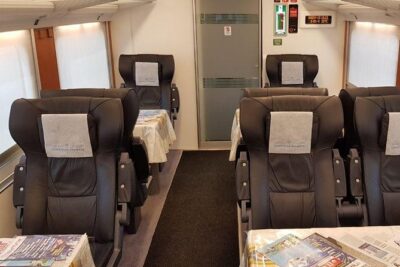
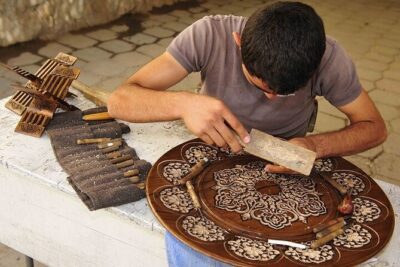
Uzbekistan 3 Day Private Tour Tashkent-Bukhara-Samarkand Bullet Train
Read our review →
Afrosiyob high speed train tickets – Guaranteed Pass
Read our review →
Samarkand Airport / Railway Station – Samarkand City Transfer
Read our review →
Uzbekistan 6 Days Private Tour Khiva-Bukhara-Samarkand by Train
Read our review →
Transfer Tashkent Airport / Railway Station – Hotel
Read our review →Browse the lists this tour appears in