
Reviewed · CITY TOURS
City Tour Around Bukhara
Bukhara is the sort of city that rewards a guide who can connect old brick, living religion, working crafts, and modern Uzbek life. Kamilla Yu’s tour moves from the ancient Ismail Samani Mausoleum through mosques, madrasas, trading domes, and artisan workshops, ending at Lyabi Hauz.
I like the private format, which lets you pause for photos, shopping, food, or questions instead of marching on with a large group. I also like Kamilla’s promise to keep the history clear and lively, with handmade messages from the past, local music, traditions, and optional craft or cooking experiences.
The main consideration is time. With eleven major stops, the full route can fill six hours, and entrance fees are extra at several sights. This is a strong choice for a first look at Bukhara, but it may feel brisk if you want to study every building in detail.
Key points to know before booking
- Eleven major stops: The route covers Bukhara’s best-known monuments, from the ninth-century Ismail Samani Mausoleum to Lyabi Hauz.
- A genuinely private tour: Your group of up to six people has the guide to itself, making it easier to adjust the pace.
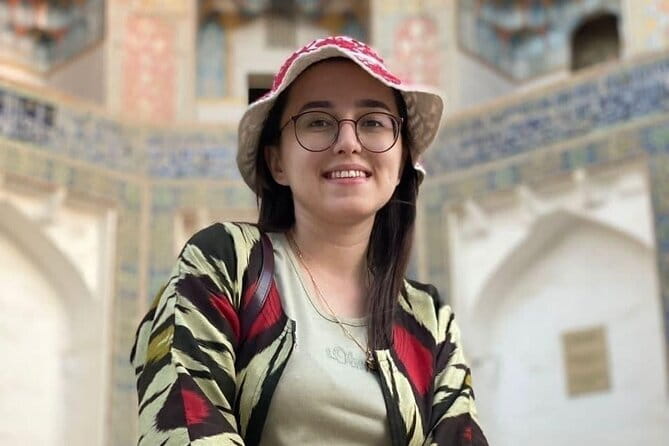
- Kamilla Yu leads the experience: Her conversational English, personal stories, and knowledge of modern Uzbek life add context beyond dates and dynasties.
- Crafts are part of the city story: You may see puppet making, blacksmithing, gold embroidery, fabric production, wood carving, and other traditional work.
- The route ends in the old city center: Finishing at Lyabi Hauz leaves you near one of Bukhara’s most useful areas for eating, strolling, and further exploring.
- Budget for admission fees: Several sites list entrance tickets separately, while Bolo Hauz Mosque, the Kalon Minaret, Mir-i-Arab Madrasa, the trading domes, and Lyabi Hauz are listed with free admission.
Why this Bukhara tour works well
The best feature here is not simply the number of monuments. It is the way the tour joins Bukhara’s grand sights with ordinary skills and customs that still have a place in the city.
You will see the great religious buildings, but you can also watch people make objects by hand. That matters in Bukhara. The city was not only a stop for scholars and rulers. It was also a place where traders sold goods, craftspeople made them, and cooks fed people passing through.
Kamilla’s style is designed for people who want history without a long stream of names and dates. She explains the reason a building mattered, how it was used, and what you are looking at now. Past participants praised her conversational English, patience with photographs and shopping, and ability to answer broader questions about life in Uzbekistan.
That makes this more than a monument checklist. You get a guide who can place the Silk Road era beside modern Uzbek culture and society. For a first day in Bukhara, that context can help the city make sense quickly.
The experience is private for up to six people and costs $66 per group. Split among six, that is an excellent price for a four to six hour private tour. For two people, it is still reasonable, especially if you value flexibility and personal attention. Just remember that several admission tickets are not included.
A few more Bukhara trips to weigh up
- Bukhara Full Day Old City Private Tour
★ 5.0 · 46 reviews - Bukhara Historical City Highlights Guided Walking Tour
★ 4.5 · 16 reviews - Private Samarkand City Tour With Transportation
★ 5.0 · 149 reviews
Starting with Bukhara’s oldest brickwork
The tour begins at the Ismail Samani Mausoleum, a fitting introduction to Bukhara. Built in the ninth or tenth century, it is made almost entirely from brickwork rather than bright tile or colorful surface decoration.
The visual surprise is in the pattern. More than twenty styles of bricklaying were used, and the changing light brings out the structure. You do not need a long lecture to appreciate it. Look closely at the walls and you will see how much design can come from the placement of ordinary bricks.
You have about thirty minutes here. Admission is not included, so check the ticket cost when planning your total budget. The starting point is outside the central old-city endpoint, and pickup is offered, which can make the opening transfer easier.
Chashmai Ayub and Bolo Hauz Mosque
Next comes Chashmai Ayub Mausoleum, a holy site connected with three religions. The complex dates to the twelfth century and is associated with the grave of the Prophet Job, known here as Ayub. It also contains a natural well whose water is associated with healing skin conditions.
You get around twenty minutes at this stop. The appeal is partly religious and partly physical. The well helps you picture why a water source could become a sacred place in a dry region where reliable water mattered greatly.
At Bolo Hauz Mosque, the focus shifts to wood. The mosque has twenty carved wooden pillars, though it is commonly called a forty-pillar mosque. Kamilla explains the reason for that name and how the site was used to announce news about a new ruler.
Allow thirty minutes here. Admission is listed as free. This is a good place to look upward and study the carved columns rather than rushing straight toward the next monument.
The Ark of Bukhara, a fortress with a view

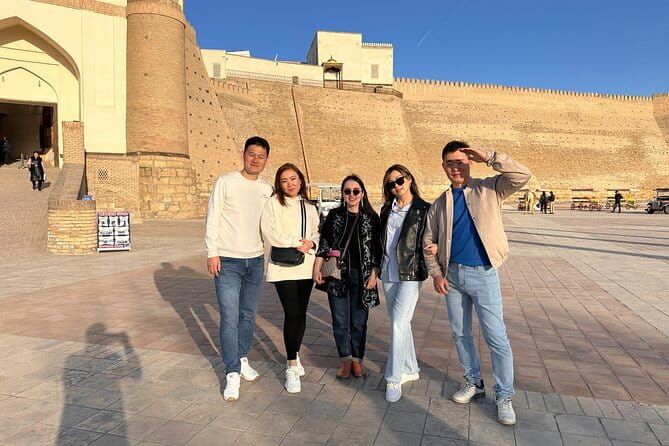
The Ark is the most dramatic stop on the route. This fortress served as the home of Bukhara’s rulers from the fourth century BC until 1920. Much of what you see today is ruined or reconstructed, but the scale of the citadel helps you understand the political power once concentrated inside its walls.
The visit takes about forty minutes, with admission extra. You can explore parts of the ruins and reach a high point for a city view. That outlook gives the stop real value because Bukhara’s monuments are easier to understand when you see how closely they sit together.
The Ark is also where a guide earns their fee. A bare visit gives you walls and a view. A good explanation adds the role of the fortress, the rulers who lived there, and the secrets tied to the citadel’s past. Kamilla’s storytelling approach should suit you if you prefer a few memorable explanations to a dense chronology.
Same Silk Road, a completely different kind of day:
- Best of Bukhara: All Day Private Old Town Tour
★ 5.0 · 66 reviews - Best of Bukhara: All Day Private Old Town Tour
★ 4.9 · 62 reviews - Yurt Camp Tour with Night from Bukhara
★ 3.8 · 35 reviews - All You Need To Know About Bukhara. A Walk In The Town
★ 4.9 · 31 reviews
The Kalon ensemble and its enduring tower
The Great Minaret of the Kalon is one of Bukhara’s essential sights. Built in the twelfth century, it has survived for centuries without falling, and the tour explains the construction choices that helped make it so solid.
You spend about twenty-five minutes here, and the minaret is listed as free to visit. It also looks different after dark, when it is illuminated. Summer evening tours are available, so you may be able to see the tower in that setting if your schedule matches the seasonal offering.
The nearby Poi Kalyan Mosque takes another twenty-five minutes. It is still active and dates from the sixteenth century. The complex is known for its many domes, with 288 listed in the tour description, and its corners offer plenty of photo angles.
Admission is not included at Poi Kalyan Mosque. Since this is an active religious site, listen carefully to the guide about how to behave inside. The tour’s strength here is the connection between architecture and present-day use. You are not only looking at an old monument. You are seeing a place that still functions as a mosque.
Mir-i-Arab Madrasa completes this section. It has operated as a religious college since the sixteenth century, and the visit explains how religious education worked and how a madrasa was typically arranged.
The stop lasts about twenty-five minutes and is listed as free. Look for the relationship between the courtyard, study spaces, and religious areas. The point is not only to admire the facade, but to understand how students and teachers used the building.
Trading domes and the business of the Silk Road
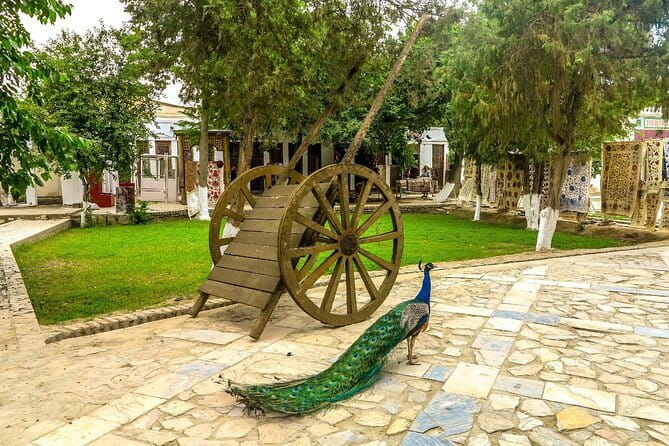
Bukhara’s trading domes bring the commercial side of the city into view. You cross three domes, each designed for a particular type of trade. The covered spaces let you picture how merchants displayed goods, met buyers, and made money along the old trade routes.
You have about forty minutes here. Admission is free, and this is one of the more relaxed parts of the walk because the domes are active spaces rather than sealed monuments. You may also have time to browse or shop, and Kamilla is described as patient when people want to pause for souvenirs.
This is a useful moment to ask practical questions about crafts and local products. The tour also includes contact with working artisans, including puppet makers, blacksmiths, gold embroiderers, fabric makers, and wood carvers. The exact workshop sequence can vary, so think of it as a cultural layer added to the main sightseeing route rather than a fixed museum visit.
Kosh Madrasah and Magoki Attori Mosque
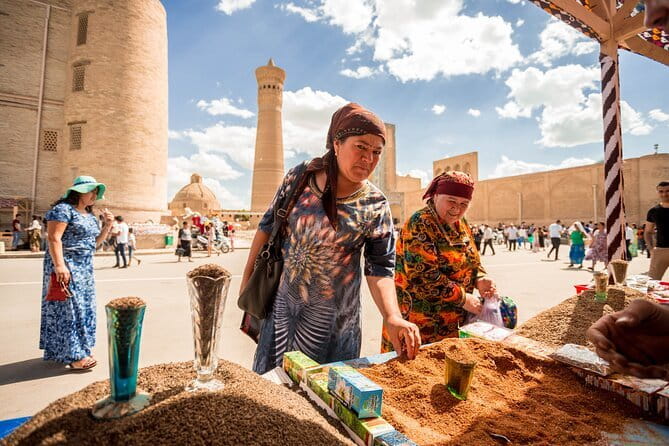
Kosh Madrasah presents two schools in one square, built in different styles. You spend about forty minutes here, including a look at an original seventeenth-century classroom and a mosque described as having a cave-like style.
The stop also introduces two main streams of religious thought. That is a good example of the tour’s approach: architecture is used to explain how people studied, worshipped, and organized religious life. Admission is not included, so ask Kamilla which areas are open on the day.
Magoki Attori Mosque and the Carpet Museum take about twenty minutes. The mosque is described as dating to the twelfth century and lying well below the current ground level. It is associated with two different forms of worship, Judaism and Islam, which gives the site unusual importance in Bukhara’s layered past.
The carpet collection adds a craft connection to the architecture. Admission is extra here as well. If carpets interest you, allow yourself time to look closely at the patterns and workmanship rather than treating this as a quick stop between larger monuments.
Ending at Lyabi Hauz
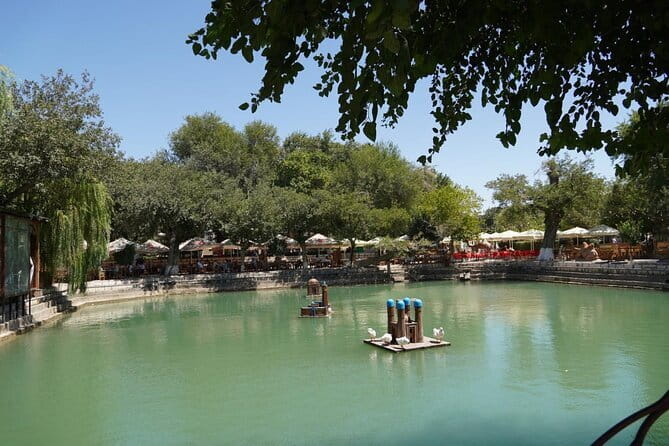
The tour finishes at Lyabi Hauz, the heart of Bukhara’s old city. The complex includes a mosque, two distinctive madrasas, and a caravanserai, an old roadside hotel for merchants and other people on the move.
You spend about thirty minutes here, with free admission listed. The pond gives the area a different mood from the fortress and monumental mosque courtyards. It is a natural place to pause, review what you have seen, and decide where to eat or walk next.
Ending here is practical. You are close to the center of the old part of Bukhara, and the location is useful for continuing your own sightseeing. The tour begins at the Ismail Samani Mausoleum and ends at Lyabi Hauz, so pickup can be helpful at the start, while the final location puts you in a convenient area afterward.
Crafts, food, and the personal touch
The tour is not limited to buildings. Kamilla can arrange a masterclass in preparing a traditional meal or bread if you want that added cultural experience. Local food places can also be recommended or built into the day, and one past group added a lunch stop for plov.
These extras are especially useful if you have already seen monuments in Samarkand or Khiva and want something more hands-on in Bukhara. Ask about your interests at the beginning. The guide has adapted timing for food, crafts, photographs, shopping, and personal questions.
Local music, traditions, and folk shows may also be included or made available. The details are not fixed in the information provided, so confirm what is possible for your date rather than assuming every performance is part of every tour.
Coffee and tea breaks are part of the experience, but coffee and tea are not included in the price. That is a small cost, yet it is worth knowing when you compare the $66 tour price with the final amount you will spend.
Timing, comfort, and value
The advertised duration is approximately four to six hours. The listed stop times add up to about six hours, before allowing for movement, discussion, food, crafts, or shopping. If you want all eleven stops, expect the longer end of the range.
The tour operates Monday through Friday from 9:00 a.m. to 6:00 p.m. for the stated operating period. Summer evening tours are available, which can help with heat and gives you the chance to see the Kalon Minaret lit up.
Because this is a walking-focused city experience with several outdoor courtyards, good weather matters. If poor weather forces cancellation, you can receive a different date or a full refund. You can also cancel for a full refund up to twenty-four hours before the start time. Changes or cancellations inside that window are not accepted for a refund.
Most people can participate, and the meeting point is near public transportation. Pickup is offered, but confirm the exact arrangement when booking. A mobile ticket and booking confirmation at the time of purchase make the practical side straightforward.
Who should book this experience
I would choose this tour if you want to see Bukhara’s main sights in one private outing and also care about daily life, food, crafts, and modern culture. It is particularly useful for a first visit, for couples or families who want to set their own pace, and for small groups that can divide the $66 cost.
Kamilla’s strong points are her clear conversational English, preparation, flexibility, and personal way of explaining the city. She has helped people connect Bukhara’s monuments with Uzbek society today, and she is willing to talk through questions that go beyond the formal route.
You may want a different format if you prefer silent, unhurried museum study or a tightly timed luxury tour with every entrance included. The broad schedule can also feel full, especially if you add lunch, artisan visits, or a cooking class. Ask for a shorter version if you would rather spend more time at fewer sites.
Should you book the Bukhara city tour?
Book it if you want an easy first-day orientation with a personal guide, major monuments, craft encounters, and useful local suggestions. The price is good for a private group of up to six, and the end point at Lyabi Hauz is convenient.
Before booking, decide whether you want the full eleven-stop route or more time for food and artisans. Also set aside money for admission fees and confirm any masterclass, folk show, or evening option. For a balanced introduction to Bukhara that treats the city as a living place rather than a collection of ruins, this is a sensible choice.
FAQ
How long does the Bukhara city tour last?
The tour lasts approximately four to six hours. Visiting all eleven listed stops, along with breaks, photographs, shopping, food, or craft activities, may take closer to six hours.
How many people can join the private tour?
The price of $66 covers one private group of up to six people. Only your group participates in the activity.
Where does the tour begin and end?
The tour begins at the Ismail Samani Mausoleum in Bukhara. It ends at Lyabi Hauz, also called Lyabi Khause Square, in the center of the old city near the pond.
Are entrance fees included?
No. Admission is not included at the Ismail Samani Mausoleum, Chashmai Ayub Mausoleum, the Ark of Bukhara, Poi Kalyan Mosque, Kosh Madrasah, and Magoki Attori Mosque and Carpet Museum. Several other stops are listed as free.
Is pickup available?
Pickup is offered, and the meeting area is near public transportation. Confirm the pickup details when you book.
Can I cancel for a refund?
You can cancel at least twenty-four hours before the local start time for a full refund. Cancellations or changes made less than twenty-four hours before the experience are not accepted for a refund. If poor weather causes the tour to be canceled, you will be offered another date or a full refund.
Just added around Bukhara
- Full-Day Private Guided Tour to Islamic 7 Saints of Bukhara★ 4.5 · 3 reviews
- Bukhara in a Day History, Culture, and Local Insight Private Tour★ 5.0 · 4 reviews
- Bukhara Walking Tour★ 5.0 · 4 reviews
- 2 Day Ukhum Hiking Tour from Bukhara★ 5.0 · 4 reviews
- A Complete Chapter To Old Bukhara★ 5.0 · 5 reviews
- Bukhara: Full-Day Guided Tour with English-Speaking Guide★ 5.0 · 4 reviews
- Uzbekistan 8 Days Private Guided Tour★ 4.6 · 3 reviews
- 2 – Days Guided Tour of Samarkand and Bukhara from Tashkent★ 5.0 · 5 reviews
City Tours, compared.
Private Samarkand City Tour With Transportation
Read our review →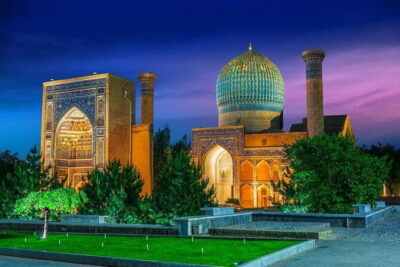
A City Tour Of Samarkand: The Pearl Of The East
Read our review →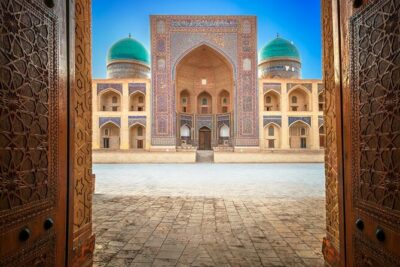
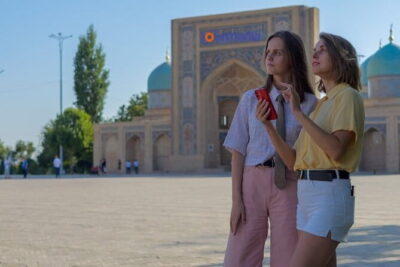
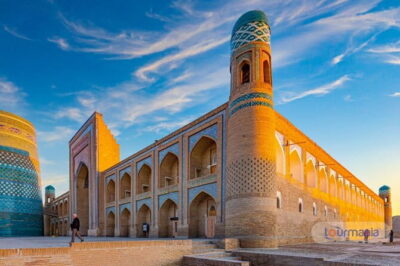
Khiva Historical City Highlights Guided Walking Tour
Read our review →
Samarkand Historical City Highlights Guided Walking Tour
Read our review →
Private Guided Tour Samarkand city history and culture
Read our review →
Samarkand City Tour with a Professional Photographer
Read our review →Browse the lists this tour appears in