
Reviewed · WALKING TOURS
Sunset walking tour of Samarkand
Samarkand becomes a different city when the sun drops. Blue tile catches the last light, great squares empty out, and places such as Shah-i-Zinda can feel far more reflective than they do at midday. Sunnat, the guide most often assigned to this walk, brings the city’s Timurid past to life while also talking about present-day Uzbek culture.
I like the evening timing, which helps you avoid much of the daytime heat and gives the monuments a softer, more mysterious look. I also like the personal scale: several people ended up with a private tour, and Sunnat is described as flexible, warm, and happy to adjust the discussion to your questions. The main caution is practical: transport and meals are not included, and the published timing has caused confusion. A late start may leave Ulugbek Observatory closed by the time you reach it.
Key points to know before you book
- Five hours on foot: The route links Gur-i Amir, Registan, Bibi-Khanym, Shah-i-Zinda, and Ulugbek Observatory.
- Sunset changes the mood: Lit facades and quieter courtyards give Samarkand a more atmospheric evening visit.
- Sunnat is a major strength: He explains history clearly and also discusses life and customs in Uzbekistan.
- The route begins at Gur-i Amir: You finish at Ulugbek Observatory, so plan your return from that end of the city.
- Transport and food cost extra: The guide service is included, but getting around and eating are your responsibility.
- Check the exact start time: A late departure can mean missing Ulugbek Observatory.
Why Samarkand works so well after sunset

Samarkand is famous for grand monuments, but a hot afternoon can make a long sightseeing walk tiring. This tour shifts the main visit into the cooler part of the day, when the city’s most important buildings are often lit and the pace feels less punishing.
You still need to walk for about five hours, so this is not a quick photo circuit. Yet the evening schedule gives you time to stop, listen, and look closely at the tilework instead of rushing from one sight to the next.
The best reason to choose this outing is the contrast between the monuments. Gur-i Amir is a tomb with a concentrated, solemn mood. Registan is an enormous civic square. Bibi-Khanym recalls imperial ambition, while Shah-i-Zinda feels intimate and spiritual. Ulugbek Observatory adds science to the story, showing that Samarkand was not only a city of rulers and mosques.
The route is especially useful if you have limited time in Samarkand and want an introduction to its main sights in one outing. You get a connected story rather than a series of unrelated stops.
A few more Samarkand trips to weigh up
- Samarkand: Historical Monuments Guided Walking Tour
★ 4.8 · 446 reviews - Samarkand One Day Tour: one day walking & group tour
★ 4.4 · 87 reviews - Samarkand: Historical Monuments Group Walking Tour
★ 5.0 · 29 reviews
Starting at Gur-i Amir, Tamerlane’s tomb
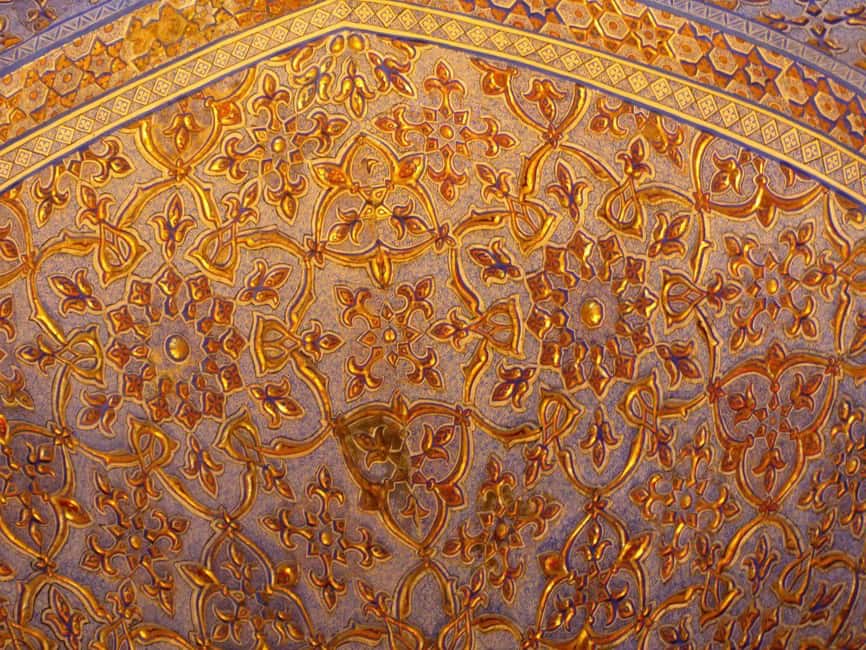
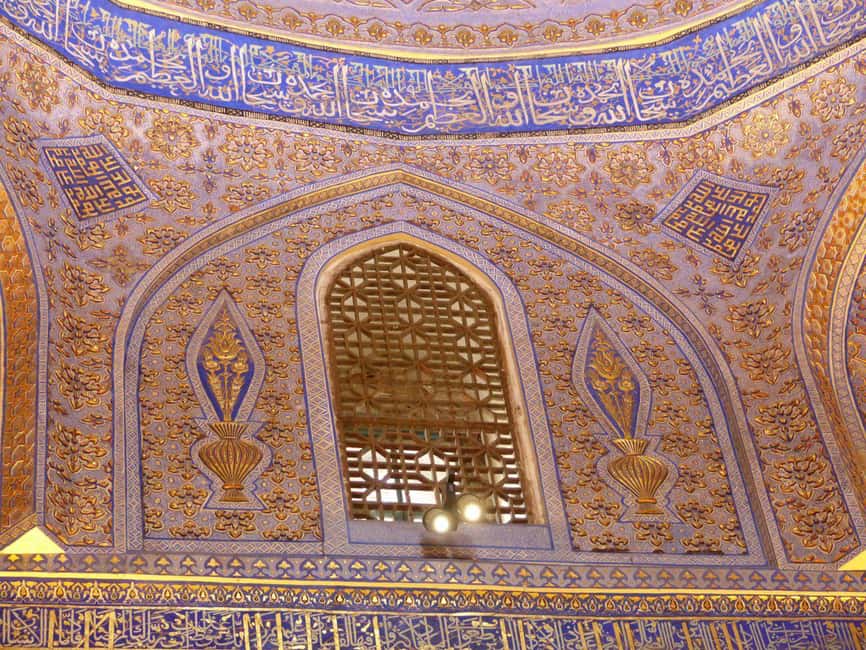
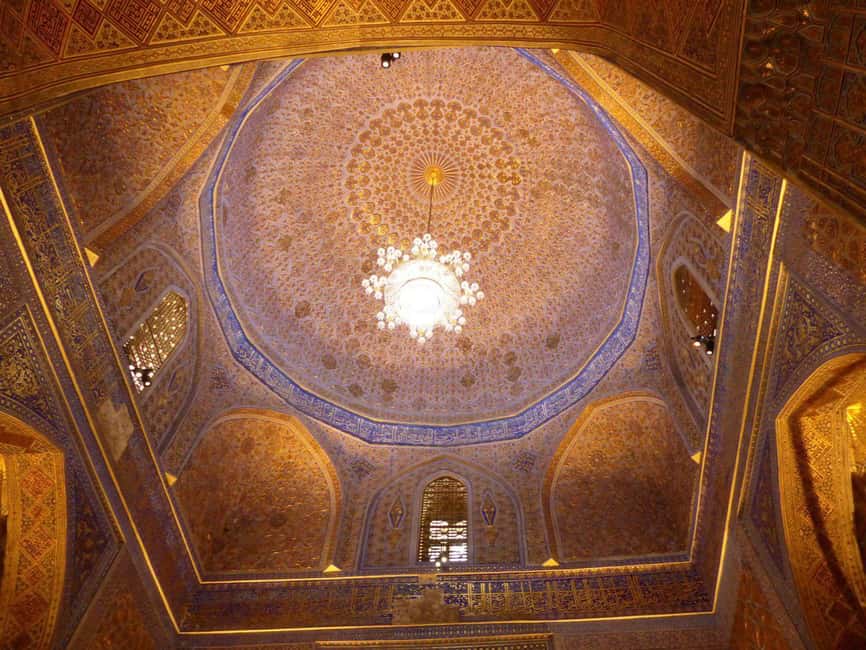
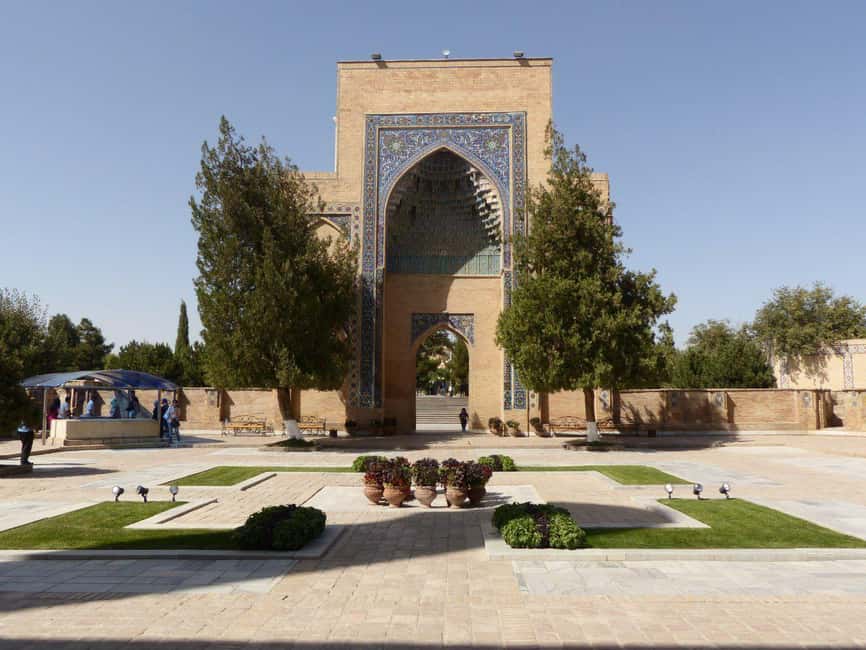
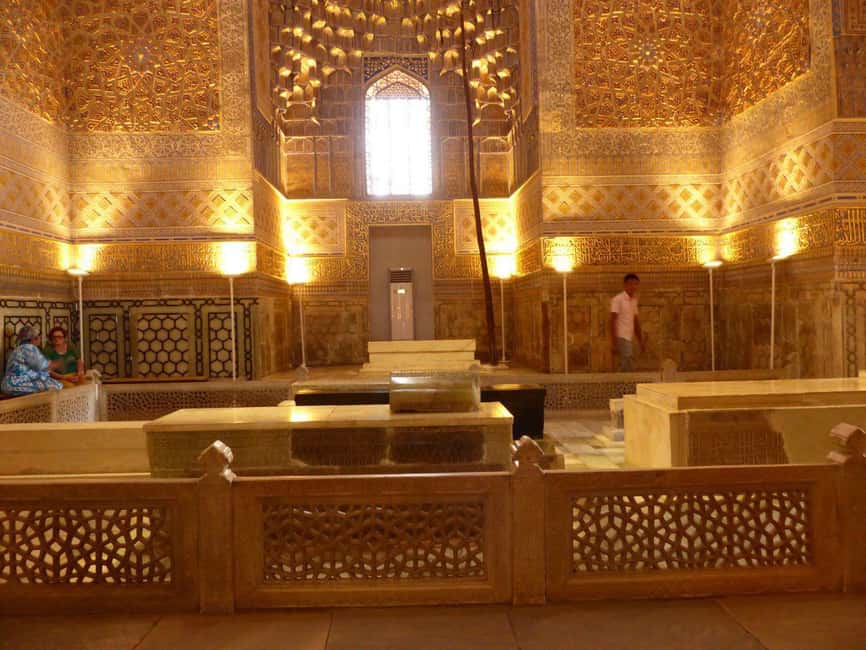
The walk begins at the Amir Temur Mausoleum, usually called Gur-i Amir. This is the tomb of Tamerlane, or Amir Temur, the ruler whose empire shaped much of Central Asia and whose building projects transformed Samarkand.
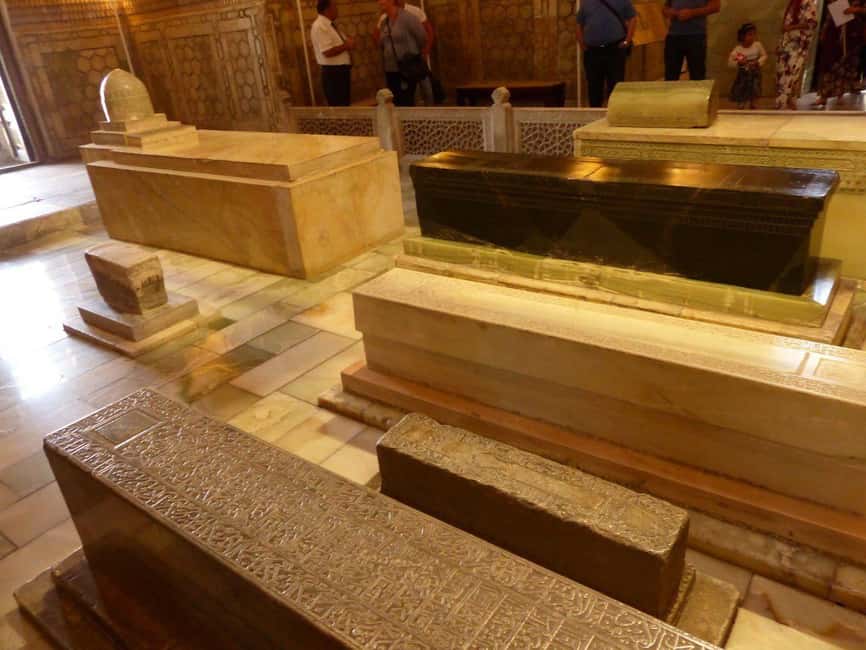
The mausoleum also contains the remains of his sons Miranshah and Shahrukh and his grandson Ulugbek. That family connection gives the first stop extra weight. You are not simply looking at a decorated tomb. You are entering the burial place of several figures who ruled, built, studied, and fought across the Timurid world.
A guide is useful here because the building’s importance is easy to underestimate if you only take in the dome and blue decoration. Ask Sunnat to explain the family connections and the role of Amir Temur in Samarkand’s development. His strength is not just listing dates. He tends to connect the monument with the city and with Uzbek life today.
The starting point also gives the tour a clear direction. From royal mausoleum, you move toward the public heart of old Samarkand.
Registan Square and the meaning of sandy place
Registan is the grand visual centerpiece of the walk. Three monumental madrasas frame the square, creating one of the most memorable urban spaces in Central Asia.
The name is commonly explained as sandy place. Your guide will explain why the square received that name and how it functioned as a center of public life. This is a good place to pause rather than simply cross the plaza for a photograph. Look up at the entrances, compare the facades, and notice how the buildings use repeated patterns to make a very large space feel ordered.
Registan can be overwhelming in daylight, especially when you are trying to take in its scale and details at once. At sunset, the changing light gives the tile a different character. Later, illumination can make the square feel theatrical, though the exact lighting and access conditions can vary.
The tour includes a guided visit and a chance to take photographs. It also advertises skip-the-ticket-line access, which may save time at busy monuments. Still, you should confirm what entrance access is available on your chosen date, especially if your start time is late.
Bibi-Khanym Mosque and a famous building legend
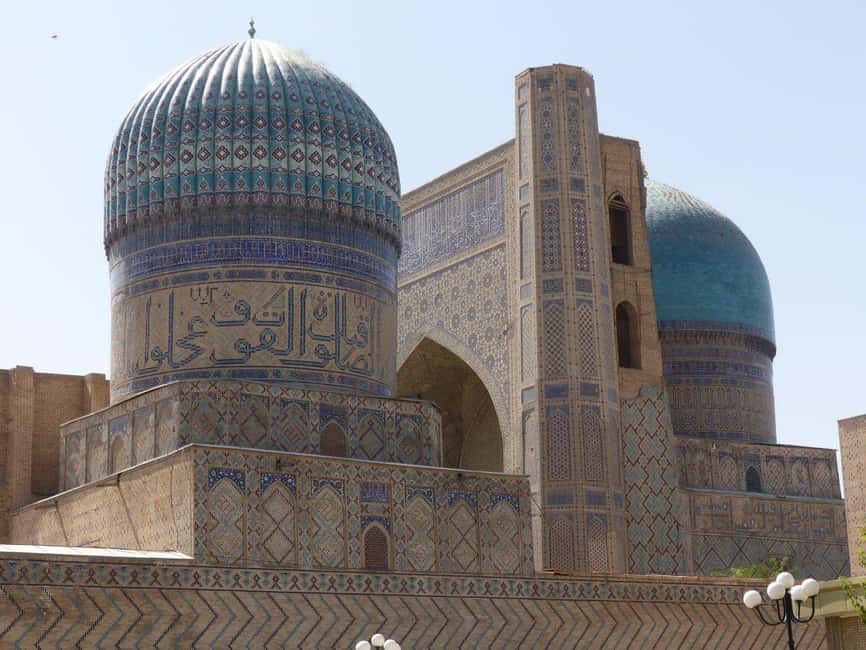
Next comes Bibi-Khanym Mosque, a 15th-century congregational mosque tied to Amir Temur’s building program. Its scale is the point. The monument was meant to express power, wealth, and religious importance, and its huge entrance and decorated surfaces make that ambition clear.
The guide tells the legend connected with the construction: the architect fell in love with Tamerlane’s wife, who supervised the project. Treat this as a traditional story rather than a confirmed historical record. Legends matter here because they show how people have remembered the buildings and the personalities behind them.
I would pay attention to how the guide handles both the story and the architecture. A good explanation lets you enjoy the tale without confusing it with documented fact. Sunnat’s interest in Samarkand’s past makes this one of the stops where questions can add a lot to the experience.
Bibi-Khanym is also a reminder that enormous monuments have practical limits. You will be walking between major sites, stopping for explanations, and taking photographs. Comfortable shoes are not a minor suggestion. Wear them.
Same Silk Road, a completely different kind of day:
- Private Samarkand City Tour With Transportation
★ 5.0 · 149 reviews - A City Tour Of Samarkand: The Pearl Of The East
★ 5.0 · 133 reviews - Full Day Private Tour in Seven Lakes from Samarkand
★ 5.0 · 94 reviews - Samarkand: Shahrisabz Day Trip with Optional Local Guide
★ 4.9 · 81 reviews
Shah-i-Zinda after the crowds
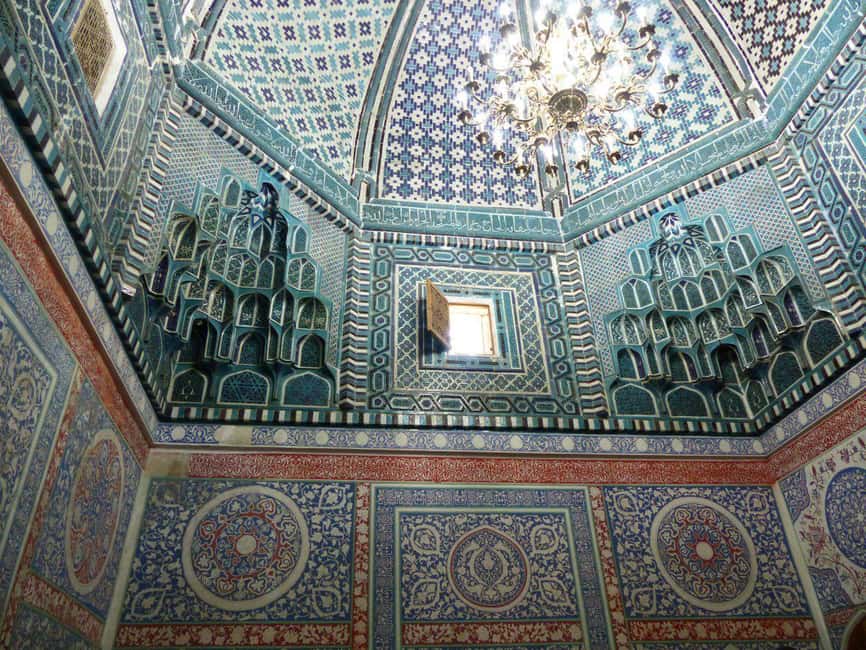
For many people, Shah-i-Zinda is the emotional high point of the route. This necropolis is a long architectural ensemble of mausoleums linked with Karakhanid and Timurid nobility. Its name translates as living king, although it is often described as the city of the dead.
The contrast between the name and the setting gives your guide plenty to explain. Shah-i-Zinda is not just a cemetery. It is a place of pilgrimage, memory, family burial, and remarkable decorative art. The close sequence of mausoleums creates a more intimate experience than the wide-open spaces of Registan.
This is also the stop most affected by the sunset schedule. A late visit can bring an unusual sense of quiet, and after-hours access may allow you to see the complex with very few other people around. That possibility is a real advantage of this tour, especially if you prefer atmosphere over a busy daytime visit.
There is a tradeoff. If the tour starts too late or earlier stops take longer than expected, the timing of Shah-i-Zinda and the observatory may shift. Ask at the beginning how long you will spend at each major site. That simple question can help you decide where to linger.
Ulugbek Observatory and the science of Samarkand
The walk finishes at Ulugbek Observatory, built by Ulugbek, a Timurid ruler, educator, and astronomer. This final stop broadens the story of Samarkand. The city was not only shaped by conquest, dynastic power, and religious architecture. It was also a center for astronomical study.
Ulugbek’s role is especially interesting because he combined political authority with scientific work. At the observatory, you get a different view of the Timurid world, one based on measurement and study rather than ceremony.
The observatory is the most important scheduling concern. One person lost the chance to see it because the late evening timing left the site closed by the end of the walk. The tour description gives a duration of about five hours, but the listed start information has been unclear. Confirm the exact start time and ask specifically if Ulugbek Observatory will be open during your visit.
Ending here also affects your onward plans. Since transport is not included, you need to arrange your own return from the observatory. If you are staying near central Samarkand, ask the guide what options are practical at the end of the tour, but do not assume a transfer is part of the booking.
The guide makes the difference
The strongest part of this experience is the live English-speaking guide. Sunnat is repeatedly singled out for his enthusiasm, patience, punctuality, and ability to explain Samarkand in an engaging way. He is also described as a young local guide who enjoys sharing both history and modern Uzbek life.
That local connection matters. You can ask about customs, daily life, and how historic places fit into the modern city. The tour is not limited to monument facts, and you are encouraged to shape the conversation around your own interests.
The guide has also handled solo bookings, including occasions when the guest effectively received a private tour. Do not treat that as a guarantee of a private booking, but it suggests the experience can feel personal when the group is small.
There is one fair qualification. One assessment described Sunnat as enthusiastic but still gaining experience. If you want a highly formal art-history lecture, the style may feel more conversational than academic. If you prefer questions, local perspective, and a guide who adjusts the discussion, that is likely a benefit.
Walking, access, and what to bring
The route is listed as wheelchair accessible, but the practical experience still depends on the exact access conditions at each monument. You should confirm details before booking if you use a wheelchair, particularly because the tour covers several historic complexes and includes outdoor walking.
Wear comfortable shoes and comfortable clothing. The walk is long enough that poor footwear will distract you from the buildings. Evening temperatures can also differ from daytime conditions, so check the forecast and dress accordingly.
A phone or camera is useful for the sunset views and illuminated facades, though the best part of the walk is the explanation between photographs. Bring water and plan for food before or after the tour, since meals are not included.
Transport is also excluded. The listed route begins at Gur-i Amir and ends at Ulugbek Observatory. You need to handle your arrival at the starting point and your departure from the finish.
Is $60 a fair price?
At $60 per person, the value depends on how much you want from the guide. You are paying for a full day of sightseeing in a compact evening format, an English-language explanation at several major monuments, and the chance to experience Samarkand at a cooler and quieter time.
The price looks stronger if you are a solo visitor or a small group. Several hours of guiding across the city can be expensive when arranged privately, while this booking may give you a personal experience if no one else joins.
The value is less clear if you only want photographs or already know Samarkand’s history well. You will still need to pay for transport and meals, and possible entrance arrangements should be checked. The tour is most worthwhile when you want context, questions answered, and a clear route through the city’s main monuments.
The rating of 4.9 from 16 bookings points to a very strong overall response, with particular praise for the guide’s historical explanations, flexibility, and evening access. One lower rating focused not on the guide but on unclear timing and a missed observatory visit. That distinction is important. The core experience appears strong, but the schedule deserves your attention.
Who should book this Samarkand walking tour?
I would choose this tour if you are visiting Samarkand for the first time and want to see the major Timurid sights in one organized outing. It also suits you if daytime heat, large crowds, or harsh light make ordinary sightseeing less appealing.
It is a good fit for solo visitors who like conversation and may benefit from a small-group or private-feeling experience. It works well for history-minded visitors, photographers who enjoy evening light, and anyone curious about Uzbek customs as well as ancient monuments.
I would hesitate if you have limited mobility and need fully confirmed step-free access at every stop. I would also hesitate if seeing Ulugbek Observatory is essential and you cannot adjust the start time. Confirm that point before paying.
Free cancellation is available up to 24 hours before the activity for a full refund, and you can reserve now and pay later. Those terms help if your Samarkand schedule is still shifting, but they do not replace checking the actual meeting time.
Should you book it?
Book this walk if you want Samarkand explained by an enthusiastic English-speaking local guide, with the added pleasure of sunset light and fewer people. The combination of Gur-i Amir, Registan, Bibi-Khanym, Shah-i-Zinda, and Ulugbek Observatory gives you a strong first look at the city.
Before booking, confirm the start time, the expected access to Ulugbek Observatory, and your own transport plan. If those details work, $60 is a sensible price for several hours of guiding and a more atmospheric visit than a standard midday circuit.
FAQ
Where does the tour start?
The tour starts at the Amir Temur Mausoleum, also called the Gur-i Amir Complex.
Where does the tour finish?
It finishes at Ulugbek Observatory.
How long does the walking tour last?
The sightseeing and walking portion is listed as about five hours within a one-day activity.
Which sights are included?
The route includes Gur-i Amir Mausoleum, Registan Square, Bibi-Khanym Mosque, Shah-i-Zinda necropolis, and Ulugbek Observatory. It also includes sightseeing, a photo stop, a walk, sunset views, and an arts and crafts market visit.
Is the tour conducted in English?
Yes. The activity includes a live English-speaking guide.
Are transport and meals included?
No. Guide service is included, but transport and meals are not.
Can I cancel the booking?
You can cancel up to 24 hours in advance for a full refund.
Is the activity wheelchair accessible?
The activity is listed as wheelchair accessible. You should still confirm the access arrangements for the individual monuments before booking.
Just added around Samarkand
- The Golden City of Samarkand: A Self-Guided Audio Tour★ 4.0 · 4 reviews
- Samarkand Capital of Amir Timur Private Tour with Transport★ 5.0 · 3 reviews
- Seven Lakes Panjakent: One-Day Adventure from Samarkand★ 5.0 · 3 reviews
- Shakhrisabz Private Day Tour from Samarkand★ 5.0 · 4 reviews
- Samarkand Local Family Cooking Class and Siyob Bazaar Tour★ 5.0 · 5 reviews
- Ancient and Modern tour in Samarkand with Transport★ 5.0 · 3 reviews
- Explore Samarkand Guided Tour with Transfers★ 5.0 · 3 reviews
- Penjikent Day Trip From Samarkand★ 5.0 · 3 reviews
Walking Tours, compared.
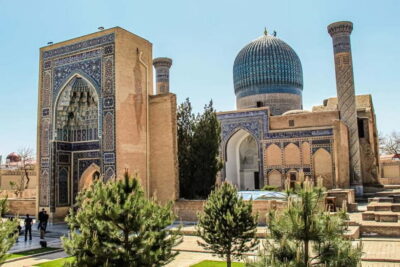
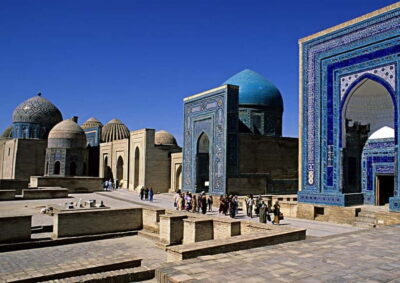
Samarkand One Day Tour: one day walking & group tour
Read our review →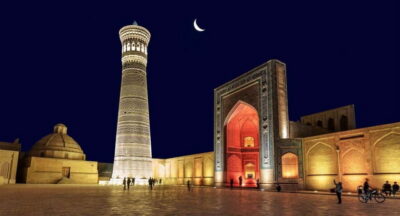
All You Need To Know About Bukhara. A Walk In The Town
Read our review →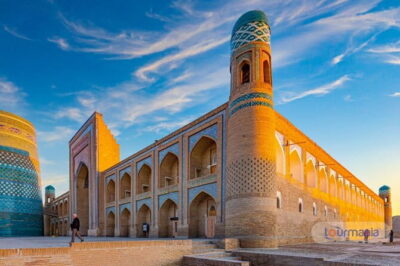
Khiva Historical City Highlights Guided Walking Tour
Read our review →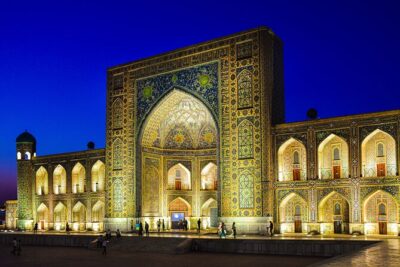
Tashkent Walking Tour with Local Lady / Gentleman
Read our review →
Samarkand Historical City Highlights Guided Walking Tour
Read our review →
Tashkent Walking & Food Tour: Highlights + Local Flavors
Read our review →Browse the lists this tour appears in