
Reviewed · TASHKENT TOURS
Uzbekistan in 7 days Tashkent, Samarkand, Bukhara and Khiva
Uzbekistan gives you four very different city experiences in one tightly planned route. You move from modern Tashkent to blue-tiled Samarkand, old Bukhara, and the walled city of Khiva, with the main transport and monument fees handled for you. Sayeed and his team coordinate the trip, while local guides take over in each city.
I like the practical design: high-speed Afrosiyob trains connect Tashkent, Samarkand, and Bukhara, and the price includes hotels, breakfasts, transfers, excursions, and entrance tickets. I also like the range of sights, from Chorsu Bazaar and the Museum of Applied Art to Registan, the Kalon Minaret, and Khiva’s carved-column Juma Mosque.
The main drawback is pace. This is a sightseeing sprint, not a leisurely stay. The route is advertised as seven days but the supplied schedule covers six days, and the Bukhara to Khiva train takes six to seven hours. Confirm the exact dates, overnight arrangements, and departure times before paying.
Key points to know before booking
- Tashkent begins with a full day of contrasts, pairing old mosques and bazaars with parks, museums, and modern city streets.
- Samarkand’s headline sights fit into one packed day, including Registan, Shah-i-Zinda, Gur Emir, and Bibi Khanym.
- Bukhara is explored on foot, with the Ark, trading domes, Lyab-i-Hauz, and the Kalon Minaret at the center of the route.
- The Khiva transfer is the hardest travel day, with six to seven hours by train and a stop near the Amu Darya.
- The package covers many costly essentials, including 3 to 4-star hotels, breakfast, train tickets, transfers, transport, guides, and entry fees.
- The group can reach up to 25 people, though private customization is available if you want a different pace or plan.
What this six-day Uzbekistan route really covers
The trip follows a logical westward path through Uzbekistan. You arrive in Tashkent, travel by train to Samarkand, continue to Bukhara, then make the long journey to Khiva.
The schedule is labeled Uzbekistan in 7 days, but the detailed plan lists Day 1 through Day 6. Day 1 is arrival, transfer, and hotel check-in, with sightseeing beginning on Day 2. That means you should ask Assalam Travel to clarify if a seventh calendar day is included in your booking.
This is an efficient first visit. You see the four cities most often linked with Uzbekistan’s Silk Road story, and you do not need to arrange separate hotels, tickets, local transport, or monument admissions. The tradeoff is that each city gets limited free time.
The advertised price is $1,250 per person. That is not simply the cost of guiding. It also covers accommodation, breakfast, train tickets, transfers, transportation, excursions, and entrance tickets. I would compare the package with the combined cost of arranging those pieces yourself, especially the intercity rail tickets and a car or driver for local sightseeing.
The operator also says it can adjust the trip around your preferences. That matters here. You may want an extra night in Samarkand, less time in Tashkent, or a slower Bukhara visit. Ask what changes do to the price and whether the train schedule still works.
A few more Tashkent trips to weigh up
- 7-Day Uzbekistan with the Local: From Blue Domes to Mountains
★ 5.0 · 17 reviews
Day 1 in Tashkent: an easy arrival
The first day is deliberately light. You are met on arrival, transferred to the hotel, and checked in. Sightseeing starts the next day.
That arrangement is useful after an international flight. You do not need to find the hotel or work out local transport immediately. Since the booking information does not give a specific arrival time, hotel name, meal plan beyond breakfast, or airport meeting procedure, get those details in writing.
The six-day schedule leaves little spare time, so a late arrival could affect the next morning. Confirm when the Tashkent pickup happens and whether your first hotel is close to the starting point for the city tour.
Day 2 in Tashkent: mosques, markets, and modern city life
Tashkent’s sightseeing day covers a lot of ground. It begins with the Hazrati Imam Complex, one of the capital’s key spiritual sites.
Allow about 90 minutes here. The Barak-Khan Madrasa gives you an early look at the tilework and religious architecture that return throughout the journey. This is a good place to pay attention to the guide’s explanations, since the complex is more rewarding when you understand its place in Tashkent’s religious life.
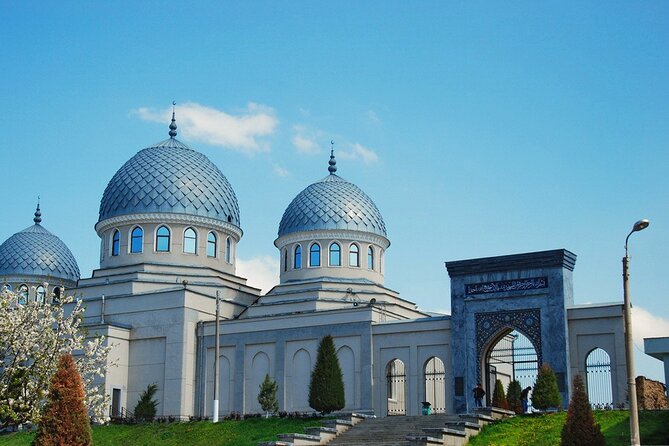
The Dzhuma Mosque follows, with about 45 minutes scheduled. Its carved wooden columns and traditional Islamic design make it different from the large open courtyards you will see in Samarkand and Bukhara. The short stop is enough for a focused visit, but not for a slow architectural study.
Next comes the Abdulkasym Medrese, near Hazrat Imam Square and in the central area of the old city. The visit lasts about 45 minutes. I like this stop because it keeps the morning focused on Tashkent’s older quarters rather than treating the capital only as a starting point.
Chorsu Bazaar gives you an hour. Its huge blue dome is one of the city’s clearest landmarks, and the market offers a more everyday view of Uzbekistan. You may find fresh produce, spices, nuts, sweets, and local goods under the dome. This is one of the better chances to pause, look around, and buy something small.
The afternoon shifts toward central Tashkent. Amir Timur Square takes about 30 minutes, with its equestrian statue and surrounding gardens and historic buildings. Independence Square follows for about 40 minutes. You see the Monument of Independence, the Eternal Flame, fountains, and the city’s formal political center.
Tashkent City Park adds a modern contrast. The 45-minute stop focuses on newer streets, tall buildings, cafes, and public spaces. It may feel less essential than the old mosques, but it helps you understand that Tashkent is not simply an open-air monument town.
The Museum of Applied Art is one of my favorite inclusions. Set in an old mansion, it displays Uzbek ceramics, carved wood, textiles, and other traditional crafts. You get about an hour here, enough time to notice patterns and techniques that appear again in bazaars and souvenir shops.
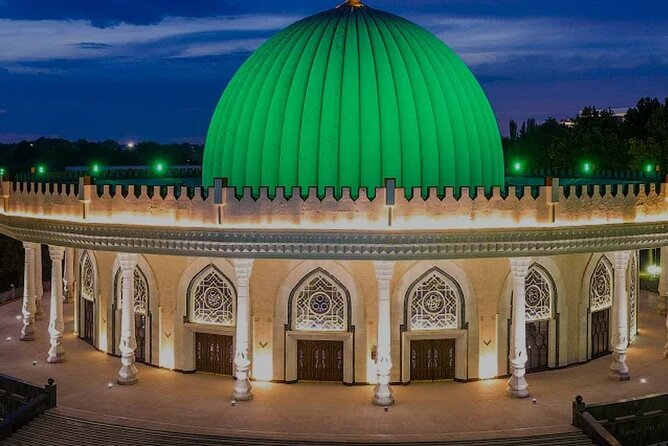
The final stop is the Amir Timur Museum, with about 50 minutes inside. Its dome and decorative interior frame an introduction to Amir Timur and his legacy. If you prefer museums to city squares, this visit gives the day a strong finish.
Nine stops make this a long day. The plan mixes indoor and outdoor visits, which helps, but you should still expect frequent transfers and plenty of walking. The route is excellent for a first overview of Tashkent, less so if you want extended time at any one site.
Day 3 in Samarkand: the blue-tile highlights
You leave Tashkent for Samarkand on the Afrosiyob high-speed train. The ride takes about two hours and 15 minutes, a major advantage over a long road transfer. On arrival, you check into the hotel before sightseeing.
Gur Emir Mausoleum is the first stop, with about 40 minutes. This is the burial place associated with Amir Timur and an important introduction to Samarkand’s royal and religious monuments. Look closely at the interior decoration rather than rushing straight to photographs.
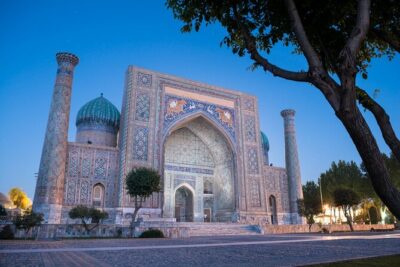
Registan gets an hour. The square’s three grand madrasahs, mosaics, minarets, and enormous facades are the visual center of the trip. The schedule gives you enough time to walk across the square, enter the buildings, and hear the basic story of how this public space developed.
Shah-i-Zinda follows for about 50 minutes. Its avenue of mausoleums is filled with detailed blue tilework, and the setting has a more sacred, intimate feel than Registan. Wear comfortable shoes. The route involves walking through a historic complex, and the visual detail rewards a slower pace than the timetable may allow.
At the Ulugh Beg Observatory, you spend about 40 minutes learning about the astronomer and ruler Ulugh Beg. The remains of the giant sextant connect Samarkand’s political past with serious scientific work. It is a welcome change from grand facades and helps broaden the picture of the city.
Bibi Khanym Mosque takes about 45 minutes. Its scale is the main attraction, with massive domes and a large courtyard. The stop is relatively short for such a large complex, so listen carefully to the guide’s explanation and save time for the central view.
You finish at Siab Bazaar, where 45 minutes are set aside for fruit, spices, nuts, sweets, and local shopping. This is a smart final stop because it brings you back to ordinary commercial life after a day of monuments.
Samarkand’s schedule is the classic highlights package. I like the train connection and the order of the sights, but this day may feel crowded. Registan, Shah-i-Zinda, and Bibi Khanym each deserve unhurried attention. If Samarkand is your main reason for visiting Uzbekistan, ask about adding time here.
Same Silk Road, a completely different kind of day:
- Best of Tashkent Mountains: Amirsoy, Chimgan & Charvak Trip
★ 4.8 · 567 reviews - Samarkand One Day Tour – Departure From Tashkent
★ 5.0 · 313 reviews - Tashkent City Tour
★ 5.0 · 121 reviews - Amirsoy, Chimgan & Charvak Full-Day Adventure
★ 4.9 · 82 reviews
Day 4 in Bukhara: trading domes and old power
The train from Samarkand to Bukhara takes about one hour and 30 minutes. After hotel check-in and a rest, the walking tour begins at Lyab-i-Hauz.
This pool-centered square is a calm place to begin. The 40-minute visit lets you take in the setting before entering Bukhara’s more concentrated historic core. It is also a useful orientation point for the day.
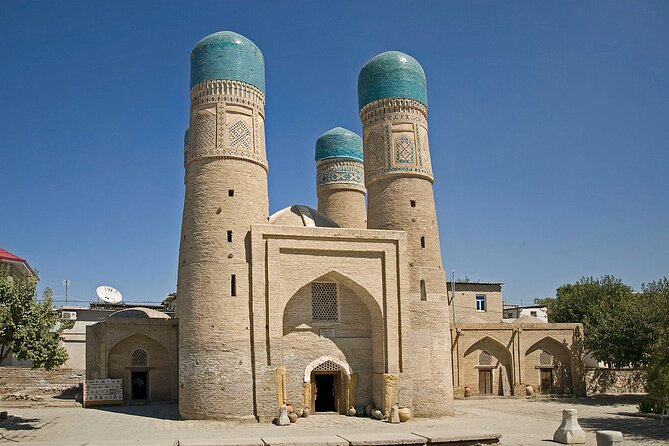
Chor Minor comes next, with 30 minutes scheduled. Its four blue-domed towers give it an unusual profile, and you may climb to the rooftop for a view. The stop is brief, so ask the guide about the rooftop access and available time before you start climbing.
The trading domes receive about 40 minutes. These covered market buildings once served merchants selling silk, spices, jewelry, and other goods. Today, the area is also a place to browse Uzbek souvenirs and meet artisans. Keep your shopping time realistic, since the rest of the day includes several major monuments.
The Great Minaret of the Kalon gets about 50 minutes. Its brick construction and tall form dominate the old center. The supplied description repeats the trading-dome text for this stop, so confirm exactly which parts of the Kalon complex are included, such as the mosque, madrasa, or courtyard.
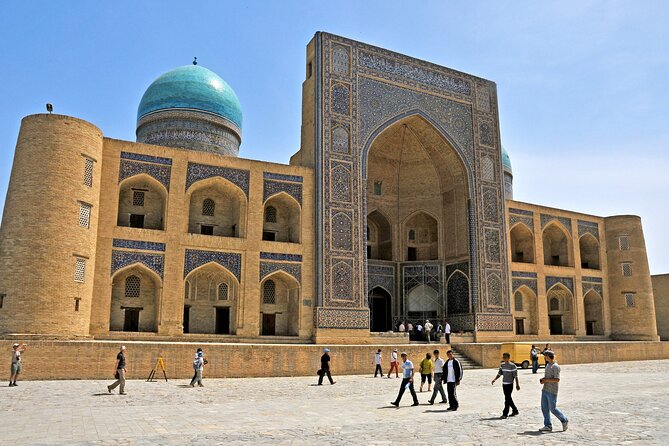
The Ulugh Beg and Abdullazizkhan madrasahs are scheduled for 50 minutes. Facing each other, they show different architectural styles and periods. One is noted for its restrained design, while the other carries heavier decoration. This side-by-side comparison is more useful than seeing either building alone.
The Ark of Bukhara takes an hour. This fortress was the former residence of Bukhara’s rulers, and you can explore its courtyards, museums, and walls. It is one of the day’s more substantial visits, so the guide’s storytelling should help give shape to what can otherwise feel like a series of rooms and walls.
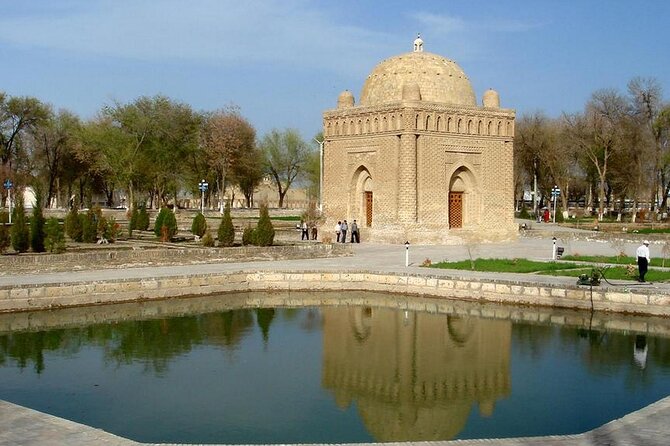
The Ismail Samani Mausoleum closes the day, with 30 minutes. Built from baked bricks in geometric patterns, it differs sharply from the blue tilework of Samarkand. I especially like its inclusion because it shows a very different approach to Central Asian architecture.
Bukhara is well suited to walking, and the route brings together squares, markets, religious schools, a fortress, and a mausoleum. The drawback is the same as in Samarkand: seven stops leave little room for sitting in a teahouse or wandering without a guide.
Day 5: the long train to Khiva and the Amu Darya
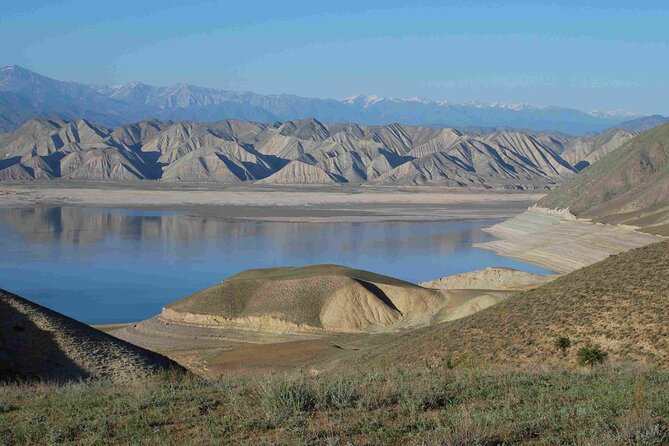
The move from Bukhara to Khiva is the least comfortable part of the route. The train takes six to seven hours, and the schedule includes a stop at the Amu Darya River.
This is a travel day, not a sightseeing day. The river is one of Central Asia’s major waterways and flows through several countries, including Uzbekistan. The listing gives no further detail about the length or exact nature of the stop, so do not assume it is a guided riverside excursion.
A long rail journey can be worthwhile because it lets you see more of the country between historic centers, but it also uses much of the day. Ask whether the train is direct, what seating is provided, when you reach Khiva, and whether hotel check-in occurs that evening or on Day 6.
The schedule does not list a separate Khiva hotel check-in stop on Day 5, though Day 6 begins with pickup from the hotel. That makes the overnight plan especially important to confirm.
Day 6 in Khiva: inside the walls of Itchan Kala
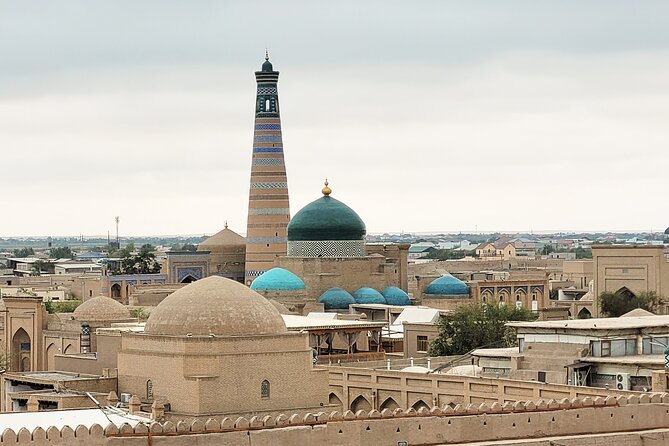
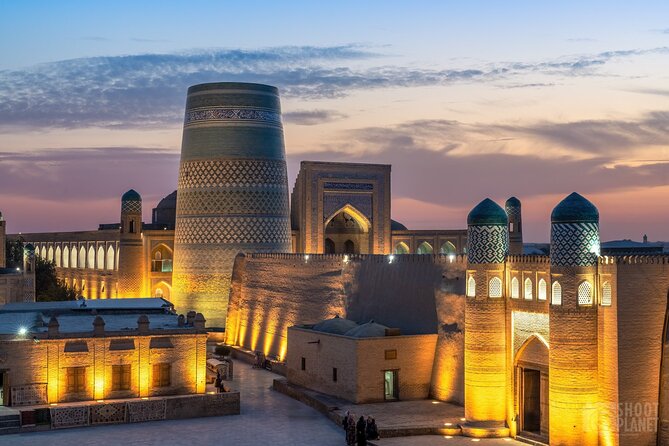
Khiva’s old city, Itchan Kala, is the final major sightseeing block. You begin with about two hours in the walled center, including the chance to climb the watchtower for a broad view.
Kalta Minor is one of Khiva’s easiest landmarks to recognize. The unfinished minaret was begun in 1851 by Muhammad Amin Khan and was intended to be the tallest minaret in the city. You get about 20 minutes at the monument, enough for photographs and an explanation of why it was never completed.
The nearby Muhammad Amin Khan Madrassah takes 30 minutes. Built between 1851 and 1854, it was the largest madrassah in Khiva. Its location near Kalta Minor makes the two stops easy to connect.
The Pahlavan Mahmoud Mausoleum receives 30 minutes. It is described as Khiva’s most sacred site, dedicated to Pahlavan Mahmoud, a celebrated figure. Dress and behave respectfully at this religious place, and give yourself time to notice its decoration rather than treating it as a quick photo stop.
The Islam Khodja Complex lasts about 40 minutes. You can choose to climb the narrow spiral staircase to the top of the minaret for a panoramic view of the old city. This is an optional physical challenge, and the tight stairs may not suit everyone. If you do climb, allow time for people moving in both directions.
Juma Mosque is scheduled for 45 minutes. Its 213 carved wooden columns are the reason to pay close attention here, with some columns dating back to the 10th century. The interior is unlike the open courtyards and huge domes in Samarkand, making it one of the route’s most distinctive buildings.
Tash Hauli Palace takes another 45 minutes. Once the private residence of Khiva’s khans, it includes the harem and other palace areas. The visit offers a look at court life and domestic architecture, not only religious buildings.
The final stop is the Allakuli Khan Caravanserai and Tim Market, with about 30 minutes. The 19th-century market once welcomed merchants crossing the Silk Road. Today, you can browse souvenir stalls in the old commercial setting.
Khiva is the most concentrated city on the itinerary. Many major sites sit within or around Itchan Kala, so the sightseeing feels focused even though the day remains full. After the six to seven-hour journey from Bukhara, you may wish for more time to explore at your own pace.
Guides, group size, and the feel of the service
Assalam Travel lists a maximum group size of 25 people. That is small enough for a guide to manage, but large enough that movement through narrow historic spaces can slow down. Ask if your booking is a shared group or a private arrangement.
Sayeed is the named contact connected with the overall service. The operator’s approach includes regular contact during the trip, which can be reassuring when you are moving between four cities. Local guides lead sightseeing in each city, but their names are not provided in the supplied information.
One useful point is that the service is not described as one guide accompanying you from start to finish. Expect different city guides and central coordination from the operator. That can give you local focus in each place, though the quality and style may vary from guide to guide.
The strongest service themes are careful organization, transport coordination, comfortable hotels, and attention to safety. Two women traveling together specifically described feeling safe throughout the journey, and another booking praised the daily contact from the operator. Those points matter on a route with several hotel changes and train transfers.
What the $1,250 price means
At $1,250 per person, the package offers value if you want a handled, guided route rather than a self-planned trip. You are paying for the train tickets, hotels, breakfasts, transfers, local transportation, excursions, guides, and entrance fees.
The price is less compelling if you prefer to spend several days in one city or choose your own hotels and restaurants. The itinerary is fixed enough to cover the major sights, but customization is available, so ask for a revised quote if you want a slower schedule.
The package includes breakfast, but no other meals are specified. Plan to budget separately for lunch, dinner, drinks, personal shopping, and any optional costs not listed. The rooftop and minaret climbs are mentioned as parts of visits, but the information does not state if any extra charge applies.
You can cancel for a full refund up to 24 hours before the experience start time. Changes or cancellations inside that period are not accepted for a refund, and the cutoff uses local time.
Who should choose this Uzbekistan tour
I would choose this route if you want your first Uzbek visit to cover the major historic cities with little planning work. It suits people who value organized transport, city guides, and a clear list of included admissions.
It is also a reasonable choice for solo visitors or pairs who want support between cities. The operator’s daily contact and included transfers reduce the stress of handling several train stations and hotel arrivals.
I would hesitate if you dislike early starts, full sightseeing days, or long train rides. The Bukhara to Khiva leg is especially demanding, and the schedule does not leave much free time for slow meals, independent shopping, or quiet museum visits.
If you care most about architecture, ask for extra time in Samarkand or Bukhara. If Khiva is your priority, confirm the arrival and departure arrangements so you are not left with only a short visit after the long rail journey.
FAQ
How long does the tour last?
The detailed schedule covers six days, from Day 1 through Day 6, although the experience title refers to seven days. Ask Assalam Travel to confirm the exact number of nights and calendar days included.
Which cities are included?
The route includes Tashkent, Samarkand, Bukhara, and Khiva. It also includes a stop at the Amu Darya River during the journey from Bukhara to Khiva.
Are train tickets included?
Yes. The package includes train tickets, including the Afrosiyob high-speed trains from Tashkent to Samarkand and Samarkand to Bukhara.
What does the price include?
The $1,250 per-person price includes 3 to 4-star hotel accommodation, breakfast, train tickets, transfers, transportation, excursions, guides, and entrance tickets to the listed historical monuments.
How large can the group be?
The maximum group size is 25 people. The operator also says tours can be customized around your preferences and plans.
Can I cancel for a refund?
Yes. You can cancel at least 24 hours before the experience start time for a full refund. Cancellations or changes made less than 24 hours before the start time are not accepted for a refund.
Should you book it?
Book this tour if you want a well-supported first look at Uzbekistan and are happy to trade free time for broad coverage. The combination of included rail tickets, hotels, transfers, guides, and monument admissions makes the $1,250 price easier to justify.
Before booking, confirm the seven-day versus six-day wording, the hotel nights, the Bukhara to Khiva train details, and how much independent time you receive. If those points match your expectations, Assalam Travel offers a practical way to connect four major Silk Road cities without having to build the trip piece by piece.
Just added around Tashkent
- Private Intercity Transfer Tashkent – Samarkand – Tashkent★ 3.5 · 3 reviews
- Tashkent Mountain Tour Amirsoy with Transport★ 3.5 · 3 reviews
- Tashkent-Samarkand-Bukhara tour-3nights/4 days★ 5.0 · 5 reviews
- Private Tashkent City Tour★ 5.0 · 3 reviews
- Tashkent Food and Metro Journey★ 5.0 · 4 reviews
- Amirsoy & Chimgan mountain tour from Tashkent★ 5.0 · 3 reviews
- Silk Road Secrets Tour in Uzbekistan★ 5.0 · 4 reviews
- Transfer Tashkent Airport / Railway Station – Hotel★ 3.5 · 3 reviews
Tashkent Tours, compared.
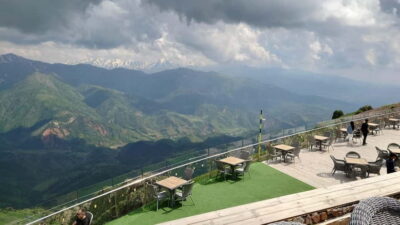
Best of Tashkent Mountains: Amirsoy, Chimgan & Charvak Trip
Read our review →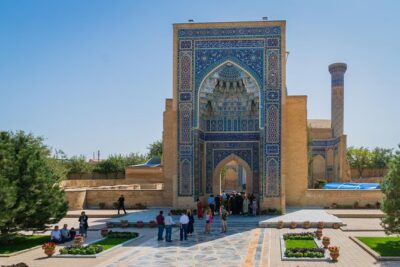
Samarkand One Day Tour – Departure From Tashkent
Read our review →
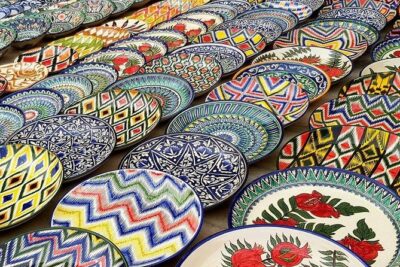
2 Days Tour to Bukhara and Samarkand from Tashkent by train
Read our review →
Uzbekistan 6 days private tour Tas-Khiva-Buk-Sam-Tas
Read our review →
Uzbekistan 8 Days Private Tour Tashkent-Urgench-Bukhara-Samarkand-Tashkent
Read our review →Browse the lists this tour appears in