
Reviewed · FULL-DAY
Full-Day Private Guided Tour to Islamic 7 Saints of Bukhara
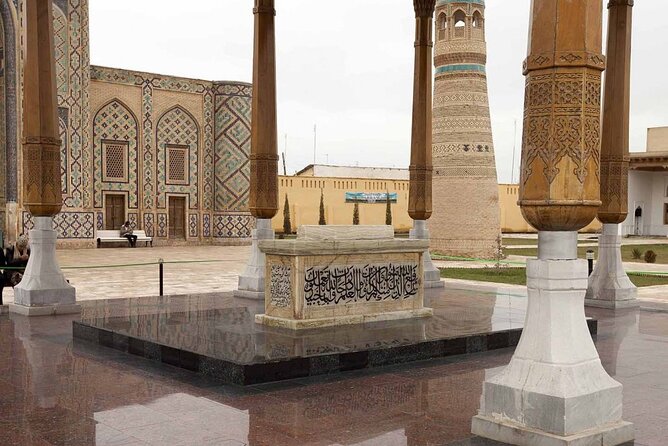
Bukhara’s Seven Saints tour takes you beyond the famous old-city lanes and into the wider region where the Naqshbandi Sufi tradition grew. Over 7 to 8 hours, you visit seven burial sites tied to major spiritual teachers, from Abdalhalika Gijduvani in Gijduvon to Bahaaddina Naqshbandi at his large mausoleum.
I like two things right away: this is a private tour, so you can ask questions as the meaning of each shrine becomes clearer, and private transport makes a long, spread-out route far easier. Guide Hamza is described as passionate about Sufism, Uzbek culture, and the background of each khoja. The main consideration is time: seven stops at roughly 40 minutes each, plus road time, makes for a full day with a strong religious focus.
Key points at a glance
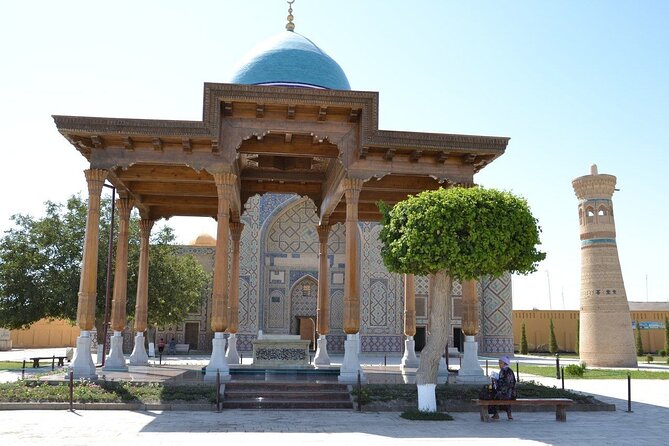
- Seven Sufi sites in one day: Visit Gijduvon, Safirkon, Vobkent, Ramitan, Kogon, and the Bakhautdin Naqshband Mausoleum.
- A private vehicle matters: The shrines are spread across the Bukhara area, so included transport saves you from arranging several separate rides.
- Hamza may lead your visit: The guide is praised for explaining Sufism, Islamic culture, and the lives of the saints with energy and care.
- Entrance fees are covered: Monument tickets and tour fees are included, while photo and video charges may cost $1 to $2 per site.
- Budget about $170 per person with lunch: The tour is listed at $160 per person, with lunch available for an extra $10.
- A spiritual rather than city-sightseeing day: Choose this for religious history and local context, not for a quick checklist of Bukhara’s central monuments.
Why the Seven Saints route matters in Bukhara
Bukhara is often called the Holy City of Central Asia. Its religious importance reaches back many centuries, when the city had hundreds of mosques and dozens of madrassas. The Seven Saints route shows you a different side of that story. Instead of focusing on grand city buildings alone, it follows a chain of Sufi teachers connected with the Hadzhagan school and, later, the Naqshbandi brotherhood.
The word khoja appears throughout the route. It refers to respected spiritual figures, and each shrine marks the burial place of a teacher whose influence passed to the next generation. The value of the day comes from seeing that connection in order. Your guide can explain how one saint taught or influenced another, turning seven separate stops into one unfolding account.
I would not book this simply because the number seven sounds tidy. The appeal is the chance to understand why Bukhara became such an important center of Islamic learning and Sufi practice. If you want polished palaces, lively bazaars, and easy walks between sights, stay in the old city. If you want the religious story behind Bukhara’s reputation, this route adds something the central monuments cannot.
A few more Bukhara trips to weigh up
- Best of Bukhara: All Day Private Old Town Tour
★ 5.0 · 66 reviews - Best of Bukhara: All Day Private Old Town Tour
★ 4.9 · 62 reviews - Bukhara Full Day Old City Private Tour
★ 5.0 · 46 reviews
Gijduvon and the first teacher, Abdalhalika Gijduvani
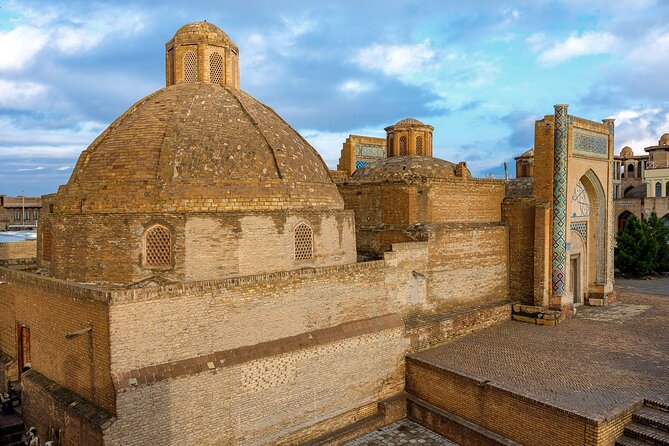
The first stop is Gijduvon, the birthplace of Abdalhalika Gijduvani, who lived from 1103 to 1179. He founded an independent school of mysticism in Maverannahr known as Hadzhagan, or the Path of Teachers.
This first visit gives the day its framework. Gijduvani is not just the first name on a list. He represents the beginning of the spiritual chain that you follow through the other six sites. Allow the guide to set out the basic ideas of the school here, since later stops will make more sense once you know where the tradition began.
The planned visit lasts about 40 minutes, and admission is included. Because the day contains seven sites, do not expect a long, unhurried exploration at every stop. The strength of the route is its overall pattern, not extended time at one monument.
Safirkon and Khoja Arif Rivgariya
In Safirkon, you visit the burial place of Khoja Arif Rivgariya, also known as Saint Khoja Arif Mohi Tobon. He was one of the well-known Sufi figures of Central Asia and a follower of the Hadzhagan tradition.
This stop helps you see how the school moved forward through respected teachers. The route is not only about grand architecture. It is also about the people who shaped religious thought and practice in the region, and about the way their teachings were passed down.
You have around 40 minutes here. That is enough for an explanation, a look around, and quiet time at the burial site, but your schedule will remain fairly tight. Dress and behave respectfully at each sacred place, and follow your guide’s advice about photography.
Vobkent and Mahmud Angirey Fagnaviya
The third visit is in Vobkent, at the burial place of Khoja Mahmud Angirey Fagnaviya. He was recognized as a spiritual authority in Maverannahr and is described as the first to introduce an important practice into the Hadzhagan tradition.
The supplied information does not spell out that practice, so this is a useful point to ask your guide for the fuller explanation. A private setting gives you room to ask questions that might be missed on a large group outing. If Hamza leads the tour, you can expect particular attention to the connection between the saints and the wider development of Sufism.
Again, the planned stop is about 40 minutes. The repeated timing makes the route easy to follow, but it also means you should not expect every site to receive the same depth of attention. The quality of your experience will depend partly on the guide’s explanations and on how much time is needed for the road sections.
Same Silk Road, a completely different kind of day:
- City Tour Around Bukhara
★ 5.0 · 55 reviews - Yurt Camp Tour with Night from Bukhara
★ 3.8 · 35 reviews - All You Need To Know About Bukhara. A Walk In The Town
★ 4.9 · 31 reviews - One-Day Private Tour in the Old Town of Bukhara
★ 5.0 · 24 reviews
Ramitan and two links in the chain
The route reaches Ramitan for two separate visits. First comes Ali Khoja Romitaniya, a major spiritual authority of the Hadzhagan school. He is described as a master of wisdom with strong spiritual qualities and personal charisma.
The second Ramitan stop is dedicated to Khoja Muhammad Babai Sammasi, the fifth of the Seven Saints. He followed and studied with Ali Khoja Ramitani, so visiting both sites in the same town makes the teacher-student relationship easier to grasp.
These two stops are among the most useful parts of the day for understanding the route as a chain rather than a collection of unrelated tombs. You can compare the two figures and ask how their roles differed. Each visit is scheduled for approximately 40 minutes, giving you a little time to absorb the explanation before moving on.
Ramitan also shows one practical feature of the tour: not every stop requires a new town. The itinerary groups two related sites in one area, which helps make the long day more workable. You still need to be ready for a full schedule, but private transport removes much of the hassle of moving between scattered locations.
Kogon and the sixth saint, Mir Kulal
At Kogon, you visit Saint Mir Kulal. His name is connected with the word kulal, meaning potter, and he was a spiritual authority and sheikh of the Hadzhagan school. He is sixth in the chain of spiritual succession described on this route.
Mir Kulal’s place in the sequence prepares you for the final and most famous stop. The important question here is succession: how teachings and authority continued from one master to the next. This is where a good guide can turn names and dates into a story you can follow.
Plan on about 40 minutes. The admission fee is included, but photo and video charges may be collected separately at museum entrances, generally $1 to $2 per site. Since this is a religious route, you may prefer to spend less time taking pictures and more time listening to the explanations and observing the setting.
Bakhautdin Naqshband and the final mausoleum
The last stop is the Bakhautdin Naqshband Mausoleum, dedicated to Saint Bahaaddina Naqshbandi. He was the leading Central Asian Sufi figure of the 14th century and the namesake of the Naqshbandi Sufi tradition. The name is linked with his craft, naqshband, or chaser.
This is the natural climax of the day. By the time you arrive, the earlier teachers should give you a clearer sense of how Naqshbandi fits into the spiritual succession. The stop is also described as the largest representative site on the route, making it a fitting final visit rather than just another short pause.
Entrance to this mausoleum is included. You have about 40 minutes here, though the overall visit may feel more substantial because it brings the full chain together. Take the chance to review the names with your guide before returning to Bukhara. This is also the point where the tour’s focus becomes clearest: it is about the roots and spread of a major Sufi brotherhood, not simply a tour of attractive buildings.
What the private format adds
The private setup is the strongest practical feature. Only your group participates, and private transport is provided. Since the route covers several towns and rural locations, arranging the same day independently would mean finding transport for each leg and making sure the sites are open and correctly identified.
A private guide also changes the rhythm. You can ask Hamza, if he is assigned to your group, to explain unfamiliar terms such as Hadzhagan, silsila, or Naqshbandi. The guide can also help you understand the difference between visiting a burial place as a historical site and approaching it as a place of religious respect.
The driver matters on a long day, too. The available feedback specifically praises a friendly, well-mannered driver. That may sound like a minor detail, but several hours in a vehicle can shape your view of the whole experience. Calm driving and polite service are welcome when the schedule includes seven stops.
Pickup is offered, and the stated meeting point is Hotel Malika-Bukhara on Gavkushon Road 25. The tour ends back at the meeting point. Confirmation is provided when you book, and the experience is listed as suitable for most participants and close to public transportation.
Is $160 per person a fair price?
At $160 per person, this is not a low-cost sightseeing outing. It is a full-day private service with a licensed guide, private transportation, entrance tickets to all monuments, and taxes and fees included. For a small group that wants a focused religious tour without arranging vehicles, the price can make sense.
The value improves if you care about the subject. You are paying for the route, but also for the guide’s ability to explain the links between seven Sufi teachers and Bukhara’s place in Islamic culture. A standard city tour will not usually give you this same regional and spiritual context.
Lunch is not included, but it can be added for $10 per person. That brings the working total to about $170 per person before tips and any photo or video fees. Tips are separate, and museum photo or video fees may cost $1 to $2 per site. Keep a little cash available for those extras.
Group discounts are offered, so the final value may improve if you are traveling with several people. Since the route is private, ask about the discount before booking if you have a larger party.
Who should book this full-day religious tour?
I would choose this tour if you have already allowed time for Bukhara’s central sights and want to understand the city’s spiritual importance. It suits anyone interested in Sufism, Islamic culture, religious architecture, or the way ideas pass from teacher to student.
It also works well for a small private group that prefers a guide who can adjust explanations to its interests. The tour is less suitable if you want a relaxed day with long meals, shopping, or plenty of time at each monument. Seven stops in 7 to 8 hours is a substantial schedule.
The experience requires good weather, and a minimum number of participants may apply even though the tour is private. If poor weather or an unmet minimum cancels the activity, you are offered another date or a full refund. You can cancel for a full refund up to 24 hours before the start time, but changes or cancellations inside that window are not accepted.
My booking advice
Book this tour if the names of Gijduvani, Rivgariya, Fagnaviya, Romitaniya, Babai Sammasi, Mir Kulal, and Naqshbandi sound like the missing part of your Bukhara visit. The route gives those names a physical setting and shows how they connect.
I would skip it if your stay is short and you have not yet seen Bukhara’s main old-city monuments. For the right audience, though, the private vehicle, included admissions, and guide-led explanation make the $160 price reasonable. Ask when booking if Hamza will be your guide, confirm the lunch plan, and carry money for photography fees and tips.
FAQ
How long does the Seven Saints tour last?
The tour lasts approximately 7 to 8 hours.
What is the price of the tour?
The listed price is $160 per person. Group discounts are available.
Is this a private tour?
Yes. Only your group participates in the activity.
Is hotel pickup available?
Pickup is offered. The stated meeting point is Hotel Malika-Bukhara at Gavkushon Road 25 in Bukhara, and the tour ends back there.
Which places does the tour visit?
The route visits Gijduvon, Safirkon, Vobkent, Ramitan, Kogon, and the Bakhautdin Naqshband Mausoleum. Ramitan has two separate saint sites.
Are entrance tickets included?
Entrance tickets to all listed monuments are included. Photo and video fees at museum entrances are separate and may cost $1 to $2 per site.
Is lunch included?
No. Lunch is available for an additional $10 per person.
What is the cancellation policy?
You can cancel at least 24 hours before the start time for a full refund. Cancellations or changes made less than 24 hours before the start time are not accepted. Poor weather or an unmet minimum may lead to another date or a full refund.
Just added around Bukhara
- Bukhara in a Day History, Culture, and Local Insight Private Tour★ 5.0 · 4 reviews
- Bukhara Walking Tour★ 5.0 · 4 reviews
- 2 Day Ukhum Hiking Tour from Bukhara★ 5.0 · 4 reviews
- A Complete Chapter To Old Bukhara★ 5.0 · 5 reviews
- Bukhara: Full-Day Guided Tour with English-Speaking Guide★ 5.0 · 4 reviews
- Uzbekistan 8 Days Private Guided Tour★ 4.6 · 3 reviews
- 2 – Days Guided Tour of Samarkand and Bukhara from Tashkent★ 5.0 · 5 reviews
- 9 Days Private Guided Tour to Uzbekistan★ 5.0 · 3 reviews
Full-Day, compared.
Full Day Private Tour in Seven Lakes from Samarkand
Read our review →
Tashkent Private Full-Day City Tour on a Premium Car
Read our review →
Browse the lists this tour appears in