
Reviewed · BUKHARA TOURS
One-Day Private Tour in the Old Town of Bukhara
Bukhara reveals itself best in layers: a thousand-year-old mausoleum, a towering minaret, shaded trading domes, and a pond where locals sit beneath the trees. This private tour brings those pieces together with guides such as Madina, Nargiza, Sho, and Shokhrukh, who can explain both the monuments and modern Uzbekistan.
I like the private format, which lets you ask questions and adjust the pace. I also like the mix of famous sights and working craft areas, from carpet and embroidery shops to miniature workshops. The main consideration is time: fitting 12 stops into 5 to 6 hours means some visits are brief, and evening departures may leave little time for paid interiors.
Key points at a glance
- Twelve major stops cover Bukhara’s mausoleums, mosques, citadel, madrasahs, bazaars, and public squares.
- The private group size is limited to four, making it easier to ask questions or shape the visit around your interests.
- The Ark of Bukhara and Magoki Attori Mosque require paid admission, costing $3.50 and $2 per person respectively.
- A vehicle is provided when needed, useful for connecting the outlying northern sights with the compact old town.
- Guides speak several languages, including German, Japanese, and English, depending on availability.
- The tour combines monuments with everyday culture, including craft workshops, water history, religious study, and shaded café-style stops.
Why Bukhara Works So Well on a Private Day Tour
Bukhara’s old town is not just a set of grand buildings. It is a compact record of trade, faith, scholarship, and daily life. The route moves from early Islamic architecture to royal power, then through the covered bazaars and mosque-filled center.
At $67 per group of up to four, the cost is especially strong for couples, families, or a small group of friends. It is not $67 per person. Admission fees are separate, but only two are specifically listed: $3.50 per person for the Ark and $2 per person for Magoki Attori Mosque and the carpet museum.
You should allow 5 to 6 hours, though the actual pace can depend on your questions, entrances, traffic, and the amount of time spent in workshops. I would treat this as a strong first introduction rather than a slow, scholarly examination of every building.
The tour begins at Lyab-i-Hauz Square, although pickup is offered and arrangements have included hotels, the train station, and even Bukhara Airport in individual cases. The listed end point is the Ismail Samani Mausoleum. Confirm your exact pickup and finish arrangements before setting out.
A few more Bukhara trips to weigh up
- Best of Bukhara: All Day Private Old Town Tour
★ 5.0 · 66 reviews - Best of Bukhara: All Day Private Old Town Tour
★ 4.9 · 62 reviews - Bukhara Full Day Old City Private Tour
★ 5.0 · 46 reviews
Ismail Samani Mausoleum and the Oldest Layer of Bukhara
The Ismail Samani Mausoleum is a powerful place to begin because it immediately takes you beyond the postcard version of Bukhara. Built more than 1,000 years ago, it is described as the only preserved structure from the city’s most flourishing early period.
Its design brings together three architectural styles associated with three religions. That detail gives your guide plenty to explain, especially if you want more than dates and names. The building is not huge, and the planned visit lasts about 20 minutes, but its age and survival make it one of the most important stops.
Admission is not included, so check the current fee locally. The route later ends here, which means the order may feel unusual if you are expecting a loop. It also makes the mausoleum easy to pair with a train or other onward plan, provided your timing is confirmed in advance.
Chashmai Ayub Mausoleum follows with a different story. Its well is linked to the prophet Job, and the building now houses the Museum of Water Supply in old Bukhara. The museum gives you a practical look at how a desert city managed water, a subject that can explain as much about urban life as any palace or mosque.
This stop also lasts around 20 minutes. It is best approached as a focused visit, not a long museum session.
Bolo Hauz Mosque and the Emir’s Citadel
Bolo Hauz Mosque offers a change of mood. It remains a functioning mosque and is about 300 years old, with striking wooden columns. Outside, the square has benches and trees, making it one of the better places on the route to pause in the shade.
The visit is planned for about 20 minutes and admission is free. Because it is an active religious site, your guide can help you understand how to behave respectfully. The cool, leafy square also gives your feet a break before the heavier historical material at the Ark.
The Ark of Bukhara is the citadel that once served as the residence of the emirs. At roughly 40 minutes, it receives the longest single visit on the route. That is sensible: the Ark represents political power, while the mosques and madrasahs show religious and educational life.
Admission costs $3.50 per person and is not included. If you want to enter and explore the Ark properly, take the tour earlier in the day. An evening walk can show you the exterior atmosphere, but limited light or closing hours may reduce what you can see inside.
This is one of the places where a private guide earns the fee. The value is not simply getting through the gate. It is having someone explain what the citadel meant to the rulers of Bukhara and how it fits into the city around it.
Poi Kalon, Bukhara’s Defining View
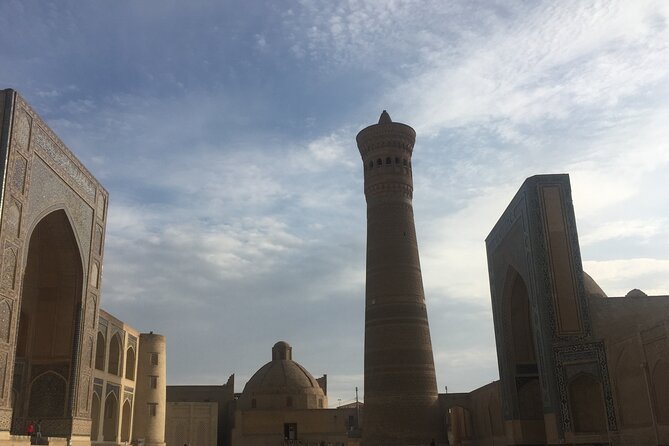
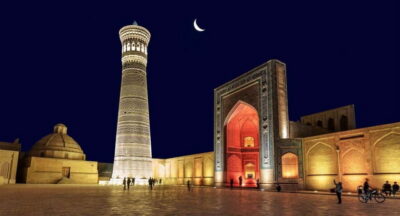
The Great Minaret of the Kalon is the visual centerpiece of the old town. The minaret is about 900 years old, and the surrounding Poi Kalon ensemble includes the Kalon Minaret, the Grand Mosque of Kalon, and the Miri-Arab religious school.
You get around 30 minutes here. That is enough to take in the scale of the square and hear the basic story, but it may feel short if you want detailed interior exploration, photography, and quiet time all at once. Ask your guide how much of the available time will be spent inside each building.
Poi Kalon is also the place where Bukhara’s connection to Islam and the Great Silk Road becomes easiest to picture. The buildings are not isolated monuments. They formed part of a center for prayer, learning, travel, and commerce.
Entrance fees are not specified for every paid sight, so budget for additional charges beyond the two listed prices. The tour description clearly identifies the Ark and Magoki Attori fees, but local admission arrangements can change.
Same Silk Road, a completely different kind of day:
- City Tour Around Bukhara
★ 5.0 · 55 reviews - Yurt Camp Tour with Night from Bukhara
★ 3.8 · 35 reviews - All You Need To Know About Bukhara. A Walk In The Town
★ 4.9 · 31 reviews - Bukharian Bath in Ancient Hammam with Massage
★ 4.4 · 19 reviews
Covered Bazaars and the Craft Traditions of Bukhara
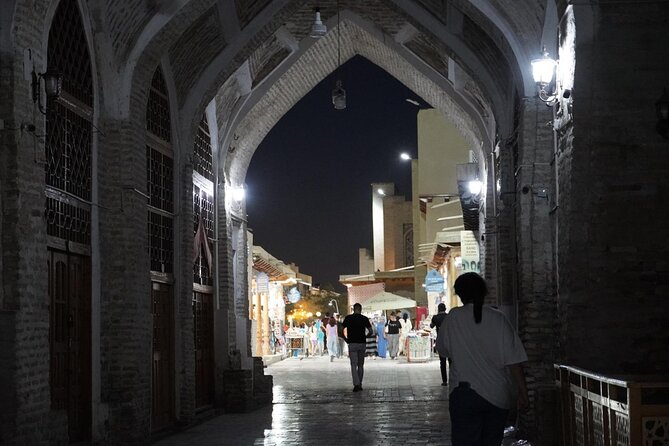
The old trading domes are among the most enjoyable parts of the tour because they connect grand architecture with things still being made and sold. Taqi-Zargaron is a covered market with workshops and shops offering silk carpets, ceramics, embroidery, and clothing.
You have about 20 minutes here, and admission is free. That is enough for a quick look, though not a leisurely shopping session. If you are serious about buying a carpet or textile, tell your guide early so the pace can be adjusted.
Taqi-Telpakfurushon sits at the crossing of five old trading streets. It includes a 16th-century bathhouse, miniature workshops, and embroidery work. The setting helps you understand how merchants and craftspeople once operated in a city built around movement through narrow commercial routes.
Taqi-Sarrafon is another trading dome, with souvenir shops, miniature workshops, and an explanation of caravanserais. The three market stops can begin to feel similar if you rush through them. I would focus on the differences: Taqi-Zargaron for textiles and ceramics, Taqi-Telpakfurushon for the old commercial crossroads and workshops, and Taqi-Sarrafon for the caravan trade story.
The craft stops also require a little judgment. They are useful if you want to see current traditions, but they may not suit you if you prefer uninterrupted monument time. The private format helps here because you can tell your guide what interests you.
Kosh Madrasah and the Story of Religious Education
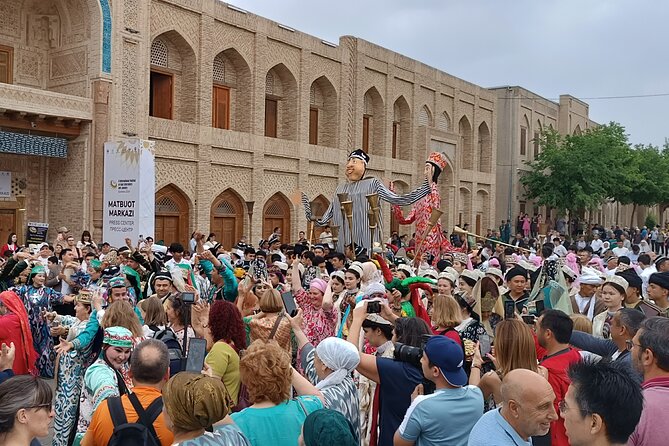
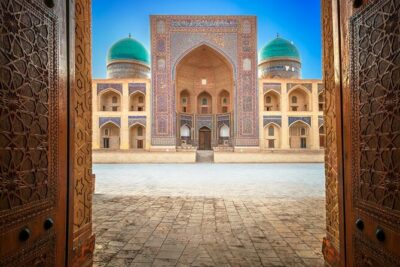
Kosh Madrasah consists of two madrasahs facing each other. Their facades represent two notable historical periods, making the stop a useful lesson in how architectural taste and religious education changed over time.
The planned visit is 20 minutes, and admission is not included. This is a stop where your guide’s explanation matters because the paired buildings can look like a single architectural statement at first glance.
Kukaldosh Madrasah receives 30 minutes and is described as the largest madrasah in the old town. Its wall paintings show routines from old Bukhara, shifting attention from rulers and monuments to ordinary patterns of life.
That focus makes Kukaldosh one of the more useful stops for understanding the city as a community. You are not only looking at a facade. You are being pointed toward the habits, work, and social world that gave the old town its purpose.
Magoki Attori and Lyab-i-Hauz
Magoki Attori Mosque is built lower than the surrounding level, and its site was once a fire temple. That layered past makes it one of Bukhara’s most intriguing religious buildings.
The visit takes about 20 minutes. Admission to the mosque and carpet museum costs $2 per person. This is the second specifically listed paid entrance, and the modest fee adds useful value if carpets and religious history interest you.
The carpet museum can also help you place Bukhara’s textile tradition in a wider context. If shopping is not your priority, you can still treat the stop as a short look at an important local craft.
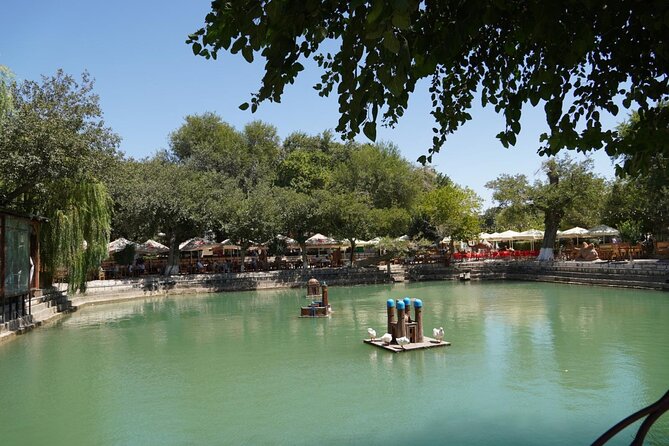
Lyab-i-Hauz is both a monument complex and a social space. Its three main elements are the Devonbegi Madrasah, Devonbegi Khanaka, and the Devonbegi pond. Benches, trees, and drinks make the area a natural pause near the end of the route.
The visit lasts about 30 minutes. This is a good point to slow down, ask your guide about present-day Uzbekistan, or simply sit beside the water. Several guides, including Madina and Shokhrukh, have been praised for discussing modern culture and current life as well as the past. That wider conversation is one of the strongest reasons to choose a private tour instead of relying only on a guidebook.
What the Guides Add to the Experience
The guide is the main variable in any private tour, and this one has a strong record of language and subject flexibility. Madina has guided in German and Japanese as well as English, while Saodq is described as fluent in five languages. Sho, also called Shokhrukh, has been singled out for polished English, cultural context, and flexible routing.
You should still request your preferred language when booking. The available guide depends on scheduling, but a female guide can be arranged.
The strongest practical benefit is the chance to ask questions. You can ask about the old water system, Islamic education, crafts, the emirs, or present-day cultural and economic changes. One private visit was adjusted around a guest’s timing and preferences, with transport between the airport, tour, and train station. Do not assume every booking includes that exact arrangement, but it shows why confirming your schedule is worthwhile.
The guides have also handled solo visitors, hotel pickups, train station pickups, and questions beyond the basic monument stories. For a first day in Bukhara, that personal context can prevent the city from becoming a blur of similar domes and brick facades.
Timing, Walking, and What to Budget
The tour lasts approximately 5 to 6 hours and requires a moderate level of physical fitness. You will move between monuments, markets, squares, and museum spaces, with some walking in the old town. The air-conditioned vehicle is included and can be used where necessary.
Coffee breaks are part of the experience, and Lyab-i-Hauz is particularly well suited to a shaded pause. Still, this is an active half-day, not a relaxed café tour.
The listed price is $67 per group of up to four. For four people, that is excellent value. For one person, it remains reasonable if you want a private guide, but a shared tour could cost less if available. Add at least $5.50 per person for the two stated admissions, then allow for any other entrance charges not specified in the tour details.
Free cancellation is available if you cancel at least 24 hours before the start time. Changes or cancellations within 24 hours are not refunded.
Who Should Book This Bukhara Tour?
I would choose this tour if you have one main day in Bukhara and want a strong overview without having to organize transport, entrances, and historical explanations yourself. It suits couples, families, and small groups who want a private pace.
It is also a good match for solo visitors who want company and a clear introduction to the city. The guides can adjust the conversation toward language, religion, architecture, crafts, or modern Uzbekistan.
You may want another plan if you prefer spending an hour inside each monument, browsing every stall, or photographing the old town without a fixed schedule. Twelve stops in 5 to 6 hours is ambitious. An early start is the safer choice if entering the Ark and other attractions matters to you.
Should You Book It?
Book this private Bukhara tour if you want to connect the city’s best-known sights with its working crafts, water traditions, religious schools, and modern life. The $67 group price is particularly attractive for up to four people, and the guides add real value through language skills and flexible explanations.
Choose an earlier departure, confirm pickup and language needs, and tell the guide which stops matter most. If you do that, the tour should give you a clear, well-paced first look at Bukhara, with enough room for questions and a few shaded pauses along the way.
FAQ
How long does the private Bukhara tour last?
The experience lasts approximately 5 to 6 hours.
How much does the tour cost?
The price is $67 per group of up to four people.
Is this a private tour?
Yes. Only your group participates in the activity.
Is hotel pickup available?
Pickup is offered. The listed starting point is Lyab-i-Hauz Square, and individual arrangements have included hotels, Bukhara Airport, and the train station. Confirm your exact pickup when booking.
What transportation is included?
An air-conditioned vehicle is included and is used where necessary.
Which entrance fees are not included?
Admission to the Ark of Bukhara costs $3.50 per person, and admission to Magoki Attori Mosque and the carpet museum costs $2 per person. These fees are not included.
Is the tour suitable for people with limited mobility?
A moderate level of physical fitness is required. The provided information does not give specific accessibility details.
Can I request a female guide or a particular language?
A female guide is available. Guides have conducted tours in English, German, Japanese, and other languages, but you should request your preferred language when booking.
What is the cancellation policy?
You receive a full refund if you cancel at least 24 hours before the experience start time. Cancellations or changes made within 24 hours are not refunded.
Just added around Bukhara
- Full-Day Private Guided Tour to Islamic 7 Saints of Bukhara★ 4.5 · 3 reviews
- Bukhara Walking Tour★ 5.0 · 4 reviews
- Bukhara in a Day History, Culture, and Local Insight Private Tour★ 5.0 · 4 reviews
- 2 Day Ukhum Hiking Tour from Bukhara★ 5.0 · 4 reviews
- A Complete Chapter To Old Bukhara★ 5.0 · 5 reviews
- Bukhara: Full-Day Guided Tour with English-Speaking Guide★ 5.0 · 4 reviews
- Uzbekistan 8 Days Private Guided Tour★ 4.6 · 3 reviews
- 2 – Days Guided Tour of Samarkand and Bukhara from Tashkent★ 5.0 · 5 reviews
Bukhara Tours, compared.
All You Need To Know About Bukhara. A Walk In The Town
Read our review →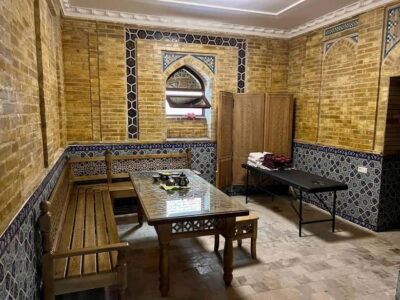
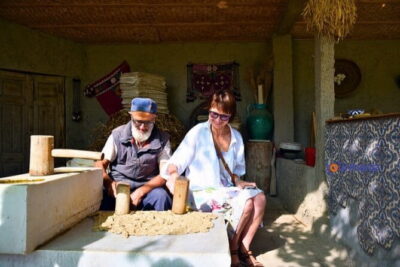
Bukhara Historical City Highlights Guided Walking Tour
Read our review →
Browse the lists this tour appears in