
Reviewed · CITY TOURS
Samarkand City Tour: Ancient Domes & Timeless Stories
Samarkand’s greatest monuments fit into one powerful half-day, from the blue-tiled tombs of Shah-i-Zinda to the grand courtyards of Registan. You get sacred places, imperial architecture, and the story of Tamerlane without spending a full day on the move.
I like the small group of seven or fewer, which gives you room to ask about Uzbek customs, architecture, and old stories. I also like the guide’s easygoing approach: Johnny, Jonny, or Jahongir is named in the booking details, and past guests especially praised the English, friendly manner, and willingness to allow sitting breaks.
The main consideration is that the four-hour route is packed. The timed stops focus on Shah-i-Zinda, Bibi-Khanym Mosque, Registan Square, and Amir Temur’s Mausoleum, while the wider description also names the Tomb of Saint Daniel, Khazreti Khizr Mosque, and Siyob Bazaar. Confirm which stops are included before you book, since all of them are unlikely to fit comfortably into one short walking tour.
Key points to know before you book
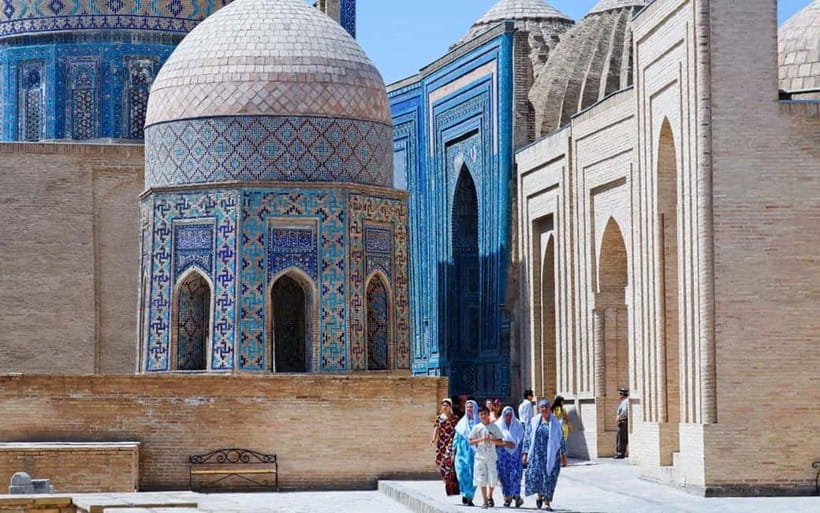
- Shah-i-Zinda begins the tour with Samarkand’s most detailed tilework, so bring a camera and modest clothing.
- Registan receives the most time, with one hour of guided sightseeing plus free time for photos.
- The route is mainly on foot, with listed walks of about 15 minutes between major stops.
- A guide named Jonny, Johnny, or Jahongir may lead the visit, with English, Russian, and Uzbek offered.
- The $25 price is good for a small-group introduction, but museum and monument entry tickets cost extra.
- Heat matters in Samarkand, so sunglasses, a hat, water, and a headscarf are practical choices.
Samarkand in four hours: grand sights without the usual sprawl
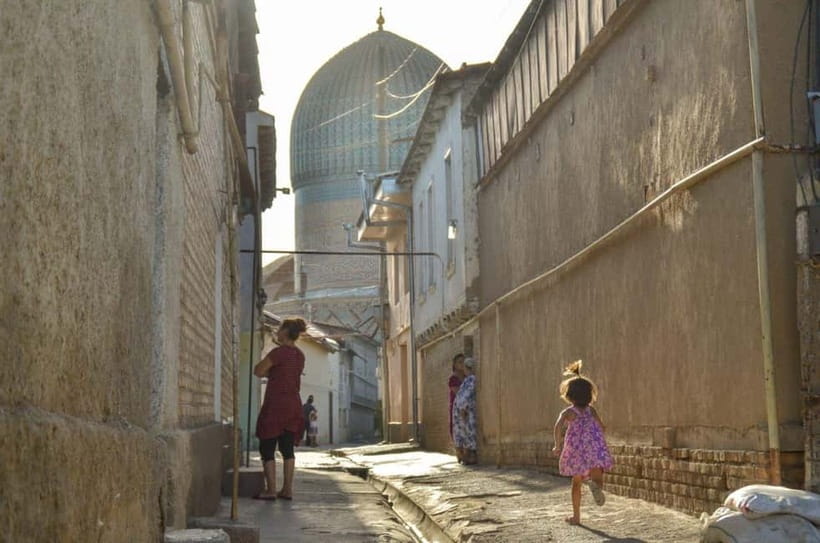
Samarkand can feel scattered. Its major monuments are not all gathered around one compact old town, and first-time visitors can lose time figuring out what deserves attention. This tour gives you a clear route through four of the city’s most important sites, with a guide to connect the buildings to the people and beliefs behind them.
You meet beside the red Ziraat Bank ATM in front of the entrance to the Shah-i-Zinda Mausoleum complex. The guide will carry a paper with GetYourGuide branding, which helps in a busy meeting area. The starting point matters because the tour begins at Shah-i-Zinda, not at a hotel or central transport hub.
At $25 per person, the value is strongest if you want orientation, context, and a manageable route rather than a long private tour. Water and a tourist map are included. Entry tickets and personal spending are not, so keep extra money ready for the sites.
The small-group format is useful here. With no more than seven people, you can ask why one tile pattern differs from another, how Islamic architecture developed in the region, or how Tamerlane shaped Samarkand. The guide can also adjust the pace more easily than a large coach group.
A few more Samarkand trips to weigh up
- Private Samarkand City Tour With Transportation
★ 5.0 · 149 reviews - A City Tour Of Samarkand: The Pearl Of The East
★ 5.0 · 133 reviews - Samarkand Historical City Highlights Guided Walking Tour
★ 5.0 · 22 reviews
Shah-i-Zinda: tiled tombs and a serious spiritual mood
Shah-i-Zinda is the visual star of the opening section. You walk along a narrow passage lined with mausoleums covered in blue, turquoise, white, and patterned ceramic tile. The effect is not just grand. It is close, detailed, and almost intimate, with every turn offering a new facade.
The name is connected with the idea of a living king, and the complex has strong religious importance. Your guide can help you separate legend from established history, which is especially useful in a place where sacred stories and political memory overlap.
The scheduled guided visit lasts about 30 minutes, followed by 15 minutes of free time. That is enough for a clear explanation and a chance to take photographs, though it is not a slow architectural study. If you love tilework, you may wish for more time.
Wear clothing that respects the religious setting. A headscarf is listed among the items to bring, and it is sensible to carry one even if you are unsure when it will be needed. Comfortable shoes also help, since the visit and the nearby connections are on foot.
The free period is valuable. I would use it for close details rather than only wide photographs. Look at the geometric borders, the varied shades of blue, and the way the passage frames the buildings. In strong sun, the tiles can look almost electric, so sunglasses are more than a comfort item.
Bibi-Khanym Mosque: imperial scale and a famous love story
From Shah-i-Zinda, the route includes a 15-minute walk to Bibi-Khanym Mosque. That short connection lets you see a little of Samarkand between monuments instead of moving only by vehicle. In hot weather, however, the walk can feel longer, so carry the water that is included and use the pace-setting breaks wisely.
Bibi-Khanym was once the largest mosque in Central Asia. Even in its restored form, its scale is the point. The massive entrance, broad open space, and towering architectural forms were made to communicate power. This was religious architecture, but it was also a public statement about empire.
The guide tells the story of a queen, an emperor, and a kiss that influenced the mosque’s history. Treat that tale as part of Samarkand’s storytelling tradition rather than a simple newspaper account. The best guides make clear where legend, romance, and historical evidence meet.
You receive about 30 minutes of guided sightseeing, then 15 minutes to look around independently. That split works well for first-time visitors. The explanation gives you a framework, and the free time lets you step back for photographs or study the scale without trying to listen and compose a picture at the same time.
The drawback is similar to Shah-i-Zinda: the stop is enough to see the principal features, but not enough for a deep architectural inspection. If Bibi-Khanym is your main reason for coming to Samarkand, a separate visit would give you more freedom. For a city sampler, the timing is fair.
Registan Square: the hour that anchors the tour
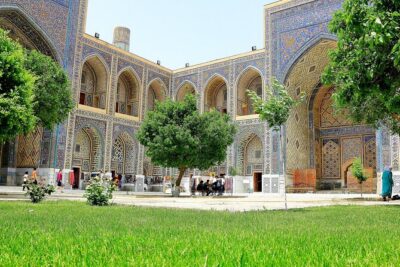
Registan is the tour’s longest stop, with one hour of guided sightseeing and another 20 minutes of free time. That extra attention is welcome. The square is not a single building but a great urban space framed by three monumental madrasas, each with its own facade, proportions, and decoration.
This is where the tour’s history becomes easiest to picture. Registan was a center of learning, ceremony, and public life. Its architecture reflects the ambition of Samarkand under rulers who wanted the city to be seen as a center of scholarship and power.
I like the longer visit because Registan rewards patience. The first view gives you the famous postcard image. After your guide explains the buildings, you can use the free time to compare the entrances, tiled panels, arches, and repeated geometric designs.
The square is also the tour’s best photo stop. Take a wide shot first, then use the free period for closer details. If the sun is harsh, the blue tile can wash out in photographs, so sunglasses and a hat will make the visit more comfortable while you wait for a better angle.
Registan can feel visually overwhelming. Three grand facades compete for your attention, and it is easy to remember only the general color and scale. A good guide helps by giving you a few clear points to hold on to, such as the purpose of a madrasa, the role of the square, and the architectural differences among the buildings.
The route provides 15 minutes of walking after Registan before the final monument. That keeps the tour active, but it also means you should not expect long unstructured pauses. The free time at Registan is your best chance to slow down.
Same Silk Road, a completely different kind of day:
- Samarkand: Historical Monuments Guided Walking Tour
★ 4.8 · 446 reviews - Full Day Private Tour in Seven Lakes from Samarkand
★ 5.0 · 94 reviews - Samarkand One Day Tour: one day walking & group tour
★ 4.4 · 87 reviews - Samarkand: Shahrisabz Day Trip with Optional Local Guide
★ 4.9 · 81 reviews
Amir Temur’s Mausoleum: ending with the conqueror
The final scheduled stop is the Mausoleum of Amir Temur, also known as Tamerlane. You receive about 30 minutes of guided sightseeing and 15 minutes of free time. Ending here gives the tour a clear historical finish, since Tamerlane’s rule helped make Samarkand an imperial capital of major ambition.
Inside, the mood changes from the open scale of Registan to a more focused memorial setting. The tomb is marked by a striking jade tombstone, a detail that gives the site a personal center after the broad political story of the city.
Your guide can connect Tamerlane’s military legacy with the architecture you have already seen. That connection matters. The monuments are not random beautiful buildings. They reflect rulers who used Samarkand to display authority, religious devotion, learning, and wealth.
The 15-minute free period is enough to take in the room and revisit details from the explanation. If you want extended quiet time at the tomb, you may find the group schedule limiting. Still, the final stop works well for a first overview because it leaves you with a clear sense of the people behind the monuments.
What happens to Saint Daniel, Khazreti Khizr, and Siyob Bazaar?
The wider description of this experience names three additional stops: the Tomb of Saint Daniel, Khazreti Khizr Mosque, and Siyob Bazaar. These places add useful variety to the main monument route.
The Tomb of Saint Daniel is presented as a place of peace and reverence visited by people of different faiths. Khazreti Khizr Mosque is described as one of Samarkand’s oldest Islamic sites and offers a view over the city. Siyob Bazaar shifts the focus from monuments to daily life, with spices, fruit, and traditional sweets.
But the timed route supplied for the four-hour experience lists Shah-i-Zinda, Bibi-Khanym, Registan, and Amir Temur’s Mausoleum. It does not assign visit times to Saint Daniel, Khazreti Khizr, or Siyob Bazaar. I would ask Jonny Guide or the operator directly if these are substituted stops, optional additions, or part of a different version of the tour.
That clarification is especially important if the bazaar is your priority. A market visit needs unhurried time to browse, smell the spices, and look at local foods. It is hard to combine that properly with four major monuments in only four hours.
The guide can make the difference
The strongest practical reason to choose this tour is the guide. The names Jonny, Johnny, and Jahongir appear in the information for the experience, so the exact guide may vary. The comments attached to those bookings consistently praise a young, energetic, friendly style and strong English.
One useful detail is the willingness to allow sitting breaks when requested. That matters in Samarkand, where heat, bright sun, and long periods of standing can wear you down. You should still manage your own pace and speak up early if you need a pause.
The guide is also expected to answer questions beyond the buildings. You can ask about old and modern Uzbek traditions, daily life, architecture, and the city’s place in Central Asian history. That exchange may be more valuable than a memorized list of dates.
English, Russian, and Uzbek are available. If you need a specific language, check the starting time and guide assignment before paying. A small group does not automatically mean a private tour, so you should also expect to share the guide’s attention with other people.
Price, tickets, walking, and weather
At $25, this is a low-cost way to see four major Samarkand sights with a guide. The price makes particular sense if you are visiting for a short stay, arriving without much background, or prefer not to arrange each stop yourself.
The value is less clear if you want long visits at every monument or a flexible private route. The four hours include guided sightseeing, free time, and walking connections. Entry tickets are extra, and the amount is not specified, so do not treat the $25 as the complete cost of the day.
The walking is manageable on paper, with several 15-minute connections and time on your feet inside the complexes. Hot weather can change that calculation. Bring sunglasses, a hat, and water. Water is included, but carrying your own backup is sensible for a sunny half-day.
The meeting point is precise: next to the red ATM in front of Shah-i-Zinda’s entrance. Look for the guide holding the paper with GetYourGuide branding. This is more useful than relying on a broad landmark name.
Free cancellation is available up to 24 hours before the start for a full refund, and you can reserve now while paying later. Those terms help if your Samarkand schedule is still shifting.
Who should book this Samarkand tour?
I would choose this experience if you want a strong first look at Samarkand, especially if you care about architecture and want history explained in plain language. It suits people who prefer a small group, enjoy asking questions, and are comfortable walking between sites.
It is also a good fit for solo visitors who want company without joining a large bus group. The reported guide style is friendly and conversational, and the small size should make it easier to ask about subjects beyond the standard script.
I would be more cautious if you have limited mobility, dislike heat, or need long periods at each monument. The route is active and timed. Sitting breaks are possible when requested, but the tour is not presented as a slow-access visit.
If Siyob Bazaar, the Tomb of Saint Daniel, or Khazreti Khizr Mosque is essential to your plans, confirm the exact route first. The named highlights and timed stops do not fully match, and a quick question can prevent disappointment.
Should you book it?
Book this tour if you want four major Samarkand landmarks, a local guide, and a small group for $25. The best parts are the close look at Shah-i-Zinda, the hour at Registan, and the chance to ask a guide such as Jonny or Jahongir about Uzbek history and daily life.
Do not book it blindly if you expect every named sight to be included or if you want a relaxed full-day exploration. Confirm the stops, budget for entry tickets, bring a headscarf and sun protection, and arrive at the red ATM in front of Shah-i-Zinda. With those expectations set, this is a practical and well-priced introduction to Samarkand’s grandest monuments.
FAQ
How long does the Samarkand City Tour last?
The tour lasts four hours.
How much does the tour cost?
The listed price is $25 per person.
What places are included in the timed route?
The timed route includes Shah-i-Zinda, Bibi-Khanym Mosque, Registan Square, and the Mausoleum of Amir Temur.
Are entry tickets included?
No. Entry tickets to museums and personal expenses are not included.
Where is the meeting point?
Meet beside the red Ziraat Bank ATM in front of the entrance to the Shah-i-Zinda Mausoleum complex. The guide will hold a paper with GetYourGuide branding.
What languages are available?
The live guide can conduct the tour in English, Russian, or Uzbek.
How large is the group?
The tour is limited to seven participants.
Just added around Samarkand
- The Golden City of Samarkand: A Self-Guided Audio Tour★ 4.0 · 4 reviews
- Samarkand Capital of Amir Timur Private Tour with Transport★ 5.0 · 3 reviews
- Shakhrisabz Private Day Tour from Samarkand★ 5.0 · 4 reviews
- Seven Lakes Panjakent: One-Day Adventure from Samarkand★ 5.0 · 3 reviews
- Explore Samarkand Guided Tour with Transfers★ 5.0 · 3 reviews
- Samarkand Local Family Cooking Class and Siyob Bazaar Tour★ 5.0 · 5 reviews
- Ancient and Modern tour in Samarkand with Transport★ 5.0 · 3 reviews
- Penjikent Day Trip From Samarkand★ 5.0 · 3 reviews
City Tours, compared.
Private Samarkand City Tour With Transportation
Read our review →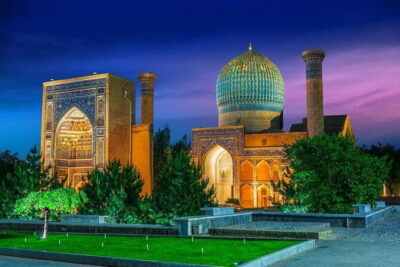
A City Tour Of Samarkand: The Pearl Of The East
Read our review →
Khiva Historical City Highlights Guided Walking Tour
Read our review →
Samarkand Historical City Highlights Guided Walking Tour
Read our review →
Private Guided Tour Samarkand city history and culture
Read our review →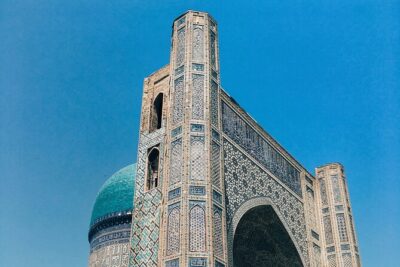
Samarkand City Tour with a Professional Photographer
Read our review →Browse the lists this tour appears in