
Reviewed · SEVEN LAKES TOURS
Panjakent day trip from Samarkand
Panjakent gives you something Samarkand cannot: a look at early Sogdian civilization and modern Tajik life in one compact day. You cross the border, visit ruins from the 5th to 8th centuries, then see a local bazaar and a museum devoted to Rudaki, the father of Persian poetry.
I like the range here. Sarazm reaches back roughly 5,500 years, while Ancient Panjakent shows a later Silk Road town with temples, homes, and public buildings. I also like the private format, included lunch, air-conditioned vehicle, and entrance fees. The catch is that Panjakent is modest, and one traveler found its sights disappointing after the grand monuments of Samarkand.
Key points at a glance
- Five very different stops: Visit a medieval mausoleum, Sogdian ruins, a local market, a small history museum, and Sarazm.
- A private Tajikistan day: Only your own group takes part, with pickup offered from Samarkand.
- Ancient Panjakent explains the Silk Road: The ruined city flourished from the 5th to 8th centuries as the easternmost town of Sogdiana.
- Sarazm reaches far beyond Silk Road history: The settlement dates back about 5,500 years and is Tajikistan’s first World Heritage Site.
- Umar has earned strong praise: His English and ability to keep conversation going made the crossing and sightseeing easier for one happy customer.
- The schedule is tight: Six to seven hours covers a lot, so you should expect a brisk day rather than long, leisurely visits.
Crossing from Samarkand into Tajikistan
This trip changes countries as well as subjects. You leave Samarkand for Panjakent in Tajikistan, making the border crossing an important part of the day even though the principal stops are historical sites.
The journey is arranged as a private activity, so you do not share the vehicle with a large mixed group. That matters here. Border formalities, changing scenery, and several short visits can make a group tour feel slow. With your own party, the day should be easier to manage, though the listed six to seven hours still leaves little room for long stops.
Pickup is offered, and transport is in an air-conditioned vehicle. Lunch and all admission fees are included in the $150 price per person. Alcoholic drinks are not included. Group discounts are also available, which can improve the value if you are traveling with several people.
The border crossing has gone smoothly for at least one visitor, and guide Umar received specific praise for his English and for keeping conversation going throughout the day. That is useful on a cross-border outing. A good guide can explain what you are seeing, help the day feel less hurried, and make the transition from Uzbekistan to Tajikistan more comfortable.
Still, allow for the fact that an international day trip has less control over timing than a city tour. The border, road conditions, and weather can affect the pace. The experience requires good weather, and a cancellation caused by poor conditions brings either a different date or a full refund.
More seven lakes tours in Samarkand:
- Full Day Private Tour in Seven Lakes from Samarkand
★ 5.0 · 94 reviews - Tour From Samarkand To Tajikistan: Seven Lakes
★ 5.0 · 34 reviews - Seven Lakes of Tajikistan Full Package Excursion from Samarkand
★ 5.0 · 26 reviews
Mukhammad Bashoro Mausoleum in Mazari Sharif
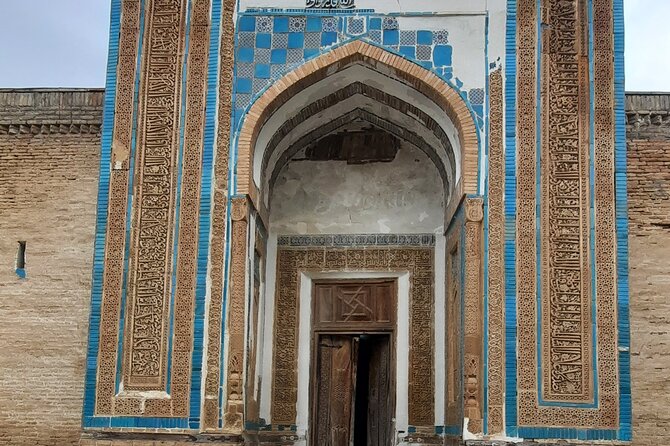
The first listed stop is the Mausoleum of Mukhammad Bashoro, located east of Panjakent on a side road near the small village of Mazari Sharif. This is not a grand urban monument. Its appeal comes from its setting, age, and form.
The mausoleum dates from the 11th or 12th century and is also known as Mazar-i-Sharif. Later work in 1342 or 1343 added a large, deep arched shrine, small corner rooms, and corridors. Those additions give the building a layered architectural story instead of a single clean date.
You receive about two hours here, the longest stop of the day. That suggests the site is meant to be treated as more than a quick photo stop. You can look closely at the structure, consider its religious purpose, and take in the village setting around it.
The drawback is simple: the supplied information does not describe extensive displays or a large visitor complex. If your main interest is monumental architecture on the scale of Samarkand’s famous squares, this may feel quiet and restrained. I would approach it as a place for detail and atmosphere, not spectacle.
Admission is included, so you do not need to budget separately for entry. The stop also gives the day an early focus on Tajikistan’s Islamic architectural heritage before you move farther back in time at the archaeological sites.
Ancient Panjakent and the Sogdian past
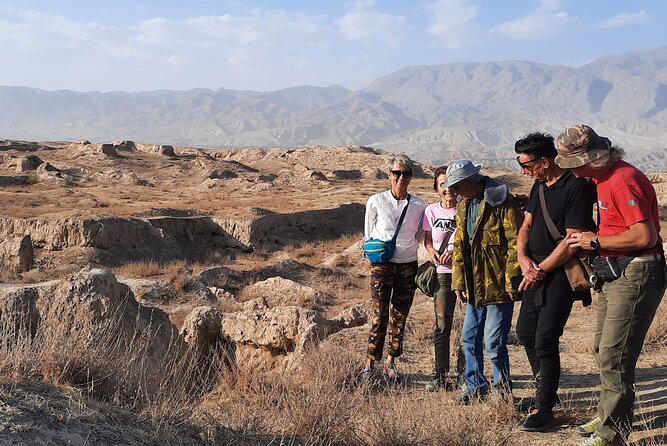
Ancient Panjakent is the historical heart of the trip. The city was founded as early as the 5th century BC within the Sogdian world, then grew into a major town from the 5th century AD onward. It remained active through the 8th century.
Sogdiana occupied an important place in Central Asian trade and culture. Ancient Panjakent was its easternmost town, which helps explain why the ruins matter. You are not simply looking at old walls. You are seeing the remains of a city at the edge of a large cultural and trading zone.
The site represents the early Middle Ages, with the remains of religious, public, and residential buildings. The information provided also points to the importance of the ruins as a rare monument of the period. You might find the site especially rewarding if you enjoy archaeology, ancient urban planning, or the story of civilizations that existed before the better-known Islamic monuments of Central Asia.
The visit lasts about an hour, and admission is included. That is enough to understand the layout and the broad story, but not enough for an unhurried archaeological study. I would bring a curious eye rather than expecting reconstructed rooms or a polished open-air museum.
Ancient ruins can be hard to read without explanation. This is where your guide matters most. Ask about the Sogdians, the city’s dates, and how the site relates to the wider Silk Road. A strong guide turns scattered foundations into a city with a purpose.
Panjakent Bazaar and present-day Tajik life
After the ancient city, Panjakent Bazaar changes the tone completely. You move from archaeology to ordinary commerce, where the town’s daily rhythm matters more than its distant past.
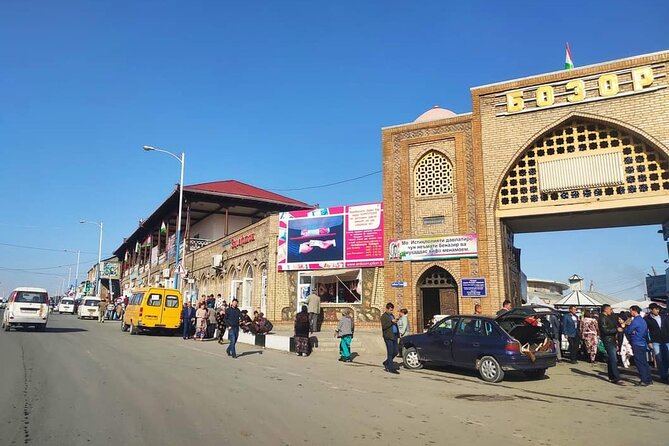
The stop lasts about 30 minutes and admission is free. That is not long enough for a full market expedition, but it can give you a quick look at local buying and selling. The market is reached through an ornate gate, and the morning rush is part of the experience.
This is one of the trip’s more useful contrasts. Ancient Panjakent shows a vanished city. The bazaar shows how a modern town feels today. I like having both in the same itinerary because the visit does not treat Tajikistan as an archaeological site only.
Keep your expectations sensible. Thirty minutes is a short visit, and the bazaar is not presented as a major attraction with a long guided program. You may have time to look around, take in the movement of the market, and perhaps make a small purchase, but the schedule is not designed for slow browsing.
The bazaar can also be a welcome break between formal historical stops. If you have spent the morning looking at masonry and excavation areas, the sounds, colors, and movement of a working market give you a more immediate connection to Panjakent.
A few more Samarkand trips to weigh up
- Samarkand One Day Tour: one day walking & group tour
★ 4.4 · 87 reviews - Samarkand: Shahrisabz Day Trip with Optional Local Guide
★ 4.9 · 81 reviews - From Samarkand: Shahrisabz Day Trip & Mountain Pass Tour
★ 4.5 · 42 reviews - Bukhara-Shakhrisabz-Samarkand One Day Trip
★ 4.1 · 16 reviews
Rudaki Museum and the father of Persian poetry
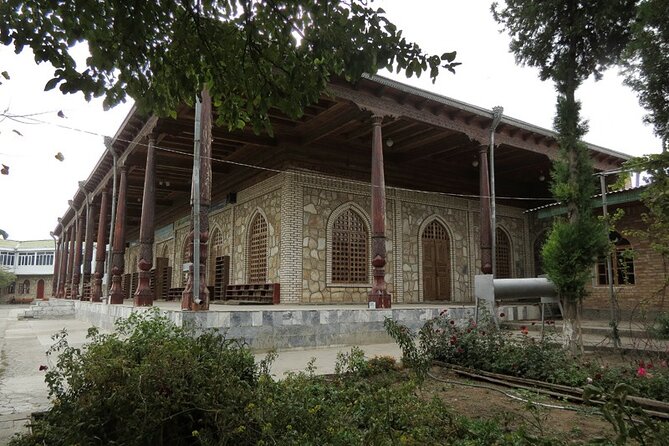
The Republican Museum of History and Local Lore of Rudaki occupies an elegant single-storey building with white Doric columns and a floral display. It gives the town a cultural stop that is more focused than a general sightseeing walk.
One room is assigned to Abu Abdullah Rudaki, who lived from 858 to 941 and is known as the father of Persian poetry. His presence gives the museum a clear link to the literary history of the region, not just its archaeology.
You have about an hour here, with admission included. The museum is likely most useful if you want context for the people, language, and culture behind the monuments. It helps broaden the day beyond ruins and dates.
As with many smaller regional museums, the appeal is likely to depend on your interests and your guide’s explanations. The description emphasizes the building and Rudaki room, but it does not provide a full list of collections. I would not book this trip solely for the museum. Instead, treat it as a compact cultural stop that adds depth to the larger Panjakent story.
The hour also creates a calmer interval after the bazaar. You can slow down, ask questions, and connect the older Sogdian period with the Persian literary tradition represented by Rudaki.
Sarazm, a settlement older than Panjakent
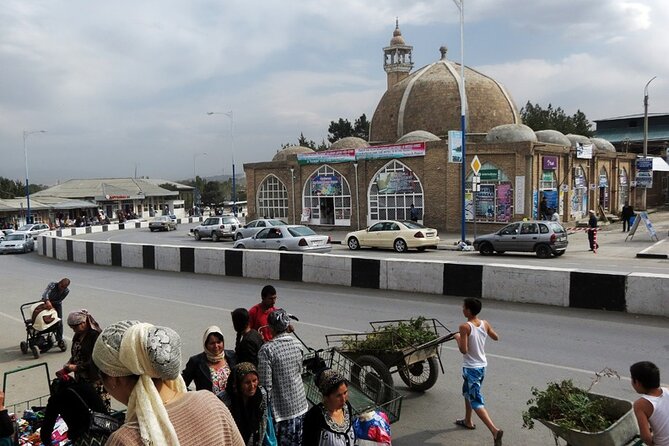
Sarazm is the most ancient stop and, for many people, the strongest reason to choose this trip. The site predates Ancient Panjakent by thousands of years. It was founded around 3500 BC and is described as a settlement with roughly 5,500 years of history.
That age changes your sense of time. Ancient Panjakent belongs to the Sogdian and early medieval world. Sarazm takes you to a much earlier period, when settled communities were forming long before the Silk Road became a familiar name.
The site includes well-preserved palace and religious buildings, along with public and residential structures. These remains have major historical and cultural value, and Sarazm is Tajikistan’s first World Heritage Site.
You have about 90 minutes here. That is a reasonable length for a site that deserves more than a brief glance, though the full day remains tightly packed. Pay attention to the difference between the types of buildings and ask how the settlement functioned. The value is not only in the age of the ruins, but in what an organized community tells you about life in the distant past.
Sarazm also provides the clearest answer to the question of why this trip is different from a standard Samarkand excursion. Samarkand is famous for grand, finished monuments. Sarazm asks you to use your imagination. You look at remains and think about the people, buildings, and systems that once occupied them.
Is $150 a fair price?
At $150 per person, this is not a cheap add-on. The price includes a private air-conditioned vehicle, pickup, lunch, entrance fees, and a full cross-border day. You are also paying for the planning required to connect five stops in Tajikistan from Samarkand.
The private format is the main value point. Only your own group takes part, so the cost makes more sense for couples, families, or small groups who prefer a dedicated vehicle and guide. Group discounts may help if you are booking for several people.
The value is less convincing if your priority is famous architecture or a long list of dramatic sights. One low-scoring assessment found the attractions disappointing after Samarkand’s beauty and suggested visiting the Seven Lakes instead. That criticism is worth taking seriously. Panjakent’s appeal is quieter, older, and more archaeological.
I would pay this price if I wanted a convenient introduction to Tajikistan without arranging transport, lunch, border travel, and admissions myself. I would hesitate if I wanted a relaxed day, extensive market time, or a destination packed with monumental sights.
Who should book this Panjakent trip?
I would recommend it most strongly to people who enjoy ancient history and want to add a second country to a Samarkand stay. Sarazm and Ancient Panjakent give the day real purpose, while the mausoleum, bazaar, and museum prevent it from becoming only an excavation-site visit.
It also suits you if you value a private guide. Umar’s reported English and conversation skills are useful qualities for this kind of day, especially when the experience depends on understanding places that may not explain themselves clearly.
You should think twice if you have only one day for a major side trip and expect constant visual drama. The route includes modest sites, a short market visit, and a small museum. The day’s pleasure comes from variety and historical scale, not from one spectacular monument.
Plan for a brisk pace. The five stops add up to five hours, while the full experience lasts six to seven hours. That leaves limited room for transport and border formalities. Wear practical walking shoes, keep your schedule flexible, and focus on the quality of the contrasts rather than trying to linger everywhere.
Booking and cancellation details
Confirmation is provided when you book. Most people can participate, and the activity is private to your group. Pickup is offered, mobile tickets are available, and free cancellation applies if you cancel at least 24 hours before the start time.
Changes or cancellations made less than 24 hours before the start are not accepted for a refund. Cutoff times follow local time. Since good weather is required, a weather cancellation brings the choice of another date or a full refund.
FAQ
How long does the Panjakent day trip from Samarkand last?
The experience lasts approximately six to seven hours.
Is this a private tour?
Yes. Only your group participates in the activity.
What is included in the price?
The price includes an air-conditioned vehicle, lunch, all fees and taxes, and admission to the included ticketed sites.
Is pickup available from Samarkand?
Yes. Pickup is offered.
Which places are visited?
The route includes Mukhammad Bashoro Mausoleum, Ancient Panjakent, Panjakent Bazaar, the Republican Museum of History and Local Lore of Rudaki, and Sarazm.
Can I cancel for a full refund?
Yes, if you cancel at least 24 hours before the experience start time. Poor weather may also lead to a different date or a full refund.
Should you book it?
Book this trip if you want archaeology, local culture, and a first look at Tajikistan in one private day. Sarazm and Ancient Panjakent provide the strongest reasons to go, while the mausoleum, bazaar, and Rudaki museum round out the visit.
Skip it if you want a destination as grand as Samarkand or a slower day with fewer stops. Panjakent is understated. For the right visitor, that is the point. For everyone else, the $150 price may be better spent on a more dramatic Tajik excursion.
Just added around Samarkand
- The Golden City of Samarkand: A Self-Guided Audio Tour★ 4.0 · 4 reviews
- Samarkand Capital of Amir Timur Private Tour with Transport★ 5.0 · 3 reviews
- Seven Lakes Panjakent: One-Day Adventure from Samarkand★ 5.0 · 3 reviews
- Shakhrisabz Private Day Tour from Samarkand★ 5.0 · 4 reviews
- Ancient and Modern tour in Samarkand with Transport★ 5.0 · 3 reviews
- Explore Samarkand Guided Tour with Transfers★ 5.0 · 3 reviews
- Samarkand Local Family Cooking Class and Siyob Bazaar Tour★ 5.0 · 5 reviews
- Penjikent Day Trip From Samarkand★ 5.0 · 3 reviews
Seven Lakes Tours, compared.
Full Day Private Tour in Seven Lakes from Samarkand
Read our review →
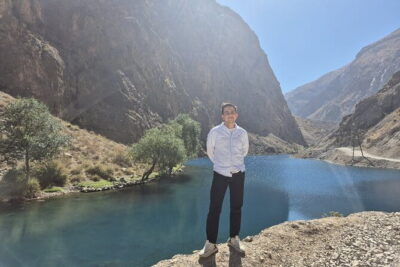
Seven Lakes of Tajikistan Full Package Excursion from Samarkand
Read our review →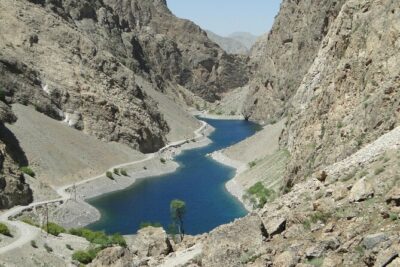
Seven Lakes Tajikistan Private Excursion From Samarkand
Read our review →
Seven Lakes Tajikistan: All-Inclusive Private Day Tour
Read our review →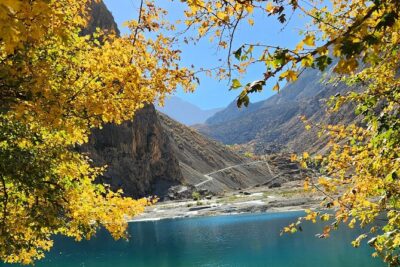
Day Tour from Samarkand Explore Panjakent and Seven Lakes
Read our review →
Seven Lakes Panjakent: One-Day Adventure from Samarkand
Read our review →Browse the lists this tour appears in