
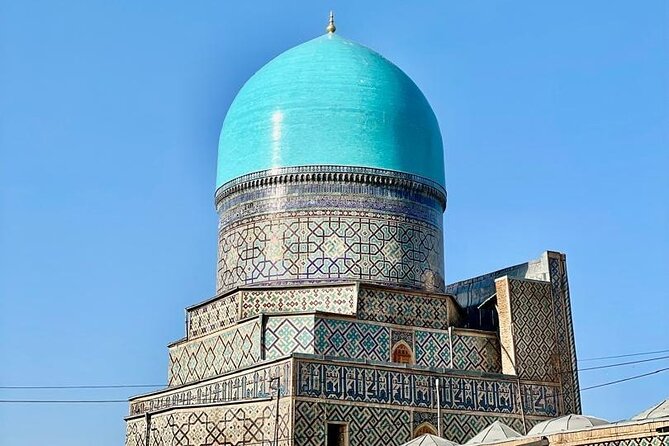
Reviewed · SAMARKAND TOURS
Ancient and Modern Tour in Samarkand with Transport
Samarkand’s biggest sights can blur together if you only collect photographs. This five-hour private tour gives them a clear thread, from Tamerlane’s tomb at Gur Emir to the blue-tiled courts of Registan, then onward to mosques, mausoleums, and the lively Siyab Bazaar.
I like the flexible start time and the fact that guide Bekjon can adjust the order around your interests. I also like the practical touches: he points out good photo positions, can take photographs for you, and adds local details such as breakfast customs, hamams, sweets, and plov.
The main catch is cost. The $40 price covers the guide and private transport, but entry tickets are extra at every site, and several visitors found those fees higher than expected. Bring Uzbek som, comfortable clothes, and modest clothing for mosque visits.
Key points before you book
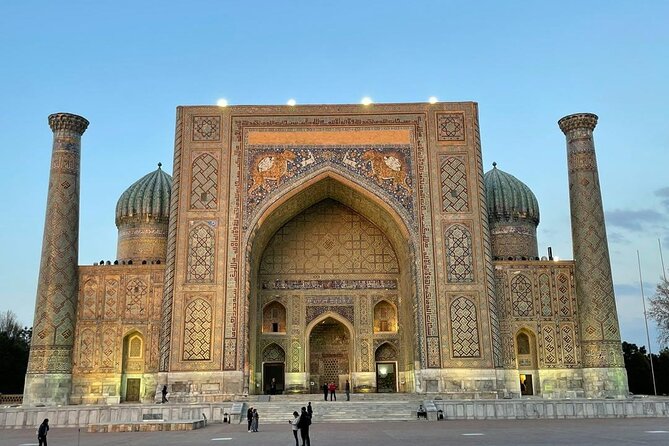
- Gur Emir begins the story: See the gilded interior and tomb of Tamerlane, along with the burial place of his male descendants.
- Registan is the grand centerpiece: This is Samarkand’s essential square and the clearest symbol of the city.
- The route is private and adjustable: You can request a different start time or ask Bekjon to spend more time on the sites that interest you most.
- Siyab Bazaar adds daily life: Expect spices, fresh and dried fruit, local sweets, and Samarkand bread.
- English and Russian are available: The guide can explain the city in either language.
- Budget for admissions: The tour fee does not include tickets, food, or drinks.
Why this five-hour Samarkand tour works well
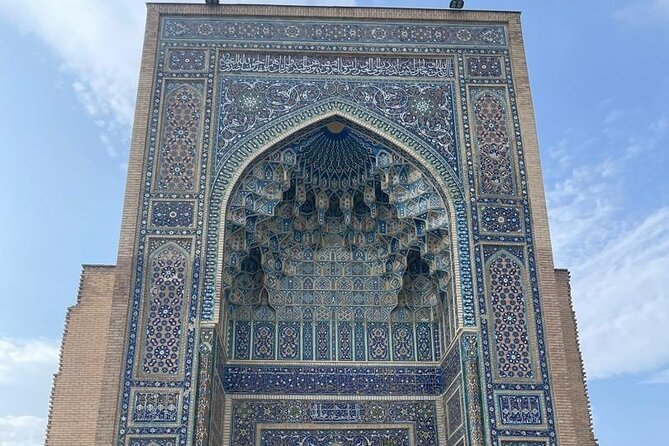
Samarkand is not a city where the oldest sights sit in one compact square. Its major monuments are spread across different parts of town, and the distances can make an unplanned visit tiring. A private car, sedan, or minivan lets you move between them without spending your short visit working out taxis.
The guide also gives the monuments a shared story. Tamerlane, his family, the Silk Road, religious life, and modern Uzbekistan all appear along the route. You are not simply looking at tilework. You are learning why these buildings were made, who used them, and how they fit into Samarkand’s long past.
The tour lasts about five hours, which is enough for the main sights without turning the day into a marathon. You should still expect walking, steps, and time outdoors. Shah-i-Zinda in particular can require a steady pace through a long complex of mausoleums.
This is a private-group experience, not a large coach outing. That matters if you want to ask questions, pause for photographs, or change the plan. Bekjon has adjusted the schedule for personal interests, changed the route to suit the available time, and helped visitors who needed to cut the tour short.
Other Samarkand days people book alongside this one:
- Samarkand: Historical Monuments Guided Walking Tour
★ 4.8 · 446 reviews - Private Samarkand City Tour With Transportation
★ 5.0 · 149 reviews - A City Tour Of Samarkand: The Pearl Of The East
★ 5.0 · 133 reviews
Gur Emir, where Tamerlane’s story begins
The meeting point is the entrance to Gur Emir Mausoleum. This is a sensible starting place because the building introduces the Timurid age before you reach the more theatrical Registan.
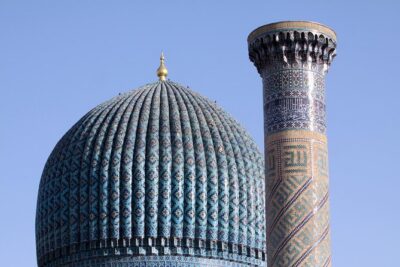
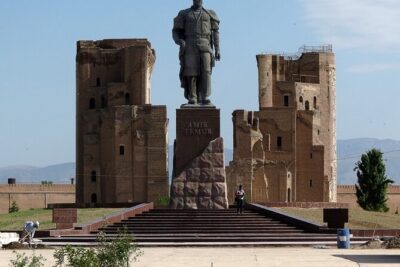
Gur Emir was built for Amir Timur, better known in the West as Tamerlane, and for his male descendants. Inside, the decoration is heavily gilded, creating a sharp contrast with the blue and turquoise tilework seen elsewhere in Samarkand. The mausoleum is not vast, so a good guide can help you pay attention to details instead of rushing through the room.
I would start early in summer if you can. The booking information recommends an earlier start during the hottest months, and morning visits can also make the first stop feel calmer. One visitor had the mausoleum almost to herself early in the day on a rainy morning, which shows how much timing can affect the mood.
Ask Bekjon about the Timurid family and the legends connected with the building. The tour promises stories passed down through the years, and this is the place where those stories have their strongest setting. You will also begin to see the difference between historical fact, local tradition, and the grand image Tamerlane wanted to leave behind.
Registan, Samarkand’s essential square
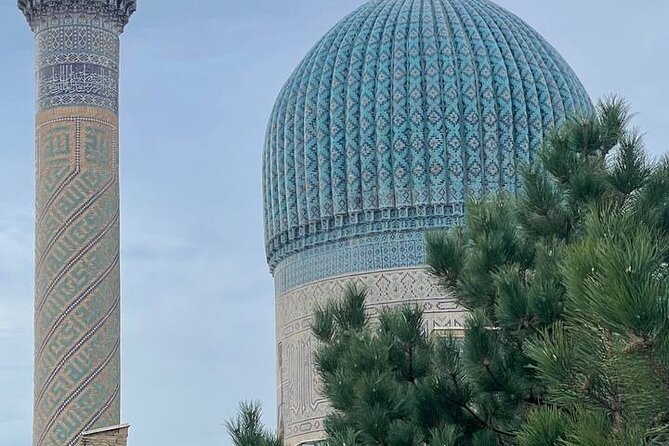
Registan is the visual center of any first visit to Samarkand. Three monumental madrasas frame the square with patterned tile, tall portals, and a scale that can make even a short visit feel important.
The attraction is not only the decoration. Registan was the public face of the city, and its design shows how education, religion, power, and ceremony came together in the Timurid world. This is the site where a guide’s explanations matter most because the details can otherwise become a wall of blue patterns.
Allow time to look up. The main portals and facades are easy to photograph, but the best images often come from changing your position and letting the guide suggest a viewpoint. Bekjon is especially attentive to photographs, and several people valued both his suggestions and his willingness to take pictures.
Registan is also the stop most likely to feel busy. The square is Samarkand’s calling card, so it attracts the largest share of attention. Your private guide can help you move at a sensible pace, but you should not expect complete quiet or solitude.
Bibi Khanym Mosque and the story of India
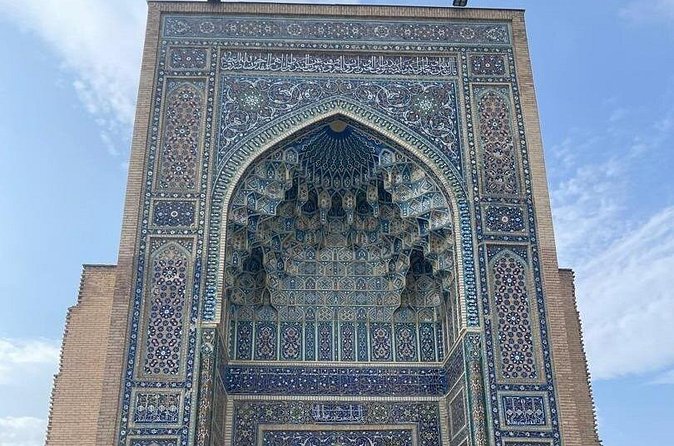
Bibi Khanym Mosque brings you into another part of Tamerlane’s story. It was built in honor of his victory over India and is linked with his beloved wife. The scale is the point: this was intended to make a public statement about power, wealth, and devotion.
The mosque has suffered over time, and its size can be easier to understand from outside than from inside. Look at the massive entrance, the broad courtyard, and the surviving decorative work. A guide can help explain which parts belong to the older structure and how the monument relates to Samarkand’s changing fortunes.
This is one of the places where modest dress matters. Uzbekistan does not require a general dress code, but you should cover your shoulders and legs when visiting mosques. Sunglasses and comfortable clothing are useful for the outdoor portions of the tour, though you may want to remove sunglasses when stepping inside religious spaces.
The advertised itinerary includes shopping time of about one hour around the Bibi Khanym section. Confirm with Bekjon how you want to use that time. You might prefer more monument time, a look at nearby stalls, or a slower stop for photographs.
Same Silk Road, a completely different kind of day:
- Full Day Private Tour in Seven Lakes from Samarkand
★ 5.0 · 94 reviews - Samarkand One Day Tour: one day walking & group tour
★ 4.4 · 87 reviews - Samarkand: Shahrisabz Day Trip with Optional Local Guide
★ 4.9 · 81 reviews - Guide / excursion service in Samarkand
★ 5.0 · 57 reviews
Siyab Bazaar, where Samarkand becomes local
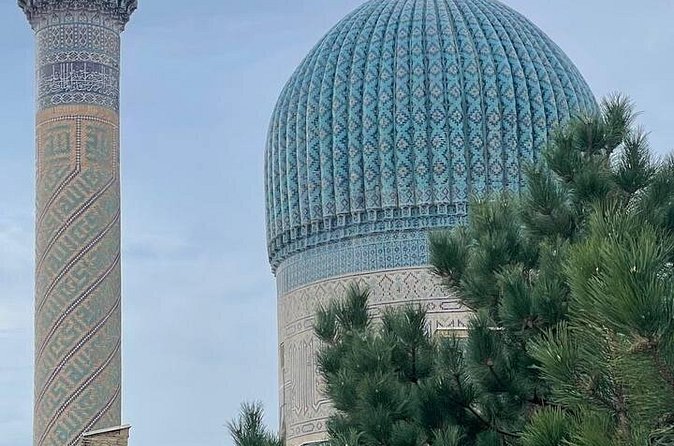
Siyab Central Bazaar is the break from monumental architecture. This is where you see the practical side of Samarkand: spices, fresh fruit, dried fruit, sweets, and the famous round loaves of Samarkand bread.
A market stop gives the tour balance. After hearing about rulers and mausoleums, you get a sense of what people buy, eat, and carry home today. Bekjon can guide you through the atmosphere and help explain local customs. The experience may also include tasting local sweets, depending on your timing and choices.
Food is not included, so plan to pay directly for anything you eat or drink. A visitor enjoyed plov at a nearby restaurant during a longer outing, while another sampled local treats in the market. These details are not fixed parts of the tour, so ask what fits into your five-hour schedule.
Siyab Bazaar can be a good place to buy edible souvenirs, but do not let shopping swallow the day unless that is your main interest. The market works best as a cultural pause between major sites.
Hazrat Khizr Mosque and modern Uzbekistan
Hazrat Khizr Mosque adds a different layer to the route. It is described as the first mosque of Samarkand, and it is also connected with the burial of Uzbekistan’s first president.
That combination lets you compare old religious traditions with the country’s modern political story. The mosque is a useful reminder that Samarkand is not an open-air museum. People still live with these places, interpret them, and attach new meaning to them.
As at Bibi Khanym, dress modestly and keep your voice low. The tour information specifically asks visitors not to make noise, and that is good practice in any active religious setting. Drones are not allowed, and pets are not permitted on the activity.
Shah-i-Zinda and the family mausoleums
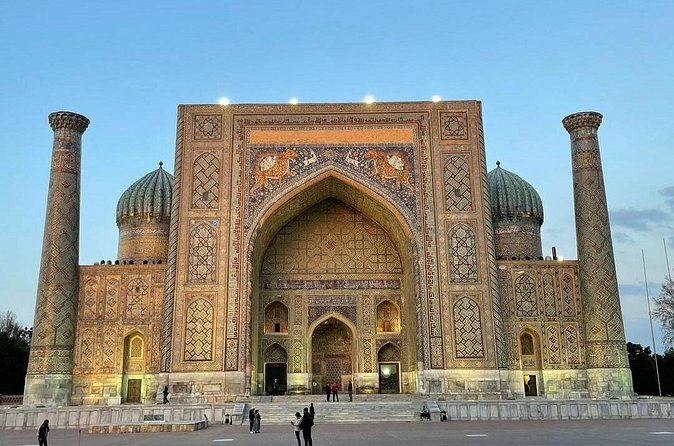
Shah-i-Zinda is likely to be the most detailed stop. The complex contains about 20 mausoleums, many connected with women in Tamerlane’s family. The narrow procession of decorated tombs creates a very different feeling from the open scale of Registan.
The complex is also linked with the burial of a family relative of the Prophet, making it a particularly important sacred site in Central Asia. This is a place to slow down and listen. The tilework is beautiful, but the meaning of the burials gives the visit its weight.
You should be ready for walking and possibly stairs. The experience is not suitable for wheelchair users, and people with recent surgery or existing medical conditions should think carefully about the physical demands. Comfortable shoes are a better choice than anything chosen only for photographs.
Shah-i-Zinda is also one of the best places to compare old and modern Uzbekistan. Pilgrims, local families, and sightseers may share the same path, so respectful behavior matters. Your guide can help you understand when to pause for a picture and when to step aside.
The guide makes the difference
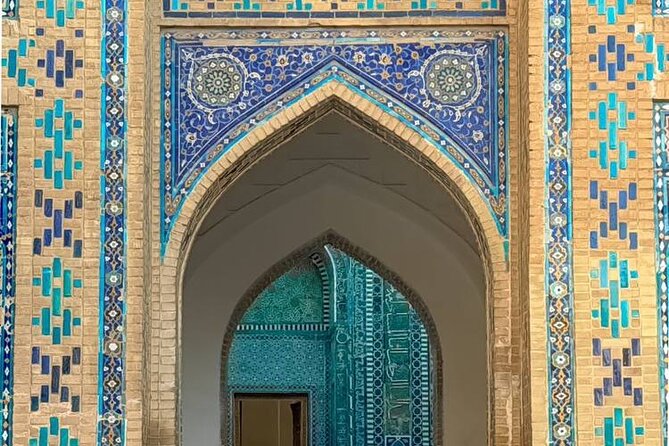
The strongest part of this experience is the guide’s flexibility. Bekjon speaks English and Russian and has been able to explain in both languages when a group needed that. His English is described as fluent, and his style includes humor, local opinions, and answers to questions rather than a fixed speech delivered at every stop.
You can request a start time when booking, and the time can be changed by asking. That is useful if you arrive by train, need a slower morning, or want to avoid summer heat. Tell Bekjon what matters before the tour begins. You may care most about architecture, Timur’s family, religious sites, local food, modern Uzbekistan, or photography.
He can also change the sequence because he has his own car. That gives you more control than a standard group itinerary. If you have already seen one site, you can ask to spend longer elsewhere. If you have limited energy, you can discuss a more manageable pace.
The photography help is a real practical advantage. You will get advice on where to stand and can ask the guide to take pictures for you. This is particularly useful for solo visitors, couples, and anyone tired of relying on quick self-timer shots.
Transport, timing, and the real price
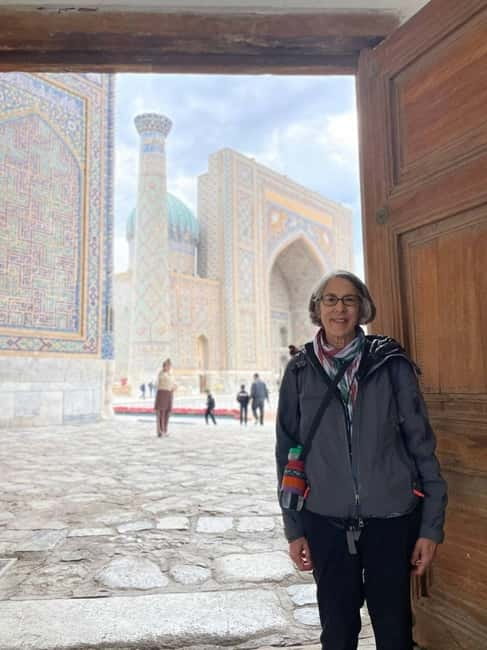
The tour costs $40 per person and includes a professional guide plus sedan or minivan transport. For a private five-hour outing, that can be good value, especially if you are traveling with several people and want to avoid arranging separate rides between monuments.
The price does not include entrance tickets, food, or drinks. This is the point to plan for carefully. Admission fees can add a noticeable amount, and one visitor was surprised by the cost of some sites. Bring enough Uzbek som rather than assuming a card will be accepted everywhere.
The itinerary information also shows a one-hour tram segment, while the included transport is listed as a sedan or minivan. Ask for clarification when booking if that detail matters to you. The clearest practical expectation is that the guide provides private road transport between the spread-out sights.
Five hours is a useful middle ground. You can see the major monuments and get a taste of the market, but you will not have unlimited time for every interior, meal, or shopping stop. If you want a slow visit with a long lunch, a bathhouse, or extensive market browsing, ask about extending or reshaping the plan.
The tour offers free cancellation up to 24 hours before departure and lets you reserve while paying later. That helps if your Uzbekistan schedule is still moving around.
Who should book this experience?
I would choose this tour if you have one day in Samarkand, want the major sights in a sensible order, and prefer a private guide to exploring alone. It also suits couples, families with older children, and small groups who want to set their own pace.
It is a good match for first-time visitors who want both ancient monuments and present-day life. The bazaar, local food suggestions, modern political context, and neighborhood observations keep the day from becoming only a procession of grand buildings.
Russian-speaking visitors may find the language option especially useful. English-speaking visitors also have a clear option, and the guide can explain in both languages for mixed groups.
I would think twice if you dislike walking, have a recent surgery, use a wheelchair, or need a fully accessible route. I would also budget beyond the advertised price for tickets and food. The tour is flexible, but flexibility does not remove the physical demands of Shah-i-Zinda or the extra admission costs.
Should you book the Samarkand Ancient and Modern Tour?
Book it if you want efficient sightseeing with room for personal interests. The combination of private transport, flexible timing, detailed historical explanation, photo help, and local stops gives you more than a simple transfer between monuments.
The best way to get value is to tell Bekjon your priorities at the start. Ask for early timing in summer, carry Uzbek som for tickets, dress modestly for mosques, and wear shoes suited to Shah-i-Zinda.
Skip it if you want a completely self-guided day, a fixed low final price, or a route designed around accessibility. For most independent visitors who want Samarkand’s essential sights explained by a friendly English or Russian guide, this is a strong five-hour introduction.
FAQ
How long does the Ancient and Modern Tour in Samarkand last?
The tour lasts five hours. You can check available starting times when booking, and the start time may be changed by request.
Where does the tour begin?
The meeting point is at the entrance to Gur Emir Mausoleum.
Which sights are included in the route?
The route includes Gur Emir Mausoleum, Registan, Bibi Khanym Mosque, Siyab Central Bazaar, Hazrat Khizr Mosque, and Shah-i-Zinda.
Is transport included?
Yes. Transport is included in a sedan or minivan. The itinerary information also refers to a one-hour tram segment, so you should clarify the exact transport plan when booking if needed.
Are entrance tickets included?
No. Entry tickets for the listed sites are not included and can be paid for on the spot.
Which languages does the guide speak?
Live guiding is available in English and Russian.
Is the tour private?
Yes. The experience is offered for a private group.
What should I wear when visiting mosques?
There is no general dress code in Uzbekistan, but you should dress modestly at mosques by covering your shoulders and legs. Comfortable clothing and sunglasses are also recommended.
Just added around Samarkand
- The Golden City of Samarkand: A Self-Guided Audio Tour★ 4.0 · 4 reviews
- Samarkand Capital of Amir Timur Private Tour with Transport★ 5.0 · 3 reviews
- Shakhrisabz Private Day Tour from Samarkand★ 5.0 · 4 reviews
- Seven Lakes Panjakent: One-Day Adventure from Samarkand★ 5.0 · 3 reviews
- Explore Samarkand Guided Tour with Transfers★ 5.0 · 3 reviews
- Samarkand Local Family Cooking Class and Siyob Bazaar Tour★ 5.0 · 5 reviews
- Ancient and Modern tour in Samarkand with Transport★ 5.0 · 3 reviews
- Penjikent Day Trip From Samarkand★ 5.0 · 3 reviews
Samarkand Tours, compared.
Private Samarkand City Tour With Transportation
Read our review →
A City Tour Of Samarkand: The Pearl Of The East
Read our review →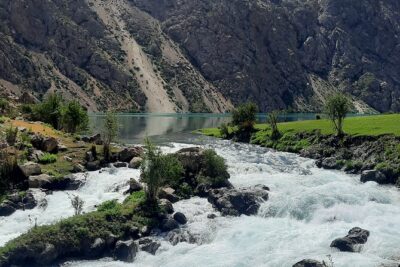
Full Day Private Tour in Seven Lakes from Samarkand
Read our review →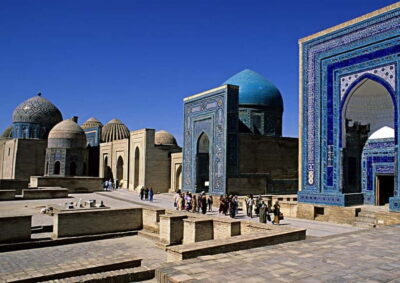
Samarkand One Day Tour: one day walking & group tour
Read our review →
Browse the lists this tour appears in